AI in Logistics for Smarter and Faster Supply Chains
Connect logistics data, operational workflows, and AI-powered decision support to improve planning, visibility, asset utilization, and service reliability across your supply chain.
 AI & DataAgentic AI, computer vision, generative AI
 App DevelopmentWeb, mobile, and custom software
 SecurityEngineering, warehousing, analytics
 AgtechFarm, livestock, and crop software
 FoodtechTraceability and food supply chain
 Digital HealthEHR, telehealth, and interoperability
 NetSuiteERP implementation and support
 Microsoft DynamicsDynamics 365 and Business Central
 SalesforceCRM consulting and integration
 EcommerceB2B ecommerce, ERP integrations and migrationsAI & DataAgentic AI, computer vision, generative AIApp DevelopmentWeb, mobile, and custom softwareSecurityEngineering, warehousing, analyticsAgtechFarm, livestock, and crop softwareFoodtechTraceability and food supply chainDigital HealthEHR, telehealth, and interoperabilityNetSuiteERP implementation and supportMicrosoft DynamicsDynamics 365 and Business CentralSalesforceCRM consulting and integrationEcommerceB2B ecommerce, ERP integrations and migrations
Connect logistics data, operational workflows, and AI-powered decision support to improve planning, visibility, asset utilization, and service reliability across your supply chain.
Many logistics operations rely on manual processes, siloed data, and reactive decision-making. Without intelligence built into operations, organizations face higher costs, inefficiencies, and limited visibility.

Traditional forecasting methods struggle to adapt to changing market conditions and external factors.

Manual planning of routes, warehouse layouts, and inventory levels increases costs and delays.

Lack of real-time tracking and alerts reduces transparency across the supply chain.

Manual inspection and returns handling slow down operations and increase overhead.
We provide AI-powered logistics solutions designed to support planning, monitoring, and operational efficiency across the supply chain.

Analyze historical data, external factors, and market trends to generate more accurate and granular demand forecasts using Generative AI.
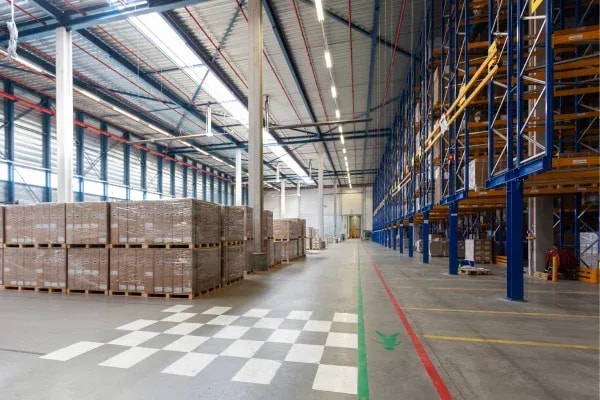
Simulate and optimize warehouse layouts by evaluating product placement, order flow, and storage capacity.

Optimize delivery routes using real-time traffic data, delivery constraints, and time windows to improve fleet efficiency.
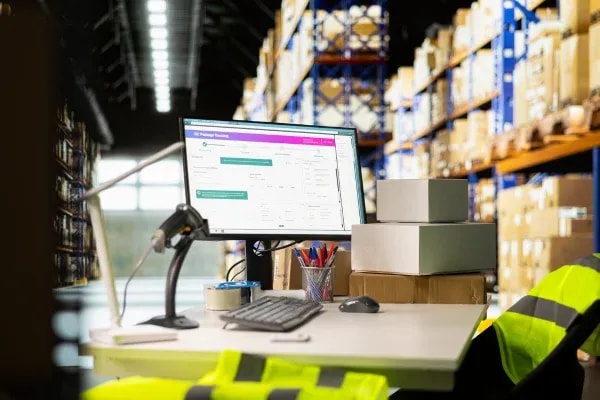
Analyze demand patterns, lead times, and costs to determine optimal inventory levels and automate replenishment.

Use image analysis to detect and classify cargo damage for timely intervention and insurance assessment.

Enable real-time tracking, monitoring, and alerts to support transparency and timely delivery.

Apply computer vision and machine learning to identify defects, reduce inspection time, and improve quality processes.

Streamline returns handling by automating resellability assessment and restocking workflows.
Reduce overhead by improving efficiency and predicting potential operational issues.
Automate inspection, quality assurance, and monitoring processes.
Optimize routing, scheduling, fuel usage, and maintenance planning.
Support faster order processing, real-time tracking, and improved service reliability.




Solution planning considers transportation, warehousing, inventory, suppliers, customer service, and operational reporting across the connected logistics environment.
Models, integrations, and workflows are designed around your selected logistics use case, available data, existing systems, and operational requirements.
Delivery combines AI engineering, data engineering, application development, cloud deployment, system integration, and product implementation within one engagement.
Monitoring, access controls, human review, exception handling, and model improvement are planned to support reliable operations after deployment.
Start with one high-value logistics problem, the data available to address it, and a measurable definition of success. Folio3 AI can help assess feasibility and define a practical path from pilot to production.
Book a Discovery Call
Fill the form below or Contact us at +1 408 365-4638 / email us via contact@folio3.ai
Years of Engineering Excellence
Delivered Worldwide
Client Satisfaction
Years of Advanced AI Expertise
Response Guaranteed

+1 408 365-4638
contact@folio3.ai

6701 Koll Center Parkway, #250 Pleasanton, CA 94566