Key Takeaways
China is making significant strides in artificial intelligence agent development as the country's tech giants intensify competition with established US frameworks like Microsoft's AutoGen and OpenAI's experimental Swarm platform.
Chinese tech giants enter AI agent race
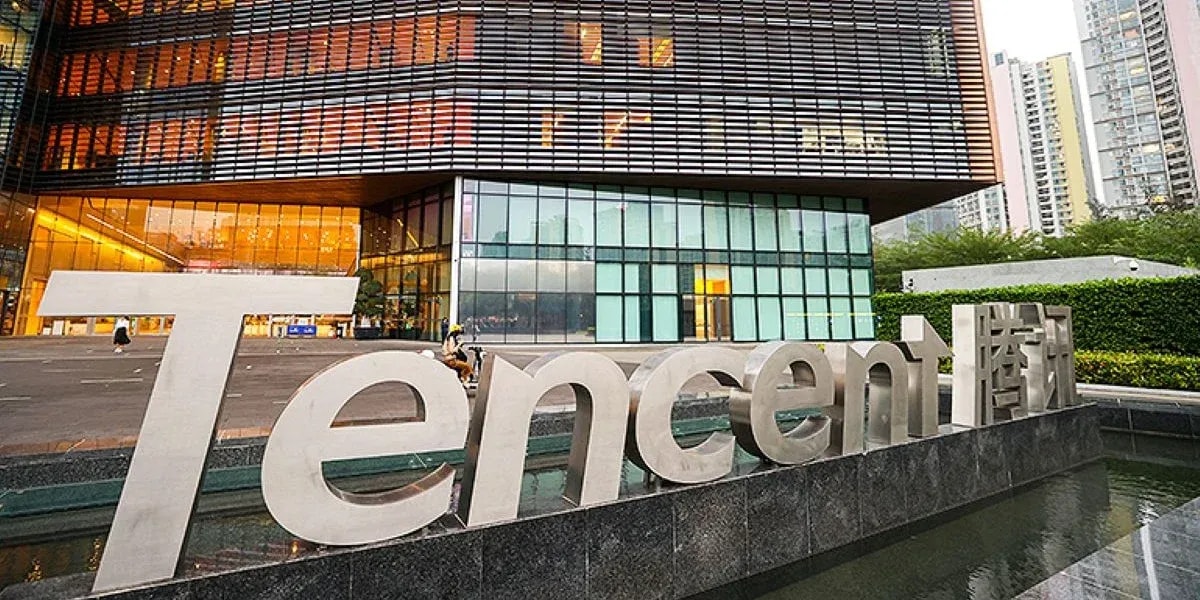
Tencent Holdings was the latest to join the fray after the Shenzhen-based company open-sourced its new Youtu-Agent agentic framework on Tuesday. Developed by Youtu Labs, Tencent's AI research department, the framework was released on Microsoft's open-source code-hosting platform GitHub last week.
The timing of these releases demonstrates the accelerating pace of development in China's AI sector. The move followed ByteDance, the owner of TikTok, which open-sourced its agent development platform, Coze Studio, in July. Meanwhile, Alibaba Group Holding open-sourced its agent framework Qwen-Agent in March.
Agentic frameworks are software platforms that provide the tools and components to build, deploy, and manage AI agents. Agents, such as Chinese start-up Butterfly Effect's Manus and OpenAI's Operator, are capable of autonomously performing complex tasks for users by planning and executing a series of subtasks.
Tencent's Youtu-Agent has demonstrated impressive performance in industry benchmarks. The company said that a Youtu-Agent agent built on the open-source DeepSeek-V3.1 model achieved a score of 71.47 per cent on WebWalkerQA, a web traversal benchmark.
The framework has also shown strong results in other challenging evaluations, with 72.8% pass@1 on the text-only validation subset using DeepSeek-V3-0324 (including models used within tools) on the GAIA benchmark.
Strategic open-source approach
The Chinese companies are pursuing an aggressive open-source strategy to compete with their US counterparts. At a recent industry conference, Tencent's cloud computing unit unveiled a dozen AI agents, which are software designed to autonomously complete tasks on behalf of business users and consumers, the company said on WeChat on Sunday.
The demonstrations included sophisticated applications such as automated marketing workflows, where Tencent showcased how its online marketing agent could automate entire workflows, from profiling target consumers and selecting suitable products to creating marketing materials and evaluating campaign performance.
Global framework competition intensifies
The Chinese advances come as the global AI agent framework landscape becomes increasingly competitive. Major US platforms include Microsoft's AutoGen, which emphasizes autonomous code generation and agent collaboration, and OpenAI's experimental Swarm framework, focused on lightweight multi-agent orchestration.
AutoGen really shines when it comes to autonomous code generation. Agents can self-correct, rewrite, execute, and produce some pretty impressive code, especially when it comes to solving programming challenges. Meanwhile, OpenAI's Swarm focuses on orchestrating specialized agents for modular workflows. It provides tools for building task-specific agents, such as retrieval-augmented generation (RAG), summarization, and data analysis.
Alibaba's expanding AI agent ecosystem
Alibaba has been particularly active in the space, with its Qwen-Agent framework showing strong adoption. Recent developments include the release of advanced models like GUI-Owl and Mobile-Agent-v3 that head-on address these challenges.
GUI-Owl is a native, end-to-end multimodal agent model, built on Qwen2.5-VL and extensively post-trained on large-scale, diverse GUI interaction data.
Read more