Key takeaways
As Hurricane Melissa bore down on Jamaica as a powerful Category 5 storm, social media platforms became clogged with artificially generated videos that threatened to drown out crucial safety warnings.
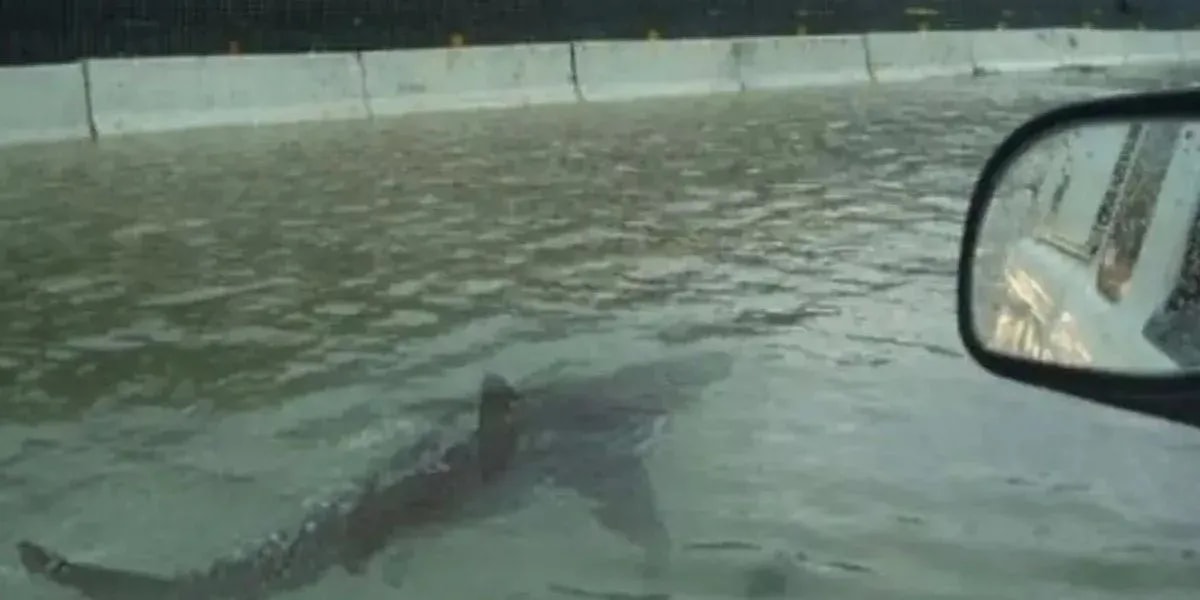
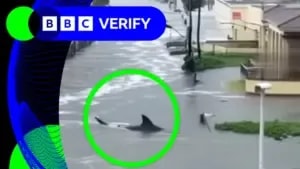
Dozens of fake videos depicting everything from sharks swimming in flooded streets to dramatic newscast fabrications have circulated widely, garnering millions of views and complicating emergency response efforts.
[caption id="attachment_32662" align="aligncenter" width="800"]
Image Source: BBC Verify[/caption]
The fabricated content, much of it bearing the distinctive watermark of OpenAI's Sora video generation tool, ranges from images of severe flooding to scenes portraying human suffering.
Some videos appeared designed to reinforce stereotypes, showing people supposedly partying or minimizing the threat of what forecasters warned could be Jamaica's most violent weather on record.
Agence France-Presse identified dozens of these fake videos as Hurricane Melissa threatened the Caribbean island with violent winds and heavy rainfall.
Senator Dana Morris Dixon, Jamaica's information minister, addressed the proliferation of fake content during a Monday press briefing aimed at providing accurate information about the approaching storm.
"I am in so many WhatsApp groups, and I see all of these videos coming. Many of them are fake," Dixon said, according to multiple news outlets. "And so we urge you to please listen to the official channels."
Among the most viral pieces of misinformation was a TikTok video posted by account @yulian_studios showing a large shark swimming through flooded streets.
The video, clearly labeled as AI-generated by its creator, nonetheless accumulated more than 2 million views within 24 hours of posting.
The footage depicted murky floodwaters engulfing a city street as a voice exclaimed about the ocean rising onto the road.
The ease with which users can now create realistic-looking disaster footage has alarmed experts and officials alike. Hany Farid, co-founder of the cybersecurity company GetReal Security and a professor at the University of California, Berkeley, emphasized the dangers posed by these new technologies.
"The paradox of the information age is that we are becoming less informed as a public as the amount of information increases," Farid told Agence France-Presse.
Farid further explained that the hurricane-related AI content underscores how new text-to-video models have "accelerated the spread of convincing fakes." The applications allow users to generate clips featuring hyper-realistic human likenesses, lowering the barrier to creating sophisticated misinformation.
Amy McGovern, a University of Oklahoma meteorology professor whose research focuses on using AI to improve extreme weather forecasting, warned about the real-world consequences of such content.
"This storm is a huge storm that will likely cause catastrophic damage, and fake content undermines the seriousness of the message from the government to be prepared," McGovern said, according to media reports. "Eventually, such fake content will lead to loss of life and property."
A recurring problem with new technology
The shark hoax phenomenon has plagued hurricane coverage for over a decade.
The original "street shark" image first appeared during Hurricane Irene in 2011, created by combining a photograph of flooding in Puerto Rico with an image of a shark taken off the coast of South Africa. Similar fabrications have resurfaced during virtually every major hurricane since.
However, the advent of accessible AI video generation tools has dramatically increased both the volume and sophistication of fake content.
TikTok has reportedly removed at least two dozen fake Hurricane Melissa videos, though many others continue to circulate on multiple platforms.
Analysis of comment sections reveals that many viewers remain unaware they are consuming AI-generated content, despite visible watermarks.
Under one fabricated video showing an elderly man yelling at the hurricane, a commenter wrote earnestly about praying for the protection of property. Similar expressions of concern flooded the comments of another AI video depicting a woman with babies under a roofless home.
Meta's policies require labels on photorealistic videos created with AI, yet several examples were found circulating on Facebook and Instagram without proper identification.
OpenAI, the company behind Sora, did not respond to requests for comment from media outlets.
Hurricane Melissa made landfall in Jamaica on Tuesday with maximum sustained wind speeds of 185 mph, making it the strongest hurricane to strike the island in its recorded history.
At least seven people across the Caribbean were killed as the storm moved through the region.
The proliferation of fake content during Hurricane Melissa highlights the growing challenge authorities face in communicating vital information during emergencies.
Read more: