Key Takeaways
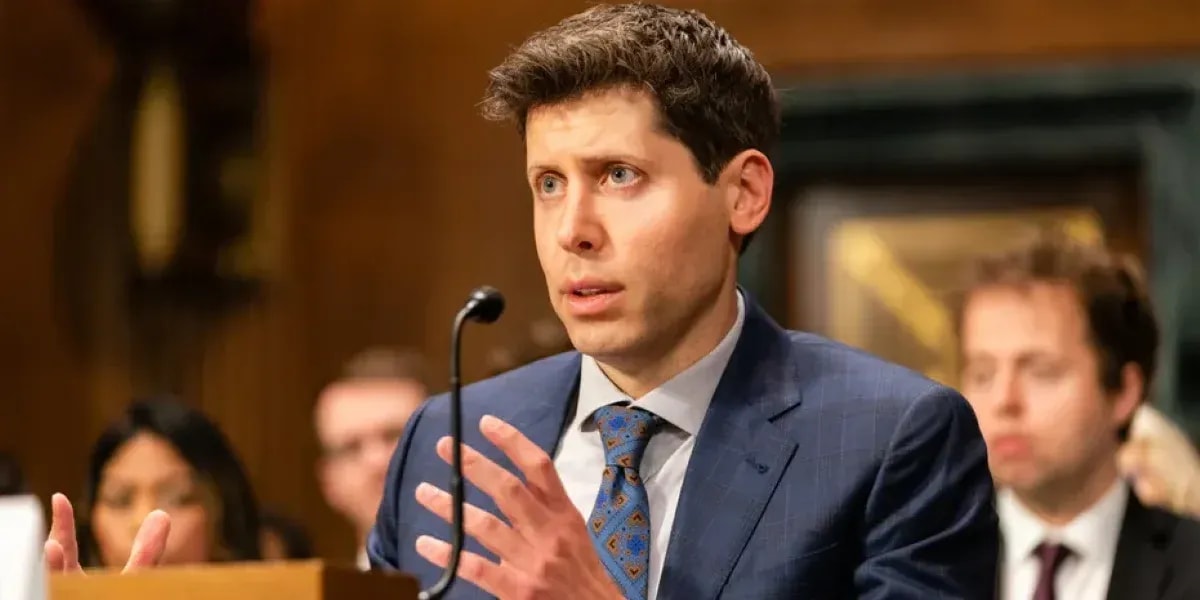
The latest confrontation between OpenAI CEO Sam Altman and billionaire Elon Musk unfolded on social media platform X over the weekend, sparked by Altman's frustration with a canceled Tesla Roadster order.
On October 30, Altman posted screenshots showing his 2018 reservation for the next-generation Tesla Roadster and his recent attempt to cancel it and receive a $50,000 refund, only to find the reservation email address no longer working.
"I really was excited for the car! And I understand delays. But 7.5 years has felt like a long time to wait," Altman wrote in his post.
Musk responded on November 1 with a sharp accusation: "You stole a non-profit." The Tesla CEO later added that the refund issue had been resolved within 24 hours, writing, "And you forgot to mention act 4, where this issue was fixed and you received a refund within 24 hours. But that is in your nature."
Altman quickly countered Musk's nonprofit theft accusation by defending his stewardship of OpenAI and revealing details about Musk's own proposal for the company.
In a series of posts on X, Altman wrote: "I helped turn the thing you left for dead into what should be the largest non-profit ever. You know as well as anyone a structure like what OpenAI has now is required to make that happen."
He then disclosed a previously unreported detail about Musk's plans for the company: "You also wanted Tesla to take OpenAI over, no nonprofit at all."
Altman concluded his response by attempting to de-escalate the situation, writing: "Now you have a great AI company and so do we. Can't we all just move on?"
Deep-rooted tensions over OpenAI's mission
The public exchange represents the latest chapter in an ongoing feud between the two tech leaders who co-founded OpenAI in 2015 alongside Ilya Sutskever and Greg Brockman.
The organization was initially established as a nonprofit with a stated mission to develop artificial general intelligence for the benefit of humanity.
Musk stepped down from OpenAI's board in 2018 amid disagreements over the company's direction. He has since launched his own AI venture, xAI, and filed multiple lawsuits against OpenAI and Altman, alleging they breached the company's founding agreement by shifting toward a for-profit model.
In October 2025, OpenAI completed its transition to a for-profit structure, though the company maintains that its nonprofit division, now called the OpenAI Foundation, retains control and holds equity currently valued at approximately $130 billion.
Musk has characterized this transformation as a betrayal of OpenAI's original mission and has sought legal injunctions to stop the restructuring.
Broader implications for the AI industry
The dispute between Musk and Altman extends beyond personal grievances to fundamental questions about the future direction of artificial intelligence development.
Musk has positioned himself as a defender of OpenAI's original open-source, safety-focused mission, while Altman argues that the current structure is necessary for the company's success and ability to compete.
In February 2025, Musk made an unsolicited $97.4 billion bid to acquire OpenAI's for-profit assets, which Altman swiftly rejected.
In September 2025, xAI filed a lawsuit against OpenAI in California federal court, claiming the company systematically poached xAI employees to acquire proprietary technology and steal trade secrets. OpenAI dismissed the claims as "the latest chapter of Elon Musk's ongoing harassment."
Read more: