As cities and organizations seek smarter ways to manage traffic, enforce regulations, and enhance public safety, automated license plate recognition (ALPR) systems are becoming an integral part of modern infrastructure. These intelligent systems not only streamline vehicle monitoring and data collection but also drive measurable results.
The global ALPR & ANPR Cameras market size was USD 1.8 billion in 2023 and is expected to expand at a compound annual growth rate (CAGR) of 11.50% from 2023 to 2030, driven by organizations discovering measurable benefits across security, revenue generation, and operational efficiency. Understanding the cost of the ALPR system requires evaluating initial investments alongside ongoing operational expenses and the tangible returns these systems deliver through enhanced productivity and reduced manual oversight requirements.
Understanding the automatic license plate recognition system
Automatic license plate recognition technology uses optical character recognition and computer vision to capture, read, and process vehicle license plate information from images or video streams. Moreover, these systems convert license plate images into searchable text data and capture vehicle details, such as make, model, color, and timestamps.
Ready to Build a Custom ALPR Solution?
Get an AI-powered license plate recognition system tailored to your cameras, workflows, and budget.
Explore Free Consultation
Factors affecting ALPR system costs
ALPR system pricing depends on five interconnected components that work together to determine your total investment.
Camera hardware
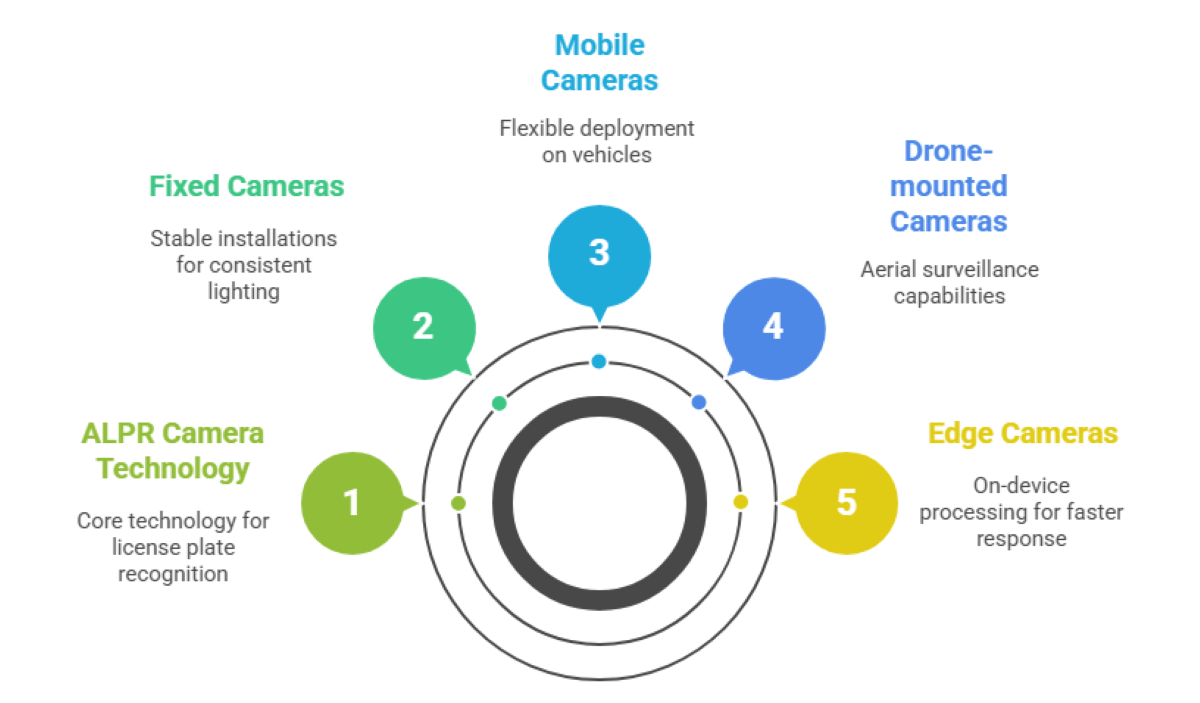
Camera technology forms the foundation of any ALPR deployment, with costs varying based on mounting type, processing capabilities, and environmental requirements.
Fixed cameras
Fixed installations offer the most stable platform for high-accuracy license plate recognition, with minimal maintenance requirements and optimal positioning for consistent lighting conditions. However, the price of fixed cameras ranges between $742 – $2,500, depending on resolution and features.
Mobile cameras
Mobile cameras mount on patrol vehicles, enforcement cars, or portable trailers for flexible deployment. These systems include battery power, wireless connectivity, and weather-resistant casing to withstand vibration and weather exposure. Mobile units enable rapid deployment for temporary enforcement or investigative activities, providing real-time alerts to officers in the field.
Portable/mobile ALPR units are available in $550–$650 range, suitable for parking and access control use cases. While edge-based mobile ALPR cameras (onboard processing) typically cost $1,200–$2,500 per unit, compared to basic models at $350–$800
Drone-mounted cameras
Drone-mounted cameras offer aerial Model Cloud-Based On-Premise Initial Cost Low for large-area surveillance, traffic monitoring, or emergency response situations. These specialized units require lightweight construction, stabilized gimbals, and wireless data transmission while maintaining accuracy during flight operations. Drone systems excel at covering areas inaccessible to ground-based cameras or providing temporary surveillance over events and incidents.
Standard 4G-enabled ALPR cameras cost between $500–$2,500 per unit, depending on features like night vision, range, and cloud connectivity.
Edge cameras
Edge cameras integrate processing power directly into the camera unit for local license plate recognition. However, this eliminates the need for a separate server infrastructure. These units perform on-device optical character recognition, reducing bandwidth requirements and providing faster response times. Edge processing eliminates dependency on constant network connectivity for basic operation.
Edge-powered ALPR cameras with direct power input typically cost between $600 and $800 for entry-level models and between $1,500 and $3,000 for mid-tier options with enhanced features. High-end or law enforcement-grade units can range from $5,000 to over $10,000 when fully installed and configured.
ALPR software licensing
ALPR software licensing represents the intelligence layer that transforms captured images into actionable data through optical character recognition, database management, and integration capabilities.
Particularly choosing between cloud-based and on-premise deployment models impacts both immediate costs and long-term operational expenses while affecting data control, scalability, and maintenance requirements.
Feature | Cloud-Based | On-Premise |
Initial Cost | Low ($10–200/camera/month) | High ($10,000–$50,000 upfront) |
Maintenance | Included in subscription | Additional 20% annually |
Data Control | Vendor-managed | Full organizational control |
Scalability | Instant scaling | Hardware-dependent |
Internet Dependency | Required for operation | Optional after installation |
Updates | Automatic | Manual deployment |
AI & analytics layer
Advanced analytics capabilities transform basic license plate recognition into comprehensive vehicle intelligence through real-time processing, behavioral pattern analysis, and automated decision-making systems.
Real-time alerts
Real-time alerts process vehicle data instantly to trigger notifications. These occur when specific license plates appear on watchlists, unauthorized vehicles enter restricted areas, or predefined conditions are met. Advanced alert systems can distinguish between different threat levels and automatically escalate responses based on severity. These systems require dedicated processing power and robust network connectivity to ensure responses in less than one second for critical security applications.
Plate recognition accuracy
Plate recognition accuracy determines system reliability through advanced optical character recognition algorithms that achieve over 99% accuracy rates under optimal conditions. Modern systems can handle challenging environments, including low-light conditions, adverse weather, and damaged plates, through advancements in machine learning. Processing quality directly correlates with hardware requirements and computational costs for maintaining high accuracy standards.
Behavioral analysis
Behavioral analysis is important, including how long vehicles stay in an area and visit frequency. This helps detect suspicious activities or optimize traffic flow. Advanced systems recognize unusual patterns, such as vehicles circling facilities, extended parking violations, or correlations with criminal activities. These capabilities require substantial data storage and processing power to analyze historical patterns and generate meaningful behavioral insights.
Accuracy rates are important factors:
Modern ALPR systems achieve varying accuracy levels depending on environmental conditions, camera quality, and processing algorithms.
- Optimal lighting yields 95-99% accuracy, whereas challenging conditions result in 85-90% performance levels.
- Advanced AI models maintain higher accuracy across diverse conditions than basic recognition software systems.
- Professional-grade cameras, when properly positioned, deliver consistently superior accuracy compared to standard security cameras.
Infrastructure & storage
A robust infrastructure foundation supports ALPR operations through reliable data storage, processing capacity, and network connectivity, which are essential for continuous system operation.
Cloud storage
Cloud storage offers scalable data management without local infrastructure investment. It provides automatic backup, disaster recovery, and multi-location access. Moreover, cloud solutions typically charge per gigabyte stored monthly, plus additional costs for data retrieval and transfer. Organizations must evaluate long-term storage costs against local storage investments, particularly for high-volume deployments that require extended retention periods.
Edge servers
Edge servers process license plate recognition locally at deployment sites, reducing network bandwidth requirements while providing faster response times for real-time applications. However, edge computing requires an initial hardware investment and local maintenance, but it offers greater data control and reduced ongoing connectivity costs. These systems excel in remote locations or where network reliability poses operational challenges.
Backup systems
Backup systems ensure data protection through redundant storage, automated backup processes, and disaster recovery capabilities that prevent data loss in the event of system failures. Furthermore, detailed backup strategies include local redundancy, off-site storage, and regular testing procedures to guarantee data integrity. Investment in reliable backup infrastructure often prevents costly data recovery efforts and maintains operational continuity.
Bandwidth & data retention considerations:
Network infrastructure requirements and data retention policies have a considerable impact on ongoing operational costs and system performance across various deployment scenarios.
- Single cameras require 2-5 Mbps, while multi-camera installations demand dedicated fiber connections.
- 30-day retention requires minimal storage, while multi-year requirements demand substantial infrastructure investments.
- Automated off-site backups can double network requirements during peak data transfer periods.
Integration & APIs
System integration capabilities determine how effectively ALPR solutions connect with existing infrastructure, databases, and operational workflows across different organizational environments.
Police database connections
Police database connections facilitate real-time cross-referencing with criminal justice information systems, stolen vehicle databases, and warrant information, providing immediate alerts for law enforcement applications.
City dashboard integration
City dashboard integration combines ALPR data with traffic management systems, emergency response platforms, and municipal databases to provide situational awareness for city operations.
ITS platform connectivity links license plate recognition with intelligent transportation systems, including traffic signal control, variable message signs, and automated toll collection, for comprehensive traffic management.
Customization & support
Professional implementation services ensure the successful deployment of ALPR through specialized expertise, training programs, and ongoing technical support that maximize system effectiveness.
Implementation services
Implementation services provide project management, system configuration, and technical deployment support to ensure a successful ALPR installation across diverse operational environments. Implementation support sessions cost $500 per session for complex environments that require specialized assistance or custom integration work.
Onboarding programs
Onboarding programs provide training for system administrators, end-users, and support staff to ensure effective system operation and maintenance capabilities. Additionally, these training programs cover system operation, troubleshooting procedures, and maintenance requirements tailored to the organization's specific needs.
Service level agreements (SLAs)
Service Level Agreements define response times, system availability targets, and support procedures that guarantee consistent system performance and rapid issue resolution. SLA terms typically specify uptime requirements, technical support response times, and escalation procedures for critical issues.
24/7 monitoring requirements:
Continuous system monitoring ensures reliable operation and rapid response to technical issues that could impact the effectiveness of the ALPR system and organizational operations.
- Automated alerts notify support teams immediately when cameras, servers, or network connections experience problems.
- Regular monitoring identifies potential issues before they cause operational disruptions or data loss.
- Continuous monitoring ensures recognition rates remain within acceptable parameters across all system components.
Training cost considerations:
Training programs ensure effective system utilization while minimizing ongoing support requirements and maximizing return on ALPR investment across organizational levels.
- Initial training sessions typically last 1-2 days and cover system operation, basic troubleshooting, and maintenance procedures tailored to different user groups.
- Ongoing training maintains system expertise, which includes annual refresher sessions to ensure staff remain current with system updates.
- Specialized training incurs increased costs, as it encompasses advanced analytics, integration management, and system administration.
Need Help Choosing the Right ALPR Model?
Compare cloud, on-premise, and API-based ALPR options with guidance from AI implementation experts.
Explore Free Consultation
Comparison of ALPR pricing models (2025)
Model Type | Cost Range | Ideal For |
Per-camera subscription | $50–200/month per camera | Small to medium deployments, predictable scaling |
Per-lookup cloud API | $25–500/month for 10K–500K lookups | Variable usage patterns, batch processing |
On-premise perpetual | $10,000–50,000 upfront + 20% annual maintenance | Large enterprises, data sovereignty requirements |
Hardware + software bundle | $20,000–25,000 per camera system | Law enforcement, high-security applications |
SaaS complete solution | $300–1,000/month unlimited cameras | Multi-site operations, rapid deployment needs |
Hidden costs to consider
ALPR deployments often involve additional expenses beyond the initial hardware and software investments, which impact the total cost of ownership.
- API calls and overage fees accumulate quickly when usage exceeds plan limits, especially during high-traffic periods or system testing phases..
- Support upgrades and service tiers offer enhanced technical assistance, faster response times, and dedicated account management beyond basic support packages.
- Integration with legacy infrastructure typically requires custom development work, middleware solutions, and specialized consulting services, which can cost between $10,000 and $100,000, depending on the project's complexity.
- License renewals for software subscriptions, maintenance agreements, and vendor support contracts represent ongoing operational expenses that increase annually..
- Training and certification expenses continue beyond initial implementation as staff turnover occurs and system updates require additional education.
Investing in ALPR: Cost vs. ROI
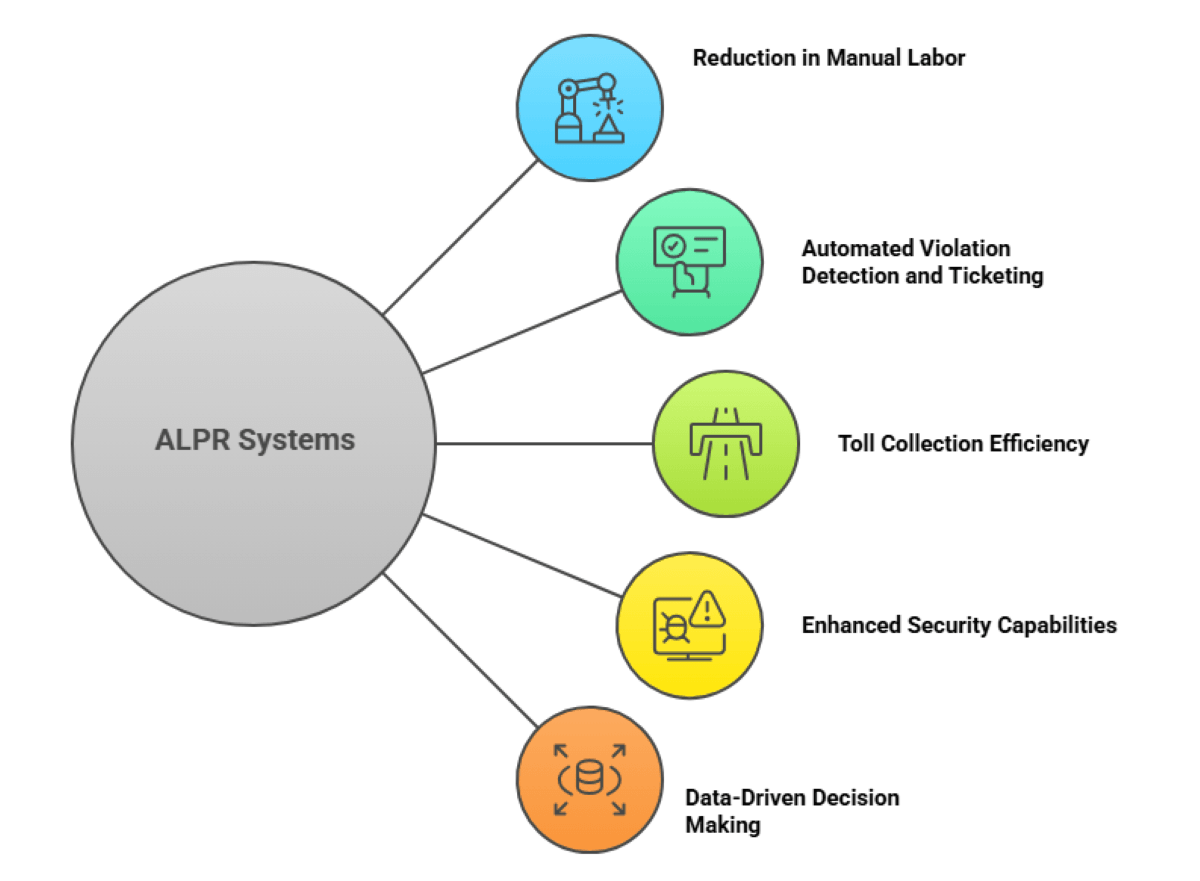
ALPR systems deliver measurable returns through operational efficiency improvements, cost reductions, and revenue generation. These benefits often justify initial investments within 12 to 24 months.
Reduction in manual labor
Reduction in manual labor eliminates the need for security guards, parking attendants, and traffic enforcement officers while providing 24/7 coverage without breaks or sick days. Additionally, automated systems handle thousands of vehicles daily without requiring human intervention, resulting in a 60–80% reduction in staff costs for parking operations.
Automated violation detection and ticketing
Automated violation detection and ticketing generate immediate revenue through precise enforcement of parking regulations, access control violations, and traffic infractions. Parking enforcement ROI typically ranges from 300% to 600% annually through improved violation detection and automated ticketing processes.
Toll collection efficiency
Toll collection efficiency enhances traffic flow while reducing operational costs through the use of automated vehicle identification and electronic payment processing. ALPR-based toll systems process vehicles 5–10 times faster than manual collection while reducing staff requirements by 90%.
Enhanced security capabilities
Enhanced security capabilities prevent theft, vandalism, and unauthorized access through real-time monitoring and automated alert systems that supplement or replace human security personnel. Proactive threat detection helps prevent incidents before they occur, reducing insurance costs and liability exposure.
Data-driven decision making
Data-driven decision-making optimizes operations through detailed analytics on traffic patterns, peak usage times, and customer behavior, which inform strategic planning and resource allocation. Business intelligence derived from ALPR data helps optimize staffing, adjust pricing strategies, and improve facility utilization.
How Folio3 AI can help you with ALPR solutions?
Folio3 delivers customizable ALPR solutions with advanced AI-powered vehicle recognition, seamless integration capabilities, and comprehensive deployment support across diverse sectors.
Moreover, we offer custom ALPR solutions and flexible API integration with competitive pricing starting from budget-friendly options for small deployments to enterprise-scale implementations. Our team works with you to design cost-effective solutions that maximize ROI while meeting your specific operational requirements.
Custom AI-powered recognition technology
Our ALPR solution leverages various deep learning algorithms to detect license plates, extract alphanumeric characters, and capture vehicle metadata, including make, model, and color. Additionally, the system operates effectively in various lighting conditions and supports multiple license plate formats, enabling comprehensive traffic intelligence applications.
Seamless infrastructure integration
Compatible with existing IP cameras, traffic management systems, and access control software through flexible API support for both cloud and on-premise deployments. Our software-only approach eliminates specialized hardware requirements while delivering professional-grade recognition capabilities across CCTV, ANPR cameras, and standard security infrastructure.
Scalable deployment across sectors
Our adaptable solutions serve law enforcement, transportation authorities, parking management, toll collection, fleet operations, and smart city initiatives. From single-camera pilot projects to enterprise-wide implementations, our modular architecture supports growth while maintaining consistent performance across diverse operational environments.
FAQs
What's the average cost of an ALPR system in 2025?
ALPR system costs range from $50 to $ 200 per month per camera for cloud solutions to $20,000 to $ 25,000 for complete hardware systems. However, the total deployment costs depend on camera count, software features, and integration requirements.
Are there any free/open-source ALPR systems?
Yes, OpenALPR offers open-source license plate recognition software, while some vendors provide free trials and basic plans. However, production deployments typically require paid subscriptions for reliability, support, and advanced features.
Is it better to choose cloud-based or on-premise ALPR?
Cloud solutions offer lower upfront costs and easier scaling, while on-premises solutions provide data control and potentially lower long-term costs. The choice depends on budget, data requirements, and organizational IT capabilities.
What factors influence the total ALPR deployment cost?
Key cost factors include camera count and quality, software licensing model, integration complexity, installation requirements, training needs, and ongoing support requirements. Hidden costs, such as API overages and maintenance, significantly impact total ownership expenses.