


Generative AI Development Services That Improve Business Efficiency
Build custom LLMs, RAG pipelines, AI agents, and fine-tuned models around the data and workflows your teams actually use. Our generative AI development services take each build from proof of concept through integration, governance, and deployment.
Folio3 Generative AI Delivery ResultsAccuracy
Generative AI Impact Benchmarks
Published research sources: GitHub developer productivity study, Harvard Business School / BCG field experiment, and NBER customer-support study. Results vary by task, user expertise, model quality, workflow complexity, data readiness, and implementation.
Business Data
Connect generative AI with approved documents, databases, and knowledge sources for more relevant and reliable outputs.
Custom Logic
Apply business rules, prompts, workflows, and controls so AI behaves according to defined requirements.
Human Oversight
Keep important outputs, actions, and decisions subject to human review and approval where needed.
What Is Generative AI Development?
Generative AI development turns foundation models into useful business software. It connects AI models with your data, APIs, rules, and workflows so teams can generate content, answer questions, analyze information, and automate repeatable work with the controls the use case requires.
Book a free consultationOur Generative AI Solutions
Generative AI Development
We develop generative AI solutions that can understand business information, generate useful outputs, automate repetitive work, and support more efficient day-to-day operations.
AI Chatbot Development
We build AI-powered chatbots and virtual assistants that handle user questions, provide contextual responses, support customers and employees, and reduce routine manual communication.
AI Agent Development
We create AI agents that can manage multi-step tasks, interact with connected systems, follow defined workflows, and support business processes with minimal manual involvement.
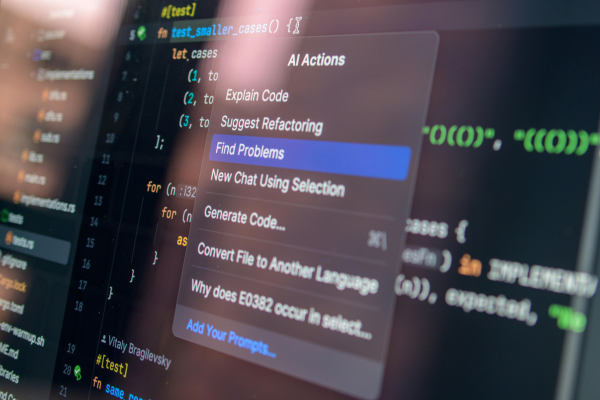
GenAI Support & Optimization
We help maintain and improve existing generative AI solutions by refining performance, updating workflows, improving reliability, and adapting systems as business needs change.

Generative AI Consulting
We help identify practical generative AI opportunities, define the right solution approach, select suitable technologies, and create an implementation plan aligned with business goals.
Why Most Generative AI Pilots Never Reach Production
POCs That Stall Before Deployment
Proofs of concept often demonstrate technical feasibility but fail to address scalability, integration, ownership, security, and production readiness requirements.
Hallucination And Factual Accuracy Risks
Generative AI can produce confident but incorrect outputs, creating reliability issues when systems lack grounding, validation, retrieval controls, and evaluation frameworks.
Weak Integration With Existing Systems
GenAI tools create limited value when disconnected from CRMs, ERPs, databases, APIs, and workflows where teams actually perform daily work.
Compliance And Data Governance Gaps
Projects slow down when data access, privacy, auditability, retention, permissions, and regulatory requirements are not designed into the architecture early.
Foundation Models And Frameworks We Work With
We choose models and frameworks around accuracy, privacy, hosting, latency, scalability, and cost instead of defaulting to whichever technology is getting the most attention.
Foundation Models
- OpenAI GPT models
- Anthropic Claude
- Google Gemini
- Meta Llama
- Mistral
- DeepSeek
Agent and LLM Frameworks
- LangChain
- LangGraph
- CrewAI
- AutoGen
Vector Databases
- Pinecone
- Weaviate
- Qdrant
- pgvector
Deployment Infrastructure
- Docker
- Kubernetes
- vLLM
- AWS
- Microsoft Azure
- Google Cloud
Custom Generative AI vs. Off-the-shelf AI Tools
Custom generative AI gives you greater control over data, integration, accuracy, governance, scalability, and product differentiation than generic off-the-shelf tools.
| Requirement | Custom Generative AI | Off-The-Shelf AI |
|---|---|---|
| Domain accuracy | Grounded in your data, terminology, and workflows | Designed for broad general-purpose usage |
| Data privacy | Deployment and access controls defined around your environment | Data handling depends on vendor policies |
| Integration depth | Connects directly with APIs, databases, CRMs, ERPs, and internal systems | Usually limited to supported integrations |
| Workflow control | Logic, guardrails, approvals, and outputs are configurable | Workflow behavior follows product limitations |
| Cost at scale | Architecture can optimize model routing and inference usage | Pricing remains dependent on vendor plans |
| Product differentiation | Creates proprietary AI capabilities around your product | Competitors can access similar functionality |
| Governance | Monitoring and control mechanisms fit your requirements | Governance options depend on vendor features |
How Our GenAI Development Process Works
Our generative AI development process starts with a business problem worth solving and moves through architecture, validation, integration, and deployment with clear checkpoints for quality, risk, and ROI.
Discovery And Readiness Assessment
We define the business problem, users, workflow, data readiness, risk exposure, and success metrics before committing engineering resources to the build.
Architecture And Data Design
We design the data, retrieval, model, orchestration, security, and integration layers around the reliability and scale the production workflow actually needs.
Proof Of Concept Build
A focused proof of concept validates feasibility, output quality, user value, integration assumptions, and measurable business impact.
Model Development And Fine-tuning
Selected models get configured, fine-tuned, evaluated, and optimized against your data, domain terminology, response requirements, latency targets, and quality benchmarks.
Integration And Deployment
The solution integrates with business systems, security controls get implemented, production workflows are tested, and deployment happens through carefully controlled release stages.
Monitoring And Continuous Optimization
Output quality, usage, cost, retrieval performance, model behavior, and workflow outcomes are continuously monitored to improve production performance over time.
Flexible Engagement Models For GenAI Development
Choose the delivery model that fits where your project stands now, how much support your team needs, and how quickly you want to move toward production.
POC Sprint
Validate one clearly defined GenAI use case through architecture, prototyping, evaluation, and feasibility testing before committing to larger production development.
MVP Build
Build a production-oriented GenAI application with core integrations, model controls, user workflows, security, testing, and deployment infrastructure already included.
Full-scale Rollout
Expand validated AI capabilities across products, teams, workflows, integrations, and infrastructure while adding governance, monitoring, optimization, and production support.
Staff Augmentation
Add experienced AI, ML, LLM, data, and MLOps engineers directly to your team without expanding permanent internal hiring commitments.
Business Impact Of Generative AI
Generative AI creates value when it reduces manual work, accelerates access to knowledge, improves decisions, and strengthens high-volume business workflows.
Knowledge Acceleration
Grounded AI systems turn scattered documents and data into searchable, contextual knowledge employees can access faster through natural language interactions.
Precise Personalization
Context-aware generative AI adapts responses, recommendations, and content to user needs without requiring teams to manually create every individual interaction.
Operational Throughput
Generative AI automates document-heavy and knowledge-intensive work, helping teams complete repetitive tasks faster while maintaining structured human review and control.
Decision Augmentation
AI copilots summarize evidence, compare scenarios, and surface relevant context so specialists can make informed decisions without replacing accountable human judgment.
Cost Efficiency
Model routing, retrieval optimization, observability, and usage controls reduce unnecessary inference spending while keeping performance aligned with actual business requirements.
Risks In Generative AI Adoption And How We Manage Them
Production GenAI introduces accuracy, privacy, bias, compliance, cost, and integration risks that must be controlled through architecture, testing, and monitoring.
| Risk | How We Manage It |
|---|---|
| Hallucination and inaccurate outputs | Ground models with validated RAG sources, retrieval controls, structured outputs, verification rules, and human review where required. |
| Data privacy exposure | Use isolated environments, encrypted data flows, access controls, PII filtering, private hosting, and restricted model access. |
| Bias in generated content | Test representative inputs, establish output criteria, implement guardrails, and continuously evaluate model behavior. |
| Regulatory non-compliance | Add traceable model interactions, policy controls, audit logs, data handling rules, and documented review processes. |
| Cost overruns at scale | Monitor token consumption, route workloads across models, optimize retrieval, cache repeated requests, and measure per-workflow inference cost. |
| Integration failure | Use modular APIs, observable services, controlled system permissions, fallback logic, and staged production releases. |
Responsible AI, Governance And Compliance
Governance is built into the system architecture using access controls, evaluation, audit logging, human review, and documented model lifecycle processes.
Bias And Fairness Testing
Model outputs are evaluated across representative inputs, edge cases, and defined quality criteria to identify inconsistent or potentially biased behavior.
Data Privacy By Design
Access permissions, encryption, filtering, environment isolation, and configurable data retention policies control what data reaches each model.
Human-in-the-loop Review
Human approval is added where model outputs affect sensitive, regulated, financial, clinical, operational, or otherwise high-consequence business decisions.
Audit-ready Documentation
Models, prompts, datasets, evaluation criteria, system changes, access controls, and deployment decisions get documented to support internal governance processes.
Generative AI Solutions By Industry
Generative AI solutions adapt to industry-specific workflows, data structures, risk requirements, and integration needs instead of applying generic templates.
Healthcare
Healthcare GenAI solutions cover documentation, knowledge retrieval, summarization, and administrative workflows with controlled data access and human review.
Finance
Governed GenAI workflows support research, reporting, customer operations, risk analysis, and document processing with traceable outputs and access controls.
Retail
Generative AI automates product content, improves search, supports recommendations, and creates more relevant customer interactions across digital channels.
Manufacturing
GenAI tools support technical documentation, maintenance knowledge, SOP generation, troubleshooting support, and faster access to critical operational information.
Agriculture
Generative AI applies to reporting, operational knowledge, field intelligence, livestock insights, and decision support across complex modern agricultural workflows.
SaaS
Software companies embed copilots, assistants, intelligent search, content generation, and workflow automation directly into their existing digital products.
Generative AI vs. Agentic AI vs. Traditional AI/ML
Traditional AI predicts, generative AI creates, and agentic AI executes. Production systems often combine all three depending on workflow complexity and business requirements.
| Capability | Traditional AI/ML | Generative AI | Agentic AI |
|---|---|---|---|
| Primary Role | Predicts, classifies, and identifies patterns | Creates new content and structured outputs | Plans, decides, and executes multi-step tasks |
| How It Works | Uses trained statistical or predictive models | Uses foundation models to generate responses from learned patterns | Uses models with tools, memory, workflows, and decision logic |
| Best For | Prediction, scoring, classification, and detection | Generation, summarization, search, and assistance | Workflow automation, orchestration, and task execution |
| Level Of Autonomy | Low | Moderate | High with defined controls |
| Tool Usage | Usually limited | Can call tools when integrated | Designed to use APIs, applications, databases, and external tools |
| Memory And Context | Usually task-specific | Uses prompt and retrieval context | Can maintain context and memory across multiple workflow steps |
| Human Oversight | Used for model validation and decisions | Used for sensitive or high-impact outputs | Built into approval, escalation, and exception workflows |
| Typical Examples | Fraud detection, forecasting, churn prediction, recommendation scoring, computer vision | Document summarization, content generation, copilots, knowledge assistants, conversational search | Claims processing, research agents, support automation, approval workflows, task orchestration |
Meet The Team Behind This Build
As a generative AI development company, Folio3 brings specialists across AI architecture, LLM engineering, retrieval pipelines, agent orchestration, integration, and production deployment to each engagement.
Abdul Sami
Head of AI and Machine Learning, Senior Software Architect, Folio3 AIAbdul leads the engineering behind Folio3's generative AI systems, including custom LLM development, retrieval-augmented generation, AI agent orchestration, and production deployment for high-volume language and multimodal workloads. With 20+ years in AI and software architecture, he focuses on production-ready systems rather than pilots that never ship.
Safe Social Networking With Generative AI And ML
Imprint.Live needed a scalable social platform that could increase engagement while controlling inappropriate content and supporting age-specific safety requirements. Folio3 built AI-powered moderation, an Azure OpenAI chatbot, personalized interactions, reporting workflows, and engagement features across the platform.
Digital Sales Platform With AI-Generated Avatar Creation
A US digital services provider needed a unified platform connecting investors, founders, and service providers while introducing personalized generative AI avatars. Folio3 developed the digital sales experience, customized dashboards, wallet integration, marketplace functionality, and prompt-based avatar creation.
Clinical Documentation Automation With Generative AI
A UK healthcare technology provider needed to reduce manual clinical data entry and improve documentation efficiency for healthcare professionals. Folio3 revamped Clinicpad with AI assistance, conversation recording, handwritten-note processing, audio uploads, image interpretation, and PII filtering before LLM transmission.
Why Teams Choose Folio3 For GenAI Development
As a generative AI development company, Folio3 helps teams move beyond demos into systems that connect with real workflows, operate with clear controls, and can be measured in production.
Engineering First
Work starts with architecture, data, integrations, evaluation, deployment requirements, and measurable outcomes instead of presentations about generic AI possibilities.
Production Focus
Design decisions center on real users, production traffic, security, latency, failure handling, observability, and ongoing ownership from the beginning.
Cross-industry Experience
AI teams have delivered solutions across healthcare, finance, agriculture, retail, software, insurance, hospitality, and other operationally complex industries.
Governance By Design
Security, access control, output evaluation, human review, monitoring, and traceability are included in the architecture instead of being added after deployment.
Flexible Engagement
Start with readiness, validate through a focused POC, build an MVP, scale an existing solution, or extend your internal engineering team.
Senior AI Expertise
Work directly with experienced AI engineers who deliver generative AI development solutions across models, data engineering, integrations, MLOps, software architecture, and production deployment.
Frequently Asked Questions
How Is Generative AI Different From Agentic AI?+
Generative AI creates outputs such as text or summaries, while agentic AI uses models, tools, memory, and workflows to execute tasks.
What Does A Generative AI Development Engagement Cost?+
Cost depends on use case complexity, model requirements, integrations, data readiness, deployment environment, security requirements, expected usage, and ongoing support needs.
How Long Does Production-Ready GenAI Development Take?+
A focused POC may take four to six weeks, while integrated production applications commonly require several months depending on scope.
Can Generative AI Integrate With Our Existing CRM Or ERP?+
Yes. GenAI applications connect to CRMs, ERPs, databases, APIs, document repositories, and internal platforms through controlled integration layers.
Which LLMs And Frameworks Do You Support?+
Delivery spans OpenAI, Claude, Gemini, Llama, Mistral, DeepSeek, LangChain, LangGraph, CrewAI, AutoGen, and multiple vector database technologies.
How Do You Prevent Hallucinations In Production Systems?+
Hallucination risk is reduced by combining RAG grounding, validated knowledge sources, retrieval filtering, structured outputs, evaluation frameworks, guardrails, and human review for sensitive workflows.
Do You Offer A GenAI Readiness Assessment Before Development?+
Yes. Use cases, data readiness, architecture requirements, integration complexity, risk, expected ROI, and internal capabilities all get evaluated before recommending development.
Can You Deploy On-Premise Or In A Private Cloud?+
Yes. Architecture can support cloud, private cloud, hybrid, or self-hosted models depending on security, infrastructure, data residency, and performance requirements.
Which Industries Do You Have GenAI Delivery Experience In?+
AI work spans healthcare, finance, insurance, agriculture, retail, SaaS, hospitality, and other industries with complex data and operational workflows.
Take Your Generative AI Project From Pilot To Production
Move beyond disconnected experiments with generative AI development built around production architecture, business integration, governance, measurable outcomes, and long-term maintainability.

