Enterprises are moving beyond chatbots to intelligent AI agents that plan tasks, call tools, and complete work across systems. This guide spotlights the best AI agent companies to consider in 2026, across no-code platforms, developer frameworks, enterprise-grade systems, and vertical specialists, so leaders can align capabilities with workflow complexity, integration needs, and governance requirements. You’ll also find practical vendor selection checklists, feature comparisons, and implementation tips to ensure measurable ROI and safe, scalable deployments.
Strategic Overview
AI agents are software entities that can perceive context, plan actions, call tools and APIs, and execute tasks autonomously across enterprise systems. Agentic AI refers to orchestrated autonomy; multi-step decision-making and workflow execution, often coordinating multiple agents to complete complex business processes end to end.
Adoption is accelerating: a PwC survey summarized by industry analysis found 79% of enterprises report positive results from AI agents, including 66% productivity and 57% efficiency gains, underscoring tangible operational impact. The market is rapidly diversifying, with no-code builders, developer-first frameworks, enterprise platforms, and vertical specialists, all viable depending on workflow complexity, governance, and the depth of integration with systems of record (ERP, CRM, ITSM). Selecting the right archetype and planning for an orchestration/middleware layer are now decisive success factors.
Need the right AI agent strategy for your enterprise?
Talk to our AI experts to identify the best-fit agent architecture, integrations, and rollout plan for your business.
Book a Free Consultation
Folio3 AI Custom Agent Solutions for Industry-Specific Workflows
Folio3 AI builds industry-specific custom AI agents that automate complex, high-stakes workflows, distinct from generic “generative AI” use cases. Our core strengths include custom model development, real-time video analytics, and workflow-centric agentic automation tied to measurable business KPIs. From healthcare and manufacturing to agriculture and transportation, we deliver end-to-end solutions that integrate seamlessly with existing systems and data pipelines.
Our approach:
- Collaborative AI strategy aligned to business objectives and governance.
- Custom AI development and tool integration for high-variance workflows.
- Enterprise AI integration focused on latency, reliability, and ROI tracking.
For enterprises without in-house AI expertise, our teams handle solution design, MLOps, and change management to productionize agents responsibly.
Learn more about Folio3 AI Agent Development and our perspective on AI agents for enterprise.
Lindy offers a no-code multi-agent workflow builder with out-of-the-box templates and a growing ecosystem of integrations (notably Pipedream), enabling business users to stand up automations quickly without heavy engineering lift.
Pricing is transparent: Pro at roughly $49.99/month and Business from $199.99/month, making it attractive for teams optimizing time-to-value.
Pros:
- Fast deployment and intuitive onboarding
- Template-driven workflows and accessible integrations
- Good fit for departmental automation without IT backlogs
Cons:
- Less control for highly specialized, regulated, or latency-critical automations
- Advanced customization typically requires developer involvement or alternative platforms
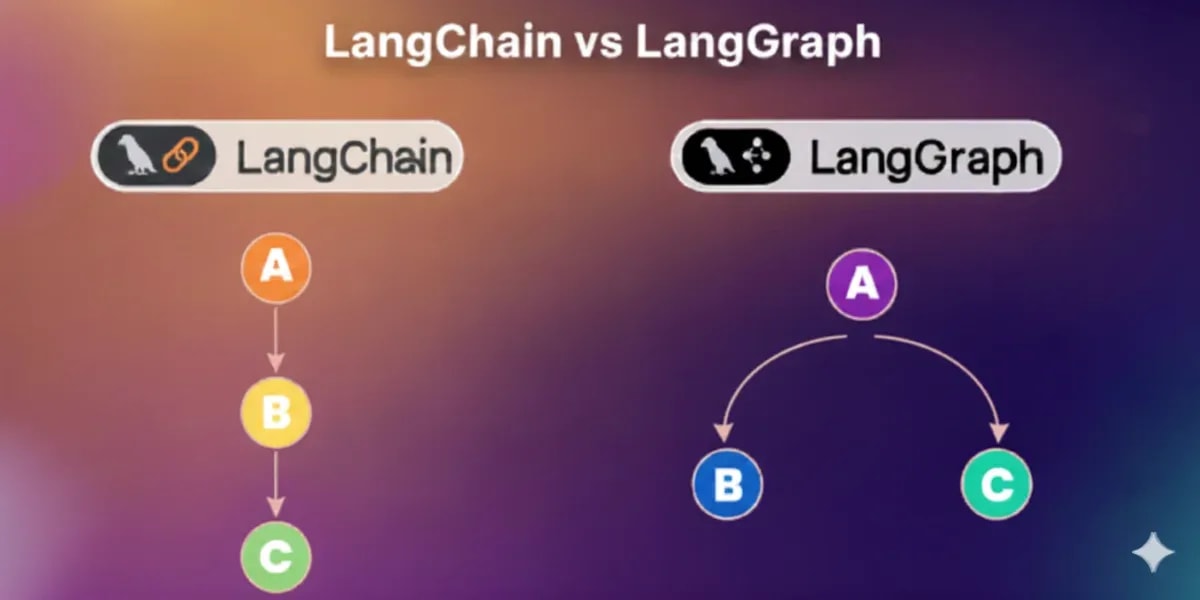
LangChain Developer-First AI Agent Framework
LangChain is an open-source, MIT-licensed developer framework for building agentic AI applications, with hosted options like LangGraph and LangSmith for observability and evaluations. A Plus plan runs about $39/month; there is no native end-user UI, and engineering ownership is required for setup and scaling..
Why choose it:
- Maximum flexibility for custom tool use, memory, and planning
- Excellent for proofs of concept and iterative experimentation
- Vibrant community and ecosystem of extensions
Trade-offs:
- Steeper learning curve for teams new to LLM tooling
- Not designed for non-developers; governance and runtime hardening are on you
If you need a developer AI agent framework with deep control over orchestration, LangChain remains a strong option.
Reka MultiOn Research-Grade Multimodal AI Agents
Multimodal agents process text, images, audio, and even video to reason over richer contexts and perform actions with higher fidelity. Reka focuses on advanced foundation models powering research-grade agentic capabilities, while MultiOn explores cutting-edge, browser- and app-capable agents that can navigate complex tasks. These options are best suited for innovation-driven enterprises piloting frontier scenarios and accepting higher experimental overheads compared to production-first platforms.
CrewAI Devin Code-Centric Multi-Agent Orchestration
For engineering-heavy teams, CrewAI and Devin-style systems exemplify code-centric agent orchestration, coordinating multiple specialized agents to tackle software tasks, IT ops, and process automation at scale. Pricing commonly cited for Devin tiers includes Core ($20/month) and Team ($500/month), with CrewAI emphasizing developer control and rapid prototyping.
Best for:
- Software engineering workflows (issue triage, PR reviews, test generation)
- IT and DevOps automations where tool access and auditability are crucial
- Teams wanting scalable multi-agent coordination patterns
Vocode specializes in open-source voice and phone agents, automating inbound and outbound calls without requiring modern APIs, ideal for modernizing legacy telephony workflows. Voice agents conduct natural language conversations, authenticate callers, and trigger downstream actions.
Ideal use cases:
- Customer service and appointment scheduling
- Billing inquiries and collections calls
- Voice-first support triage with ticket creation and summarization
Harvey Legal AI Agents for Document Review and Drafting
Harvey exemplifies domain-specific legal agents that draft, analyze, and automate document review for in-house teams and law firms, streamlining NDAs, MSAs, and case file analysis with audit-ready outputs. The broader trend is clear: vertical AI agents deliver targeted outcomes and faster time-to-value when tuned to industry workflows and compliance norms.
DataRobot Enterprise Model-to-Action AI Integration
DataRobot helps enterprises convert predictive insights into actions. What many teams call model-to-action integration is connecting ML predictions to automated business workflows under enterprise-grade controls. This alignment is especially valuable in regulated, data-driven contexts where reliability, monitoring, and decision governance are paramount.
IBM Watsonx Enterprise AI Governance and Hybrid Deployment
IBM’s WatsonX stack is notable for model governance, risk management, and hybrid deployment options (cloud + on-premises), addressing requirements common in financial services, healthcare, and the public sector. In 2026, governance and policy tooling are not optional; they are core to sustainable agent operations, a point echoed across leading strategy analyses on agentic AI and enterprise controls.
Vertical specialists like RhinoAgents and Artisan AI focus on measurable business outcomes. Reported case studies include loan review cycles cut from five days to under 24 hours (banking), SaaS firms tripling qualified leads within six months, and logistics fleets saving 15% in fuel with 20% faster deliveries via routing optimization, demonstrating why industry-tuned agents often beat generic platforms on speed to ROI [independent review synthesis]. These solutions embed domain logic, policies, and integrations that enterprises already trust.
How to Choose the Right AI Agent Company for Your Enterprise
Use this 5-step, business-first checklist:
- Workflow fit: Map process complexity and decide between no-code (fast wins) vs developer/pro-code (deep customization).
- Integration scope: Confirm coverage for CRM, ERP, data warehouse, ITSM, and legacy systems; plan for an orchestration/middleware layer (iPaaS, event bus, RPA).
- Governance and data residency: Require auditability, role-based access, model management, and regional data controls.
- KPIs and ROI: Define success metrics (time-to-resolution, cost per ticket, first-pass yield, throughput) and instrumentation upfront.
- Lifecycle support: Ensure vendor commitment to retraining, drift monitoring, and continuous tuning aligned with change control.
Condensed selection frameworks from expert reviews emphasize piloting across varied archetypes, like productized platforms, developer frameworks, enterprise suites, and domain specialists, to de-risk decisions and benchmark outcomes against clear KPIs [see earlier review reference].
Choosing between AI agent platforms and custom development?
Get expert guidance on platform selection, integrations, governance, and ROI so you can move forward with confidence.
Talk to an AI Specialist
Key Features That Differentiate AI Agent Providers
Key differentiators in 2026:
- Planning and reasoning depth for multi-step tasks.
- Tool/API access, function calling, and RPA handoffs.
- Multi-agent orchestration for complex, parallelized workflows.
- Monitoring, guardrails, budget controls, and rate limiting
- Event triggers and workflow retries (self-healing automation).
- Context grounding with memory, vector search, and business rules.
- Policy enforcement, PII controls, and audit trails.
Comparison by archetype:
Capability | No-code platforms | Developer-first frameworks | Enterprise platforms | Vertical solutions |
Setup speed | Fast | Moderate–Slow | Moderate | Fast–Moderate |
Customization | Low–Medium | High | Medium–High | Medium–High (domain-tuned) |
Governance tools | Basic | BYO / modular | Advanced | Domain-specific |
Integrations | Templates/iPaaS | SDKs/APIs | Native + partner ecosystem | Targeted depth in niche systems |
Multi-agent orchestration | Basic | Advanced | Advanced | Targeted to use cases |
Best fit | Departmental wins | R&D and bespoke apps | Cross-enterprise programs | High-ROI industry workflows |
Multi-agent orchestration coordinates multiple autonomous agents, each with defined roles, tools, and policies, to collaboratively execute complex workflows (e.g., a planner, a retriever, and an executor handling a customer refund across CRM, billing, and logistics).
Practical Tips for Successful AI Agent Implementation
- Start small: Automate a low-risk, repetitive process with clear metrics; scale gradually as confidence and data quality improve.
- Design AI-first: Revisit process steps to leverage agent autonomy instead of merely replicating manual workflows.
- Align stakeholders early: Involve IT, process owners, security, and compliance to preempt integration or policy bottlenecks.
- Instrument everything: Capture latency, accuracy, exception rates, and business KPIs from day one.
- Plan for operations: Treat agents like services, like version them, monitor drift, and maintain runbooks.
Best Practices for AI Agent Governance and Security
- Establish human-in-the-loop checkpoints for high-impact actions.
- Enforce role-based access, data minimization, and least privilege.
- Maintain immutable audit logs, anomaly detection, and incident playbooks.
- Codify AI governance: policies for model lineage, testing, and responsible deprecation.
- Pilot in low-risk domains; scale controls with adoption.
AI governance means implementing the processes, tools, and policies that make AI activity traceable, safe, and compliant, linking models, data, actions, and outcomes to accountable owners.
Frequently asked questions
What are the core benefits of AI agents in enterprise workflows?
AI agents accelerate process execution, boost productivity, and automate multi-step workflows that typically require manual coordination across systems.
How do no-code and developer frameworks compare for business use?
No-code platforms prioritize speed and accessibility for non-technical users, while developer frameworks offer maximum customization and integration depth but require engineering resources.
What governance measures ensure trustworthy AI agent operation?
Robust governance includes audit trails, role-based permissions, human oversight, and automated monitoring to enforce policies and manage risk.
How can enterprises measure ROI from AI agent deployments?
Track process cycle time, cost per transaction, error/exception rates, throughput, and downstream business impact tied to automation goals.
What initial steps should organizations take to adopt AI agents effectively?
Begin with a contained, repetitive process and clear success criteria, integrate with systems of record, and expand iteratively with ongoing stakeholder alignment.