

Artificial Intelligence
 AI & DataAgentic AI, computer vision, generative AI
 App DevelopmentWeb, mobile, and custom software
 SecurityEngineering, warehousing, analytics
 AgtechFarm, livestock, and crop software
 FoodtechTraceability and food supply chain
 Digital HealthEHR, telehealth, and interoperability
 NetSuiteERP implementation and support
 Microsoft DynamicsDynamics 365 and Business Central
 SalesforceCRM consulting and integration
 EcommerceB2B ecommerce, ERP integrations and migrationsAI & DataAgentic AI, computer vision, generative AIApp DevelopmentWeb, mobile, and custom softwareSecurityEngineering, warehousing, analyticsAgtechFarm, livestock, and crop softwareFoodtechTraceability and food supply chainDigital HealthEHR, telehealth, and interoperabilityNetSuiteERP implementation and supportMicrosoft DynamicsDynamics 365 and Business CentralSalesforceCRM consulting and integrationEcommerceB2B ecommerce, ERP integrations and migrations
Meet John, who arrived at the airport to drop off his best friend Alex for a two-year study abroad program. What should have been a meaningful goodbye turned into a nightmare when John got stuck in the parking queue for 45 minutes. With Alex's departure time approaching, John had no choice but to drop him off at the curb and rush away without a proper farewell.
John's story reflects a daily reality for thousands of travelers facing endless parking searches, long queues, and outdated payment systems. These frustrations don't just stress passengers; they cost airports millions in lost revenue when customers drive away. Smart airport parking with AI is transforming this experience. According to Airport Council International's 2019 reports, parking revenue accounts for approximately 20.1% of total airport ancillary revenue. At Folio3 AI, we help airports implement intelligent solutions that turn parking frustrations into competitive advantages.

Airport parking represents a significant revenue stream that directly impacts facility profitability and passenger satisfaction levels. Additionally, understanding these economic fundamentals helps airports make informed investment decisions about AI technology adoption.
Airport parking generates substantial income when managed effectively, often representing millions in annual revenue for major facilities. Manual systems typically capture only 65-70% of potential revenue due to pricing inefficiencies, underutilized spaces, and operational gaps that smart systems eliminate through real-time optimization and data-driven decision making. Moreover, automated systems ensure maximum capture rates by eliminating human error and providing comprehensive tracking capabilities.
Global passenger air travel continues expanding, with ACI World projections showing passenger traffic will reach 19.5 billion by 2042, representing a twofold increase compared to 2024 levels. This growth creates unprecedented demand for parking spaces, making efficient capacity management essential for meeting traveler needs. Consequently, airports must implement advanced systems to maximize revenue opportunities through improved utilization rates and strategic pricing approaches that adapt to changing market conditions.
Airports with superior parking experiences attract more passengers and command premium pricing structures. AI-powered systems provide real-time optimization capabilities that manual operations cannot match, creating sustainable competitive positioning in crowded aviation markets. Therefore, these systems improve customer loyalty and satisfaction ratings while generating measurable competitive advantages.
Smart parking implementations typically achieve ROI within 6 months to 2 years, according to industry reports. These returns come from increased revenue per space, reduced operational costs, improved customer satisfaction, and enhanced capacity utilization that maximizes facility potential while minimizing operational overhead. Additionally, many systems pay for themselves through enforcement improvements alone.
Smart systems reduce staffing requirements, maintenance costs, and infrastructure wear through predictive analytics and automated processes. These savings often cover implementation costs while improving service quality and reliability for passengers. As a result, airports achieve sustainable long-term operational improvements that benefit both operators and travelers.
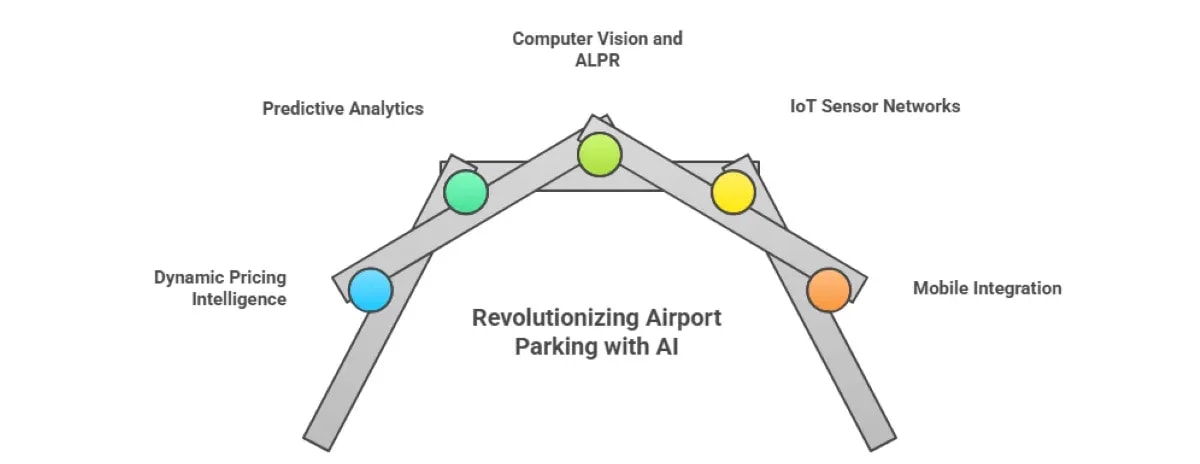
Modern AI parking systems combine multiple advanced technologies to create seamless, efficient operations that benefit both airports and passengers through automation and intelligence.
AI algorithms analyze demand patterns, flight schedules, local events, and historical data to adjust parking rates in real-time. This ensures optimal pricing that maximizes revenue during peak periods while attracting customers during slower times. Consequently, these systems create balanced utilization that benefits both operators and passengers through fair, market-responsive pricing.
Machine learning models process years of historical data alongside current conditions to predict parking demand hours or days in advance. This enables proactive resource allocation, staffing optimization, and capacity planning that prevent bottlenecks while ensuring adequate availability. Furthermore, these systems support strategic decision-making for long-term capacity planning and operational improvements.
Automatic License Plate Recognition cameras identify vehicles instantly, eliminating tickets and manual processes while maintaining high accuracy rates. ALPR methodologies achieve more than 95% efficacy while integrating seamlessly with payment platforms and security monitoring for effective vehicle management. These systems also provide valuable data for security monitoring and law enforcement cooperation when needed.
Connected sensors throughout parking facilities provide real-time occupancy data, traffic flow monitoring, and environmental conditions information. This network enables immediate response to changing conditions and provides valuable data for ongoing optimization efforts. Moreover, sensor networks support predictive maintenance and energy management systems that reduce operational costs.
AI-powered mobile applications allow passengers to reserve spaces, navigate to available spots, and complete payments automatically. These apps learn user preferences and provide personalized recommendations that improve satisfaction and encourage repeat usage. Additionally, mobile integration creates additional revenue opportunities through enhanced customer engagement and targeted service offerings.
AI parking systems deliver measurable improvements across multiple operational areas, creating value for airports, passengers, and staff through enhanced efficiency and service quality.
Automated processes reduce parking search time by up to 45%, eliminate queue delays, and optimize traffic flow throughout facilities. Staff can focus on customer service rather than manual tasks, improving overall operational effectiveness while reducing labor costs. Additionally, these improvements increase employee satisfaction through more meaningful work assignments and reduced repetitive tasks.
Dynamic pricing typically increases parking revenue by 25-35% while smart space allocation ensures 95%+ occupancy during peak periods. Integration with retail and service offerings creates additional revenue opportunities through extended passenger dwell time. Therefore, airports can maximize both parking and concession income streams effectively while improving overall profitability.
Streamlined parking processes save passengers 15-30 minutes per visit, reducing travel stress and creating positive airport associations. Guaranteed space availability and contactless transactions meet modern traveler expectations for convenience and efficiency. As a result, these improvements build customer loyalty and encourage repeat visits through superior service delivery.
AI systems provide continuous monitoring, automated threat detection, and complete audit trails for all transactions and activities. Data protection features ensure compliance with privacy regulations while maintaining high security standards throughout operations. Furthermore, these systems create safe environments for both passengers and their vehicles while supporting law enforcement when necessary.
Optimized traffic flow and reduced search time, resulting in significantly lower vehicle emissions within airport boundaries. Smart routing and capacity management contribute to sustainability goals while supporting carbon reduction initiatives that many airports prioritize. Consequently, these systems create measurable environmental benefits alongside operational improvements.
Leading airports worldwide demonstrate the practical benefits and measurable results achievable through AI parking implementations across various facility sizes and passenger volumes.
San Antonio International Airport became the first US facility to deploy AI parking technology through a partnership with Metropolis. The system creates vehicle fingerprints in 40 seconds, enables seamless luggage check-in within parking areas, and achieves 95% passenger satisfaction rates. Additionally, the implementation reduced operational costs and improved traffic flow while maintaining high security standards.

Successful AI parking deployment requires careful planning, systematic execution, and ongoing optimization to achieve maximum benefits while minimizing disruption to existing operations.
Infrastructure audits identify existing capabilities, integration requirements, and upgrade needs for successful implementation. Stakeholder alignment ensures organization-wide support while financial modeling establishes realistic expectations and success metrics. Therefore, comprehensive planning creates solid foundations for project success and long-term operational improvements.
ALPR camera installation, sensor network deployment, and AI platform configuration require coordinated execution across multiple facility areas. Mobile app development and payment system integration must align with passenger expectations and operational workflows. Furthermore, these integrations ensure seamless user experiences that encourage adoption and satisfaction.
Education programs prepare staff for new systems while change management processes ensure smooth transitions across all operational areas. Training covers technical operations, customer service protocols, and troubleshooting procedures that maintain service quality during implementation. Additionally, these programs build employee confidence and competence while reducing resistance to change.
Real-time analytics dashboards track key performance indicators, identify optimization opportunities, and measure progress against established operational goals. Continuous monitoring enables rapid adjustments and ensures systems deliver expected benefits consistently. Moreover, these systems provide data for ongoing improvement and strategic decision-making.
Ongoing analysis reveals improvement opportunities while expansion planning prepares for future growth and changing passenger needs. Integration enhancement connects parking systems with broader airport operations, creating synergies that amplify benefits. Consequently, these approaches maximize return on technology investments while supporting long-term operational excellence.
Understanding common obstacles and proven solutions helps airports navigate AI parking deployment successfully while minimizing risks and delays throughout the implementation process.
Legacy system compatibility requires careful planning and often custom integration solutions to ensure seamless operation. Data migration processes must preserve historical information while enabling new capabilities that enhance rather than replace existing operational knowledge. Therefore, integration planning maintains continuity while adding new functionality and operational capabilities.
Investment requirements vary significantly based on facility size and desired features across different airport environments. Detailed cost-benefit analysis helps airports make informed decisions while performance monitoring ensures systems deliver projected returns on investment. Additionally, flexible financing options and phased implementations help manage capital requirements effectively.
Data privacy requirements, security standards, and airport authority approvals create regulatory environments that require careful navigation. Working with experienced implementation partners helps navigate these requirements while maintaining compliance throughout deployment and operation. Furthermore, proper compliance ensures legal and operational safety throughout system lifecycles.
Staff adaptation and passenger education require structured approaches that address concerns and highlight benefits effectively. Successful implementations include communication strategies that build support and encourage adoption across all stakeholder groups. Moreover, these strategies create positive change experiences that enhance rather than disrupt operations.
Choosing the right technology partner affects long-term success significantly across all operational areas. Evaluation criteria should include industry experience, technical capabilities, support services, and proven track records with similar airport implementations. Therefore, careful vendor selection ensures partnerships that deliver sustained value and reliable performance.
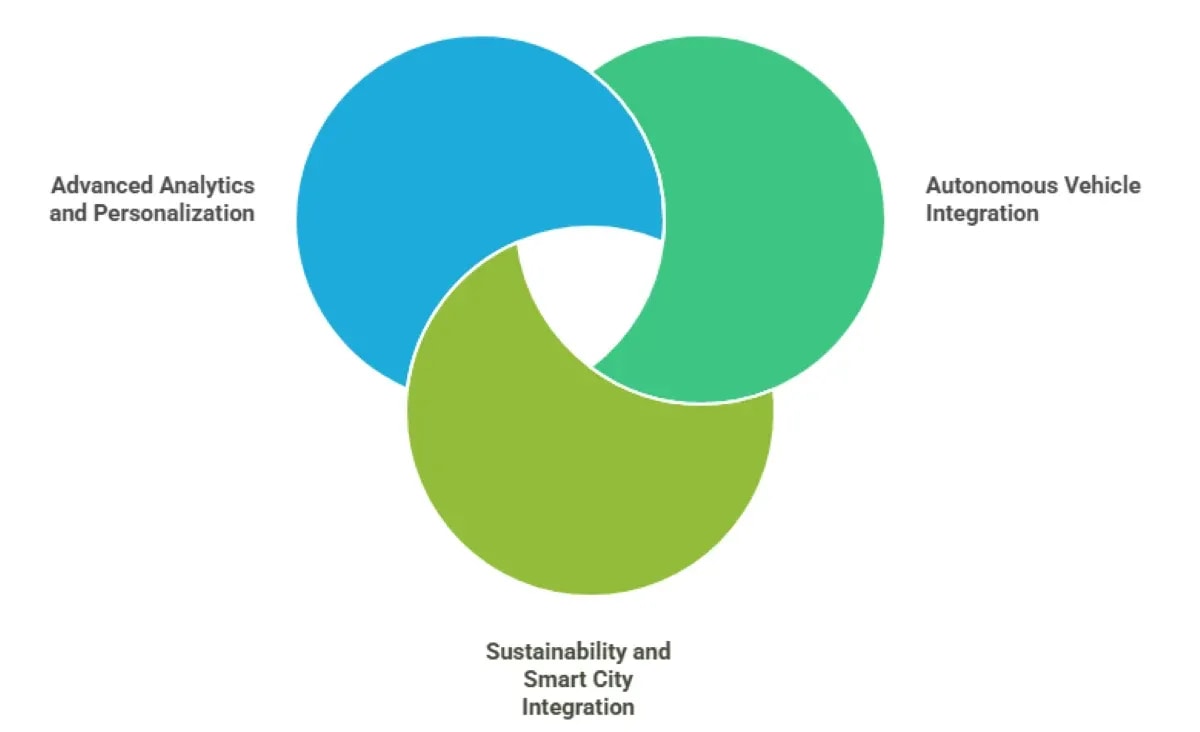
Emerging technologies and changing passenger expectations will continue shaping AI parking solutions in the coming years, creating new opportunities for efficiency and service improvements.
Self-parking technology will enable vehicles to navigate parking facilities independently while AI coordinates traffic flow and space allocation automatically. Automated valet services using robotic systems will offer premium experiences for passengers willing to pay for convenience. Additionally, these services create new revenue streams and operational efficiencies.
EV charging optimization will use AI to manage electrical grid demands while ensuring adequate charging capacity for growing electric vehicle adoption. Carbon footprint monitoring will provide real-time environmental impact data that supports sustainability reporting and improvement initiatives. Therefore, these systems help airports meet environmental goals effectively while supporting clean transportation initiatives.
Passenger journey intelligence will track complete travel experiences from parking arrival to departure gate, identifying optimization opportunities throughout airport visits. Predictive maintenance will use AI to anticipate equipment needs and prevent service disruptions. Moreover, these capabilities ensure reliable operations and minimize unexpected downtime or service interruptions.
Folio3 AI combines deep technical expertise with industry knowledge to deliver airport parking solutions that meet specific operational requirements and passenger expectations effectively.
Our intelligent monitoring systems instantly track and display real-time availability of parking spots to drivers, reducing search time and enhancing overall user convenience. We enable airports to eliminate parking frustrations while maximizing space utilization through advanced occupancy detection technology. Furthermore, real-time data helps optimize traffic flow and reduce congestion throughout airport facilities.
We utilize AI-based LPR technology for seamless vehicle entry and exit, ensuring secure access control and automated billing processes. Our ALPR systems achieve over 95% accuracy while eliminating physical tickets and manual processes. Additionally, this technology provides valuable security data and integrates seamlessly with payment platforms for enhanced operational efficiency.
Our AI algorithms leverage demand-based pricing strategies to adjust rates dynamically, ensuring optimal space utilization and maximizing revenue potential. We help airports implement intelligent pricing models that balance profitability with passenger satisfaction. Moreover, these systems adapt to real-time conditions and seasonal variations to optimize revenue streams continuously.
Our advanced analytics platforms analyze parking trends and predict peak demand periods accurately, helping airports anticipate capacity needs effectively. We enable efficient resource allocation and reduced operational costs through data-driven decision-making. Furthermore, our AI solutions optimize facility performance while improving passenger satisfaction and operational efficiency.
We develop intelligent reservation systems that allow passengers to secure parking spaces in advance while maintaining flexibility. Our AI algorithms recommend optimal spots based on individual travel patterns, preferences, and historical behavior. Therefore, these systems provide personalized experiences that increase customer satisfaction and loyalty while reducing no-show rates.

AI-powered airport parking uses artificial intelligence, machine learning, and computer vision technologies to automate parking operations, optimize space utilization, and enhance passenger experiences. These systems include features like automatic license plate recognition, dynamic pricing, and predictive analytics that create seamless parking experiences.
AI improves efficiency by reducing parking search time by up to 45%, automating entry and exit processes, optimizing traffic flow, and enabling predictive maintenance. These improvements reduce operational costs while increasing facility capacity and passenger satisfaction through streamlined operations and better resource utilization.
Automatic License Plate Recognition eliminates physical tickets, enables contactless entry and exit, automates payment processing, and provides security monitoring capabilities. ALPR systems achieve over 95% accuracy while integrating seamlessly with mobile apps and payment platforms for enhanced operational efficiency.
Yes, AI parking systems typically increase revenue by 25-35% through dynamic pricing, improved space utilization, and enhanced passenger experiences that encourage longer stays. These improvements create additional spending opportunities within airport facilities while maximizing parking revenue potential through intelligent pricing strategies.
AI parking apps allow advance reservations, provide real-time navigation to available spaces, enable contactless payments, and offer personalized recommendations based on preferences. These features save passengers 15-30 minutes per visit while reducing travel stress significantly and creating positive airport associations.
Key benefits include increased revenue through dynamic pricing, improved operational efficiency, enhanced passenger satisfaction, reduced environmental impact, better security monitoring, and valuable data insights. These advantages create sustainable competitive positioning while improving both operational performance and customer experiences.
Predictive analytics analyzes historical data, flight schedules, and local events to forecast demand patterns accurately, enabling proactive resource allocation and optimal pricing strategies. This capability helps prevent bottlenecks while maximizing revenue opportunities through intelligent capacity planning and dynamic space management.
Common challenges include legacy system integration, staff training requirements, regulatory compliance, initial investment costs, and change management across organizations. Working with experienced implementation partners helps address these challenges effectively while ensuring successful deployment and long-term operational success.
Yes, AI systems can optimize EV charging networks by managing electrical grid demands, predicting charging needs, and coordinating with parking space allocation effectively. This integration ensures adequate charging capacity for growing electric vehicle adoption while supporting sustainability goals and operational efficiency.
Folio3 AI offers proven expertise in AI technologies, a deep understanding of airport operations, customizable solutions, and extensive support services. Our successful track records with similar implementations ensure project success and ongoing optimization while delivering measurable results that meet specific operational requirements.