87%
Reduction in Manual Surveillance Workload
The construction video analytics platform reduced the amount of footage employees needed to monitor and review manually by 87%.
 AI & DataAgentic AI, computer vision, generative AI
 App DevelopmentWeb, mobile, and custom software
 SecurityEngineering, warehousing, analytics
 AgtechFarm, livestock, and crop software
 FoodtechTraceability and food supply chain
 Digital HealthEHR, telehealth, and interoperability
 NetSuiteERP implementation and support
 Microsoft DynamicsDynamics 365 and Business Central
 SalesforceCRM consulting and integration
 EcommerceB2B ecommerce, ERP integrations and migrationsAI & DataAgentic AI, computer vision, generative AIApp DevelopmentWeb, mobile, and custom softwareSecurityEngineering, warehousing, analyticsAgtechFarm, livestock, and crop softwareFoodtechTraceability and food supply chainDigital HealthEHR, telehealth, and interoperabilityNetSuiteERP implementation and supportMicrosoft DynamicsDynamics 365 and Business CentralSalesforceCRM consulting and integrationEcommerceB2B ecommerce, ERP integrations and migrations
See how Folio3 AI developed a custom construction video analytics platform that reduced manual surveillance workload by 87% and achieved 90% accuracy in targeted safety and intrusion detection.
The client is a mid-sized construction management company headquartered in the United States. It manages infrastructure, commercial, modular construction, civil infrastructure, large residential developments, and public-private partnership projects.
Its project managers, site engineers, safety personnel, and quality inspectors oversee more than 20 concurrent construction sites across the United States. As the company expanded its project portfolio, monitoring site activity, construction progress, safety compliance, quality, and documentation became increasingly difficult to manage through traditional processes.
The client wanted to introduce intelligent visual monitoring across its construction operations without replacing its existing camera infrastructure.
The client already had cameras installed across its construction sites, but the footage required employees to watch live feeds or manually search recorded video.
Traditional monitoring methods were resource-intensive, reactive, and unable to provide structured operational insights. Project teams could record what happened on a site, but they could not automatically identify important activities, compare progress, detect potential safety events, or organize relevant footage.
Folio3 AI designed and deployed a modular construction video analytics platform that integrated with the client’s existing cameras.
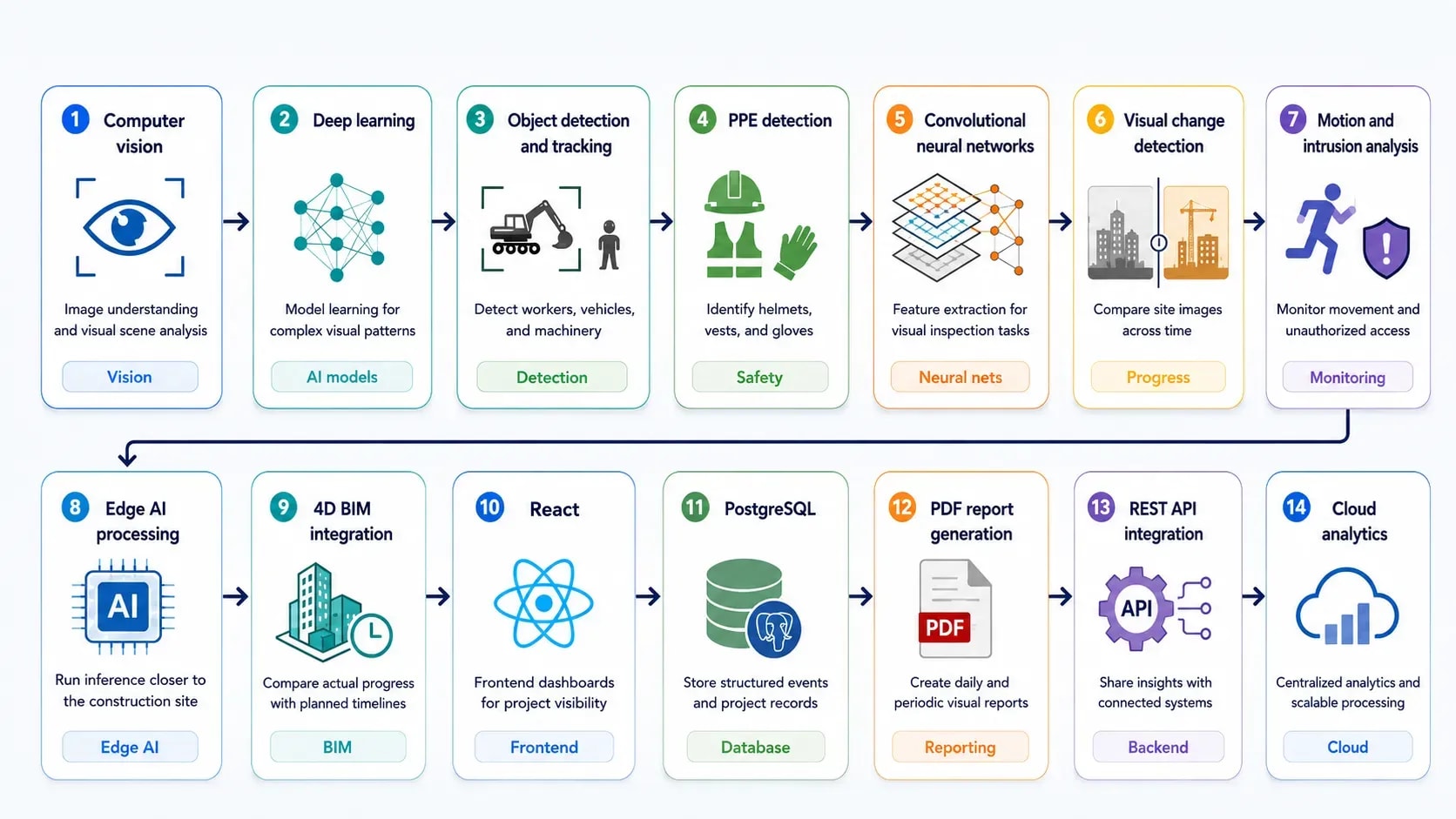
The solution combined computer vision, deep learning, edge processing, cloud analytics, object detection, visual change detection, and automated reporting to transform unstructured construction footage into actionable site intelligence.
The client faced four major operational challenges across its construction sites.
The client’s static CCTV systems recorded site activity but could not understand or classify what was happening in the footage. Employees had to monitor cameras manually to identify workers, vehicles, equipment, unauthorized access, and potential safety events.
Project managers lacked a centralized way to compare planned construction activity with actual site conditions. Visual records were distributed across different cameras, locations, and dates.
Manual quality inspections did not always capture small defects, surface inconsistencies, misalignments, or non-compliant structural elements. Visual records were also difficult to compare over time because the client lacked a version-controlled repository for inspection footage and images.
Project teams manually collected, tagged, stored, and retrieved images from construction footage. Preparing daily progress reports or finding visual evidence for an audit could require employees to search through large amounts of recorded video.
Folio3 AI developed an AI-powered construction site surveillance platform around the client’s camera environment, construction workflows, reporting requirements, and operational priorities.
The platform analyzed live and recorded footage, detected project-specific objects and events, and converted the findings into searchable visual records, progress updates, alerts, defect logs, and automated reports.
Instead of continuously reviewing full video feeds, project teams could focus on events and footage identified by the system as relevant.
The construction video analytics workflow included six primary stages.
The platform received live or recorded footage from the client’s existing construction-site cameras. Video inputs were standardized before being passed through the computer vision pipeline.
Relevant video frames were extracted at defined intervals or when predefined conditions were met. Frames were prepared for analysis through processes such as resizing, normalization, and quality filtering.
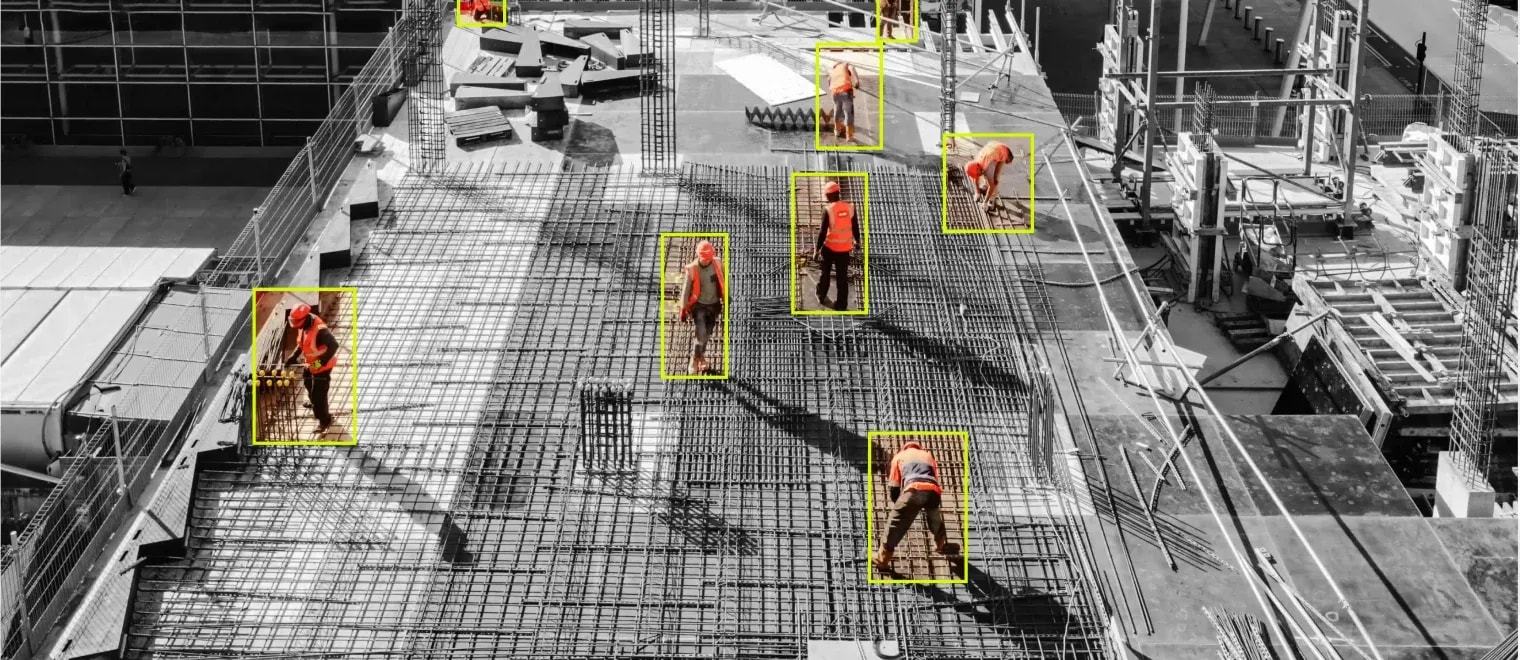
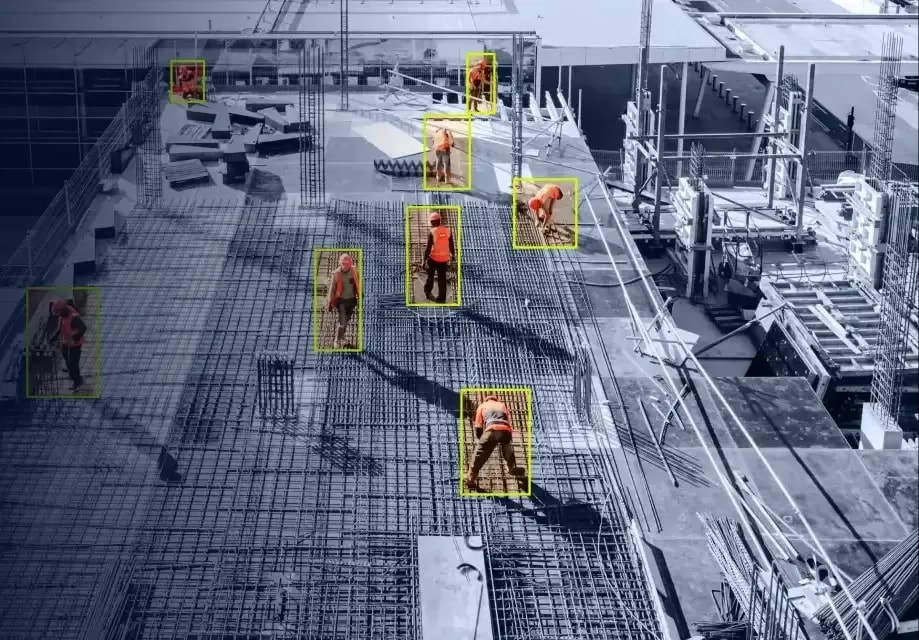
Computer vision models analyzed the prepared frames to identify project-specific objects and conditions. These included workers, vehicles, machinery, personal protective equipment, restricted-area activity, visible defects, and changes in site conditions.
The system evaluated object presence, movement, location, duration, and visual changes. Project-specific business rules determined whether an observation represented a safety event, progress update, quality issue, or reportable anomaly.
Detected events were stored with associated images, timestamps, classifications, locations, and project metadata. This converted unstructured construction footage into information that could be searched, compared, and reported.
Processed information was presented through dashboards, event records, visual timelines, PDF reports, and connected business systems. Authorized employees reviewed the detected events and used them to support operational, safety, quality, and project management decisions.
The construction video analytics platform reduced the amount of footage employees needed to monitor and review manually by 87%.
The system achieved 90% accuracy for targeted safety and intrusion detection requirements evaluated within the client’s environment.
Real-time progress visibility helped project managers identify delays and resource bottlenecks earlier.