Standard Operating Procedure AI Agent Services for Process Automation
Streamline SOP creation, execution, and compliance with AI agents that guide workflows, monitor tasks, reduce errors, and keep teams aligned.
Written SOPs assume every person reads them the same way, every time. That assumption fails at scale, across shifts, departments, and geographies, and the failures only surface during audits or incidents.

Static SOPs break when teams interpret steps differently across shifts, departments, locations, and high-pressure operational environments.

Employees may make different judgment calls on the same SOP, creating inconsistent execution and avoidable operational errors.

Outdated SOP versions keep circulating across drives, binders, and desktops, causing teams to follow the wrong procedure.

Procedures may be followed on one shift and skipped on another, creating inconsistent execution across teams.

The agent reads your procedure documents, PDFs, Word files, Confluence pages, and SharePoint entries, extracts the logical step sequence, and structures it into an executable format that can run on layers.

The agent runs each procedural step in the defined sequence, triggers the right system action at each step, waits for confirmation before advancing, and flags any step that cannot be completed as documented.
The agent compares actual execution records against the documented procedure after each run, identifies steps that were skipped, delayed, or deviated from, and surfaces gaps to the compliance team in real time.

When a procedure is revised, the agent pulls the new approved version, retires the old one from active execution queues, and notifies affected teams, with no manual distribution or version reconciliation required.
Steps that fall outside the procedure's defined scope get routed to a human with a full execution context attached, including what step triggered the exception, what the procedure says, and what prior attempts returned.

For SOPs that span multiple teams, handoffs between operations, finance, and compliance, for example, the agent coordinates execution across departments and tracks completion at each ownership boundary.
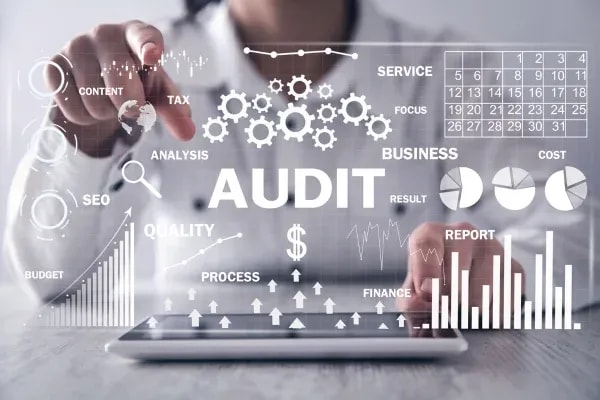
After every procedure run, the agent produces a time-stamped log of each step, the outcome, the operator or system that completed it, and any deviations, formatted to match your audit documentation requirements.

The agent guides new hires through onboarding steps in sequence, provisioning access, completing required training, capturing acknowledgments, and logging completion against the HR record without manual tracking.
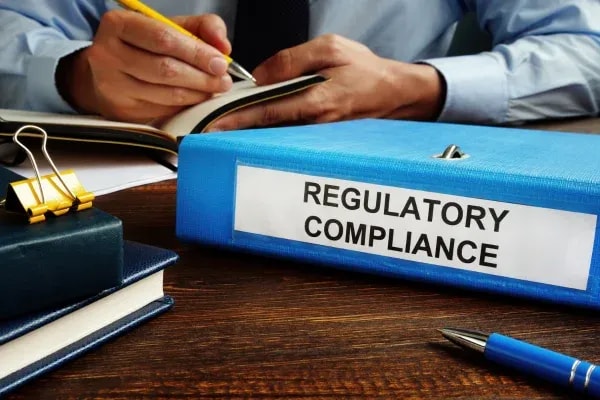
The agent monitors regulatory feeds relevant to your industry, flags procedure sections that may be affected by new requirements, and alerts the compliance team before an audit catches the gap.

Procedures that require actions across multiple platforms, ERP, HRMS, CRM, and ITSM, are executed by an agent that calls each system API in the correct order and confirms completion before moving to the next step.

SOP failures carry different risks across industries, from recalls and audit gaps to patient safety issues and regulatory exposure
Production procedures and inspection workflows need agents that enforce exact step sequencing and flag deviations before products move forward.
Patient intake, discharge, and infection control protocols need agents that enforce steps consistently and log every action automatically.
KYC, trade approvals, and reporting SOPs need agents that enforce correct versions, dual controls, and audit-ready records.
Receiving, inventory, and carrier handoff procedures need agents that run consistently across locations and sync outcomes with the WMS.
Runbooks, change management, and provisioning workflows need agents that execute quickly, log actions, and escalate only unresolved issues.
Every SOP agent we deliver includes each of these by default because an agent missing any one of them is not production-ready.
Request a QuoteThe agent reads procedure documents written for humans, with conditional logic, ambiguous phrasing, and embedded exceptions, and converts them into structured execution logic without requiring you to rewrite your SOPs first.
DAG-Based Procedural Execution Logic Procedures are modeled as directed acyclic graphs, where each step has defined inputs, outputs, and dependencies. The agent cannot skip a step, run steps out of order, or advance past a blocking condition.
Critical steps, high-risk decisions, and exception conditions route to a human with full context attached; the step, the procedure section, the execution history up to that point, and what the agent could not resolve.
The agent doesn't just read data. It writes outcomes back to ERP, HRMS, CRM, and ITSM systems after each step, so the record of what happened lives in your systems, not only in the agent's log.
Permission-gated steps require role-based approval, such as manager, compliance, or dual-control sign-off, before the agent can proceed.
Every step execution is logged with a timestamp, the actor or system that completed it, the input received, and the output produced. Logs cannot be edited after the fact; they are the audit trail.
-2c617ea2-65d4-46ec-9385-d408ed94933e.png&w=1920&q=65)



We build direct integrations, not middleware connectors or file-based syncs, so the agent reads current system data and writes outcomes back in real time after each step.
Discuss Your SOP AI Use CaseThe agent reads master data, inventory records, and workflow states from ERP systems and posts step completions back as transactions, so every procedure action is recorded in the system of record, not only in the agent log.
For onboarding, offboarding, and policy enforcement procedures, the agent reads employee records from your HRMS, confirms role and status before executing permission-gated steps, and writes completion records back to the employee file.
Procedures that involve customer-facing steps or service delivery workflows connect to your CRM so the agent reads account context before executing, and posts outcome notes back to the customer or case record after completion.
Incident response and change management SOPs run against your ITSM platform; the agent reads ticket state, executes runbook steps, updates the ticket at each step, and closes or escalates based on the procedure outcome.
The agent pulls the current approved SOP version directly from your document management system at execution time, so there is no local copy to go stale and no manual update needed when a procedure is revised.
For procedures that depend on proprietary systems without standard connectors, we build custom API integrations during the delivery phase; the agent connects to your environment, not the other way around.
Our SOP AI agent development services begin with workflow discovery, not architecture. The first phase defines the problem before we build anything.

We map your existing plant workflows, identify decision points that consume operator time, and document where agent intervention creates the most measurable operational value.

We assess your OT and IT data sources, confirm integration feasibility, and scope the API connections and data contracts required to feed each agent reliably.

We define the agent structure, select the LLM that fits the use case and data volume, and design the orchestration logic before writing a single line of code.
Agents are tested against historical plant data and digital twin environments to validate decision logic under real operating conditions before touching a live system.

We configure for edge or cloud based on your latency requirements, network constraints, and data residency preferences. Deployment architecture is finalized before go-live.
-bce0b011-abd2-4c80-8e8c-9342eef314f6.png&w=1920&q=65)

We run a controlled pilot with defined escalation paths, live monitoring, and operator override active. Nothing expands to full scale until the pilot results support it.

Post-rollout, we monitor agent performance against baseline metrics and track results across live production environments.

We retrain models on production data and expand deployment scope as results validate further investment.

Outcomes:
We build SOP agents through a fixed delivery sequence because every phase produces outputs that the next one depends on.
We review existing procedures, identify high-risk SOPs, and break each workflow into steps, branches, dependencies, and execution requirements before agent design begins.
We map decision points, exception paths, and approval gates, then identify ambiguous, incomplete, or inconsistent procedure areas that could create execution risk.
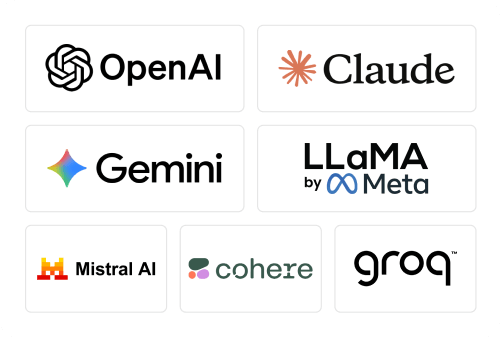
We select the LLM, orchestration framework, and agent structure based on procedure complexity, data sensitivity, compliance needs, and your operating environment.
Your SOP library is ingested into a RAG pipeline with vector search, helping agents retrieve the correct procedure for each execution context.
We build API connections, configure authentication, define permission scopes, and test every integration against real SOP steps before the pilot launch begins.
We test agents using historical exceptions, incident logs, edge cases, and adversarial inputs to expose compliance gaps before live workflow execution.
The agent runs on a defined procedure subset while operations and compliance teams review accuracy, exception rates, and audit log quality.
The full SOP library moves to production with dashboards, escalation workflows, monthly accuracy monitoring, and retraining when performance drift appears.
We have built SOP agents for manufacturing quality control, healthcare clinical workflows, financial compliance procedures, and IT operations runbooks. The procedural AI methodology transfers across domains; the domain configuration is built for you specifically.
Every agent is built from your specific procedures, your system environment, and your compliance requirements. We do not configure a template agent and present it as a custom build.
We deploy where your operations require, from on-premise edge nodes in air-gapped facilities to multi-cloud architectures with private VPC and hybrid configurations.
We handle ingestion, logic mapping, RAG setup, system integration, compliance architecture, and deployment, not just the agent build. You do not coordinate between separate vendors for different phases of the project.
Using SAP, Oracle, Workday, Salesforce, ServiceNow, and SharePoint, we have built live integrations with all of them. Integration is in scope from day one, not a handoff to your IT team after the agent is built.
PII handling, audit logging, role-based permissions, and regulatory framework alignment are designed into the agent before any procedure is ingested. We do not retrofit compliance requirements onto a working system.
Automate SOP execution, reduce deviations, and generate audit-ready records with custom AI agents built around your procedures, systems, compliance controls, and workflows.
Fill the form below or Contact us at +1 408 365-4638 / email us via contact@folio3.ai
Years of Engineering Excellence
Delivered Worldwide
Client Satisfaction
Years of Advanced AI Expertise
Response Guaranteed
+1 408 365-4638
contact@folio3.ai
6701 Koll Center Parkway, #250 Pleasanton, CA 94566