Key takeaways
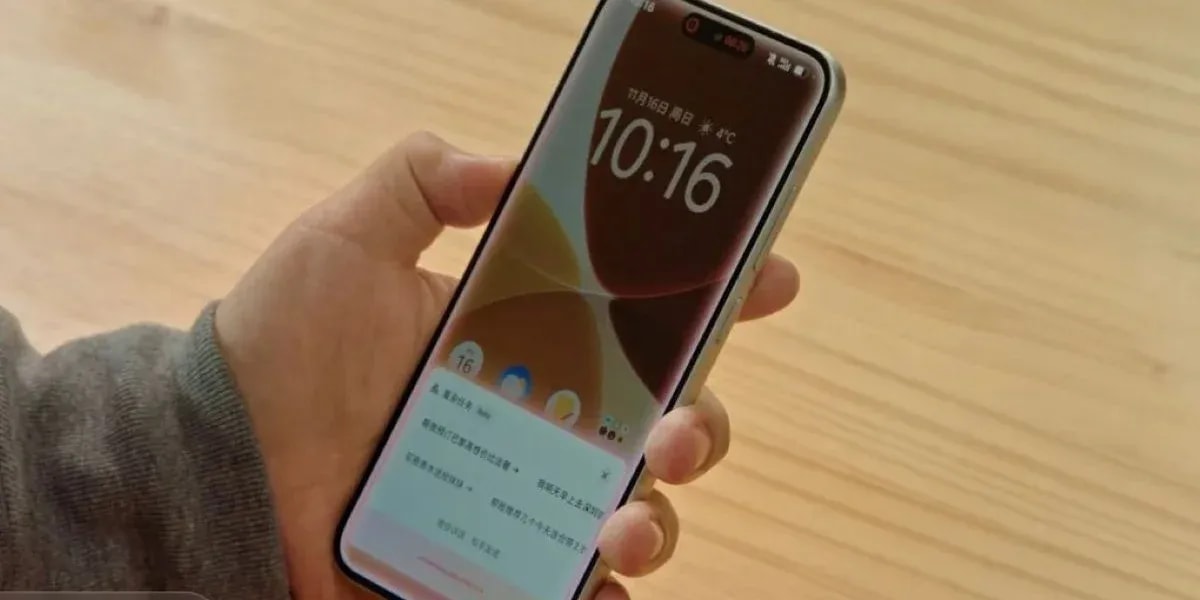
The TikTok parent company launched the Nubia M153 smartphone on December 1 as a technical preview, featuring its Doubao AI assistant embedded directly into the operating system.
Priced at 3,499 yuan ($494), the device sold out on its first day, attracting strong interest from early adopters seeking hands-free phone control through voice commands.
However, within days of launch, major platforms, including WeChat, Alipay, Taobao, and multiple banking applications, began blocking or restricting the AI assistant's capabilities, citing security and fairness concerns.
In a statement issued on Friday, ByteDance said it would prevent the Nubia M153 AI phone from claiming incentives that were intended for active human users.
The company also announced it was disabling the assistant's interaction with financial apps, including banking and payment services, and suspending AI features in competitive games to preserve fair play.
The measures followed moves by leading platforms to limit Doubao's operations.
Alipay, the payment app owned by Ant Group, an affiliate of Alibaba Group Holding, was among the apps that restricted the AI assistant's functionality.
Tencent's WeChat, China's dominant messaging platform with over 1.4 billion users, has been at the center of user complaints, with some Nubia M153 owners reporting forced logouts and abnormal environment warnings.
Agricultural Bank of China and China Construction Bank apps reportedly displayed security prompts telling users to turn off the AI assistant before accessing services, effectively blocking automated control.
Privacy concerns and user reactions
Chen Tang, a 21-year-old freelancer and Nubia M153 user, said that Pinduoduo, Alibaba's Taobao and Alipay, and Ele.me could not be operated via Doubao, which was embedded in the phone's operating system.
He noted that although he could still log in to these apps manually, his accounts would be restricted once he used Doubao to control them.
"It has a global memory [a device-wide memory tracking activity], so it basically knows everything about you," Tang said, adding that this was one reason he was not yet ready to replace his iPhone Pro Max entirely with the Doubao phone.
On Wednesday, ByteDance said it had disabled the AI assistant's ability to control WeChat because of login problems.
The company added that it was working with developers to establish "clearer, more predictable rules" and to avoid "blanket restrictions that hinder users' legitimate use of AI."
ByteDance emphasized that the phone did not store screen content or operation processes on its servers, and that such data would not be used for model training.
Industry implications
The Nubia M153 grants the Doubao assistant system-level permissions typically reserved for phone manufacturers, allowing it to read on-screen content, simulate user touches, and effectively control the device.
This deep integration represents ByteDance's attempt to compete in the AI smartphone market as Apple Intelligence remains unavailable in mainland China.
The clash unfolded against years of tension over platform interoperability and competition in China's internet sector.
ByteDance and Tencent have previously fought public battles over link blocking, with ByteDance accusing WeChat of abusing its dominant position.
The handset was released as a "technology preview version" on the ZTE website, with the purchasing page warning that the device was intended for industry professionals only and that its functions might not be fully complete.
ZTE jointly developed the phone with ByteDance.
Read more:
Sam Altman Explores Rocket Company Investment In Potential Space Race With Elon Musk
Google Rolls Out Gemini 3 Deep Think For Ultra users
OpenAI Acquires Neptune To Strengthen AI Model Training Capabilities