Key Takeaways
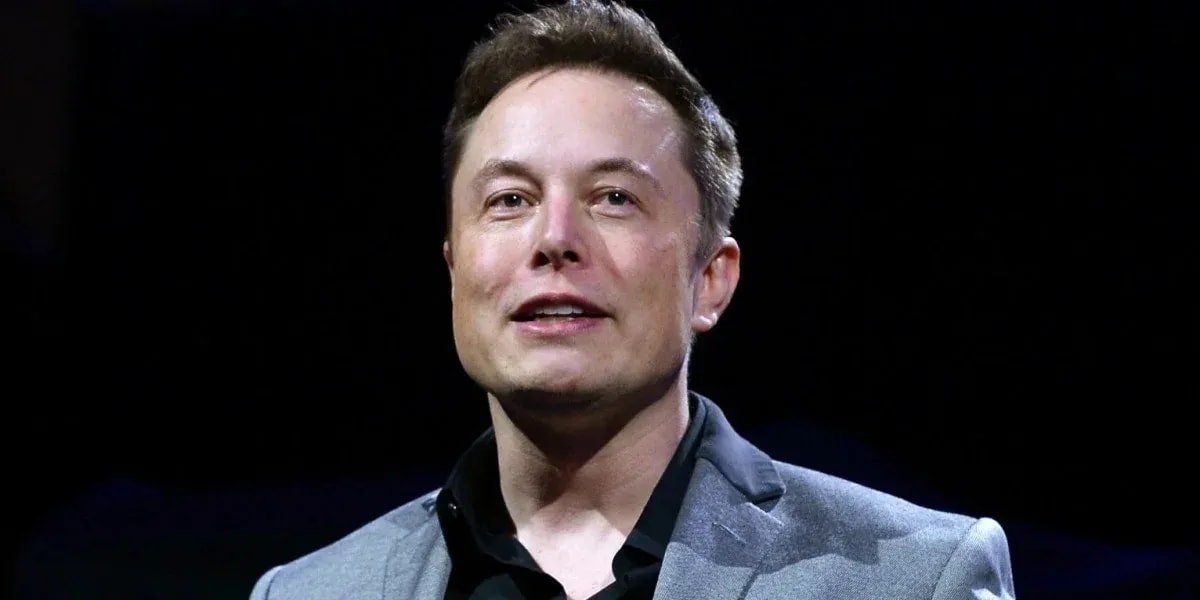
Tech billionaire Elon Musk has escalated his public battle against OpenAI and other artificial intelligence competitors, marking one of Silicon Valley's most contentious corporate feuds as the AI race intensifies.
Musk labels OpenAI "evil" over funding practices
In October 2024, Musk accused OpenAI of being "evil" after reports emerged that the ChatGPT maker asked investors not to fund rival AI companies, including his own xAI, during a $6.6 billion fundraising round that valued the company at $157 billion.
The stipulation reportedly prevented backers from supporting competitors like Musk's Grok chatbot.
Musk has filed multiple lawsuits against OpenAI and CEO Sam Altman throughout 2024, alleging the company abandoned its original nonprofit mission to benefit humanity.
In court filings, Musk claimed OpenAI has transformed into a "closed-source de facto subsidiary" of Microsoft, violating what he describes as the organization's founding principles.
In February 2025, Musk led a consortium of investors in making an unsolicited $97.4 billion bid to acquire the nonprofit entity controlling OpenAI.
The offer was swiftly rejected on February 14, with OpenAI stating the company was not for sale. In posts on X, Musk has described OpenAI's conversion efforts to a for-profit structure as a "total scam."
The hypocrisy debate over "open source" AI
While Musk has repeatedly criticized OpenAI for not being truly "open source," his own approach has drawn scrutiny.
In March 2024, xAI released Grok-1 as open source, with Musk stating at the time that his platform aimed to be "by far the most transparent & truth-seeking." However, subsequent models, including Grok-2, Grok-3, and Grok-4, have remained closed source.
Stefano Maffulli, executive director of the Open Source Initiative, told Euronews in March 2024 that Grok does not meet the true definition of open source because it fails to disclose training data and other critical information.
All of Grok's models after the initial release have remained proprietary, demonstrating what critics call a hypocritical stance given Musk's public demands for OpenAI to open source its technology.
Tensions with Anthropic's Claude
Musk has also directed criticism toward Anthropic, the AI safety-focused company behind the Claude chatbot.
In March 2024, Musk reacted with shock when Claude appeared to encode hidden messages in responses to user queries, expressing concern about AI alignment and control mechanisms.
In September 2025, Musk posted on X that "winning was never in the set of possible outcomes for Anthropic," despite the company achieving a $183 billion valuation—roughly equivalent to xAI's own valuation—and generating $500 billion in annualized revenue.
The roots of the conflict
Musk co-founded OpenAI alongside Sam Altman and nine others in December 2015 with a stated mission to develop artificial general intelligence that "benefits all of humanity." However, tensions emerged over the company's direction, and Musk left OpenAI's board in 2018.
According to emails published by OpenAI in March 2024, Musk had actually supported converting OpenAI to a for-profit structure during his tenure and even proposed merging the company with Tesla to gain control.
OpenAI stated in its legal response that Musk wanted to start with a $1 billion funding commitment to avoid "sounding hopeless" compared to competitors like Google.
After departing OpenAI, Musk founded xAI in 2023 and launched Grok, positioning it as a more politically neutral alternative that could answer "spicy" questions other AI systems might decline.
However, Grok has faced its own controversies, including generating antisemitic content and what Musk himself described as difficulty avoiding both overly progressive and extreme right-wing outputs.
Legal battles continue
A federal judge in California denied Musk's request to halt OpenAI's transformation into a for-profit entity in March 2025, though the court allowed other aspects of his lawsuit to proceed.
The ongoing legal battle has included claims of antitrust violations, with Musk alleging that OpenAI and Microsoft violated competition laws.
OpenAI maintains that it provides "broad access to today's most powerful AI" and that its mission remains focused on building beneficial tools.
The company has pointed to its free version of ChatGPT, used by hundreds of millions globally, as evidence of its commitment to accessibility.
As the AI industry continues its rapid expansion, with companies racing to develop more powerful models, the public feud between Musk and his former colleagues shows no signs of abating.
Read more: