Key takeaways
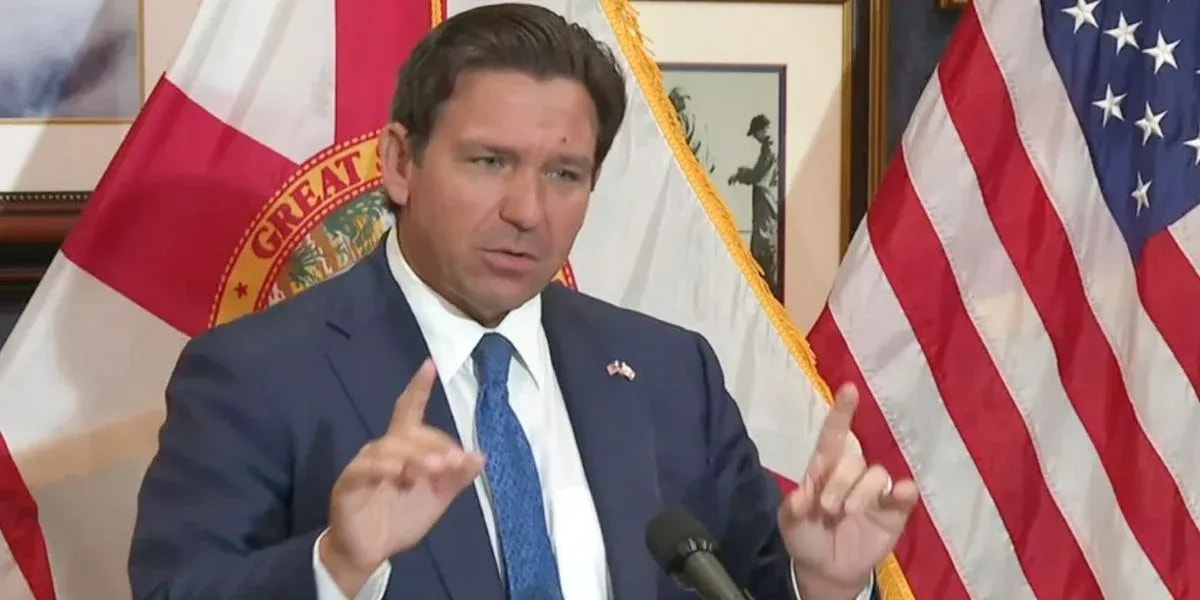
Speaking at Florida Atlantic University in Jupiter, DeSantis pushed back against interpretations that Trump's December 11 executive order would prevent states from enacting their own AI laws, setting up a potential constitutional clash between state and federal authority.
"The president issued an executive order. Some people were saying Well, no, this blocks the states," DeSantis said, according to Fox Business. "It doesn't."
The governor emphasized constitutional limitations on executive authority, stating, "You should read it and see. First of all, an executive order can't block states. You can preempt states under Article 1 powers through congressional legislation on certain issues, but you can't do it through executive order."
Florida's AI Bill of Rights proposal
DeSantis released his "Citizen Bill of Rights for Artificial Intelligence" proposal on December 4, which includes multiple consumer protections aimed at safeguarding Floridians from potential AI-related harms.
The proposal addresses deepfakes, data privacy, parental controls, and restrictions on how companies can use individuals' names, images, or likenesses without consent.
A key provision would prohibit entities from using AI chatbots as licensed therapy or mental health counseling, or from imitating licensed professionals.
According to the governor's office, the proposal also seeks to ban any state or local government agency from utilizing DeepSeek or other Chinese-created AI tools.
"Today, I proposed new legislation on artificial intelligence and AI data centers to protect Floridians' privacy, security, and quality of life," DeSantis said in his December 4 announcement.
"Our AI proposal will establish an Artificial Intelligence Bill of Rights to define and safeguard Floridians' rights—including data privacy, parental controls, consumer protections, and restrictions on AI use of an individual's name, image, or likeness without consent."
The proposal also includes provisions to protect consumers from bearing the costs of AI data centers, prohibiting utilities from charging Florida residents more to support hyperscale data center development and banning taxpayer subsidies for Big Tech companies.
Constitutional authority and potential legal challenges
While acknowledging Trump's executive order doesn't explicitly prevent state action, DeSantis addressed concerns about potential legal challenges from the Justice Department under the Dormant Commerce Clause, which prohibits states from discriminating against interstate commerce.
"I don't know how successful that would be, but the reality is, I don't anticipate that even happening against the stuff we're doing in Florida, but if it does, I think we would be well positioned to prevail on that," DeSantis told attendees, as reported by The Hill.
The governor argued Florida's proposed regulations align with federal objectives.
"If you read it, they actually say a lot of the stuff we're talking about is things that they're encouraging states to do," he said. "So even reading it very broadly, I think the stuff we're doing is going to be very consistent. But irrespective, clearly we have a right to do this."
DeSantis later posted on social media that he did not believe Trump's order would stop Florida's efforts, stating: "An executive order doesn't/can't preempt state legislative action."
The roundtable event featured powerful testimony from parents whose children suffered harm from AI chatbot interactions, highlighting the urgency behind Florida's regulatory push.
Megan Garcia, an Orlando mother, described how her 14-year-old son Sewell Setzer III died by suicide in February 2024 after engaging with an AI chatbot on the Character.AI platform. Garcia said the chatbot claimed to be a licensed therapist and engaged in sexual roleplay with her son.
"He started to engage in various role plays, sexual role plays, and this platform was telling him it was a licensed therapist, so he was engaging in a chat box that claimed to be a licensed therapist since 1999," Garcia said, according to WPBF.
Garcia explained that her son explicitly told the chatbot on several occasions that he wanted to die by suicide. "But there weren't any mechanisms to protect him," she said. "It just continued to role-play and be the person it was pretending to be. They didn't alert authorities; the company didn't alert authorities or his parents, and in February of 2024, he died in our home in Orlando."
Responding to Garcia's testimony, DeSantis said: "We also want to prohibit any entities from using these AI chatbots as 'licensed therapy' or mental health counseling or imitating a licensed professional. The reality is these are machines, and they honestly get a lot of things wrong."
The governor framed the regulatory effort as essential consumer protection.
"This is basically protecting against this technology running amuck in a way that can be harmful to individuals," DeSantis said, according to the South Florida Sun Sentinel, which also noted he warned: "It's very hard to tell what's real or what's not real anymore."
Trump's executive order and industry backing
Trump's executive order, titled "Ensuring a National Policy Framework for Artificial Intelligence," directs Attorney General Pam Bondi to create an AI Litigation Task Force within 30 days to challenge state AI laws that conflict with the administration's vision for light-touch regulation.
At the Oval Office signing ceremony on December 11, Trump argued that AI companies "want to be in the United States, and they want to do it here, and we have big investment coming.
But if they had to get 50 different approvals from 50 different states, you could forget it," according to NBC News.
White House AI and crypto czar David Sacks, who attended the signing alongside Commerce Secretary Howard Lutnick and Senator Ted Cruz, said at the ceremony: "We have 50 states running in 50 different directions. It just doesn't make sense." He added: "We're creating a confusing patchwork of regulation, and what we need is a single federal standard, and that's what the EO says."
The executive order argues that excessive state regulation threatens U.S. AI dominance, stating: "To win, United States AI companies must be free to innovate without cumbersome regulation. But excessive State regulation thwarts this imperative."
The order also threatens to withhold federal funding from states with AI laws deemed inconsistent with national policy.
It directs the Secretary of Commerce to evaluate state AI laws that conflict with federal priorities and potentially withhold Broadband Equity Access and Deployment funding from such states.
The move marks a victory for major technology companies, including OpenAI, Google, and venture firm Andreessen Horowitz, which have lobbied against what they view as burdensome state-level regulations.
Read more:
Google Unveils Disco Browser With AI-Powered App Generation
OpenAI Releases GPT-5.2 Following Internal ‘Code Red’ Alert
Trump Signs Executive Order To Block State AI Regulations