Key Takeaways
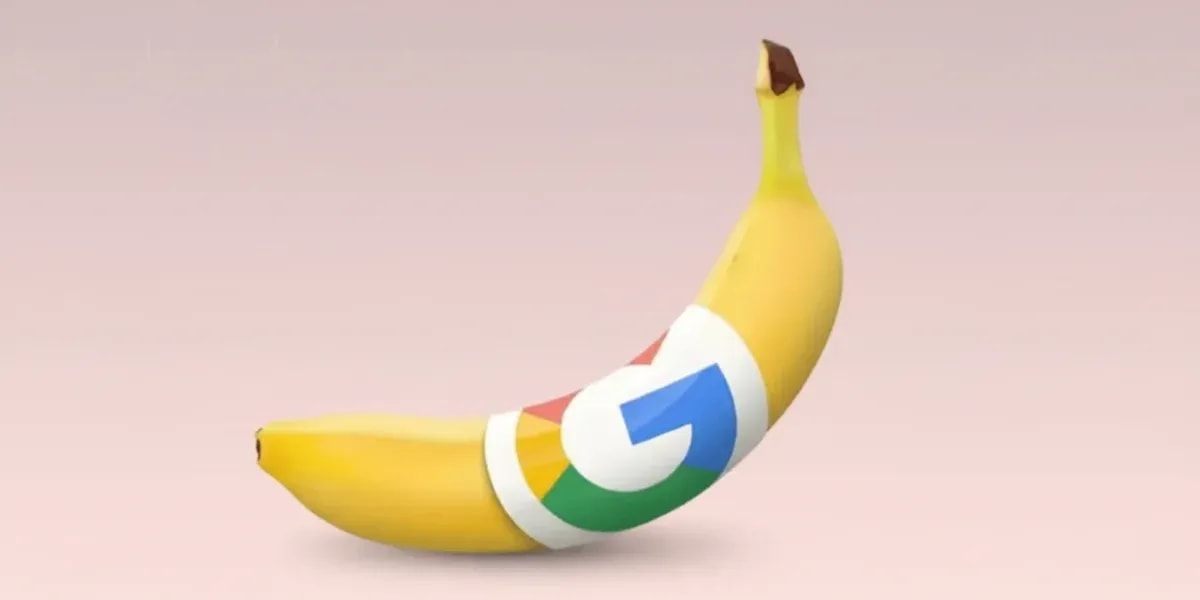
Google rolled out Nano Banana Pro on Thursday, marking the company's latest advancement in AI-powered image generation and editing technology.
The new model, officially designated as Gemini 3 Pro Image, builds on the original Nano Banana tool that launched in August and represents a significant upgrade in capabilities for both consumer and professional users.
The product launch comes just two days after Google introduced its Gemini 3 Pro AI model, which has fueled investor optimism about the company's position in the competitive artificial intelligence market.
Alphabet shares climbed 4% on Thursday, adding to the momentum from Wednesday's trading session when the stock reached record highs following the Gemini 3 announcement.
Josh Woodward, vice president of Google Labs and Gemini, told CNBC that Nano Banana Pro expands significantly beyond its predecessor.
The tool can process up to 14 different images while maintaining consistency across five characters, a capability that addresses one of the most challenging aspects of AI image generation.
"It's incredible at infographics. It can make slide decks," Woodward said in an interview with CNBC's Deirdre Bosa.
Technical capabilities and availability
Nano Banana Pro leverages Gemini 3 Pro's reasoning capabilities to deliver more accurate text rendering within images, a feature that has historically challenged AI image generators.
The model supports text generation in multiple languages and can translate existing text within images, enabling users to localize content for international markets without creating entirely new assets.
The tool offers resolution options up to 4K, substantially higher than the original Nano Banana's 1024 x 1024 pixel cap.
Users can also exercise precise control over image composition elements including camera angles, lighting, depth of field, and color grading.
Google is implementing a tiered access system for Nano Banana Pro. Free users of the Gemini app will receive limited generation quotas before reverting to the original Nano Banana model.
Google AI Plus, Pro, and Ultra subscribers receive higher usage limits, though the company has not disclosed specific thresholds.
Ultra subscribers will not see watermarks on their generated images, while other users will have SynthID watermarks applied to denote AI-generated content.
The model is rolling out across Google's product ecosystem, including the Gemini app, NotebookLM, Google Ads, AI Mode in Search for U.S. subscribers, and Google Workspace applications like Slides and Vids.
Developers can access Nano Banana Pro through the Gemini API, Google AI Studio, and Vertex AI for enterprise applications.
Market competition and adoption metrics
The release intensifies competition in the generative AI sector, where Google faces established rivals, including OpenAI, Anthropic, and other technology companies, racing to develop more capable AI systems.
OpenAI announced updates to its GPT-5 model last week, while the original Nano Banana went viral in September, helping add 13 million new users to the Gemini app in four days as people created 3D figurines from selfies.
According to Google, the Gemini app currently has over 650 million monthly active users, while Gemini-powered AI Overviews has reached 2 billion monthly users.
These figures position Google's AI products as major competitors to ChatGPT, which OpenAI CEO Sam Altman said in October had reached 800 million weekly active users.
Woodward indicated strong demand for Google's AI subscription services. "We're seeing high numbers of people coming to lots of these products," he said, noting that many users are signing up for Gemini's paid plans to access higher usage limits with advanced models.
Enterprise and creative industry integration
Beyond consumer applications, Google is targeting professional markets with Nano Banana Pro.
The company announced that Google Ads will upgrade to use the new model globally, giving advertisers access to more sophisticated creative tools.
Major creative platforms, including Adobe and Figma, are integrating the technology into their workflows.
In Adobe Firefly and Photoshop, Nano Banana Pro powers Generative Fill capabilities, allowing creative professionals to make targeted edits using text prompts.
Adobe is offering unlimited image generations with Firefly image models and partner models through December 1 for Creative Cloud Pro and Firefly plan subscribers.
The model's ability to connect to Google Search's knowledge base enables it to generate factually accurate visuals for applications requiring precision, such as educational infographics, technical diagrams, and data visualization.
However, Google acknowledges limitations, noting in its documentation that the model may still struggle with small facial features, accurate spelling in some contexts, and fine details, and that users should verify data-driven outputs.
Google's expanded visual context window allows users to upload multiple reference images simultaneously, functioning as a digital style guide to maintain brand consistency across generated content.
Read more: