Key Takeaways:
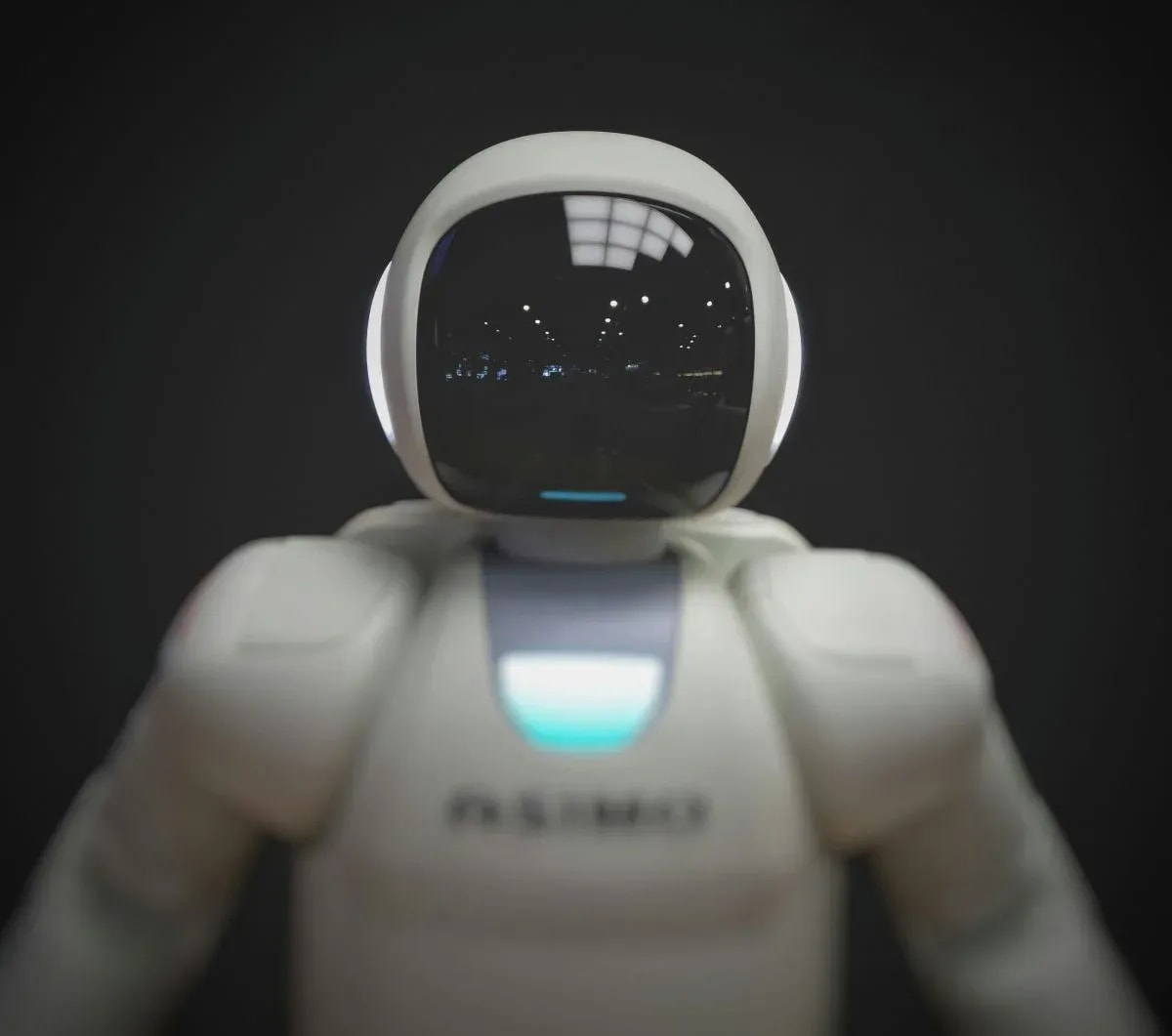
Humanoid robots demonstrated soccer skills, shadow boxing, and archery at the birthplace of the Olympic Games this week, but their jerky movements and frequent battery changes underscored how far physical robotics still lags behind the explosive advances in artificial intelligence.
The four-day International Humanoid Olympiad, held from August 29 to September 2 at the International Olympic Academy, brought together robotics experts and developers for what organizers hope will become an annual assessment of humanoid robot capabilities.
Limited capabilities despite the AI boom
Despite recent breakthroughs in AI applications like ChatGPT, humanoid robots with human-like appearances and physical skills remain years behind their digital counterparts. The gap is particularly stark when it comes to practical household applications.
"I really believe that humanoids will first go to space and then to houses … the house is the final frontier," said Minas Liarokapis, a Greek academic and startup founder who organized the International Humanoid Olympiad.
"To enter the house, it'll take more than 10 years. Definitely more. I'm talking about executing tasks with dexterity, not about selling robots that are cute and are companions."
The event featured robots from leading companies, including Unitree and Booster Robotics, with demonstrations that delighted children but also highlighted current limitations. Robots occasionally froze mid-performance for battery changes, and organizers had to carefully select activities within the machines' current capabilities.
Training data scarcity hampers progress
AI is racing ahead thanks to vast amounts of data readily available online. But training material for humanoid robots is scarce. It involves real-world actions that are slower, more expensive, and harder to record than digital data like text or images.
By one measure, humanlike robots are roughly 100,000 years behind AI in learning from data, according to an article in the current edition of the journal Science Robotics. The research suggests that physical robotics faces unique challenges in data collection compared to purely digital AI systems.
Realistic competition goals
Event organizers deliberately limited activities to what current humanoid robots could reasonably attempt.
"We were trying to get the discus and the javelin, but that's tough for humanoid robots," said Patrick Jarvis, who co-founded robot maker Acumino with Liarokapis. "We also can't say whose robot can do a high jump because you'd have to build special legs … and that's not necessary for most humanoid robots."
One company even tested whether its machine could manage the shot put, according to Thomas Ryden, executive director of MassRobotics, who worked to bring as many humanoid companies as possible to the event.
The competition aimed to provide "an honest validation of the progress that has been made in humanoid robots," Jarvis explained.
International Participation and Future Outlook
"The 1st International Humanoid Olympiad seeks to highlight Greece on the global stage of Robotics and Physical Artificial Intelligence as a center of innovation and technological excellence," said Dr. Minas Liarokapis on behalf of the organizing committee.
"It is a unique opportunity for Greece to lead in technological progress and be at the frontier of this new industrial revolution, as it possesses the most crucial ingredient: a highly skilled and talented workforce."
The event featured speakers from 12 countries and included workshops on topics such as reinforcement learning, exoskeleton systems, and developments in robotics worldwide. Notable participants included Aadeel Akhtar, CEO and founder of advanced prosthetics maker Psyonic, who demonstrated his company's bionic hand technology.
While several U.S. roboticists attended to speak, few brought actual robots to demonstrate, highlighting ongoing challenges in the field's practical applications.
The organizers plan to make this an annual event, hoping to track progress in humanoid robotics while maintaining realistic expectations about the timeline for achieving human-level dexterity and capability in everyday tasks.
Economic stakes and investment surge
The humanoid robotics market represents one of the most significant investment opportunities in emerging technology. Goldman Sachs Research projects the total addressable market for humanoid robots to reach $38 billion by 2035, up more than sixfold from a previous projection of $6 billion, while Morgan Stanley estimates the market could reach $5 trillion by 2050.
Recent funding rounds underscore massive investor confidence. In February 2024, Figure AI raised $675 million from investors including Microsoft, Jeff Bezos, and Nvidia. The sector has attracted government backing as well, with Beijing announcing a $1.4 billion robotics fund in August 2023.
Manufacturing costs are dropping rapidly. Goldman Sachs Research reports manufacturing costs declined from $50,000-$250,000 per unit last year to $30,000-$150,000 now - a 40% reduction that exceeded analyst expectations and could accelerate commercial adoption timelines.
Geopolitical competition and cultural dynamics
A clear divide emerged between Chinese and American approaches to robot demonstration. Chinese companies increasingly showcase their machines at public events, such as Beijing's first Humanoid Robot Games in August, while U.S. rivals mostly stick to polished videos that can mask failures.
Thomas Ryden from MassRobotics noted that while several U.S. roboticists attended the event in Greece, few brought robots. This reluctance to show real-world performance contrasts with China's more transparent approach to demonstrating current capabilities and limitations.
The event reflected global collaboration, featuring speakers from 12 countries and workshops covering robotics developments in New Zealand and Colombia, and the role of China as a leader in the humanoid race.
Emerging ethical and social concerns
The Olympiad highlighted growing ethical considerations surrounding humanoid robot deployment.
Experts identified several key concerns:
Job Displacement: Research shows "replacement and its implications for labor" ranks as the most important ethical issue, with an average concern rating of 5.25 on a 7-point scale. The technology threatens to disproportionately affect low-skilled workers.
Privacy and Data Protection: Privacy concerns ranked second among ethical issues, with users expressing reluctance to share personal information with robots in service contexts.
Trust and Safety: Physical safety remains paramount as robots operate alongside humans. The Bureau of Labor Statistics reported 27 fatal injuries involving robots in the United States between 2011 and 2017, underscoring the need for robust safety protocols.
Deception and Emotional Manipulation: Stanford's Encyclopedia of Philosophy notes that humanoid appearance can "deceive humans into attributing more intellectual or even emotional significance to robots or AI systems than they deserve".
Scientific innovation and breakthrough technologies
The Olympiad showcased cutting-edge research beyond basic locomotion. Hon Weng Chong, CEO of Cortical Labs, shared that his Australian biotech company is developing a biological computer using brain cells grown on a chip that could eventually help robots learn and adapt more like humans.
Aadeel Akhtar of Psyonic demonstrated his company's bionic hand offering sensory feedback, explaining: "We've built our hand for both humans and robots". Such prosthetic technology could accelerate robot development by translating human-use data to robotic applications.
Luis Sentis of the University of Texas at Austin and co-founder of Apptronik expressed optimism: "These synergies are happening very, very quickly. So I do see these problems being cracked on a day-to-day basis".
Industry outlook and future implications
The consensus among experts points to a measured but optimistic timeline. IDTechEx predicts 2026-2027 as the period when humanoids in the automotive and logistics industries will start taking off, primarily due to proven successes from early implementations.
According to Science Robotics research, author Ken Goldberg from UC Berkeley urged makers to move beyond simulations and combine "old-fashioned engineering" with real-world training to help robots "collect data as they perform useful work, such as driving taxis and sorting packages".
Read more