Key takeaways
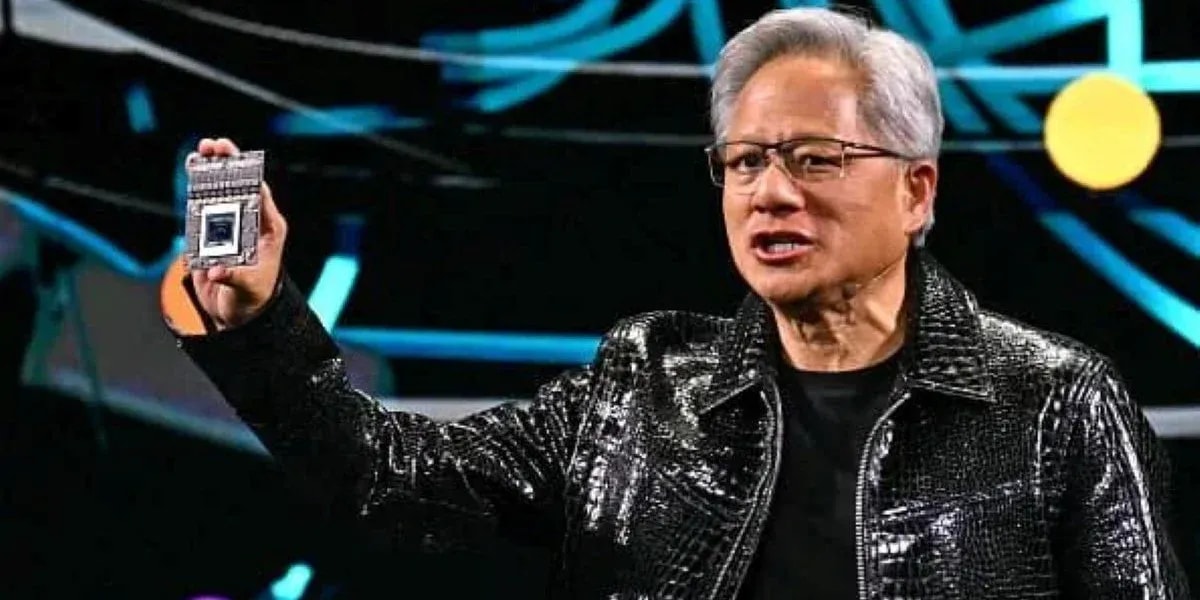
Speaking at a press conference during the Consumer Electronics Show in Las Vegas, Huang confirmed that Nvidia has ramped up production in anticipation of receiving the necessary regulatory approvals to ship the advanced chips to Chinese customers.
"It appears that we're going to be going back to China," Huang said at the event. "We've fired up our supply chain, and H200s are flowing through the line."
Waiting on regulatory approvals
The comments come as Nvidia navigates a complex regulatory landscape involving both U.S. export licenses and potential Chinese import approvals.
In December, President Donald Trump reversed a longstanding ban on exporting H200 chips to China, subject to a 25% tax on sales and additional licensing requirements.
However, final approvals from U.S. authorities have not yet been granted. Nvidia Chief Financial Officer Colette Kress said in an interview with a JP Morgan analyst at CES that the U.S. government is "working feverishly" on the license applications.
"We're going to wait and see what will happen," Kress told the analyst, according to reports from the event.
Huang emphasized that Nvidia does not expect China to make any formal public announcement regarding import approvals. Instead, he said the company will gauge market access through actual customer orders.
"We're not expecting any press releases or any large declarations," Huang said, adding that "it's just going to be purchase orders."
Massive market opportunity at stake
The Chinese market represents a significant revenue opportunity for Nvidia. Huang has previously estimated that the market could be worth $50 billion annually, none of which is currently included in the company's financial forecasts.
Any H200 sales to China would be in addition to the $500 billion two-year revenue forecast Nvidia provided last year for its Blackwell and upcoming Vera Rubin chip platforms, according to statements made at the conference.
The H200 is a predecessor to Nvidia's current Blackwell generation of chips, built on the company's Hopper architecture launched in 2022.
Unlike previous chips that Nvidia was approved to export to China, which were deliberately slowed down to comply with export restrictions, the H200 has not been modified.
Production capacity and timing
Kress assured analysts that Nvidia has sufficient production capacity to meet Chinese customer needs without affecting supply to customers in other regions.
Reports suggest the company plans to fulfill initial orders using existing inventory before ramping up additional production at manufacturing partner Taiwan Semiconductor Manufacturing Company (TSMC).
According to Reuters, Nvidia has informed Chinese customers that it aims to begin deliveries before the Chinese Lunar New Year in mid-February, though the timing remains contingent on regulatory approvals from both Washington and Beijing.
The development marks a potential turning point for Nvidia's China business, which has declined sharply in recent years due to export restrictions.
Read more:
Alibaba Launches Open-Source Image AI To Challenge Google’s Proprietary Models
Baidu files for Hong Kong IPO of AI chip subsidiary Kunlunxin
OpenAI Ramps Up Audio AI Efforts Ahead Of Device Launch