Key Takeaways
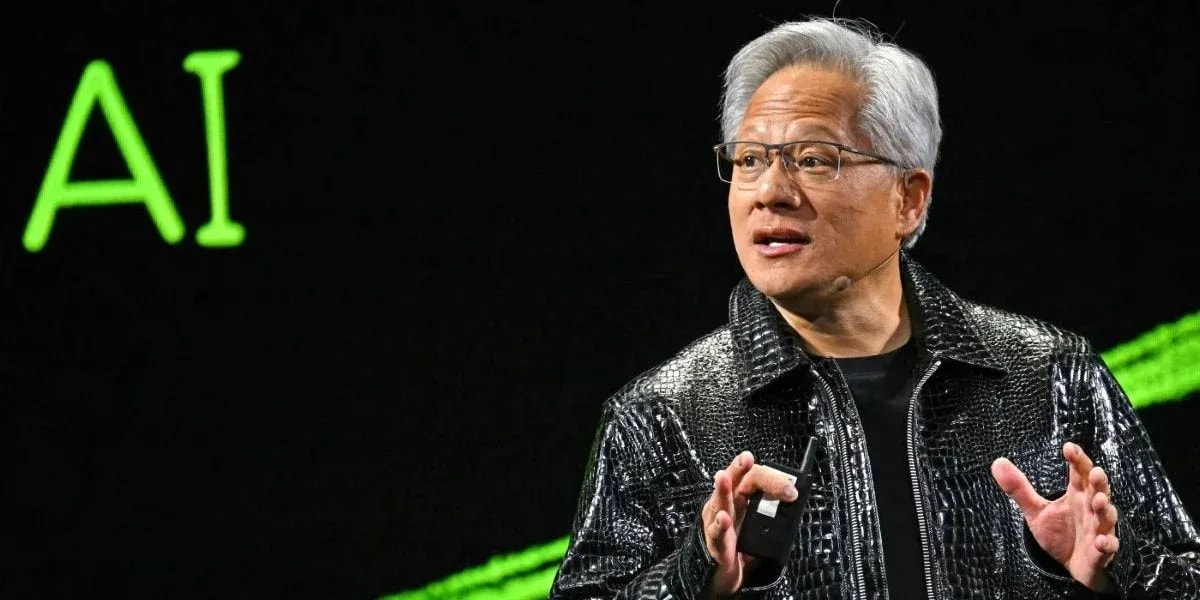
Nvidia Chief Executive Jensen Huang delivered his starkest warning yet about the US falling behind China in artificial intelligence, telling the Financial Times at its Future of AI Summit in London on Wednesday that "China is going to win the AI race."
The head of the world's most valuable company pointed to Beijing's energy subsidies and streamlined regulatory approach as key advantages over Western nations. Huang emphasized that Chinese tech giants including ByteDance, Alibaba and Tencent benefit from government power subsidies that make energy costs negligible for operating large-scale AI systems.
"Power is free," Huang remarked when describing China's support for data centers, according to the Financial Times report. He contrasted this with what he called Western "cynicism" that he believes is holding back progress, particularly in the United States and United Kingdom.
Huang also warned about regulatory fragmentation in the US, noting that individual states are considering their own AI rules. "If all 50 states adopt their own rules, 50 new regulations will emerge," he said, arguing this patchwork approach puts America at a disadvantage compared to China's centralized policy framework.
Clarifying America's position in the race
Hours after his comments sparked widespread attention, Huang issued a statement on X addressing the competitive landscape. "As I have long said, China is nanoseconds behind America in AI," he wrote. "It's vital that America wins by racing ahead and winning developers worldwide."
At Nvidia's developer conference in Washington last month, Huang had emphasized the importance of maintaining engagement with China's developer community. "We want America to win this AI race. No doubt about that," he stated at that event. "We want the world to be built on American tech stack. Absolutely the case. But we also need to be in China to win their developers. A policy that causes America to lose half of the world's AI developers is not beneficial in the long term, it hurts us more."
Export restrictions remain after Trump-Xi meeting
Huang's warning came shortly after President Donald Trump met with Chinese President Xi Jinping in South Korea last week. Despite earlier suggestions that Trump might discuss allowing sales of Nvidia's advanced Blackwell chips to China, the president confirmed no such agreement was reached.
"We did discuss chips," Trump told reporters aboard Air Force One after the October 30 meeting. "They're going to be talking to Nvidia and others about taking chips." However, when asked specifically about Blackwell processors, Trump said, "We're not talking about the Blackwell. That just came out yesterday."
In a CBS interview that aired on Sunday, Trump reiterated that position. "We will let them deal with Nvidia, but not in terms of the most advanced" semiconductors, he said. "The most advanced, we will not let anybody have them other than the United States."
US Trade Representative Jamieson Greer reinforced this stance, telling reporters that Blackwell chips are not currently under consideration for export to China. "We do have crown jewels in the United States, the Blackwells being part of those, so those were not really on the table," Greer said.
China's energy strategy for AI development
China has expanded energy subsidies for major data center facilities in recent months, according to the Financial Times. The subsidies were increased after Chinese technology companies complained about higher electricity costs associated with using domestic semiconductors from manufacturers like Huawei and Cambricon, which are less energy-efficient than Nvidia's chips.
Despite having access only to less advanced chips due to US export restrictions, Chinese firms are able to operate AI systems at scale by offsetting the efficiency gap with subsidized power costs. This approach allows China to continue developing its AI capabilities while working to improve its domestic semiconductor industry.
Huang has previously noted the strength of China's AI research ecosystem. In August, he stated that "about 50% of the world's AI researchers are in China" and that "the vast majority of the leading open source models are created in China."
Nvidia's position amid US-China tensions
Nvidia's access to the Chinese market has become a flashpoint in the technological competition between Washington and Beijing. The company has not applied for US export licenses to sell chips in China, with Huang previously citing Beijing's stance toward the company as the reason.
Earlier this month, Huang said Nvidia is currently "100% out of China" with no market share there, following Chinese government actions that effectively banned imports of Nvidia chips amid national security concerns. However, analysts view this ban as potentially temporary, suggesting Beijing may be using Nvidia's market access as leverage in broader trade negotiations.
At the APEC CEO summit in South Korea on October 31, Huang said he remains hopeful about eventually selling Blackwell chips in China. "I don't know. I hope so someday," he told reporters when asked about the prospect. He added that serving the Chinese market is "in the best interest of America" and that "it's in the best interest of China to have the American technology company bring technology to the China market."
Read more: