Key takeaways
OpenAI announced Tuesday the launch of ChatGPT Atlas, its first artificial intelligence-powered web browser that positions the company in direct competition with Google's Chrome browser and search engine dominance.
The new browser became available globally on Apple's macOS operating system on Tuesday, with OpenAI promising support for Windows, iOS, and Android platforms in the near future.
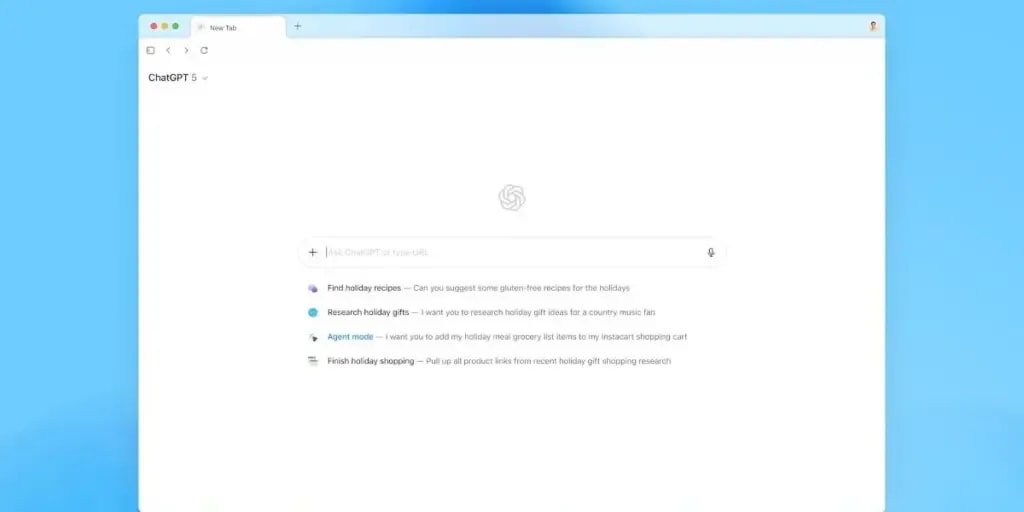
[caption id="attachment_32591" align="aligncenter" width="900"]
Source: OpenAI[/caption]
Unlike many AI products, Atlas will be accessible to both free and paid ChatGPT users, though some premium features require a subscription.
AI-first browsing experience
At the heart of Atlas is a fundamentally different approach to web browsing. Rather than simply navigating between web pages, users can engage in conversations with their browser through ChatGPT integration.
"We think AI represents a rare once-in-a-decade opportunity to rethink what a browser can be about and how to use one, and how to most productively and pleasantly use the web," said OpenAI CEO Sam Altman during the product's launch livestream. "Tabs were great, but we haven't seen a lot of browser innovation since then."
The browser features an "Ask ChatGPT" button in the upper right corner that launches a sidebar, allowing users to interact with ChatGPT without leaving their current webpage. This sidebar can analyze page content, summarize articles, compare products, help draft emails, and answer questions based on what users are viewing.
"It's basically you inviting ChatGPT into your corner of the internet," said Ryan O'Rouke, lead designer for Atlas, during OpenAI's video unveiling.
Ben Goodger, OpenAI's engineering lead for Atlas, noted in Tuesday's livestream that ChatGPT serves as the core foundation of the browser, enabling users to chat with their search results similar to features offered by competitors like Perplexity or Google's AI Mode.
Browser memory and personalization
One of Atlas's distinguishing features is its browser memory system, which allows ChatGPT to log the websites users visit and their activities, creating a more personalized browsing experience over time.
This enables complex queries like asking ChatGPT to summarize job postings viewed last week or retrieve documents previously worked on.
Adam Fry, OpenAI's product lead, confirmed during the livestream that Atlas includes this browser history feature, though users maintain complete control over their data. They can view, archive, or delete browser memories at any time through settings, and deleting browsing history automatically removes associated memories.
By default, OpenAI says it won't use browsing data to train its AI models unless users explicitly opt in, and business users' data won't be used for training purposes at all.
Agent mode for task automation
Atlas includes an "agent mode" that attempts to automate web-based tasks on users' behalf, such as booking flights, editing documents, or ordering groceries. The feature is currently only available to ChatGPT Plus, Pro, and Business subscribers and remains in preview status.
"It's using the internet for you," Altman explained during the launch presentation.
However, OpenAI acknowledged that agent mode is still an early experience and may struggle with some complex tasks. The company stated it plans to rapidly improve the feature's reliability and response time.
Competitive ground
The browser launch intensifies competition in an increasingly crowded AI browser market. Google Chrome currently commands roughly 72% of the global browser market with more than 3 billion users worldwide. OpenAI, which claims more than 800 million ChatGPT users but has yet to turn a profit, faces significant challenges in gaining market share.
Google has already integrated its Gemini AI technology into Chrome, while Microsoft has enhanced Edge with AI capabilities. Startups, including Perplexity with its Comet browser and The Browser Company with Dia, have also entered the AI browser space.
Nick Turley, head of ChatGPT at OpenAI, told TechCrunch during the company's DevDay conference that he's inspired by how browsers have redefined operating systems. Turley suggested ChatGPT represents a similar transformational phenomenon in how people accomplish work online.
Whether Atlas can make a meaningful dent in Google's browser dominance remains uncertain. While AI-powered browsers have generated significant buzz in Silicon Valley, their broader impact beyond the tech community has been limited so far.
Read more: