Key Takeaways
OpenAI announced the launch of Sora 2 on Tuesday, introducing its next-generation video and audio generation model alongside a new social platform app designed to rival TikTok's short-form video format.
The announcement, made during a livestream event Tuesday afternoon, represents a significant upgrade from the original Sora model released in February 2024.
According to OpenAI, Sora 2 now generates videos with synchronized speech, ambient sounds, and special effects while demonstrating improved adherence to physical laws.
Enhanced physics and realistic motion
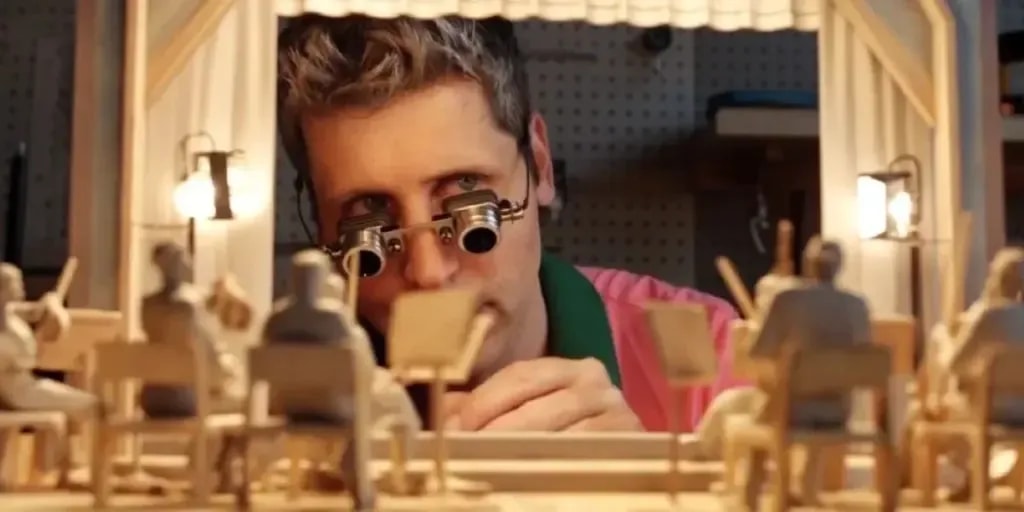
An AI-generated video frame showing a digital recreation of OpenAI CEO Sam Altman created using Sora 2 - OpenAI, Sora 2[/caption]
One of Sora 2's key improvements lies in its ability to better obey the laws of physics compared to earlier video generation models.
According to OpenAI's official announcement, previous AI video models would sometimes spontaneously deform or teleport objects to fulfill text prompts.
For example, if a basketball player missed a shot in earlier models, the ball might teleport to the hoop, whereas in Sora 2, the ball will realistically rebound off the backboard.
The company showcased demonstrations featuring complex physical movements including Olympic gymnastics routines, skateboarding tricks, and paddleboard backflips.
However, OpenAI acknowledged the technology's limitations, stating in its announcement: "The model is far from perfect and makes plenty of mistakes, but it is validation that further scaling up neural networks on video data will bring us closer to simulating reality."
Social app with "Cameo" feature
The centerpiece of Tuesday's announcement is the new Sora iOS app, which combines video generation capabilities with social networking features.
The app allows users to create "cameos," or guest appearances, of themselves and others in videos after making a one-time video and audio recording to verify their identity.
OpenAI research scientist Gabriel Petersson demonstrated the cameo feature by posting a video on social media that showed his own likeness riding a dragon, diving off a cargo ship, and running through the OpenAI office with CEO Sam Altman's likeness.
The app features an algorithmic feed similar to TikTok and Instagram Reels, displaying AI-generated videos tailored to users' interests.
According to details published by OpenAI, the feed includes a "steerable ranking" system allowing users to further personalize the content they see.
In a blog post about the launch, CEO Sam Altman wrote: "This feels to many of us like the 'ChatGPT for creativity' moment, and it feels fun and new. There is something great about making it really easy and fast to go from idea to result, and the new social dynamics that emerge."
Rollout and access
The Sora app is available for download now on iOS systems, but access to the service remains invite-only, with users able to request access through the app.
The initial rollout is limited to the United States and Canada, with OpenAI indicating plans to expand to additional countries.
OpenAI stated it may roll out access slowly, initially giving users "generous limits" on video creation due to the intense computing power required by AI systems like Sora 2.
The company's launch announcement revealed: "Transparently, our only current plan is to eventually give users the option to pay some amount to generate an extra video if there's too much demand relative to available compute."
Safety measures and concerns
Acknowledging potential risks associated with the platform, OpenAI released a separate safety document alongside the main announcement.
The company recognized potential concerns about isolation, addiction, and the proliferation of poor-quality AI content, stating: "We've made sure safety is built in from the very start."
All Sora-generated videos will include visible watermarks and industry-standard metadata to clearly indicate AI creation, and a user's likeness can only be turned into a cameo with their consent, which can be revoked at any time.
OpenAI announced it is expanding its team of human moderators to review content for bullying and other violations.
Teen accounts will be subject to parental controls and time limits. The company stated: "At creation, guardrails seek to block unsafe content before it's made, including sexual material, terrorist propaganda, and self-harm promotion, by checking both prompts and outputs across multiple video frames and audio transcripts."
In his blog post, Altman outlined principles for the product, including: "Optimize for long-term user satisfaction.
The majority of users, looking back on the past 6 months, should feel that their life is better for using Sora that it would have been if they hadn't. If that's not the case, we will make significant changes (and if we can't fix it, we would discontinue offering the service)."
Broader AI ambitions
OpenAI framed Sora 2 as an important step toward more powerful AI systems, stating in its release: "On the road to general-purpose simulation and AI systems that can function in the physical world, we think people can have a lot of fun with the models we're building along the way."
Read more: