Key Takeaways
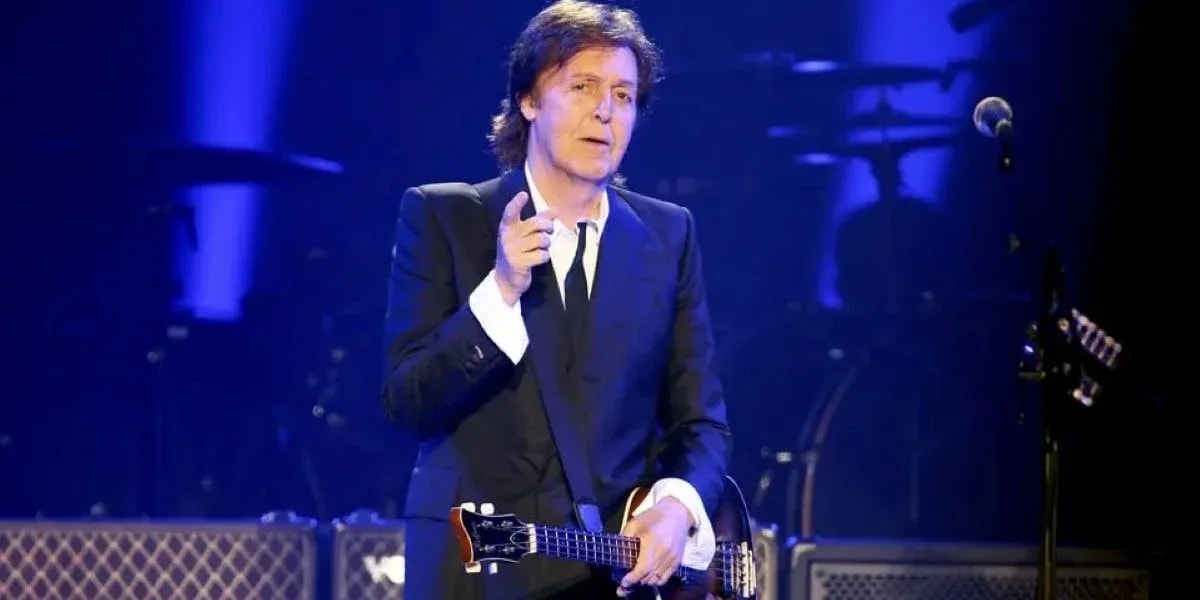
Paul McCartney has released his first new recording in five years, but fans expecting melodic brilliance will find only silence.
The former Beatle's latest track is an almost completely silent studio recording lasting two minutes and 45 seconds, serving as a stark protest against artificial intelligence companies using copyrighted music without permission or payment.
The 83-year-old songwriter, currently touring North America, contributed the track titled "(bonus track)" to the B-side of an LP called "Is This What We Want?"
The album consists of silent recordings that will be pressed on vinyl and released later this month.
The recording features only quiet hiss and occasional clattering sounds, symbolizing what McCartney and fellow artists fear could become the future of music if AI companies exploit musicians' intellectual property.
Campaign against government AI copyright plans
The protest album's track listing delivers a clear message, spelling out "the British government must not legalise music theft to benefit AI companies." Ed Newton-Rex, a composer and campaigner for copyright fairness who organized the protest album, expressed concern about the government's priorities.
"I am very concerned the government is paying more attention to US tech companies' interests rather than British creatives' interests," Newton-Rex said.
The campaign has attracted support from prominent British artists, including Sam Fender, Kate Bush, Hans Zimmer, and the Pet Shop Boys.
Elton John recently called the UK government "absolute losers" over their AI copyright proposals during an appearance on Sunday With Laura Kuenssberg.
Musicians voice concerns over creative future
McCartney has been vocal about the potential dangers AI poses to emerging artists and the music industry.
He warned that unchecked AI development could eliminate opportunities for young musicians to build careers.
"We've got to be careful about it because it could just take over and we don't want that to happen, particularly for the young composers and writers who, it may be the only way they're gonna make a career," McCartney said. "If AI wipes that out, that would be a very sad thing indeed."
Kate Bush, another artist involved in the protest album, posed a pointed question about the future: "In the music of the future, will our voices go unheard?"
Composer Max Richter added that "the government's proposals would impoverish creators, favouring those automating creativity over the people who compose our music, write our literature, paint our art."
Government caught between creators and tech giants
The UK government has consulted on allowing an exception to copyright law for "text and data mining," which could require copyright holders to actively opt out of their work being used to train AI models.
Ministers face the challenge of balancing the interests of creative industries, which contribute £125 billion annually to the UK economy, against pressure from US tech companies, who have announced more than £30 billion in investments, primarily in datacentres.
The situation has become more complicated with intervention from Donald Trump's White House.
Trump stated that "we have to allow AI to use that pool of knowledge without going through the complexity of contract negotiations" and warned international governments not to "make rules and regulations that make it impossible" for AI companies to operate.
Beeban Kidron, a cross-bench peer and film director campaigning for copyright protection, criticized the government's approach, telling The Guardian: "The government is trying to play both sides and convincing neither. They have proven themselves unfit to govern in the economic interests of the creators."
A government source indicated that Liz Kendall, the secretary of state for science, innovation, and technology, remains committed to finding a solution between AI firms and creatives, recognizing that "both of these sectors are British success stories."
A government spokesperson responded to McCartney's intervention by stating: "We've always been clear on the need to work with both the creative industries and AI sector to drive AI innovation and ensure robust protections for creators.
We are bringing together both British and global companies, alongside voices beyond the AI and creative sectors, to ensure we can capture the broadest possible range of expert views as we consider next steps."
Read more: