Key Takeaways
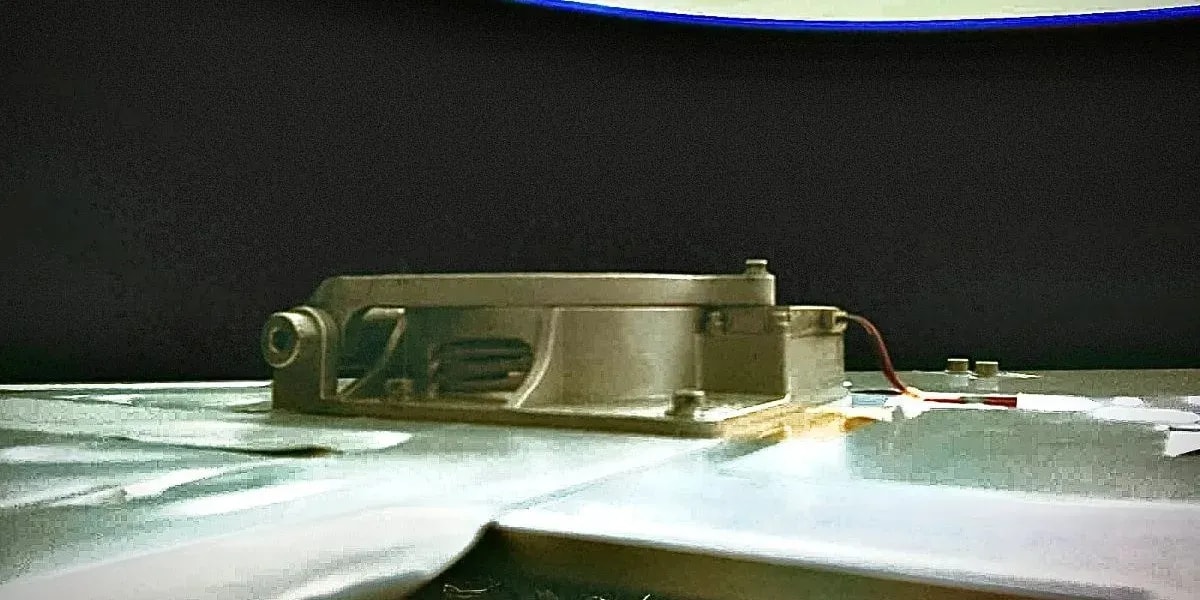
Los Angeles-based startup Proteus Space has successfully launched and established first contact with MERCURY ONE, marking the deployment of what the company calls the world's first AI-designed spacecraft.
The four-payload ESPA-class satellite lifted off from Vandenberg Space Force Base on November 28, 2025.
The mission sets a new industry benchmark by completing the entire development cycle—from initial blank sheet design to a launch-qualified satellite—in just 9 months, establishing what Proteus Space claims is the fastest timeline ever achieved for an ESPA-class spacecraft.
Record-breaking development timeline
MERCURY ONE was designed and engineered using the company's MERCURY™ platform, an AI-enabled rapid concurrent engineering system.
Proteus Space handled all aspects of the mission in-house, including design, assembly, integration and testing, launch brokering, licensing, launch integration, and operations.
"This Thanksgiving launch of our record-setting MERCURY ONE mission culminates an incredible year of successes for our team, government sponsors, payload partners, and innovation-minded customers," said David Kervin, CEO of Proteus Space. "Twelve months ago, we had no mature design, no payloads, and no metal in-house for this first-of-its-kind, ESPA-class, four-payload spacecraft."
Kervin emphasized the achievement's significance given the company's limited resources. "It's a huge testament to what technology-enabled humans can do with our MERCURY™ platform, which drives down cost, schedule, and risk and allowed us to accomplish all of this with nothing more than seed-stage capital and SBIR funding," he said.
Unprecedented payload flexibility demonstrated
The satellite carries four payloads from multiple collaborators, including NASA's Jet Propulsion Laboratory, University of California Davis, and Leonardo DRS.
In a demonstration of the platform's flexibility, Leonardo DRS was able to add its radio payload after the spacecraft's Preliminary Design Review was complete—just 7 months before the scheduled launch.
"The responsiveness of the MERCURY™ rapid concurrent spacecraft engineering platform enabled us to accelerate the critical on-orbit testing of our payload to meet market opportunity timelines," said John Corbean, Vice President of Advanced Technologies for the Leonardo DRS AIS Business Unit.
"Integrating our payload onto the MERCURY ONE bus after PDR, without any schedule impacts or major bus redesigns, demonstrates the unique advantages of this innovative approach to payload-tailored and mission-optimized satellite development."
The mission was executed under a contract with SpaceWERX and the Air Force Research Laboratory's Space Vehicles Directorate, validating what Proteus Space describes as a paradigm shift in ultra-rapid satellite design and assembly.
Kervin announced plans to offer a beta software-as-a-service version of the MERCURY™ platform for commercial and government customers by the end of 2026.
"We're going to be offering a beta SaaS of MERCURY™ for commercial and government customers by the end of next year, which will become a watershed event in the space industry," he said. "I'm incredibly proud of what our small team has accomplished and can't wait to show the world what we're doing in 2026."
The successful launch provides TRL9 flight heritage to the MERCURY™ platform, marking its transition from development to proven operational technology.
The platform compresses spacecraft definition and testing lifecycles from years to months while providing non-proprietary, vendor-agnostic design definitions.
Read more:
Trump’s Data Center Push Sparks Backlash From His Own Supporters
Thai Singer Files Complaint Over Deepfake Pornography
Oxford University trials new AI gateway service from Microsoft and Cloudforce