Key Takeaways
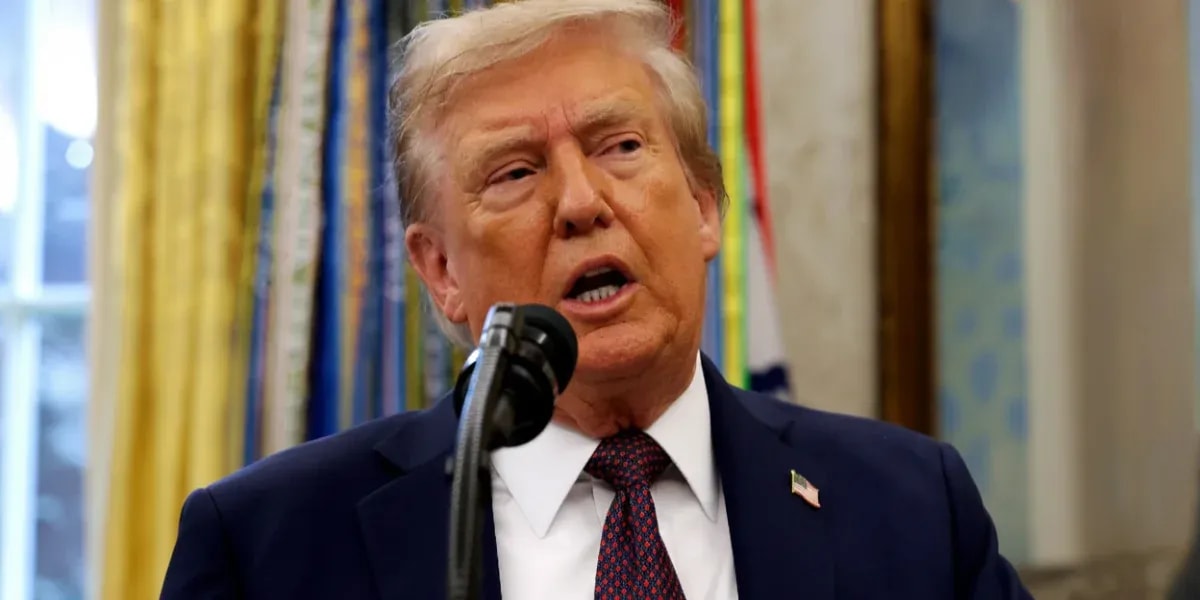
President Donald Trump's administration has prepared a draft executive order that would direct federal agencies to challenge state artificial intelligence regulations, escalating a conflict between federal and state authority over the rapidly evolving technology.
The six-page draft order, titled "Eliminating State Law Obstruction of National AI Policy," directs U.S. Attorney General Pam Bondi to establish an AI Litigation Task Force within 30 days to challenge state AI laws on grounds they unconstitutionally regulate interstate commerce or conflict with federal regulations, according to copies of the document reviewed by multiple news organizations.
A White House official told CNN that until officially announced by the White House, discussion about potential orders is speculation. The Associated Press reported that the tentative plan is for Trump to sign the order on Friday.
The draft order reflects the administration's position that a uniform federal approach to AI regulation is necessary to maintain America's competitive edge in the global AI race.
According to the draft text, it is the policy of the United States to sustain and enhance America's global AI dominance through a minimally burdensome, uniform national policy framework for AI.
Trump reinforced this position on Tuesday on Truth Social, writing that states should not implement their own AI regulations.
On Wednesday, during the U.S.-Saudi Investment Forum, Trump stated that navigating 50 different state regulatory systems would be problematic, telling attendees that the country needs one approval process rather than dealing with individual state requirements.
The draft order would empower multiple federal agencies to act.
The Federal Communications Commission chair would be directed to initiate proceedings within 90 days to determine whether to adopt federal reporting standards that preempt state laws.
The Federal Trade Commission chair would need to issue policy statements on applying federal consumer protection laws to AI models.
Additionally, the Commerce Department would be required to review state AI laws and identify those deemed burdensome or restrictive.
The order includes provisions to withhold federal funding from states that maintain AI regulations conflicting with the executive order.
The Commerce Secretary would need to issue a policy notice within 90 days outlining eligibility conditions for states to receive the remaining Broadband Equity Access and Deployment funding.
Bipartisan opposition emerges
The proposal has generated significant opposition from officials across the political spectrum.
Florida Governor Ron DeSantis called the effort federal government overreach in a Tuesday post on X, stating that stripping states of jurisdiction to regulate AI is a subsidy to Big Tech and will prevent states from protecting against various harms, including online censorship of political speech and predatory applications targeting children.
Democratic Senator Ed Markey criticized the administration in an X post on Wednesday, accusing Republicans of trying to insert their AI regulation moratorium into the defense bill and alleging that Trump sides with his billionaire Big Tech associates.
Safety advocates and civil rights organizations have raised alarms about the potential consequences of blocking state regulations.
Alejandra Montoya-Boyer, vice president of The Leadership Conference's Center for Civil Rights and Technology, said in a statement that the draft executive order is about giving the administration's tech billionaire associates and corporations a free pass rather than protecting the people it's meant to serve.
J.B. Branch, big tech accountability advocate at the consumer protection nonprofit Public Citizen, noted in a statement that AI scams are increasing, children have died by suicide linked to harmful online systems, and psychologists are warning about AI-induced psychological issues, arguing that blocking state regulations could shield Silicon Valley from responsibility.
State regulations fill federal void
In the absence of comprehensive federal AI legislation, several states have enacted their own regulations.
Four states, Colorado, California, Utah, and Texas, have passed laws establishing rules for AI across the private sector, according to the International Association of Privacy Professionals.
These state laws address various concerns, including the creation of misleading deepfakes, algorithmic discrimination in hiring, and other potentially harmful uses of AI technology.
The fast-moving technology currently operates under minimal federal oversight, even as it extends into critical areas including healthcare, policing, personal communications, and relationships.
State lawmakers have moved to fill this regulatory gap with targeted legislation addressing specific harms they've observed within their jurisdictions.
Congressional efforts and previous attempts
Concurrent with the executive order draft, House Republican leadership is discussing proposals to temporarily block states from regulating AI, potentially as part of the National Defense Authorization Act, the annual defense policy bill.
House Majority Leader Steve Scalise told reporters that AI represents the wave of the future and policies should reflect America's goal to remain dominant in the technology.
However, Congress has previously rejected similar efforts.
In July, the U.S. Senate voted 99-1 to remove a proposed 10-year moratorium on the enforcement of state artificial intelligence regulations from Trump's domestic policy bill before it passed.
The overwhelming rejection demonstrates the political difficulty of advancing such proposals through the legislative process.
Senate Majority Leader John Thune told reporters Wednesday that language being negotiated should ensure states have some role in regulating how companies operate within their borders while recognizing the importance of enabling interstate commerce.
Hundreds of organizations, including tech employee unions, labor groups, tech safety and consumer protection nonprofits, and educational institutions, signed letters to Congress this week opposing the blocking of state AI regulations and raising concerns about AI safety risks.
Read more: