Key Takeaways
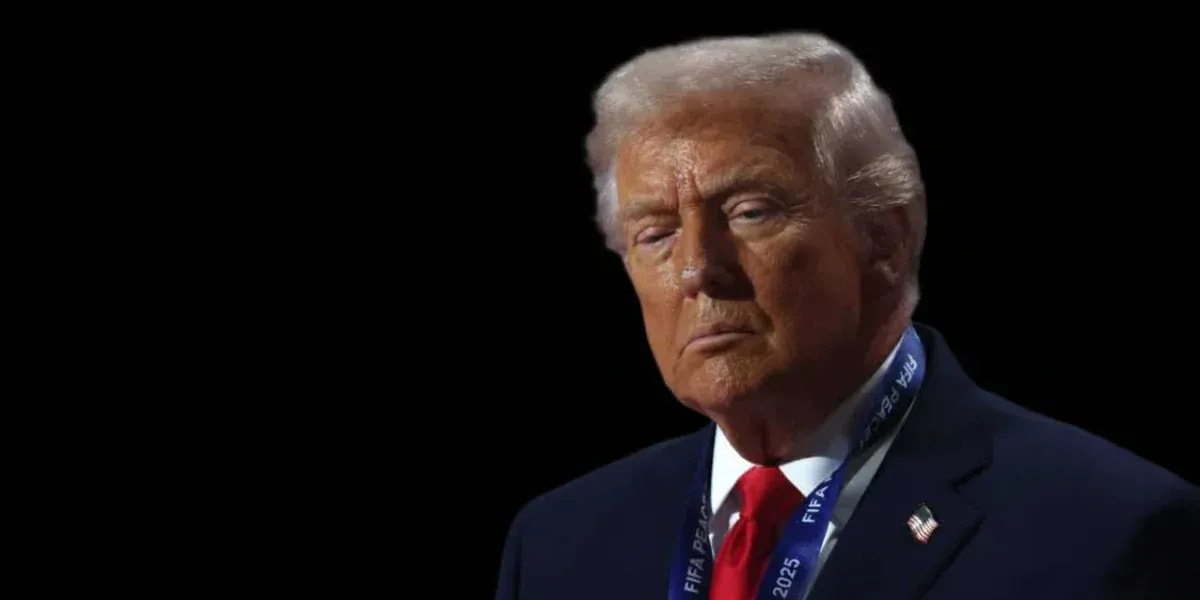
The executive order, titled "Ensuring a National Policy Framework for Artificial Intelligence," directs the Attorney General to establish an AI Litigation Task Force within 30 days.
The task force's sole responsibility will be to challenge state AI laws that the administration views as inconsistent with national policy or harmful to innovation.
Speaking at the signing ceremony in the Oval Office, White House aide Will Scharf described the order as an effort to ensure AI can operate within a single national framework rather than being subject to state-level regulation that could potentially cripple the industry.
Administration cites compliance burden and China competition
The Trump administration argues that the proliferation of state AI laws creates an untenable compliance burden for companies, particularly startups.
According to the White House, state legislatures have introduced over 1,000 different AI bills, with more than 100 already enacted into law.
David Sacks, the White House AI and crypto czar who helped author the executive order, defended the administration's approach during the signing ceremony.
"We have over a thousand bills going through state legislatures right now to regulate AI. Over 100 of them have already passed. 25 percent of them are in California, New York, and Illinois," Sacks said.
"You've got 50 states running in 50 different directions. It just doesn't make sense. We're creating a confusing patchwork of regulation. And what we need is a single federal standard."
In subsequent media appearances, Sacks emphasized the competitive stakes with China.
"If you have to report to 50 different state regulators at 50 different times with 50 different definitions, it's extremely onerous. And it's going to slow down innovation, and it's going to hinder our progress in the AI race," he told Fox Business.
The executive order explicitly frames AI development as critical to national security and economic competitiveness.
"To win, United States AI companies must be free to innovate without cumbersome regulation," the order states. "But excessive State regulation thwarts this imperative."
Beyond litigation, the executive order employs financial pressure to influence state policy.
It directs the Secretary of Commerce to identify states with AI laws that conflict with federal priorities and makes those states ineligible for non-deployment funds under the $42.5 billion Broadband Equity Access and Deployment program.
The order also instructs other federal agencies to consider whether the absence of restrictive AI laws should be a condition for receiving discretionary grant funding.
Additionally, it tasks the Federal Trade Commission and Federal Communications Commission with taking actions to limit states' ability to impose AI-related reporting and disclosure requirements.
White House AI czar Sacks clarified that the administration would not challenge all state AI laws. "Kid safety, we're going to protect.
We're not pushing back on that, but we're going to push back on the most onerous examples of state regulations," Sacks said during the signing ceremony.
Bipartisan criticism and legal challenges expected
The executive order has drawn immediate criticism from both supporters and opponents of AI regulation, with many questioning its legal foundation and policy approach.
Brad Carson, president of Americans for Responsible Innovation and a former member of Congress, predicted swift legal challenges.
"This EO is going to hit a brick wall in the courts," Carson said in a statement.
"The executive order relies on a flimsy and overly broad interpretation of the Constitution's Interstate Commerce Clause cooked up by venture capitalists over the last six months.
What's more, this EO directly attacks the state-passed safeguards that we've seen vocal public support for over the past year, all without any replacement at the federal level."
Democratic Representative Zoe Lofgren, ranking member of the House Committee on Science, Space, and Technology, called the order "not lawful" and urged Speaker Mike Johnson to engage in bipartisan AI negotiations.
"If the President really wants to address contradictory state laws, he can work with Congress on both sides of the aisle to debate and pass a federal standard," Lofgren said.
The order has also created divisions within the conservative movement.
Florida Governor Ron DeSantis, who recently proposed an "AI Bill of Rights" for his state, stated that an executive order cannot preempt state legislative action.
California Attorney General Rob Bonta announced his office would examine the legality of the executive order.
Even some Trump supporters expressed concern.
Michael Toscano, director of the Family First Technology Initiative at the Institute for Family Studies, a conservative think tank, called it "a huge lost opportunity by the Trump administration to lead the Republican Party into a broadly consultative process."
Industry reactions have been mixed.
Collin McCune, head of government affairs at venture capital firm Andreessen Horowitz, called the order "an incredibly important first step" while acknowledging that Congress must ultimately fill the regulatory vacuum.
"States have an important role in addressing harms and protecting people, but they can't provide the long-term clarity or national direction that only Congress can deliver," McCune wrote on social media platform X.
The executive order comes after two failed congressional attempts to impose federal preemption of state AI laws.
In July, the Senate voted 99-1 to reject a 10-year moratorium on state AI regulations proposed as part of Trump's domestic policy bill.
House Republicans also abandoned an attempt to include similar language in the National Defense Authorization Act.
The order directs White House officials to work with Congress to develop recommendations for federal legislation that would formally preempt state AI laws, though the timeline and prospects for such legislation remain uncertain.
Read more:
Bytedance’s AI Smartphone Faces Backlash As Major Chinese Apps Block Features
Microsoft Explores Custom AI Chip Partnership With Broadcom
Choco Launches First AI Voice Agent For Food Service With OpenAI Partnership