Key takeaways
In rural Montour County, Pennsylvania, more than 300 residents packed into a planning commission meeting in November to protest a proposed data center by Talen Energy.
Most wore red shirts signaling unity and opposition to plans that would rezone 1,300 acres of agricultural land for industrial use.
The irony wasn't lost on observers: Trump carried this county by 20 percentage points in 2024, yet residents now bristle at his administration's push to fast-track artificial intelligence infrastructure.
"To pick up that much land and build any kind of industry would be very detrimental to the whole rural atmosphere," said Sam Burleigh, co-founder of Concerned Citizens of Montour County, speaking to Pennsylvania Capital-Star in October.
The planning commission ultimately voted 6-1 against recommending the rezoning.
Rising energy costs fuel bipartisan opposition
The backlash represents a growing coalition of farmers, environmentalists, and homeowners who have united across partisan lines to resist data center expansion.
According to a report by Data Center Watch, between March and June 2025, local resistance either blocked or delayed $98 billion in data center projects—more than all disruptions tracked in the two years prior.
"Opposition to data centers is accelerating," the Data Center Watch report stated. "As political resistance builds and local organizing becomes more coordinated, this is now a sustained and intensifying trend."
The report tracked 53 active opposition groups across 17 states targeting 30 data center projects during that three-month period.
Opposition groups were successful in blocking or delaying two out of every three projects they protested. Key projects were halted or delayed in Indiana, Kentucky, Georgia, and South Dakota, among other states.
"Opposition is cross-partisan and geographically mixed," the researchers wrote. "Blue and red states alike are tightening rules or rethinking incentives; legislators in places like Virginia, Minnesota, and South Dakota are scrutinizing subsidies, grid impacts, and local authority, often cutting across traditional party lines."
Trump administration doubles down despite resistance
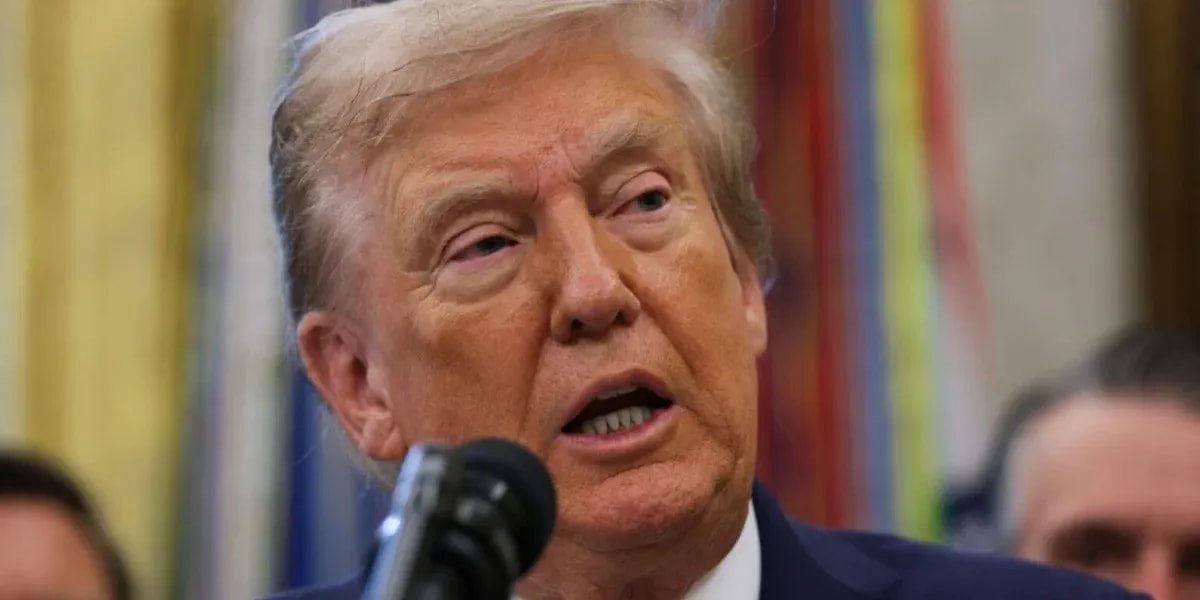
Despite the mounting opposition, the Trump administration has made AI infrastructure a cornerstone of its economic policy. On July 23, 2025, President Trump signed an executive order titled "Accelerating Federal Permitting of Data Center Infrastructure," which directs federal agencies to streamline environmental reviews and expedite the construction of data centers requiring more than 100 megawatts of power.
The executive order instructs agencies to identify existing National Environmental Policy Act categorical exclusions and create new ones to bypass detailed environmental impact statements. It also directs the Department of the Interior, Department of Energy, and Department of Defense to authorize data center construction on federal lands.
"My Administration has inaugurated a golden age for American manufacturing and technological dominance," the executive order stated. "It will be a priority of my Administration to facilitate the rapid and efficient buildout of this infrastructure by easing Federal regulatory burdens."
The White House's "Winning the Race: America's AI Action Plan" argues that America's environmental permitting system makes it nearly impossible to build digital infrastructure with the required speed.
Democrats seize political opening
Democratic candidates have capitalized on voter anger over rising electricity prices linked to data center expansion.
Abigail Spanberger won Virginia's gubernatorial race in November by more than 14 percentage points after promising to make data centers "pay their fair share" for power.
"We're going to produce more energy, and we're going to lower energy costs.
We are going to produce more energy here in Virginia and make sure that data centers pay their fair share," Spanberger said in her victory speech, according to the Virginia Mercury.
Virginia has the world's largest concentration of data centers, and power bills in the state have increased by nearly 7 percent over the past year.
In a CBS News interview following her election, Spanberger warned that Virginia faces an "energy crisis" without new policies.
"It will be important that large-scale energy users, particularly data centers, make it clear to the public that they are paying their fair share for the energy that they are using," Spanberger told Face the Nation on November 9.
In New Jersey, Governor-elect Mikie Sherrill promised to declare a state of emergency over electric bills on her first day in office.
In Georgia, Democrat Peter Hubbard became the first Democrat in 20 years to win statewide office by running on concerns about data centers and rising utility costs.
"The number one issue was affordability," Hubbard told NBC News. "But a very close second was data centers and the concern around them just sucking up the water, the electricity, the land—and not really paying any taxes."
Even some Republicans break ranks
The opposition to Trump's data center push isn't limited to Democrats. Several prominent Republicans have voiced concerns about the rapid expansion.
Rep. Marjorie Taylor Greene of Georgia criticized Trump's executive order for disregarding data centers' high water consumption.
"I have many concerns about the AI Executive Order signed yesterday by President Trump," Greene wrote on X on July 24, 2025, according to The Hill. "While I understand the many promised benefits of AI, I remain committed to protecting state rights, human jobs, human lives, human rights, our environment, and critical water supply."
Greene elaborated on her concerns about environmental impacts: "Rushed AI expansion and data centers being built all over the country from state to state with no plan regarding environmental and critical water supply impact has massive future implications and problems."
In November, Greene urged her followers: "People, you have got to pay close attention to your local city, county, and state approvals of data centers and demand your water and energy bills be protected!!!"
Sens. Josh Hawley and Thomas Massie have also emerged as vocal critics of unchecked data center expansion.
"The MAGA crowd and the Bernie bros have both figured out that they've been getting duped," said Kerwin Olson, executive director of Citizens Action Coalition, an Indianapolis-based consumer advocacy nonprofit, speaking to Inside Climate News. "It was data centers that really brought it all together."
The Energy Information Administration forecasts new highs in electricity usage in 2025 and 2026, saying increases in the commercial sector will be driven largely by more demand from data centers.
According to Morning Consult polling from October 2025, 54 percent of voters say data centers that support AI are responsible for increasing electricity prices for households.
The industry has defended its role in the economy.
Dan Diorio, vice president of state policy for the Data Center Coalition, said in a statement that the industry continues to see significant interest from communities across the country for responsible data center projects, which create jobs, economic investment, and local tax revenue.
What began as scattered local protests has evolved into a coordinated national movement that crosses traditional partisan boundaries, potentially reshaping how the United States approaches its AI infrastructure ambitions.
Read more:
Alibaba launches Quark AI glasses in China
AI can already replace 11.7% of US workforce, MIT study reveals
Deloitte Faces Second AI Citation Scandal In Million-dollar Government Report