Fleet managers across logistics and waste management sectors are discovering that ALPR technology delivers measurable returns faster than most expect. Modern fleet operations face mounting pressure from rising fuel costs, driver shortages, and compliance requirements that traditional tracking methods simply can't address efficiently.
Fleet tracking systems typically achieve payback periods between 3-8 months for most commercial applications, making them one of the fastest-returning investments in fleet technology. At Folio3, our AI-powered computer vision solutions have helped businesses across North America streamline their fleet operations while reducing operational costs by up to 25% within the first year of deployment. Our expertise in developing ALPR systems with over 90% accuracy rates positions us as a trusted partner for fleet modernization initiatives.
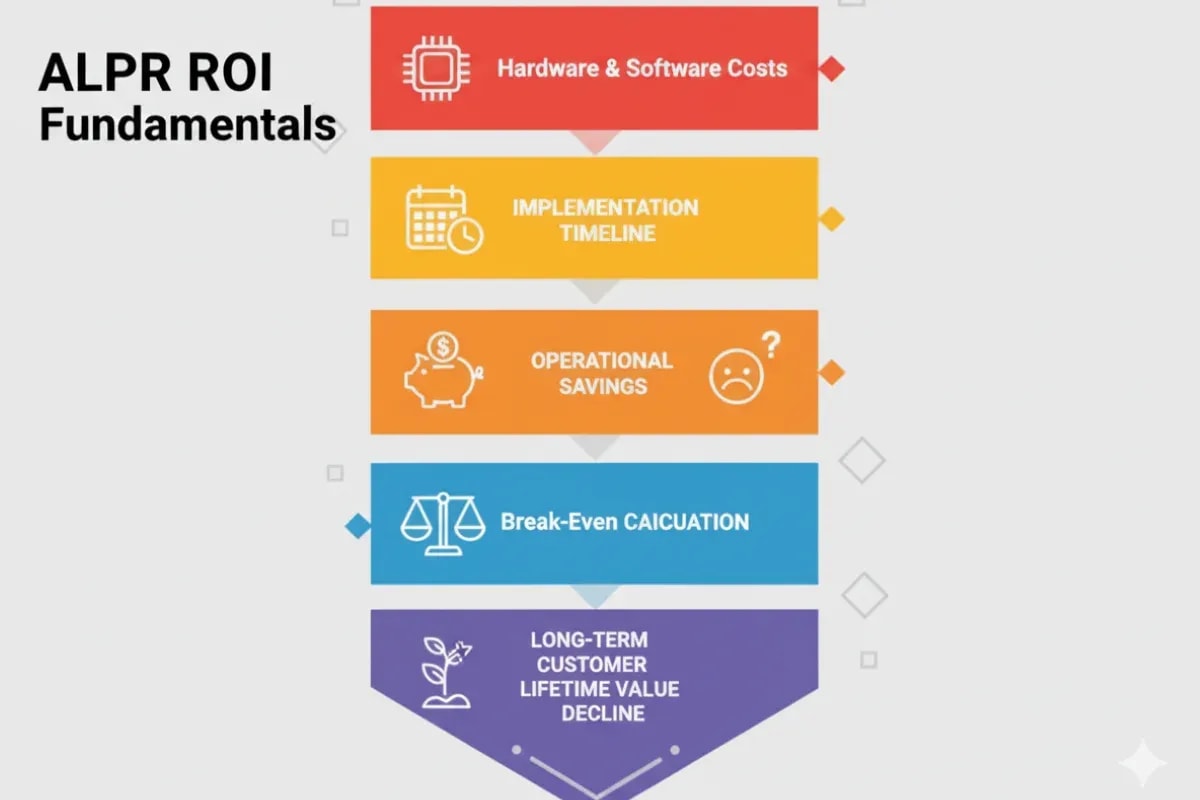
ALPR ROI fundamentals
Understanding ALPR return on investment starts with recognizing how this technology transforms fleet operations from reactive to proactive management.
Hardware and software cost components
Initial ALPR investments typically range from $200 to $800 per camera unit, depending on resolution requirements and environmental specifications. Software licensing fees average $30 to $80 per vehicle monthly, covering cloud processing, data storage, and analytics dashboards that provide real-time visibility into fleet operations.
Implementation timeline factors
Most ALPR deployments are complete within 4-8 weeks from contract signing to full operation. Installation complexity varies based on existing infrastructure, with simple retrofits taking 2-3 weeks while comprehensive integrations require up to 12 weeks for large fleets with multiple locations.
Operational savings categories
ALPR systems generate savings through reduced manual processes, improved route efficiency, and enhanced security monitoring capabilities. Fleet managers report average time savings of 2-3 hours daily on administrative tasks previously handled through manual log processing and verification procedures.
Break-even calculation basics
Payback period equals total implementation cost divided by monthly operational savings achieved through system deployment. Most fleet management systems achieve break-even within 6-12 months, with larger fleets seeing faster returns due to economies of scale and higher utilization rates.
Long-term value drivers
Beyond initial payback, ALPR systems continue generating value through reduced insurance premiums, improved asset utilization, and enhanced regulatory compliance. These ongoing benefits often double the initial ROI calculations within 24 months of full system deployment and optimization.
Complete cost structure analysis
ALPR implementation costs extend beyond basic hardware and software to include integration, training, and ongoing maintenance expenses that affect total project investment.
Initial capital expenditure
Camera hardware costs vary from $300 for basic units to $1,200 for weatherproof models with advanced night vision capabilities, according to industrial camera market analysis. Processing servers add $2,000 to $8,000, depending on fleet size and data retention requirements for compliance purposes.
Monthly operational expenses
Subscription fees cover cloud storage, software updates, and technical support services for ongoing system maintenance. Data transmission costs average $15-25 per camera monthly through cellular network providers, while advanced analytics features add $10-20 per vehicle to standard packages.
Integration and setup costs
Professional installation services range from $150 to $400 per camera location based on electrical contractor industry standards. System integration with existing fleet management platforms requires 20-40 hours of technical work, typically costing $3,000 to $7,000 for mid-size operations.
Training and support expenses
Initial staff training programs cost $500 to $1,500 per session, covering 5-10 users with hands-on system operation instruction. Ongoing technical support plans add 15-20% to annual software licensing fees, but provide priority response times and dedicated account management.
Hidden cost considerations
Network upgrades may be necessary for reliable data transmission, adding $200 to $800 per location based on network infrastructure costs. Backup power systems and surge protection equipment cost an additional $300 to $600 per installation point to ensure continuous operation during outages.
Revenue and savings drivers by fleet type
Different fleet operations generate ALPR value through distinct operational improvements and cost reductions that vary by industry application and use case.
Universal benefits
ALPR technology delivers consistent value across all fleet types through improved visibility and automated processes that reduce manual oversight requirements.
Fuel consumption reduction
Automated route optimization reduces unnecessary mileage by 8-12% across all fleet types through better dispatching and navigation. Fleet tracking systems reduce fuel consumption by 10-15% within six months of implementation through idle time monitoring and driver behavior improvements.
Insurance premium discounts
Insurance carriers offer 5-15% premium reductions for fleets with tracking systems that demonstrate improved risk management capabilities. Enhanced theft recovery and driver behavior monitoring contribute to lower risk profiles, reducing claim frequencies and associated premium costs.
Administrative efficiency gains
Manual log processing time drops by 60-80% with automated plate recognition systems that eliminate paper-based record keeping. Dispatch coordination improves when managers can view real-time vehicle locations and arrival confirmations without constant radio communication requirements.
Compliance documentation
Regulatory reporting becomes streamlined with automated timestamp records and route verification that satisfy DOT audit requirements. Electronic logs eliminate manual record-keeping errors while providing instant access to required documentation during regulatory inspections and compliance reviews.
Theft prevention and recovery
Vehicle theft recovery rates improve from the industry average of 58% to 85% with ALPR tracking systems providing real-time location data. Unauthorized vehicle movement alerts reduce theft losses while lowering insurance deductibles for recovered assets and preventing total loss claims.
Logistics fleet-specific ROI drivers
Logistics operations benefit from ALPR through improved delivery efficiency and customer service metrics that directly impact revenue generation and cost control.
Delivery time optimization
Route planning accuracy improves by 15-20% when based on actual travel data rather than theoretical estimates from mapping software. Customers receive more reliable delivery windows, reducing missed deliveries, repeat trips, and customer service complaints that increase operational costs.
Customer service enhancement
Automated arrival notifications keep customers informed without requiring driver communication that interrupts delivery schedules. Proof of service delivery becomes automated, reducing billing disputes and improving collection rates for service-based logistics companies operating on tight margins.
Driver productivity measurement
Performance metrics become objective rather than subjective, helping identify top performers and training opportunities for improvement. Overtime costs decrease by 10-18% when route efficiency improvements reduce required work hours and eliminate unnecessary vehicle movements.
Load planning efficiency
Knowing exact vehicle locations enables better load distribution and reduces empty miles between pickup and delivery points. Backhaul opportunities increase when dispatchers can identify vehicles near pickup locations in real-time, improving asset utilization and revenue per mile.
Maintenance scheduling optimization
Mileage-based maintenance schedules become more accurate with precise odometer tracking that eliminates estimation errors. Preventive maintenance timing improves, reducing unexpected breakdowns, emergency repair costs, and vehicle downtime that impacts service delivery capabilities.
Waste-fleet specific ROI drivers
Waste management operations see unique benefits from ALPR through service verification and route accountability that improve customer satisfaction and operational efficiency.
Service verification automation
Automated proof of service eliminates customer disputes about missed pickups that require investigation and administrative time. Service confirmation records reduce time spent responding to complaints and processing billing adjustments that impact cash flow and customer relationships.
Route completion monitoring
Supervisors can verify route completion without field checks, saving 2-4 hours daily on management oversight and vehicle tracking. Route deviations become immediately visible, enabling quick corrective action to maintain service schedules and prevent customer complaints about missed collections.
Billing accuracy improvement
Service billing becomes automated and accurate, reducing underbilling situations that decrease revenue and overbilling that damages customer relationships. Customer invoices include timestamp verification that improves payment collection rates and reduces disputes over service delivery timing.
Regulatory compliance tracking
Environmental regulations require detailed service records that ALPR systems generate automatically without manual data entry. Audit preparation time drops significantly with electronic documentation systems that provide instant access to required compliance records and service verification data.
Equipment utilization analysis
Vehicle capacity utilization data helps optimize fleet sizing and replacement schedules to reduce capital expenditure requirements. Underutilized vehicles can be redeployed to higher-demand routes or retired from service, reducing overall fleet maintenance and insurance costs.
ROI calculation framework
Accurate ROI calculations require structured approaches that account for both direct savings and operational improvements that contribute to overall business value.
Primary calculation methods
Standard ROI formulas provide the foundation for ALPR investment analysis while ensuring consistent evaluation criteria across different fleet types and sizes.
Simple payback period
Divide the total implementation cost by the monthly savings to determine the number of months until the break-even point is achieved. This straightforward calculation works well for initial feasibility studies and budget approvals where complexity needs to remain minimal for stakeholder understanding.
Return on investment percentage
Calculate net benefits minus total costs, divided by total costs, multiplied by 100 for percentage representation. Annual ROI percentages between 25-40% are common for well-implemented ALPR systems that achieve projected operational savings and efficiency improvements.
Net present value analysis
Account for money's time value by discounting future savings to present dollars using appropriate discount rates. NPV calculations help compare ALPR investments against alternative technology purchases or fleet improvements with different timing and cash flow patterns.
Internal rate of return
Determine the discount rate where NPV equals zero to compare against other investment opportunities available. IRR calculations above 30% indicate strong ALPR investment potential that exceeds typical business hurdle rates for technology investments.
Total cost of ownership
Include all costs over the system's expected lifespan, typically 5-7 years for ALPR equipment and software licensing. TCO analysis prevents underestimating long-term expenses, maintenance requirements, and upgrade costs that affect overall investment returns.
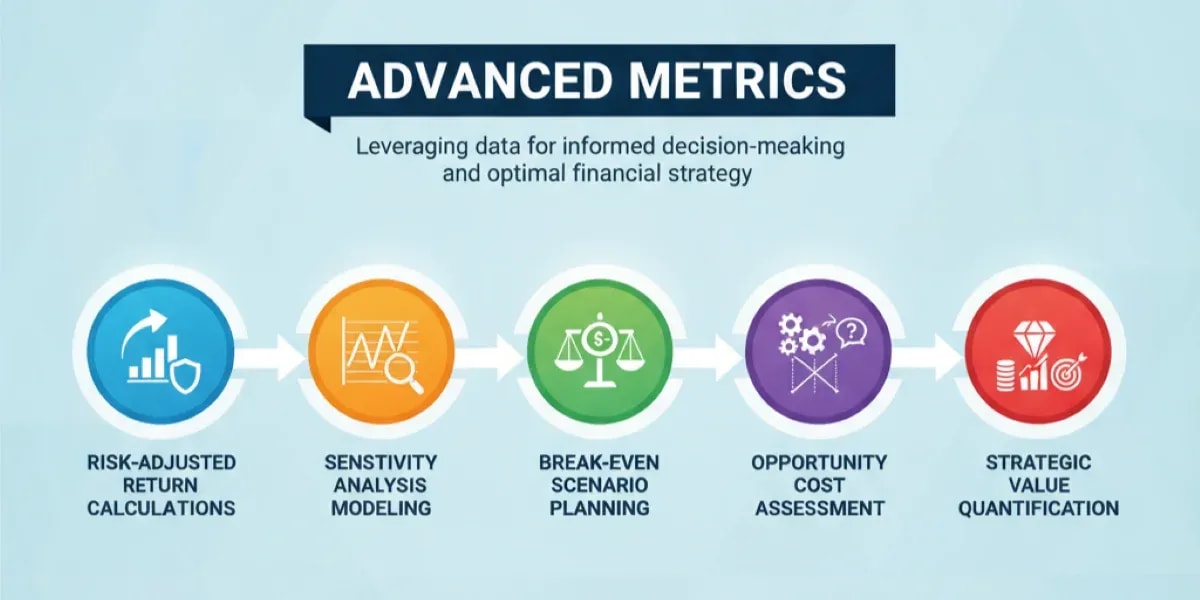
Advanced metrics
Sophisticated ROI analysis includes operational improvements that traditional calculations might miss but contribute significantly to business value creation.
Risk-adjusted return calculations
Factor in the probability of achieving projected savings based on implementation complexity and organizational readiness for change management. Conservative estimates improve budget accuracy and stakeholder confidence while reducing the likelihood of disappointing results after deployment.
Sensitivity analysis modeling
Test how ROI changes with different fuel prices, labor costs, and operational variables that affect fleet economics. Sensitivity analysis helps identify which factors most impact investment success, allowing managers to focus on controllable variables during implementation.
Break-even scenario planning
Calculate break-even points under best-case, worst-case, and most-likely scenarios to provide realistic expectation ranges. Multiple scenarios help decision-makers understand potential outcomes while preparing contingency plans for different performance levels after system deployment.
Opportunity cost assessment
Compare ALPR investment returns against alternative fleet technology purchases or operational improvements competing for capital allocation. Opportunity cost analysis ensures optimal resource allocation by quantifying the value of alternatives not pursued due to ALPR investment decisions.
Strategic value quantification
Assign monetary values to customer satisfaction improvements, regulatory compliance benefits, and competitive advantages gained through ALPR deployment. Strategic benefits often exceed direct operational savings while providing long-term business value that traditional ROI calculations might undervalue.
Real-world case studies and benchmarks
Actual implementation results provide realistic expectations for ALPR ROI across different fleet types and sizes based on documented performance data.
Mid-size logistics company results
A regional delivery operation achieved fuel savings and substantial productivity improvements within the first operational year. The initial investment paid back quickly through reduced operational costs, improved route efficiency, and decreased administrative overhead, demonstrating strong ROI potential for mid-sized fleet operations.
Municipal waste management success
A city waste department with a medium-sized collection fleet dramatically reduced service complaints and achieved substantial annual savings in administrative overhead. The payback period included improved citizen satisfaction metrics that reduced complaint processing costs and enhanced public service delivery ratings across the municipality.
Regional freight carrier outcomes
A large-scale freight operation reduced insurance premiums significantly and improved on-time delivery rates substantially. Customer retention improved measurably, contributing to revenue growth beyond direct cost savings while reducing customer acquisition costs through enhanced service reliability and operational excellence.
Small fleet implementation
A small-scale service company achieved break-even within a reasonable timeframe despite higher per-unit costs typical of smaller deployments. Theft prevention savings were substantial in the first year, demonstrating ALPR value for smaller operations where asset protection provides significant returns on investment.
Large-scale deployment metrics
An enterprise-level logistics network achieved impressive ROI in the first year through comprehensive operational improvements across multiple locations. Scale advantages reduced per-unit implementation costs while maximizing system-wide benefits through centralized monitoring and standardized processes across the entire fleet operation.
Implementation strategy for maximum ROI
Strategic deployment approaches significantly impact ALPR system returns and long-term value creation through careful planning and execution management.
Phased rollout planning
Start with high-value vehicles or routes to demonstrate early wins and build organizational support for broader deployment. Gradual expansion allows fine-tuning processes before full-scale deployment while minimizing risk and ensuring smooth transitions across operational areas.
Integration priority setting
Connect ALPR data with existing fleet management, ERP, and customer service systems for maximum operational impact across business functions. Integration multiplies system value beyond standalone ALPR benefits by enabling automated workflows and improved decision-making processes throughout the organization.
Staff training investment
Training programs ensure teams can fully utilize ALPR capabilities and realize projected savings through proper system operation. Well-trained users identify additional value opportunities during implementation while avoiding costly mistakes that could reduce system effectiveness and ROI achievement.
Set baseline metrics before implementation and track improvements monthly during the first year to validate ROI projections. Regular monitoring enables quick adjustments to optimize performance while demonstrating value to stakeholders who need evidence of investment success.
Vendor relationship management
Choose ALPR providers with proven fleet management experience and ongoing support capabilities for long-term partnership success. Strong vendor relationships ensure system reliability, feature evolution, and technical support that maintains operational efficiency throughout the system lifecycle.
ROI optimization and scaling considerations
Maximizing ALPR returns requires ongoing attention to system utilization and operational integration that extends beyond initial deployment success.
System utilization maximization
Regular usage audits identify underutilized features and training opportunities that could increase system value without additional investment. Full system utilization often doubles initial ROI calculations within 18-24 months by leveraging advanced features and analytical capabilities not used initially.
Data analytics advancement
Advanced reporting capabilities unlock additional value from collected ALPR data through improved decision-making and operational insights. Predictive analytics enable proactive fleet management that extends beyond basic tracking functions to optimize maintenance, routing, and resource allocation decisions.
Expansion opportunity identification
Successful initial deployments often justify expansion to additional vehicle types or operational areas where similar benefits can be achieved. Scaling considerations include network capacity, staff capabilities, and budget availability while maintaining service quality and system performance standards.
Technology evolution planning
ALPR systems continue evolving with AI improvements and new feature releases that enhance capabilities over time. Regular system updates maintain competitive advantages and operational efficiency gains while ensuring compatibility with changing technology standards and regulatory requirements.
Long-term value sustainability
Ongoing training, system maintenance, and process optimization ensure continued ROI realization throughout the system lifecycle. Five-year value plans help organizations maximize their ALPR investment returns while preparing for future technology upgrades and operational expansions.
How Folio3 AI can help with ALPR solutions?
Folio3 AI delivers advanced ALPR solutions that improve fleet visibility, reduce operational costs, and ensure compliance. Our solutions are accurate, scalable, and seamlessly integrate into existing enterprise workflows.
Tailored ALPR development
We build custom ALPR solutions designed around your fleet’s specific size, industry, and compliance needs, ensuring accuracy, efficiency, and measurable ROI from the very start.
Seamless system integration
Our ALPR technology integrates with your ERP, CRM, or fleet management software, enabling automated workflows, unified reporting, and smoother operations without disrupting current business systems.
High accuracy recognition
With 95%+ recognition accuracy across lighting and weather conditions, our AI-driven ALPR ensures reliable vehicle identification, reducing errors and delivering trustworthy data for critical decisions.
Scalable deployment models
We offer flexible ALPR deployments suited for both small fleets and enterprise-scale operations, supporting multi-vehicle and multi-site monitoring while maintaining performance as your operations grow.
Ongoing support and optimization
Our team provides continuous updates, training, and dedicated technical support to keep your ALPR solution optimized, ensuring long-term reliability and evolving capabilities as your business expands.
Frequently Asked Questions
What is ALPR, and how does it work for fleet management?
Automatic License Plate Recognition uses cameras and AI to read vehicle plates automatically, tracking fleet movements in real-time. The system captures images, processes plate data through machine learning algorithms, and integrates with fleet management software for comprehensive vehicle monitoring and operational insights.
How can ALPR reduce operational costs in logistics and waste fleets?
ALPR reduces costs by automating manual processes, optimizing routes, and preventing unauthorized vehicle use while improving fuel efficiency. Fleet managers save 2-4 hours daily on administrative tasks, reduce fuel consumption by 10-15%, and eliminate disputes through automated service verification and proof of delivery.
What key metrics determine ALPR ROI?
Key metrics include fuel savings, labor cost reduction, insurance premium discounts, and administrative time savings that contribute to total cost reduction. Additional factors include theft prevention, maintenance optimization, customer satisfaction improvement, and compliance automation that create measurable business value beyond direct cost savings.
How do you calculate the payback period for an ALPR investment?
Divide total implementation costs by monthly operational savings to determine the payback period in months for break-even analysis. Include hardware, software, installation, training, and integration costs in the numerator while calculating fuel, labor, insurance, and administrative savings in the denominator for accurate timing.
What typical payback period can logistics fleets expect?
Logistics fleets typically achieve payback periods between 4 and 8 months, with larger operations seeing faster returns due to economies of scale. Small fleets may require 8-12 months, while major logistics companies often break even within 3-6 months through higher utilization rates and operational efficiency gains.
Are there government incentives or grants for ALPR adoption?
Some regions offer technology modernization grants and tax incentives for fleet efficiency improvements that include ALPR systems. Check with local economic development agencies, transportation departments, and small business administration offices for available programs supporting fleet technology adoption and operational efficiency initiatives.
How accurate is ALPR powered by Google AI?
Modern ALPR systems achieve 95-99% accuracy rates in optimal conditions, with AI improvements continuing to enhance performance across various environments. Weather, lighting, and plate condition affect accuracy, but advanced machine learning algorithms and high-resolution cameras maintain reliable performance for fleet management applications.
What factors influence the total cost of ALPR deployment?
Fleet size, geographic coverage, integration complexity, and feature requirements significantly impact total deployment costs for ALPR systems. Additional factors include network infrastructure needs, staff training requirements, ongoing support levels, and customization needs that vary based on specific operational requirements and existing technology infrastructure.
Can ALPR integrate with existing fleet management software?
Most ALPR systems offer API integration capabilities with popular fleet management platforms through standard data protocols and custom connections. Integration enables automated workflows, centralized reporting, and enhanced operational visibility while preserving existing software investments and maintaining familiar user interfaces for staff.
How do data privacy regulations affect ALPR implementation?
Data privacy regulations require secure storage, limited access, and appropriate retention policies for collected vehicle and location information. Compliance involves encryption, user access controls, data anonymization where possible, and regular security audits to protect sensitive information while meeting regulatory requirements for fleet operations.