Artificial Intelligence
Drones are super versatile because you can fly them remotely. Today, enterprises across energy, agriculture, logistics, public safety, and real estate use drones as mission-critical tools for automation, inspection, and real-time intelligence. With advanced sensors, edge computing, and AI-powered analytics, drones are now part of the modern enterprise digital stack reducing operational costs, improving safety, and enabling real-time decision-making at scale.
Here’s an enterprise-grade look at the top commercial drone applications transforming industries in 2025, backed by operational impact, market trends, and Folio3’s AI expertise.
Below, we will explore some notable drone uses for business across various industries.
Commercial drones are now essential in large-scale disaster operations where speed and accuracy can save lives.
Real-time aerial visibility in areas inaccessible to ground teams
Thermal imaging to detect human heat signatures
BVLOS (Beyond Visual Line of Sight) flight for wide-area coverage
Integration with GIS and command-center dashboards
Faster assessment for insurers, municipalities, and emergency agencies
High-resolution imaging, Lidar mapping, and automated 3D reconstruction
AI models classify damage severity and generate actionable reports
80% reduction in assessment time vs manual inspections
Lower operational costs compared to helicopters
Minimizes risk to ground teams
Folio3 deploys AI-powered damage detection models, drone-image analytics, and command-center dashboards that support rapid decision-making across agencies.
Agriculture remains one of the most mature and high-ROI commercial drone sectors.
Multispectral/NDVI imaging to detect disease, stress, and nutrient variance
AI models flag early signs of crop threats
Automated growth-stage forecasting.
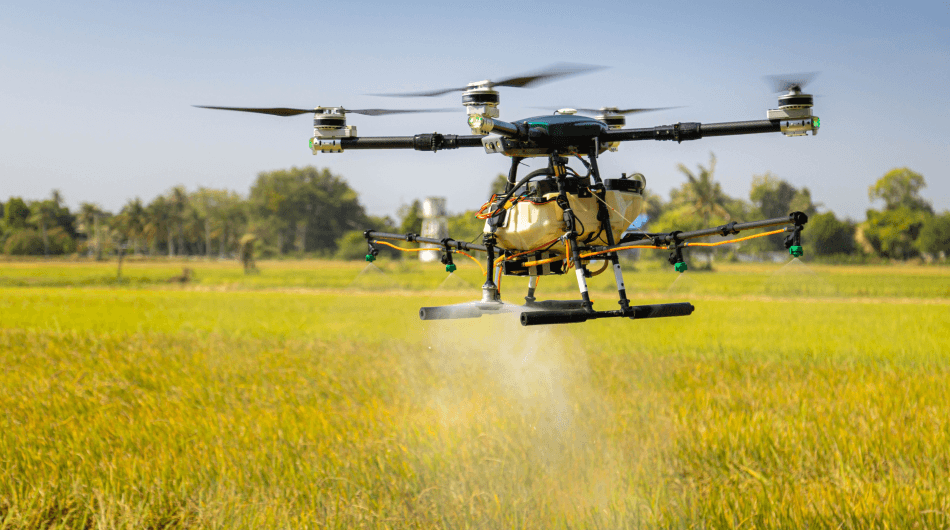
Drones spray fertilizers/pesticides with high precision
Reduces chemical usage & operational costs
Lidar + hyperspectral maps to understand plant density
On-device models for fast offline analysis
20–40% reduction in chemical usage
10–20% higher yields due to early disease detection
Massive labor reduction in large farms
Folio3 builds custom agriculture AI models for NDVI analysis, pest detection, field mapping, and automated decision support tailored to regional agronomy.
Bonus Read: Types Of Drones Used In Agriculture Business
Governments, climate agencies, and conservation orgs use drones for environmental intelligence.
Wildlife monitoring with thermal/IR sensors
Illegal logging and land-encroachment detection
Flood, forest, and coastal monitoring
Air quality & particulate measurement via onboard edge sensors
Enables continuous remote monitoring over vast ecosystems
Faster reporting for regulatory compliance
Reduces labor cost and risk for field teams
Folio3 deploys computer vision models for wildlife identification, land-use analytics, anomaly detection, and automated environmental reporting.
Bonus Read: Animal Counting – How Drones Are Changing Livestock Management?
When it comes to forest management, drones are transformative innovations. They can fly over vast areas to check on tree health, watch for deforestation, and spot illegal logging. With LIDAR tech, drones create detailed 3D maps of forests, showing us canopy structure and forest biomass.
This info is key for sustainable forest management, making planning and conservation much easier. Plus, drones can speed up reforestation by spreading seeds over large, hard-to-reach areas. It's a faster, more efficient way to plant trees.
Commercial drones are now critical in infrastructure maintenance.
Bridge inspection via Lidar and photogrammetry
Construction progress monitoring
3D mapping for digital twins
Rail and roadway inspection
Mining & quarry volumetric calculations
Cuts field inspection time from days to hours
Prevents structural failures through predictive alerts
Enhances worker safety by keeping teams off dangerous heights
Folio3 provides AI-powered surface defect detection, digital twin pipelines, automated annotation, and volume/mapping analytics.
Drones are now standard in energy infrastructure inspections.
Thermal imaging detects hotspots or defective panels
AI classification identifies cell cracks, hotspots, and delamination
Automated compliance reports
High-resolution imagery for crack, erosion, and blade-tip damage
3D reconstruction to understand structural severity
High-resolution imagery for crack, erosion, and blade-tip damage
Methane leak detection through specialized sensors
Corrosion, encroachment, and right-of-way surveillance
Up to 70% reduction in inspection time
40–60% cost savings vs manual/rope-based inspections
Improves compliance & reduces downtime
How Folio3 Helps
Folio3 builds AI-driven defect detection models, pipeline monitoring platforms, and edge-based inspection flows for large-scale energy enterprises.
It's important to maintain solar panels properly to keep them working well. Drones with thermal cameras can help by quickly scanning large solar farms and finding issues like hotspots from damage or debris. Catching these problems early prevents energy loss and keeps everything running efficiently.
This technology saves time and reduces the need for manual checks, allowing technicians to fix issues faster. With the help of solar panel inspection software, solar farms can maintain reliable clean energy production.

Commercial drones have reshaped the $40B global content and production industry.
Large-scale cinematic shots
Live event broadcasting
Tourism & destination marketing
360-degree virtual tours
Lower production costs vs helicopter/boom setups
Faster creative workflows
Ability to shoot in hard-to-reach locations
In filmmaking, drones have become a partner for cinematographers. They let you capture stunning aerial shots without needing cranes or helicopters, which cuts costs and sparks creativity. You can fly them through narrow spaces, hover at exact angles, and get smooth tracking shots, all of which boost visual storytelling.
This means even small teams can now achieve amazing scenes that were tough with traditional setups. Overall, drones have made aerial cinematography more accessible and have added a ton of flexibility and creativity to the industry.
Folio3 supports post-production workflows with AI editing tools, stabilization, noise reduction, and automated content tagging.
Commercial drones act as an intelligent first responder.
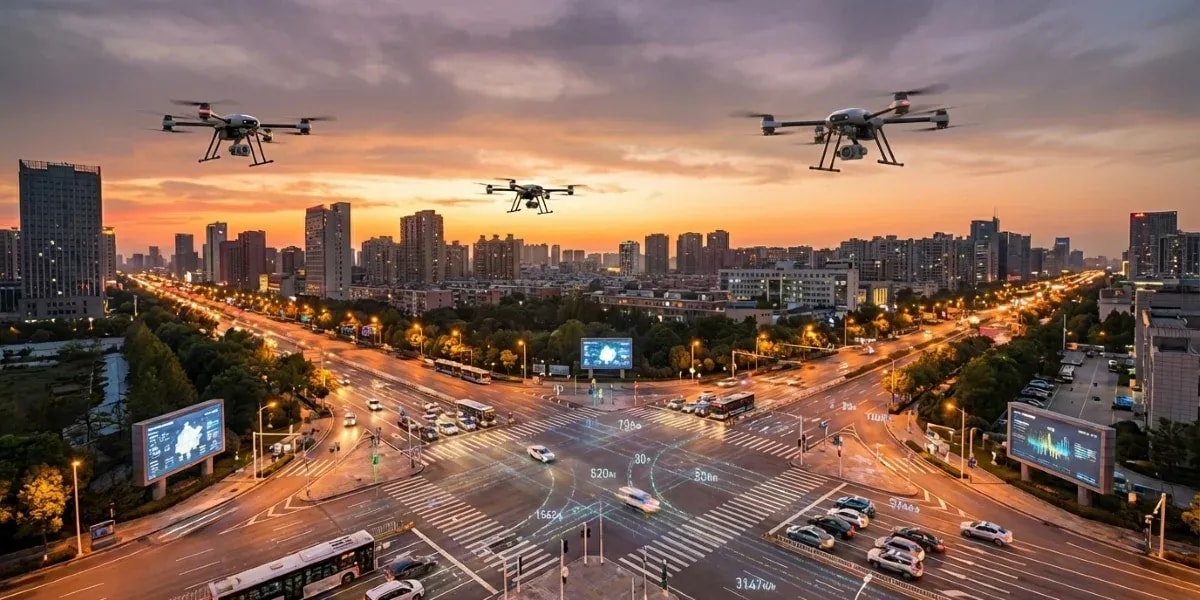
Traffic monitoring & automated incident detection
Crowd analytics during events
Tactical surveillance & situational awareness
Evidence documentation
Reduces manpower requirements
Minimizes risk in dangerous operations
Enables real-time command decisions
Handling large crowds at events can be tough for police, but drones make it easier. They fly overhead, watch crowd movements in real-time, and give a view that ground officers can't get. This helps spot issues like overcrowding or disturbances quickly, so responses are faster. Drones improve public safety and help events run smoothly.
They're cost-effective and reduce the need for lots of police, making the atmosphere more comfortable for everyone.
We build license plate detection, anomaly detection, crowd analytics, and real-time drone streaming solutions for agencies.
Drones accelerate marketing, surveying, and planning in real estate and construction.
High-quality aerial property visuals
Progressive construction monitoring
Land surveying & topography
Roof damage & insurance inspection
Drones have changed real estate. They give amazing aerial views, showing buyers the whole property and its surroundings. This helps buyers see the neighborhood, yard, and other details that regular photos miss. These shots make listings more appealing and help properties sell faster. Agents can use them to show off features like pools, gardens, and nearby amenities, giving a better overall view of the property.
Accurate land surveying is key in real estate. Drones make this process a lot easier by quickly capturing detailed data. They can map large areas faster than traditional methods, helping developers make quicker decisions and save time and money. Plus, they handle tough terrain well, so no part of the land gets missed. Using this tech gives precise and reliable data, which is essential for planning and development.
Shortens marketing timelines
Speeds up site planning
Reduces surveying costs by 50–80%
Improves transparency for stakeholders
Our imaging AI models automate measurement extraction, roof analysis, and site-progress dashboards.
A drone, or UAV, is an aircraft without a human pilot that can be controlled remotely or fly on its own with software and sensors. They come in all sizes, from tiny ones that fit in your hand to large ones like regular planes. Thanks to technology, they’re now more accessible and can perform various tasks.
For example, drones can reach hard-to-access or dangerous areas, inspect wind turbines, monitor construction sites, and survey agricultural fields. They often have cameras, GPS, and sensors to capture high-quality images and data. This makes them useful for precision tasks in fields like real estate, media, public safety, and more.
Bonus Read: How Do Drones Work: Exploring the Technology Behind UAVs
There are different types of drones, each with unique features for specific uses.
Multi-rotor Drones: These drones have multiple rotors and can take off, land, and hover vertically. They offer excellent stability and maneuverability, making them ideal for photography, videography, and inspections.
Fixed-wing Drones: Similar to traditional aircraft, these drones have wings that generate lift as they move through the air. This allows them to fly longer distances and carry heavier payloads, making them useful for surveying large areas.
Single-Rotor Helicopter Drones: These drones use a single rotor to generate lift and a tail rotor to maintain balance. They are more challenging to operate but can provide smoother footage than multi-rotor drones.
Hybrid VTOL Drones: Vertical Take-Off and Landing (VTOL) drones combine the features of fixed-wing and multi-rotor drones, allowing them to take off vertically and transition to horizontal flight for longer distances.
Commercial use of drones is on the rise, with industries finding innovative ways to utilize this technology. Some of the most common commercial uses of drones include.
Drones have revolutionized film and TV production. Now, getting amazing shots is easier and cheaper. Filmmakers can pull off complex shots without cranes or helicopters. They can zip through tight spaces, track moving subjects, and capture dynamic angles.
This makes stories more engaging and visually exciting. Plus, the cost is lower, so even small teams can create stunning visuals. This tech has opened up creative possibilities and sparked innovation in the industry.
In construction, drones make surveying land, monitoring progress, and inspecting structures easy and fast. They quickly cover large areas and take detailed images to keep projects on track. High-resolution photos and videos help with mapping, measuring, and comparing against blueprints. This helps engineers spot problems early and make smart decisions about materials, timing, and labor.
Once a structure is done, drones can also handle inspections, reaching hard-to-access spots without risking workers' safety. This tech keeps everyone safe and provides accurate data on building conditions. Commercial use of drones in construction is rapidly growing due to these benefits.
Drones are revolutionizing agriculture by improving how we manage crops. They can quickly survey large areas, creating detailed maps that show plant health and soil moisture. This helps farmers spot issues like pests or nutrient problems early and take action.
The result? Less waste, higher yields, and resource savings. Plus, they can assist with precise spraying and seed planting, making farming more efficient. This is one of the key drone applications enhancing modern farming.
Public safety agencies like police, fire departments, and search and rescue teams find drones very useful. With thermal cameras, they can locate missing persons or detect fire hotspots. This helps emergency personnel respond quickly and safely. In disasters, drones give real-time aerial views to assess damage, find survivors, and map affected areas.
They can also deliver medical supplies or rescue gear to hard-to-reach places. This is a critical drone use that enhances public safety operations.
Drones are changing the energy sector by making maintenance and inspections easier and cheaper. They reach tough spots like wind turbines and power lines, spotting issues early. This tech saves time, reduces worker risks, and keeps energy systems running smoothly. Drone uses for business in the energy sector are proving to be highly efficient and cost-effective.
Drones are great for environmental monitoring and conservation. They capture high-quality images and data, helping us track changes in landscapes and wildlife. This info supports conservation efforts and helps researchers understand human impact on nature.
They also help monitor illegal activities like poaching and deforestation, protecting our planet's resources. This drone application is vital for sustainable development and conservation.
Companies like Amazon are testing drone delivery services and integrating these flying robots into delivery and logistics. Drones can navigate through traffic and reach remote or hard-to-access locations quickly, making them ideal for urgent deliveries. This technology could revolutionize the transportation industry by reducing costs and increasing efficiency. Commercial use of drones in logistics is set to transform the industry.
The use of drones in real estate has opened up new possibilities for property management companies. Drones can provide detailed aerial footage of properties, giving potential buyers or renters a better understanding of the space.
This technology can also aid in property inspections and maintenance by quickly identifying any issues that need to be addressed. Drone applications in real estate are enhancing the way properties are marketed and managed.
The mining industry has been revolutionized by drones, offering a safer and more efficient method to survey and map mining sites. They can quickly cover large areas, enabling companies to locate mineral deposits and plan extraction processes with precision. Additionally, drones enhance safety by conducting inspections without endangering workers.
This technology has significantly boosted efficiency and productivity in the mining sector. Commercial uses for drones in mining are becoming increasingly common.
Cost-effective: Drones are much more affordable than traditional methods like helicopters or cranes, making them accessible to smaller production teams and industries.
Efficient: Drones can cover large areas quickly and provide high-resolution images and data in a fraction of the time it takes traditional methods. This saves time, resources, and labor costs.
Versatile: Drones can be equipped with different cameras and tools depending on the specific needs of each industry. This versatility makes them useful in various applications such as aerial photography, mapping, surveying, delivery, etc.
Safe: Drones eliminate the need for workers to access dangerous or hard-to-reach areas, making operations safer for everyone involved. They also are equipped with advanced collision avoidance technology to prevent accidents.
Eco-friendly: Drones reduce the need for traditional methods that emit harmful pollutants, making them a more environmentally friendly option for various industries.
Even with clear ROI, enterprises face challenges:
BVLOS regulations
Data privacy & compliance
Limited AI/ML model readiness
Fleet management & battery cycles
Connectivity issues in remote areas
Lack of in-house drone AI expertise
Folio3 solves these challenges with edge-AI deployment, compliant data pipelines, and end-to-end drone software platforms.
Folio3 AI provides advanced drone technology solutions tailored for various industries. Our team of experts is ready to assist you in leveraging drones to enhance efficiency, safety, and cost-effectiveness in your operations. Contact us today to discover how drones can be integrated into your business.
Folio3 provides complete drone-to-AI workflows:
✔ Computer vision for defect detection
✔ Generative & predictive AI for drone data
✔ On-device (edge) AI model deployment
✔ Drone-image annotation pipelines
✔ Custom dashboards, reporting & integrations
✔ Training, PoC, and full enterprise rollout support
We help enterprises unlock automation, cost savings, accuracy, and operational speed with scalable drone-AI platforms.
Commercial drones are no longer experimental; they are core to digital transformation across every major industry. With advancements in sensors, autonomy, and AI, drones are delivering measurable business value, from safety improvements to operational efficiencies and cost reductions.
Enterprises ready to modernize inspections, monitoring, and data analysis are turning to AI-enabled commercial drone solutions, and Folio3 is at the center of this transformation.
Drones are used in agriculture, construction, logistics, surveillance, filmmaking, disaster management, mining, and environmental monitoring.
Industries like agriculture, construction, energy, logistics, defense, and real estate use drones for cost-saving automation and efficiency.
UAV applications include aerial mapping, delivery services, inspection of infrastructure, crop monitoring, and security surveillance.
Drones perform crop spraying, soil analysis, plant health monitoring, and yield prediction using AI-powered imaging and sensors.
In construction, drones are used for site surveys, progress tracking, safety inspections, and 3D modeling of project sites.
Drones provide faster parcel delivery, optimize warehouse inventory checks, and reduce transportation costs in logistics.
Drones enhance safety, track stockpiles, provide high-resolution mine mapping, and optimize exploration processes.
Drones offer aerial reconnaissance, locate survivors, assess damage quickly, and deliver emergency supplies in disaster-hit zones.
Emerging use cases include smart traffic monitoring, AI-driven surveillance, precision farming, and autonomous UAV fleets for logistics.
Drones track wildlife, monitor forests, study ecosystems, and detect illegal activities like poaching or deforestation.