

ANPR
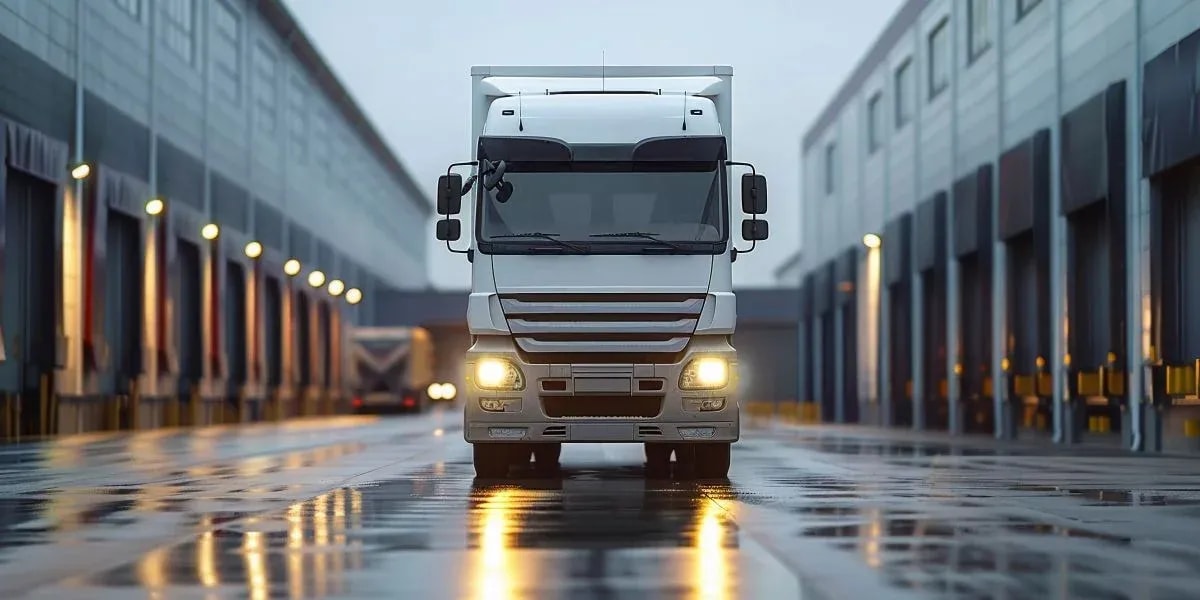
Managing a fleet of delivery trucks, freight vehicles, or service vans extends far beyond keeping vehicles operational. Fleet management solutions help logistics companies reduce costs while meeting increasingly demanding customer expectations. According to the American Trucking Associations, the trucking industry moved 11.27 billion tons of freight in 2024, representing approximately 72.7% of total domestic freight tonnage. However, many logistics companies still rely on outdated tracking methods and manual processes that drain profitability.
Modern fleet management solutions have become essential tools for staying competitive, offering real-time visibility, predictive maintenance, and automated compliance that can transform operational efficiency. At Folio3 AI, we've helped logistics companies reduce operational costs by up to 15% through intelligent fleet management systems that combine advanced AI capabilities with practical business solutions.

Fleet management represents the systematic approach to overseeing, coordinating, and optimizing a company's vehicle operations. Specifically, for logistics companies, this means having complete control over every aspect of transportation assets, from individual delivery vans to entire fleets of long-haul trucks.
Additionally, modern fleet management goes beyond simple vehicle tracking. It encompasses route planning, driver management, fuel monitoring, maintenance scheduling, and compliance reporting. The technology integrates GPS tracking, telematics data, and artificial intelligence to provide logistics managers with actionable insights about their operations.
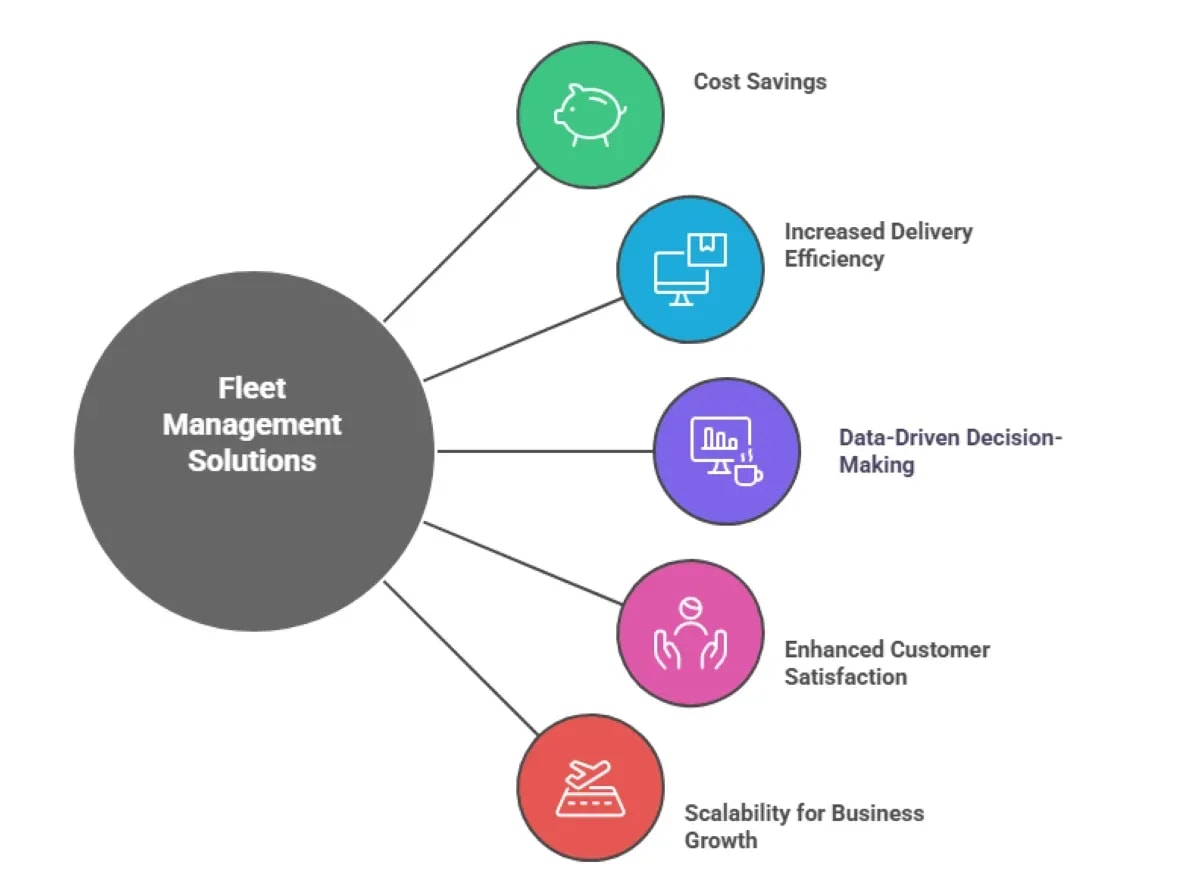
Implementation of complete fleet management systems creates measurable improvements across all aspects of logistics operations. These changes go beyond simple efficiency gains to fundamentally alter how companies approach transportation management.
Automated systems eliminate manual processes that consume administrative time and create opportunities for errors. Fuel monitoring prevents unauthorized usage and identifies vehicles with poor efficiency. Moreover, maintenance scheduling reduces emergency repair costs and extends vehicle life.
Optimized routing reduces total driving time and distance while improving on-time delivery rates. Real-time tracking allows dispatchers to provide accurate delivery windows to customers. Furthermore, traffic and weather integration helps drivers avoid delays before they impact schedules.
Fleet management systems collect and analyze thousands of data points daily, providing logistics managers with insights into fleet performance, cost drivers, and improvement opportunities. This data supports strategic decisions about fleet size, vehicle replacement, and operational changes.
Real-time tracking information allows logistics companies to provide customers with accurate delivery updates and proactive communication about potential delays. Improved on-time performance and service reliability strengthen customer relationships and support business growth.
Modern fleet management platforms scale easily as logistics companies add vehicles, drivers, or service areas. Cloud-based systems support multi-location operations without requiring additional IT infrastructure at each site.
Today's leading fleet management platforms offer integrated features explicitly designed for logistics operations. These solutions combine real-time monitoring with predictive analytics to help companies make smarter decisions about their transportation assets.
Advanced GPS systems provide precise location data every few seconds, allowing logistics managers to monitor vehicle positions, speeds, and routes in real time. Moreover, modern diagnostic capabilities track engine health, fuel levels, and potential mechanical issues before they become costly problems.
Comprehensive driver monitoring systems track acceleration patterns, braking habits, speed compliance, and idle time. Meanwhile, safety scoring algorithms provide objective performance ratings that help logistics companies identify training needs and reward safe driving practices.
AI-powered maintenance systems analyze vehicle data patterns to predict when components might fail. Consequently, this prevents unexpected breakdowns that can disrupt delivery schedules and helps logistics companies plan maintenance during optimal windows.
Smart routing algorithms consider traffic conditions, delivery windows, vehicle capacities, and driver schedules to create the most efficient routes. These systems adapt to real-time changes, automatically rerouting vehicles when traffic or delivery requirements change.
Fleet management systems automatically track hours of service, vehicle inspections, and regulatory requirements. As a result, this reduces administrative burden while ensuring logistics companies meet DOT, FMCSA, and other regulatory standards without manual paperwork.
Logistics companies today operate in an environment of rising costs, increasing customer demands, and complex regulatory requirements. Understanding these challenges helps explain why traditional fleet management approaches no longer work effectively.
Fuel costs can represent up to 35% of total operating expenses for logistics companies. Without proper monitoring and optimization, vehicles consume more fuel through inefficient routes, excessive idling, and poor driving habits. Furthermore, insurance premiums, maintenance costs, and driver wages continue to climb annually.
Manual route planning often results in suboptimal delivery sequences and unnecessary mileage. Additionally, drivers may take longer routes due to personal preferences or a lack of real-time traffic information. Poor route planning leads to late deliveries, overtime costs, and reduced customer satisfaction.
Reactive maintenance approaches wait for breakdowns to occur, causing unexpected service interruptions and emergency repair costs. Without proper scheduling, vehicles may sit idle waiting for parts or service appointments, thereby reducing fleet availability during peak periods.
Regulatory compliance requires extensive documentation and monitoring of driver hours, vehicle inspections, and safety protocols. Manual compliance tracking increases the risk of violations, fines, and insurance claims while consuming valuable administrative time.
E-commerce growth has created expectations for faster, more reliable deliveries. Supply chain disruptions require greater flexibility and responsiveness from logistics operations. Therefore, companies need better visibility and control to adapt quickly to changing conditions and maintain service levels.
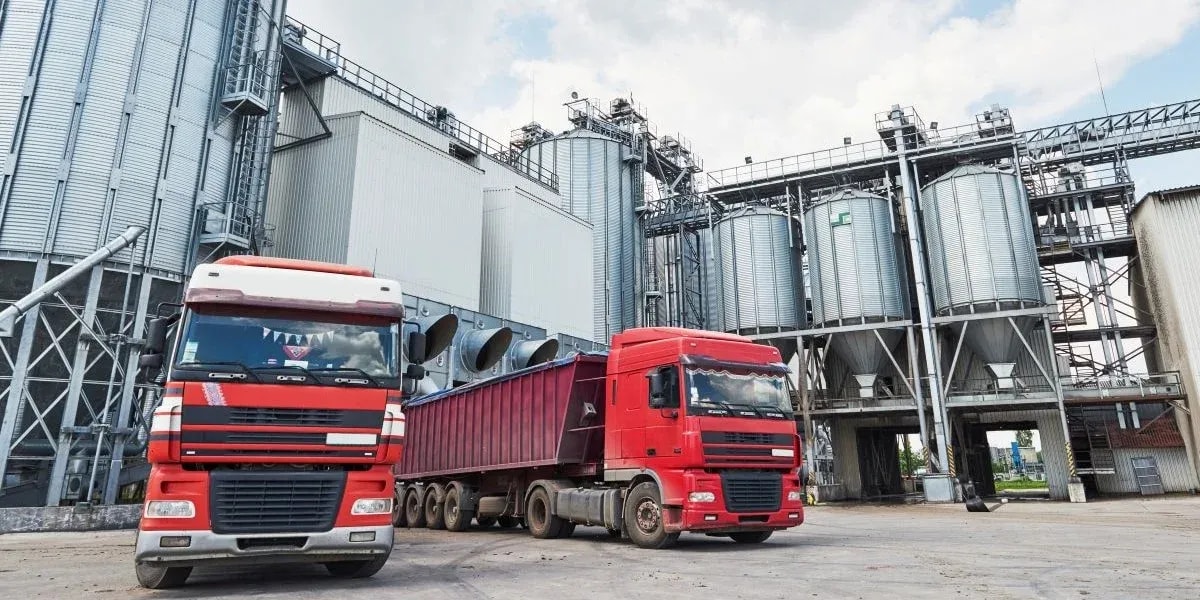
Logistics companies consistently achieve measurable returns on investment from fleet management implementations. Industry data and case studies demonstrate the financial benefits of these systems across different company sizes and operational types.
According to FleetNerd's latest research, 41% of companies using GPS tracking systems see positive ROI in under one year, with 21% achieving returns in more than one year. Vehicle utilization improvements typically range from 10-25%, while maintenance costs decrease by 12-18% through predictive scheduling.
Companies implementing comprehensive route optimization and driver monitoring systems achieve substantial savings. Moreover, strategic network optimization and flow management can reduce freight transportation costs during periods of rising fuel prices.
Load planning and routing optimization deliver measurable efficiency gains across the industry. Federal Highway Administration research shows that eco-drive systems can save more than 20% of fuel consumption on certain terrains for single vehicles.
Real-time tracking and fleet management systems create substantial improvements in service quality. G2's fleet management research found that companies achieved a 54% improvement in customer service through fleet tracking implementation.
Predictive maintenance and safety monitoring systems deliver exceptional operational improvements. U.S. Department of Energy data demonstrates that predictive maintenance is highly cost-effective, saving roughly 8% to 12% over preventive maintenance and up to 40% over reactive maintenance approaches.
Fleet management systems deliver measurable value across multiple operational areas. These quantified benefits help logistics companies justify investments and track performance improvements over time.
Fuel consumption typically decreases through route optimization and driver behavior modification. Administrative costs drop significantly when manual processes become automated. Vehicle operating costs per mile often decrease through better maintenance and utilization practices.
Companies report substantial reductions in compliance violations after implementing automated monitoring systems. Safety incident rates typically improve within months of deployment. Insurance premium reductions are common for companies with strong safety records.
Fleet management systems help companies increase vehicle utilization rates from typical industry levels to much higher performance standards. This improvement often eliminates the need for additional vehicle purchases as companies grow their business volume.
On-time delivery rates improve from industry averages to much higher performance levels with proper route optimization and tracking. Customer complaint volumes typically decrease when companies provide proactive communication and accurate delivery windows.
Companies with fleet management systems can typically handle significantly more delivery volume with the same number of vehicles. This scalability supports business growth without proportional increases in fleet size or operational complexity.
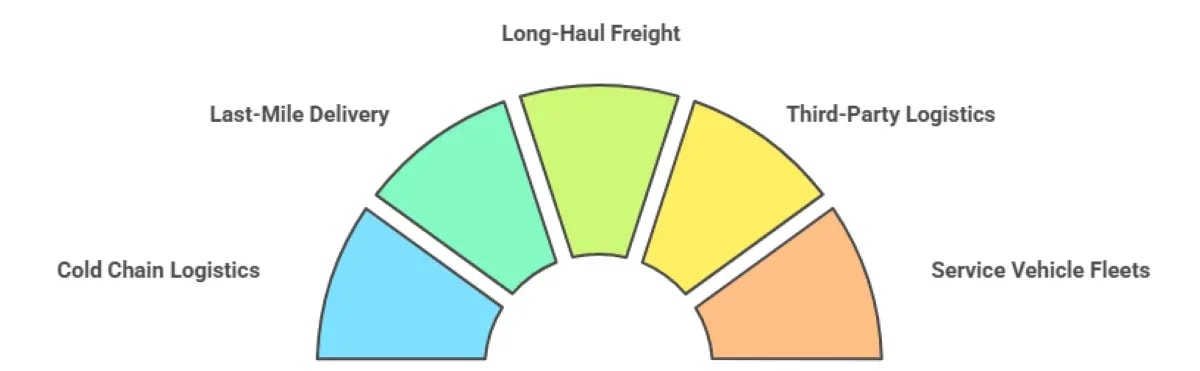
Different logistics sectors have unique requirements that influence fleet management priorities and feature selection. Understanding these vertical-specific needs helps companies choose appropriate solutions and implementation strategies.
Temperature monitoring and alert systems ensure product quality throughout the delivery process. Route optimization considers temperature control requirements and delivery time constraints. Consequently, compliance documentation for pharmaceutical and food deliveries becomes automated and accurate.
Dense urban delivery routes benefit from advanced route optimization that considers traffic patterns, parking availability, and delivery time windows. Customer communication systems provide real-time delivery updates and allow for delivery preference changes.
Hours of service monitoring ensures compliance with federal regulations while optimizing driver schedules. Fuel management across multiple states and regions helps control one of the largest operational expenses. Additionally, load planning optimization reduces empty miles and improves profitability.
Multi-customer operations require sophisticated scheduling and routing capabilities. Asset tracking across different client requirements and service levels. Integration with customer systems for seamless information sharing and billing processes.
Work order integration connects fleet management with job scheduling and customer management systems. Tool and equipment tracking ensures technicians have the necessary resources for each service call. Performance metrics help optimize service territories and technician productivity.
Artificial intelligence and machine learning technologies are transforming fleet management from reactive to predictive operations. These advanced capabilities help logistics companies anticipate problems and optimize performance in ways that weren't possible with traditional systems.
Machine learning algorithms analyze historical data patterns to predict vehicle maintenance needs, driver performance trends, and operational challenges. These insights help logistics managers make proactive decisions that prevent problems rather than responding to them after they occur.
Advanced algorithms consider hundreds of variables simultaneously to create optimal delivery routes. These systems learn from traffic patterns, delivery success rates, and driver preferences to continuously improve routing decisions over time.
Predictive maintenance systems analyze engine data, driving patterns, and environmental conditions to recommend optimal service timing. This approach prevents unexpected failures while avoiding unnecessary maintenance that wastes time and money.
AI systems analyze traffic data, weather patterns, and historical delivery information to predict optimal departure times and route selections. Demand forecasting helps logistics companies prepare for seasonal variations and market changes.
Modern AI systems integrate seamlessly with transportation management systems, warehouse management platforms, and customer relationship management tools. This integration creates a unified view of operations that supports better decision-making across all business functions.
Selecting an appropriate fleet management system requires careful consideration of company-specific needs, growth plans, and integration requirements. The decision impacts operational efficiency and costs for years to come.
Fleet management systems should accommodate current operations while supporting future growth without requiring complete platform changes. Cloud-based solutions typically offer better scalability than on-premise systems that require hardware investments for expansion.
Successful fleet management implementations integrate with existing business systems, including accounting software, customer management platforms, and dispatch systems. API availability and integration support determine how well the system fits into current workflows.
Companies should assess their readiness for advanced features like predictive maintenance and automated routing. Some organizations benefit from starting with basic tracking and gradually adding advanced capabilities as they become comfortable with the technology.
Different logistics sectors have specific compliance requirements that fleet management systems must address. DOT regulations, environmental reporting, and industry-specific standards should all be considered in the selection process.
Fleet management system costs include software licensing, hardware installation, training, and ongoing support. Companies should model expected benefits against these costs to ensure positive returns on investment within reasonable timeframes.
Folio3 AI specializes in developing intelligent fleet management solutions tailored to logistics companies' needs. Our approach combines proven technologies with industry-specific customization to deliver measurable results for transportation operations.
Our team develops custom algorithms that address specific operational challenges facing logistics companies. These solutions go beyond standard fleet management features to create competitive advantages through intelligent automation and predictive capabilities.
We specialize in connecting fleet management systems with existing business applications to create seamless workflows. Our integration expertise ensures that new systems enhance rather than disrupt current operations.
Our predictive maintenance solutions analyze vehicle data to recommend optimal service timing and prevent unexpected breakdowns. Cost optimization algorithms identify opportunities for fuel savings, route improvements, and operational efficiency gains.
Custom dashboard development provides logistics managers with the specific information they need to make quick, informed decisions. Real-time monitoring capabilities ensure that managers stay informed about critical operational events and performance metrics.
We provide comprehensive implementation support, including system setup, data migration, and staff training. Our goal is to ensure that logistics companies achieve expected benefits from their fleet management investments as quickly as possible.

Fleet management in logistics is the systematic approach to overseeing, coordinating, and optimizing a company's vehicle operations and transportation assets. It includes vehicle tracking, route planning, driver management, fuel monitoring, maintenance scheduling, and compliance reporting to ensure efficient delivery operations.
Fleet management solutions reduce costs through fuel savings (10-20% through route optimization), reduced maintenance expenses (12-18% through predictive scheduling), lower administrative costs (25-40% through automation), decreased insurance premiums, and improved asset utilization that eliminates unnecessary vehicle purchases.
Key features include real-time GPS tracking, driver behavior monitoring and safety scoring, predictive maintenance algorithms, dynamic route optimization, automated compliance reporting, fuel consumption monitoring, and integration capabilities with existing business systems.
AI improves fleet management through predictive analytics for maintenance scheduling, machine learning algorithms for route optimization, traffic pattern analysis for better departure timing, demand forecasting for capacity planning, and automated decision-making that reduces human error and increases operational efficiency.
Yes, modern fleet management systems offer API capabilities and pre-built integrations with popular ERP systems like SAP and Oracle, CRM platforms like Salesforce, accounting software like QuickBooks, and transportation management systems to create seamless workflows across business operations.
Predictive maintenance analyzes vehicle data patterns to predict component failures before they occur, preventing 60-80% of unexpected breakdowns. This reduces downtime, lowers emergency repair costs, extends vehicle life, and ensures fleet availability during peak operational periods.
Fleet management solutions improve safety through real-time driver behavior monitoring, safety scoring systems, automated alerts for speeding or harsh braking, driver coaching programs, and comprehensive reporting that helps identify training needs and reward safe driving practices.
Small business solutions typically focus on basic tracking and simple reporting for 5-50 vehicles. Enterprise fleet management solutions offer advanced features like predictive analytics, multi-location support, complex routing algorithms, extensive integration capabilities, and scalability to handle hundreds or thousands of vehicles across multiple regions.
Consider scalability for growth, integration capabilities with existing systems, AI and automation features, compliance support for your industry, total cost of ownership, vendor support quality, and specific features that address your operational challenges, like route optimization or predictive maintenance.
Folio3 AI specializes in custom AI development for logistics optimization, offers proven integration expertise with existing platforms, provides predictive maintenance and cost optimization solutions, creates custom analytics dashboards, and delivers comprehensive implementation support to ensure successful deployment and ROI achievement.