You're racing to integrate AI into your operations, but building and maintaining large language models feels like scaling Mount Everest. The infrastructure costs alone could fund a small startup, and finding the right AI talent is harder than ever. There's a faster way forward.
LLM as a Service (LLMaaS) gives you instant access to powerful AI capabilities without the headaches of model training, GPU clusters, or specialized teams. LLM adoption is projected to reach $259.8 billion by 2030, growing at 35.8% annually. Companies are choosing speed and scalability over building from scratch, and for good reason.
What is LLM-as-a-Service (LLMaaS)?
LLM-as-a-Service delivers large language models through cloud-based APIs and managed infrastructure. Instead of purchasing expensive GPUs, training models, and hiring ML engineers, you access pre-trained AI capabilities on demand.
The provider handles everything: hosting, scaling, maintenance, and updates. You simply integrate via API and pay based on usage. This can mean shared public APIs (like OpenAI's GPT), or private deployments where models run in your own virtual private cloud with custom fine-tuning for your specific data and compliance requirements.
LLMaaS vs. self-hosted: a complete comparison
FactorLLM as a ServiceSelf-Hosted LLMInitial InvestmentMinimal. Pay-as-you-go pricing starts immediately$100,000-$500,000+ for GPU infrastructureTime to DeployDays to weeks via API integration3-6 months for full setup and configurationOngoing CostsPer-token/API call charges (e.g., $0.03-$0.06 per 1K tokens)Electricity, cooling, maintenance, personnel ($150K+ annually)ScalabilityAutomatic. Handles traffic spikes instantlyManual. Requires capacity planning and hardware purchasesMaintenanceProvider manages updates, security, and optimizationYour team handles all patches, monitoring, and troubleshootingData ControlData sent to provider (unless private deployment)Complete control—data never leaves your infrastructureCustomizationLimited to provider options (fine-tuning available)Full flexibility—choose any model, modify architecturePerformance100-500ms latency due to network callsSub-100-ms possible with local optimizationExpertise RequiredMinimal—basic API integration skillsHigh—need ML engineers, DevOps, and infrastructure specialistsBest ForVariable workloads, rapid deployment, and limited AI expertiseHigh-volume, consistent usage, strict data sovereignty, specialized needsBreak-Even PointCost-effective under 10M tokens/monthMore economical for sustained high-volume usage (50M+ tokens/month)
The LLMaaS ecosystem spans enterprise-grade cloud platforms, specialized AI providers, and open-source alternatives, each offering distinct advantages for different deployment scenarios and business requirements.
AWS Bedrock, Azure OpenAI Service, and Google Vertex AI offer enterprise features including compliance certifications, VPC deployment options, and seamless integration with existing cloud infrastructure ecosystems. These platforms support multiple model providers with unified billing, comprehensive security controls, and enterprise support.
Specialized AI providers
OpenAI's GPT models, Anthropic's Claude, and Cohere provide cutting-edge capabilities through dedicated, purpose-built APIs. These providers focus exclusively on advancing AI technology, offering advanced features like extended context windows exceeding 100,000 tokens, sophisticated function calling, and specialized model variants optimized for specific tasks.
Open-source model services
Hugging Face, Together AI, and Replicate host open-source models like Llama, Mistral, DeepSeek, and Qwen. These platforms offer pricing flexibility, cost advantages, and model transparency while avoiding proprietary vendor lock-in. Organizations gain access to community-driven innovations and can experiment with various architectures.
Private enterprise deployments
Private LLMaaS runs dedicated infrastructure within your VPC or on-premises data center environment. Providers deliver the managed service convenience, like handling updates, optimization, and scaling, while ensuring complete data control and meeting strict compliance requirements for healthcare, financial services, and government sectors.
Hybrid multi-cloud solutions
Modern enterprises combine multiple providers strategically, using public APIs for development, testing, and non-sensitive applications while running production workloads with confidential data on private infrastructure. This approach balances cost efficiency with robust security, performance optimization, and operational flexibility.
Why enterprises should choose LLMaaS?
LLMaaS eliminates complexity and cost barriers that previously kept advanced AI capabilities out of reach for most organizations, accelerating innovation and delivering measurable business value.
Rapid deployment & time-to-market
Skip months of infrastructure procurement, setup, and model training cycles. Integrate sophisticated LLM capabilities through simple API calls in days rather than quarters, enabling fast pilots, minimum viable products, and proofs-of-concept. Test multiple AI use cases quickly before committing significant capital and resources.
Predictable costs & resource optimization
Avoid $100,000+ upfront infrastructure investments, ongoing hardware maintenance expenses, and costly specialist hiring. Pay-as-you-go pricing aligns costs directly with actual business usage patterns. Scale spending up during peak demand periods and down during slower times without maintaining unused capacity or stranded assets.
Access to cutting-edge models
Providers continuously improve underlying models with better accuracy, faster processing speeds, and expanded capabilities. You automatically benefit from these advancements without retraining investments, infrastructure upgrades, or dedicated AI research teams. Stay competitive with state-of-the-art technology without maintaining bleeding-edge expertise internally.
Automatic scaling & high availability
From hundreds to millions of concurrent requests without performance degradation, handle traffic spikes seamlessly. Providers manage sophisticated load balancing, automatic failover mechanisms, and multi-region geographic distribution. Your applications maintain consistent performance without manual intervention, capacity planning, or expensive over-provisioning.
Enterprise security & compliance
Private LLMaaS deployments keep sensitive data within your controlled environment while providers handle security best practices. Access SOC 2, HIPAA, and GDPR compliance certifications and enterprise features, including end-to-end encryption, granular access controls, comprehensive audit logging, and data residency options to meet regulatory requirements.
Pricing models & cost structures
Understanding LLMaaS pricing mechanisms helps you forecast budgets accurately, optimize spending strategically, and select models that align with your usage patterns and financial requirements.
Per-token usage pricing
Most providers charge based on tokens processed, like typically $0.01-$0.06 per 1,000 tokens, depending on model size, capabilities, and speed. Input tokens representing your prompts and output tokens from model responses often have different rates. Longer context windows and advanced models cost more per token processed.
Subscription & reserved capacity
Fixed monthly subscription fees provide predictable costs and often include committed token volumes with volume discounts. Enterprises with consistent, predictable usage patterns save more compared to pay-as-you-go pricing. Some providers offer reserved capacity guarantees, ensuring priority access and consistent performance for mission-critical applications.
Enterprise custom pricing
High-volume users negotiate custom agreements with significant volume discounts, dedicated infrastructure allocations, enhanced service level agreements, and priority support. Pricing typically starts at $50,000+ annually but provides substantial per-unit cost reductions. Includes account management, architectural consulting, and customization support.
Private deployment cost models
Private LLMaaS combines managed service convenience with infrastructure control and data sovereignty. Expect costs around $10,000-$50,000 monthly for dedicated instances, varying by compute requirements, redundancy levels, and compliance features. Pricing includes infrastructure management, updates, security monitoring, and technical support without full self-hosting complexity.
Hidden costs to consider
Beyond base API charges, factor in data transfer fees between regions, storage costs for fine-tuning datasets and conversation histories, and integration development time. Budget for prompt optimization engineering work, monitoring and observability tools, API gateway costs, and potential overages during unexpected usage spikes or viral applications.
Performance characteristics directly impact user experience, application responsiveness, operational efficiency, and overall costs, making architectural decisions critical for successful implementations.
Latency & response times
LLMaaS APIs typically deliver complete responses in 100-500 milliseconds, depending on model size, prompt complexity, requested output length, and geographic proximity to provider infrastructure. Streaming responses arrive faster, improving perceived performance. Network latency affects real-time applications like interactive chatbots, where sub-second responses matter most.
Throughput & concurrent requests
Providers handle thousands to millions of simultaneous requests through sophisticated automatic load balancing and horizontal scaling. Your allocated throughput capacity depends on pricing tier, provider infrastructure, and contractual guarantees. Enterprise plans typically guarantee minimum throughput levels, ensuring consistent performance during peak usage without degradation.
Context window & token limits
Models process limited tokens per request, ranging from 4,000 to 200,000+ tokens depending on model architecture and provider. Longer context windows enable processing larger documents, maintaining extended conversations, and including more examples, but cost significantly more per request. Applications must be architected around these constraints.
Geographic distribution & edge options
Multi-region provider deployments reduce latency for globally distributed users by processing requests at nearby data centers. Some providers offer emerging edge computing options that execute models closer to end users and data sources. Geographic distribution matters critically for applications requiring sub-100ms response times.
Caching & optimization strategies
Implement intelligent response caching for frequently asked questions and common queries to reduce API calls and associated costs significantly. Batch similar requests when possible to improve efficiency. Optimize prompts carefully to minimize token usage without sacrificing quality. Monitor detailed performance metrics to identify bottlenecks and improvement opportunities.
Key enterprise use cases for LLMaaS
LLMaaS powers diverse applications across business functions, departments, and industries. These implementations deliver measurable ROI, operational efficiency, and competitive advantages for forward-thinking enterprises.
AI-powered customer support
Deploy intelligent chatbots and virtual assistants that understand contextual nuances, handle complex multi-turn queries, provide personalized responses, and escalate appropriately to human agents. Organizations reduce response times significantly without staffing constraints, and free human agents for high-value interactions requiring emotional intelligence.
Content generation & marketing automation
Automate blog posts, product descriptions, email campaigns, social media content, and technical documentation at scale. Generate multilingual content, maintaining brand voice consistency across channels and regions. Marketing teams report massive time savings while maintaining quality, enabling strategic focus on creative strategy rather than production.
Enterprise knowledge management
Build intelligent search systems that understand natural language queries across internal documents, wikis, databases, and collaboration platforms. Implement retrieval-augmented generation (RAG) architectures to provide accurate, contextual, source-cited answers from company knowledge bases. Employees find information faster, reducing time wasted searching and improving decision-making quality.
Document analysis & contract intelligence
Automatically extract key information, clauses, obligations, and risks from contracts, legal documents, regulatory filings, and compliance materials. Identify potential problems, highlight critical terms, compare versions, and generate executive summaries. Legal and compliance teams reduce document review time while improving accuracy and consistency.
Code generation & developer productivity
Accelerate software development with AI-assisted code completion, automated documentation generation, unit test creation, debugging support, and code explanation. Developers report productivity improvements for routine coding tasks, including boilerplate code, API integrations, and repetitive patterns, allowing focus on complex architecture and problem-solving.
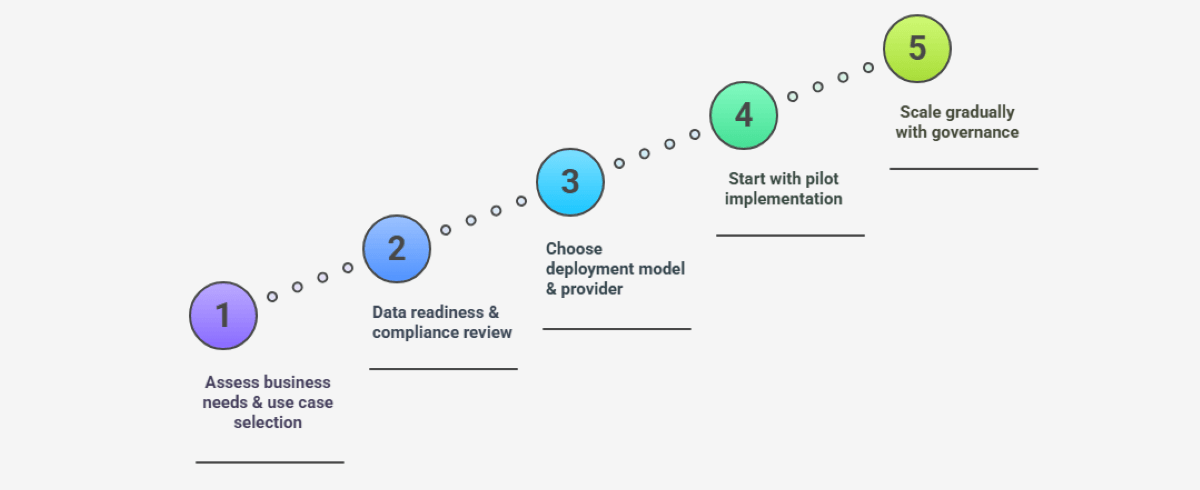
Implementation strategy: how to adopt LLMaaS?
Successful LLMaaS adoption requires structured planning, phased execution, clear success metrics, and stakeholder alignment. This approach minimizes implementation risk while building internal expertise and demonstrating tangible business value.
Assess business needs & use case selection
Identify workflows where AI delivers clear, measurable value, like customer support bottlenecks, repetitive content tasks, document processing challenges, or knowledge access problems. Prioritize use cases with quantifiable outcomes, moderate technical complexity, executive sponsorship, and potential for rapid wins demonstrating ROI to stakeholders and building organizational momentum.
Data readiness & compliance review
Audit what data will flow through LLM systems, including personal information, proprietary content, and confidential materials. Classify sensitivity levels according to organizational policies and identify applicable regulatory requirements, including GDPR, HIPAA, SOX, and industry-specific mandates. Determine if public APIs suffice or a private deployment is necessary.
Choose deployment model & provider
Evaluate public shared APIs versus private dedicated infrastructure based on data sensitivity, performance requirements, budget constraints, and compliance needs. Compare providers on pricing transparency, performance benchmarks, security certifications, integration capabilities, and long-term viability. Consider multi-provider strategies to avoid lock-in and maintain flexibility.
Start with pilot implementation
Launch a limited-scope pilot with clearly defined success metrics, accuracy rates, response time improvements, cost per transaction, user satisfaction scores, and ROI calculations. Choose a non-critical application allowing learning without business risk. Gather detailed feedback from users, measure outcomes rigorously, and refine approaches before broader rollout.
Scale gradually with governance
Expand successful pilots systematically to additional use cases, departments, and user groups. Implement comprehensive monitoring dashboards, usage limits, spending alerts, approval workflows, and access controls. Train teams on prompt engineering best practices, responsible AI usage, and optimization techniques. Build internal centers of excellence, sharing knowledge across the organization.
Risks, limitations & how to address them
Every technology involves trade-offs and potential downsides. Understanding LLMaaS limitations helps you architect robust solutions, mitigate risks proactively, and make informed decisions aligned with organizational priorities.
Data privacy & security concerns
Shared public APIs transmit data to external providers, raising data sovereignty, confidentiality, and regulatory compliance issues. Sensitive information might be stored, logged, or used for model training.
Solution: Deploy private LLMaaS in your VPC, implement data anonymization before processing, use on-premises options for highly sensitive workloads, and audit provider certifications.
Vendor lock-in & portability
Provider-specific APIs, proprietary fine-tuning formats, integrated workflows, and custom features create significant switching costs and reduce flexibility. Migrating to alternative providers requires code changes, prompt rewriting, and model retraining.
Solution: Use abstraction layers like LiteLLM, maintain provider-agnostic prompt designs, store fine-tuning data separately, and test backup providers.
Cost unpredictability at scale
Usage-based pricing can lead to budget surprises with viral applications, inefficient implementations, or unexpected usage spikes. Costs scale linearly with volume but can become substantial.
Solution: Implement comprehensive usage monitoring, set spending alerts and hard limits, optimize prompts for efficiency, cache responses intelligently, and establish clear governance policies.
Model accuracy & hallucinations
LLMs sometimes generate plausible-sounding but factually incorrect, outdated, or fabricated information without indicating uncertainty. This poses risks for high-stakes decisions.
Solution: Implement human review for critical outputs, use RAG to ground responses in verified data, add confidence scoring mechanisms, provide source citations, and fine-tune models.
Integration complexity & technical debt
Connecting LLMs to existing systems, workflows, databases, and data pipelines requires careful architectural planning, API management, error handling, and monitoring. Poor integration creates maintenance burdens.
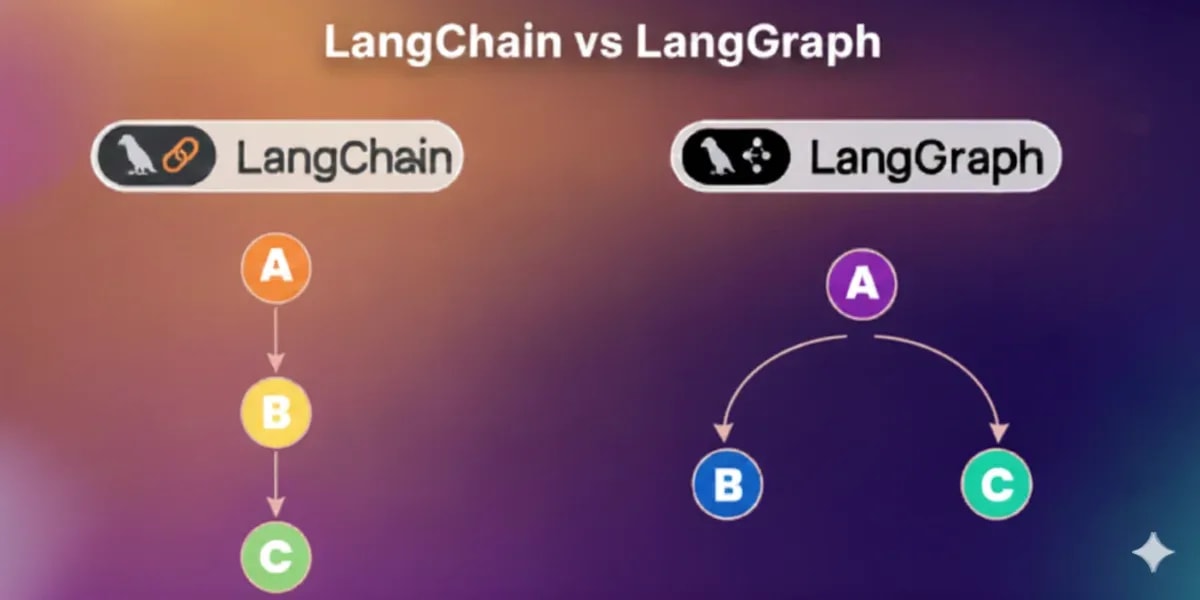
Solution: Start with simple integrations, use proven frameworks like LangChain and LlamaIndex, document thoroughly, plan for maintenance, and involve experienced integration partners.
Selecting an enterprise LLMaaS partner: key criteria
Choosing the right implementation partner significantly impacts project success, time-to-value, ROI, and long-term satisfaction. Evaluate providers systematically across technical capabilities, business alignment, and support quality.
Technical expertise & track record
Review provider experience with enterprise AI implementations, particularly in your industry vertical, addressing similar challenges. Examine detailed case studies, speak with client references directly, and verify technical certifications from major platforms. Assess their team's ML engineering depth, systems integration capabilities, and industry knowledge through technical discussions.
Security & compliance capabilities
Verify provider security certifications, including SOC 2 Type II, ISO 27001, HIPAA, PCI DSS, and relevant industry standards. Understand detailed data handling practices, encryption standards, access controls, and incident response procedures. Ensure they can meet your specific regulatory requirements and provide compliance documentation.
Customization & fine-tuning approach
Evaluate how providers handle model customization for your domain-specific terminology, use cases, and performance requirements. Ask about fine-tuning methodologies, data requirements, training timelines, performance benchmarks, and ownership of resulting models. Avoid providers with rigid, one-size-fits-all approaches that limit your competitive differentiation.
Integration & support services
Assess integration capabilities with your existing technology ecosystem, like CRMs, ERPs, databases, workflow tools, and analytics platforms. Understand support levels, guaranteed response times, escalation procedures, ongoing maintenance offerings, and training programs. Post-deployment support, troubleshooting expertise, and optimization guidance are critical for long-term success.
Transparent pricing & ROI focus
Request detailed pricing breakdowns, including implementation costs, ongoing usage charges, support fees, and potential overages or hidden costs. Discuss ROI measurement frameworks, success metrics, and value realization timelines. Partners should help you calculate expected business value, not just sell technology. Ask for pricing scenarios across different usage volumes.
How Folio3 AI can help with custom LLM solutions?
Folio3 AI brings 15+ years of AI expertise to enterprise LLM implementations, combining technical depth with industry knowledge. We deliver custom solutions that balance innovation with security, compliance, and ROI.
LLM consulting & strategy development
Our LLM journey starts with thoroughly understanding your business needs, industry dynamics, and specific use cases. Leveraging deep expertise in Natural Language Processing and Machine Learning, we collaborate with you to create custom strategies for developing LLMs that align with your organizational goals and competitive positioning.
End-to-end LLM development
We craft Large Language Models from scratch to help businesses gain a competitive edge. Our process includes detailed consultation, followed by meticulous data preparation and model training using your proprietary data, ensuring models that align perfectly with your business needs, performance requirements, and compliance standards.
LLM fine-tuning for business optimization
We fine-tune pre-trained models like GPT, Llama, and PaLM to meet the specific needs of your industry, whether in finance, legal, healthcare, or other sectors. Our fine-tuned LLMs deliver contextually accurate and relevant results, enhancing decision-making processes across your organization while maintaining data sovereignty.
LLM-powered AI solutions
Harness the power of LLMs with our robust AI solutions. From chatbots and virtual assistants to sentiment analysis and speech recognition systems, we build custom solutions that transform the way your business operates, communicates, and innovates, delivering measurable improvements in efficiency and customer experience.
Seamless LLM integration
Our developers ensure smooth integration of LLMs into your existing enterprise systems, such as CRM, ERP, and content management platforms. We prioritize minimizing downtime during the integration process, ensuring that your operations continue without disruption while maximizing the value of your existing technology investments.
Ongoing support & maintenance
We provide comprehensive support and maintenance services to keep your LLMs and LLM-based solutions running seamlessly over time. Our services include continuous monitoring, adapting to evolving data, implementing necessary updates, and ensuring optimal performance of your AI systems throughout their lifecycle.
The future of enterprise LLMaaS
LLMaaS continues evolving rapidly with breakthrough capabilities, new deployment models, and expanded applications. Understanding emerging trends helps you make forward-looking architecture decisions and maintain competitive advantages.
Multi-modal capabilities
Next-generation models combine text, images, audio, video, and structured data in unified systems. Expect LLMaaS to expand beyond text-only interactions into visual analysis, voice interfaces, document understanding, and video content generation. Applications will become richer, more intuitive, and capable of handling complex real-world scenarios requiring multiple input types.
Edge computing integration
AI processing is moving closer to users and data sources through edge deployments. Edge-deployed LLMs dramatically reduce latency, improve privacy by processing locally, and enable offline functionality. Hybrid architectures will blend cloud intelligence for training and updates with edge execution for real-time, privacy-sensitive, and low-latency applications.
Specialized industry models
Domain-specific LLMs trained on healthcare, legal, financial, manufacturing, or scientific data will deliver superior accuracy for specialized tasks. Providers will offer vertical-specific models addressing industry terminology, regulatory requirements, and use cases. Organizations gain better performance without extensive fine-tuning while maintaining compliance with sector-specific regulations.
Advanced reasoning & agentic AI
Models are gaining enhanced reasoning capabilities, planning abilities, tool usage, and autonomous decision-making. Future LLMaaS will power sophisticated AI agents that execute complex multi-step tasks, interact with external systems, verify their own outputs, and operate with minimal human supervision across extended workflows.
Regulatory frameworks & governance
Governments worldwide are establishing comprehensive AI regulations around transparency, bias mitigation, privacy protection, and liability. LLMaaS providers will build compliance features directly into platforms, including audit trails, explainability tools, and bias detection, making it easier for enterprises to meet evolving legal requirements.
Frequently asked questions (FAQs)
What exactly is LLM-as-a-Service (LLMaaS)?
LLM-as-a-Service provides on-demand access to large language models through cloud APIs without requiring you to build, train, or host the models yourself. The provider manages infrastructure, maintenance, updates, and scaling while you pay based on usage, similar to how SaaS works for software applications.
How does LLMaaS differ from using a public LLM API or building your own LLM in-house?
Public LLM APIs (like OpenAI's GPT) are one form of LLMaaS. You access shared models via standard endpoints. LLMaaS also includes private deployments where models run in your own environment with custom fine-tuning. Building in-house means purchasing GPUs, training models, and managing everything yourself, which is much more expensive and time-consuming than LLMaaS.
What are the main benefits of LLMaaS for businesses and enterprises?
LLMaaS delivers faster deployment (days vs. months), lower upfront costs (no $100K+ GPU investments), automatic scaling without capacity planning, access to continuously improving models, and reduced need for specialized AI talent. Private LLMaaS options also provide data control and compliance for regulated industries.
Which business functions or use cases work best with LLMaaS?
Customer support chatbots, content generation and marketing automation, document analysis and summarization, enterprise knowledge management, code generation for developers, and compliance/legal document review show the strongest ROI. These use cases benefit from LLM language understanding without requiring extensive customization.
How can we ensure data privacy and compliance when using LLMaaS?
Deploy private LLMaaS within your VPC or on-premises environment to keep data in your control. Select providers with relevant certifications (HIPAA, SOC 2, GDPR compliance). Implement data anonymization before processing, use encryption in transit and at rest, and establish clear data retention and deletion policies.
Can an LLMaaS be customized or fine-tuned for our industry or internal data?
Yes. Most enterprise LLMaaS providers offer fine-tuning services where models learn from your proprietary data, terminology, and use cases. This improves accuracy for domain-specific language and tasks. Fine-tuning typically requires 1,000-10,000 examples and 2-4 weeks, depending on complexity.
How quickly can we deploy an LLMaaS solution and start seeing results?
Simple integrations via public APIs can go live in days. More complex implementations with custom fine-tuning, system integration, and private deployment typically take 4-12 weeks. Pilots demonstrating value often launch within 2-3 weeks, allowing you to prove ROI before full-scale rollout.
What are the typical cost models for LLMaaS (pay-as-you-go, subscription, dedicated)?
Pay-as-you-go charges per token processed (typically $0.01-$0.06 per 1,000 tokens). Subscriptions provide fixed monthly pricing with included token volumes, better suited for predictable usage. Enterprise dedicated deployments cost $10,000-$50,000+ monthly but include infrastructure, management, and customization. Volume discounts available for high usage.
What challenges or risks should we be aware of before adopting LLMaaS?
Key risks include data privacy with shared APIs, vendor lock-in through proprietary features, unpredictable costs with inefficient usage, model hallucinations generating incorrect information, and integration complexity with existing systems. Mitigate these through private deployments, abstraction layers, usage monitoring, human review processes, and experienced implementation partners.
How do we choose the right partner or vendor when selecting an LLMaaS provider?
Evaluate technical expertise in your industry, security certifications matching your compliance needs, customization capabilities for domain-specific requirements, integration experience with your existing systems, transparent pricing with clear ROI frameworks, and quality of ongoing support. Request references, conduct pilots, and verify provider track records before committing.