AI in Sports
Veo Alternatives for Football and Soccer Clubs: What to Use and When to Build
Compare Veo, Hudl, Spiideo and PlayVista for soccer clubs, and learn when custom AI video analysis software that you own is the better choice.
 AI & DataAgentic AI, computer vision, generative AI
 App DevelopmentWeb, mobile, and custom software
 SecurityEngineering, warehousing, analytics
 AgtechFarm, livestock, and crop software
 FoodtechTraceability and food supply chain
 Digital HealthEHR, telehealth, and interoperability
 NetSuiteERP implementation and support
 Microsoft DynamicsDynamics 365 and Business Central
 SalesforceCRM consulting and integration
 EcommerceB2B ecommerce, ERP integrations and migrationsAI & DataAgentic AI, computer vision, generative AIApp DevelopmentWeb, mobile, and custom softwareSecurityEngineering, warehousing, analyticsAgtechFarm, livestock, and crop softwareFoodtechTraceability and food supply chainDigital HealthEHR, telehealth, and interoperabilityNetSuiteERP implementation and supportMicrosoft DynamicsDynamics 365 and Business CentralSalesforceCRM consulting and integrationEcommerceB2B ecommerce, ERP integrations and migrations
Explore 10 leading AI development companies for sports video analysis in 2026, helping teams and sports businesses unlock smarter tracking, performance insights, and tactical decision-making.

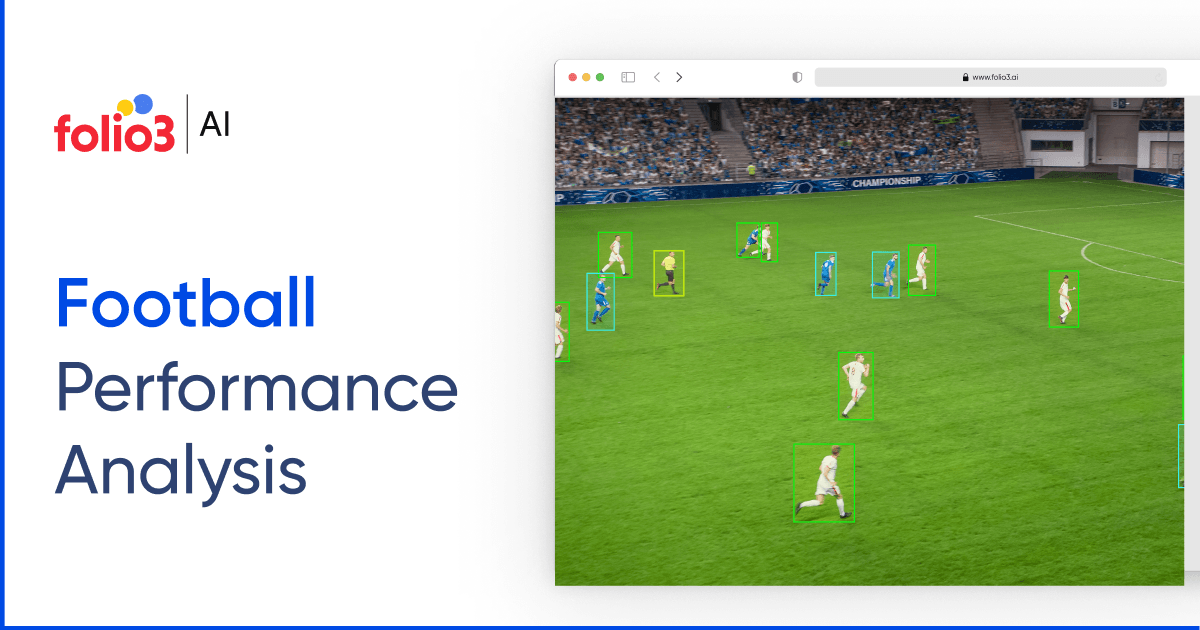
In 2026, sports video analysis AI has transitioned from novelty to necessity. Real-time object tracking, pose estimation, automated highlights, and predictive analytics are now essential for clubs, leagues, and rights holders aiming for faster decisions and enhanced fan experiences. If you’re wondering who the best AI development company for sports video analysis is, the answer depends on your needs: for custom, enterprise-grade builds and integrations, Folio3 AI stands out; for turnkey platforms, leaders like Hudl, WSC Sports, Pixellot, and others excel. Below is a concise guide to 10 companies shaping the field, what they do best, how they deploy, and where they fit in your tech stack.
Sports video analysis AI refers to systems that interpret live or recorded footage to detect events, track players and the ball, and surface insights for coaching, performance, officiating, and media. Real-time pipelines are streaming architectures that process frames on the fly for sub-second feedback. Pose estimation is the detection of an athlete's joint positions to analyze mechanics and technique. Predictive analytics uses historical and live data to forecast outcomes such as injury risk or tactical probabilities.
Selection criteria for this list include technology maturity (real-time accuracy, multi-camera fusion), deployment flexibility (edge, cloud, hybrid), integration ease (APIs, SDKs, data model alignment), and measurable enterprise impact. As summarized by Memories.ai, “AI-driven sports video analysis in 2026 blends real-time object detection, pose estimation, automated highlight creation, and predictive models to cut manual review time by up to 70%,” underscoring tangible time savings for teams and broadcasters.
Explore leading AI companies helping sports organizations transform video footage into smarter performance, coaching, and tactical insights.
Book a ConsultationQuick snapshot of the landscape:
Company | Core strength | Typical deployment | Best for |
Folio3 AI | Custom CV/ML builds, integrations, and real-time ops | Edge, cloud, hybrid | Enterprise-grade, tailored solutions and ROI tracking |
Hudl | Team film workflows and auto-tagging | Cloud SaaS + mobile | Coaching, player development at scale |
WSC Sports | Live highlight automation and personalization | Cloud media pipelines | Broadcasters, leagues, rights holders |
Pixellot | Operator-free AI cameras and automated streaming | Fixed and portable AI cameras | Schools, youth clubs, lower leagues |
Catapult | Wearables fused with video and load management | Wearables + analytics | Elite performance, sports science, and medical teams |
Memories.ai | Deep video understanding and natural language search | Cloud and on-prem options | Incident search, alerts, cross-domain scale |
SPORTLOGiQ | Granular event/tactic detection | CV pipelines + dashboards | Coaches, scouts, analytics departments |
Zone7 | Predictive injury risk and training load | Data fusion + alerts | Medical/performance staff, front offices |
Hawk-Eye | Multi-camera officiating and tracking | Venue systems + broadcast | Officiating, 3D trajectory analysis, and fairness |
Stats Perform | Fusion of tracking/event data (Opta Vision) | Data feeds + analytics suites | Tactical insights, broadcast overlays, scouting |
Most clubs and teams are well served by a packaged platform. Choose a platform such as Hudl, Veo or Pixellot when your sport and events are already supported, you are happy with the vendor's analytics, and you want to be running within days. Choose a custom-built system when you need your own events and KPIs, ownership of the tracking data and models, non-standard cameras, or a connection to your existing performance systems.
If you need | Usually best | Why |
Fast setup, standard film workflow | Packaged platform | Already built and supported by the vendor |
Automated capture with no camera operator | AI camera system | Hardware and software come as one product |
Your own events, KPIs, data ownership or integrations | Custom build | The system is designed around your sport, footage and workflow |
Folio3 AI is a custom AI development partner focused on computer vision and agentic AI for sports. Our teams build end-to-end solutions that span object detection, athletic pose estimation, and real-time stream analytics, integrated seamlessly into your existing tools and data schemas. With 15+ years of experience and 150+ tailored AI projects across industries, we help mid-to-large enterprises transition from pilot to production, ensuring security, governance, and scalability.
Clubs and leagues leverage our enterprise sport video analysis solution to reduce manual review time, improve accuracy in player and ball tracking, and streamline compliance and officiating workflows. We’ve supported sports from football and basketball to baseball, ice hockey, and swimming, addressing unique requirements around venue constraints, broadcast rights, and coaching workflows. Explore our approach to custom sports analytics development in the Folio3 sports video analysis overview, including sport-specific pages for football, basketball, and swimming, and discover how we translate AI-powered sports insights into measurable ROI.
Two areas are our current focus: soccer and football programs in the US and Europe, and basketball programs in the US. See our pages on AI football and soccer video analysis and AI basketball video analysis for scope, inputs and outputs, and custom AI agents for sports organizations for workflow automation around that data.
Hudl powers coaching and player development by using AI to automatically tag actions, segment film, and surface tactical insights, drastically accelerating post-game and practice review. Its platform spans multi-sport support, integrated communication tools, and flexible performance dashboards that help coaches compare lineups, identify tendencies, and track athlete progress over time. Hudl’s AI-assisted workflows are widely adopted from elite programs to high schools for efficient film breakdown and collaboration.
WSC Sports transforms live feeds into automated, personalized highlights, enabling rights holders and broadcasters to produce clips in real time and distribute them across apps, OTT platforms, and social. Automated highlight generation is the rapid, AI-driven creation of key moments tailored to audiences, regions, or sponsors. With strong integrations into digital media pipelines and proven scalability for global events, WSC Sports helps teams and leagues reach fans faster with contextual, brand-safe content.
Pixellot delivers operator-free capture using AI-driven cameras that follow the action automatically, recording games, tracking plays, and assembling highlights without on-site crews. This hands-free streaming approach brings automated video capture and AI editing within reach for schools, academies, and lower-league competitions that lack broadcast resources. Pixellot’s affordability and ease of deployment make it a go-to for grassroots sports seeking professional-grade video with minimal overhead.
Catapult combines athlete wearables with AI-enhanced video to deliver live metrics, performance benchmarks, and proactive injury monitoring for elite teams. Wearables are digital devices athletes wear during training and competition to capture movement and physiological data, enabling precise load management and evidence-based practice design. Catapult’s fusion of tracking and video supports tactical evaluation, medical decision-making, and return-to-play readiness with a unified performance picture.
Memories.ai offers an enterprise-grade platform for deep video understanding, what it calls visual memory, allowing applications to see, remember, and reason over vast video libraries. The system supports rapid incident search, real-time alerts, human re-identification, and natural language queries that outperform generic LLM approaches for video-specific tasks. Flexible deployment and pricing tiers make it suitable for sports and adjacent domains like security, media archives, and venue operations.
SPORTLOGiQ specializes in extracting granular events and tactics from game footage using advanced computer vision analytics; algorithms that interpret video to detect actions, track movement, and analyze spacing and patterns with high accuracy. Its tools are favored by coaches and scouts for real-time breakdowns of systems, matchups, and opponent tendencies.
Zone7 applies predictive analytics to athlete risk management, analyzing millions of hours of video, wearable metrics, and historical performance to forecast injury risk and optimal training loads. Zone7’s enterprise focus lies in fusing multimodal data for medical and performance staff.
Predictive injury prevention workflow:
Hawk-Eye sets the standard for officiating accuracy with multi-camera systems and 3D ball tracking used in tennis, football, cricket, and more. Its 3D trajectory analysis calculates an object’s position, speed, and direction across synchronized camera feeds, enabling millimeter-level decisions for fair play and precise tactical review. Hawk-Eye is credited for elevating broadcast storytelling, thanks to reliable tracking and visualization layers trusted at the highest levels.
Stats Perform’s Opta Vision fuses positional tracking with event data to deliver rich tactical analytics for teams and broadcasters. Use cases include predictive tactics, real-time overlays for live productions, and automated performance breakdowns that compress analysis time from hours to minutes. The company’s data infrastructure and integrations with leading coaching and media platforms make it a staple for elite organizations seeking end-to-end insights.
Veo democratizes sports video analysis with affordable, operator-free camera stacks and sports software development aimed squarely at grassroots and amateur sports. The system automates capture, tracking, and clip creation so small clubs and schools can access self-service video analytics without specialized staff. Veo's entry-level sports AI lowers barriers to adoption while offering automated sports analysis that scales with a club's ambitions.
Packaged platforms are built for a fixed list of sports, events and camera setups. A custom build becomes worth considering when one or more of these six situations applies:
Folio3 builds custom AI sports video analysis software for football, soccer (US and Europe) and basketball (US), with player tracking, event detection, KPIs and searchable clips, and with your organization owning the models, data and workflows. A focused proof of concept can typically be scoped for 4 to 6 weeks using your own footage, and an MVP for 8 to 16 weeks. If none of the six situations applies to you, a packaged platform is usually the faster and cheaper choice.
Explore AI sports video analysis software, custom soccer video analysis and AI basketball video analysis for US teams, or book a consultation.
Discover the top companies building intelligent sports video solutions for tracking, analysis, and performance improvement.
Book a ConsultationPrioritize real-time player and ball tracking, multi-angle ingest, automated highlights, wearable integrations, and dashboards that support tagging, coaching notes, and easy data exports.
It allows coaches to review plays instantly, validate tactics, and provide timely feedback, shortening learning loops and enhancing decision-making during training and matches.
Typical hurdles include legacy hardware compatibility, video data storage and transport, workflow alignment, and ensuring outputs map to team or league data models.
By analyzing movement patterns, workload, and technique, AI flags risk factors early and notifies staff so they can intervene before minor issues escalate.
Camera quality, labeling rigor, model training data, edge/cloud architecture, and integration choices all affect precision and real-time responsiveness.
There is no single best alternative. Hudl suits clubs already in its film ecosystem, other packaged platforms suit larger programs that want fixed multi-camera capture or analysis of footage from any camera, and clubs that need their own KPIs, data ownership or integrations should consider a custom-built system instead of another packaged product.
Build when a platform cannot support your sport, events, camera setup, data ownership needs or integrations, or when per-seat licensing grows faster than the value delivered. If a packaged tool already covers your workflow, buying it is usually faster and cheaper than building.
According to Folio3, a focused proof of concept can typically be scoped for 4 to 6 weeks using your own footage, and an MVP for 8 to 16 weeks. Enterprise rollouts depend on sport complexity, camera setup, integrations and whether analysis must run live or after the match.
Not necessarily. Folio3 states its basketball systems work with standard cameras, recorded game footage, mobile video and existing facility setups, without player-worn sensors. Accuracy still depends on camera quality, angles, lighting and training data, so camera placement should be reviewed at proof-of-concept stage.
Compare Veo, Hudl, Spiideo and PlayVista for soccer clubs, and learn when custom AI video analysis software that you own is the better choice.
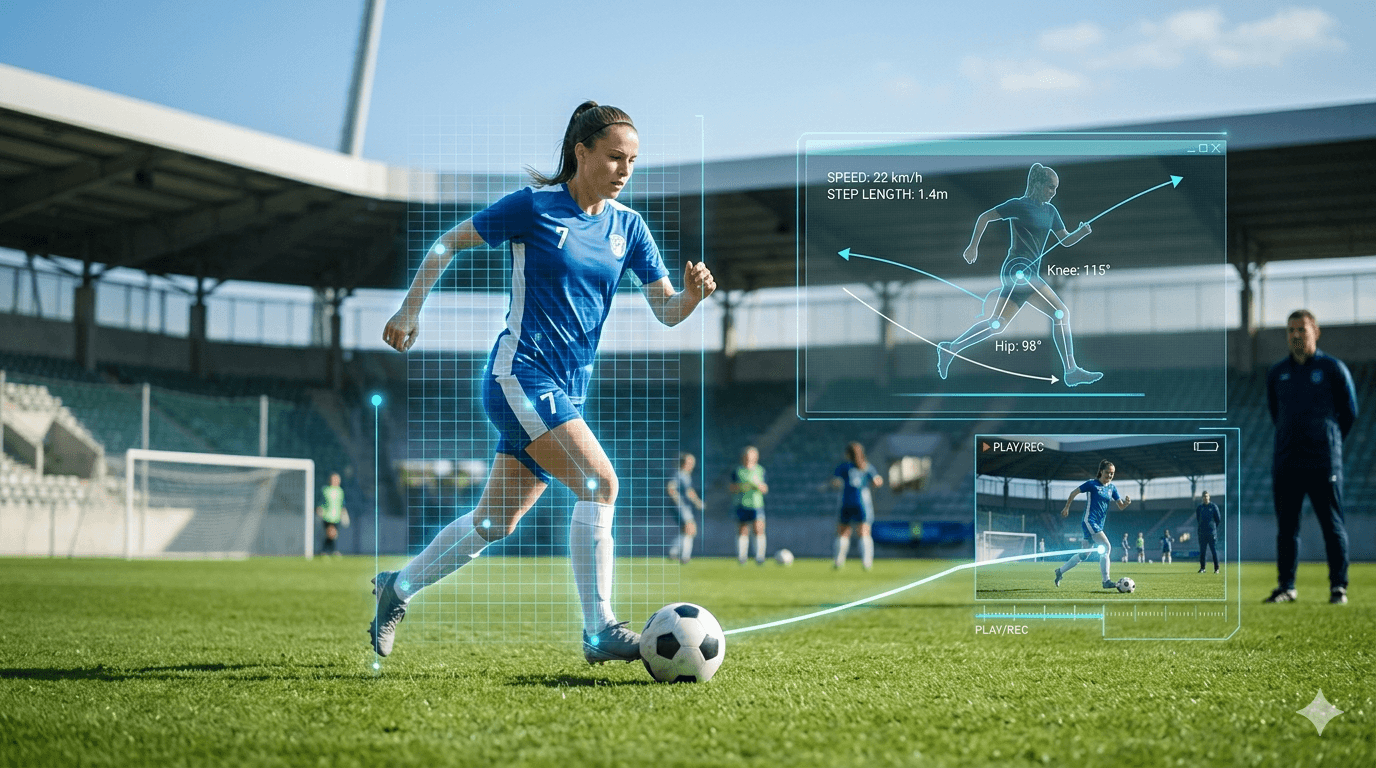
Discover what video analysis in sport really means, how it works, and why coaches rely on it to boost performance. This beginner’s guide covers types, tools, AI applications, and step-by-step workflows.