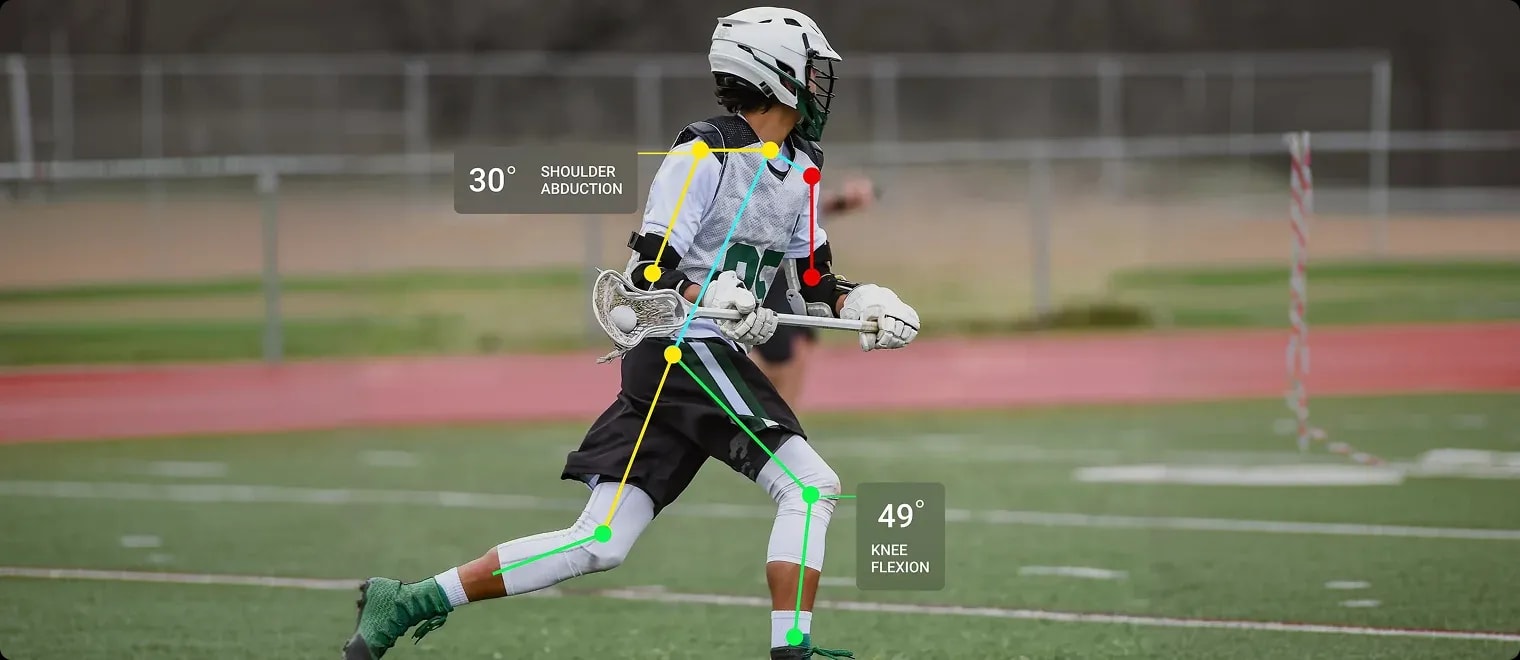
Sports
Enhancing Basketball Shooting Performance with AI-Powered Biomechanical Tracking
Folio3 AI built an iOS basketball analytics app using MetaMotionS sensors and LSTM AI to deliver real-time shooting feedback with 92% accuracy.
Folio3 AI built an iOS basketball analytics app using MetaMotionS sensors and LSTM AI to deliver real-time shooting feedback with 92% accuracy.
-79ba35d5-e175-459b-a4ea-fb5528ddf0c8.png&w=1920&q=90)
A U.S.-based sports technology startup partnered with Folio3 AI to build a native iOS platform integrating the MetaMotionS wearable sensor with LSTM-based machine learning models.
The goal: deliver real-time biomechanical shooting analysis to players and coaches. Folio3's team of 5 engineers delivered the full solution in 12 weeks, achieving 99% shooting form detection accuracy and cutting coach review time by 65%.
92%
Detection Accuracy
12 wks
Delivery Timeline
65%
Coach Review Time Saved
5
Cross-functional Engineers
Client Name
U.S.-Based Sports Technology Startup
Industry
Sports Technology / Athletic Performance Analytics
Company Size
Small-Medium Enterprise (100–500 employees)
Primary Use Case
Real-Time Biomechanical Shooting Form Analysis
Location
United States
The client is a U.S.-based early-stage sports technology business on a mission to democratize elite-level basketball coaching. Their product vision centers on giving every player, from high school athletes to semi-professional teams, access to the kind of motion analysis data that was previously locked inside expensive performance labs.
With a wearable-first product strategy, the company set out to build an AI-powered coaching platform that could decode the physics of a basketball shot and turn it into a personalized, real-time feedback loop. Prior to partnering with Folio3, they had the hardware device ready but lacked the software, AI infrastructure, and mobile engineering capability to bring the product to market.
Elite-level shooting analysis has historically lived inside performance labs. High-speed cameras, motion capture suits, and force plates produce detailed biomechanical reports, but they require controlled environments, costly equipment, and trained operators. For most athletes, that level of feedback is simply out of reach.
The client had already identified the hardware answer: a compact, wrist-worn IMU sensor capable of capturing six-axis motion data at scale. What they lacked was the software intelligence to make that data useful in real time, on a basketball court, without a data scientist in the room.
Three specific technical challenges defined the project:
Team
5 Engineers
Timeline
12 Weeks
Platform
Native iOS
Model
LSTM Neural Network
Folio3 assembled a dedicated cross-functional team of 5 engineers, 2 iOS mobile developers, 2 ML/data science specialists, and 1 QA engineer and delivered the complete end-to-end solution within a 12-week development cycle.
The team designed and built a native iOS application that serves as the central intelligence layer between the wearable sensor and the coaching workflow. At its core, the platform captures live biomechanical data from the MetaMotionS device via Bluetooth, processes it through a trained LSTM neural network, and returns a real-time shooting form score with drill-down analytics on each phase of the shooting motion.
Tools & Technologies
MetaMotion SDK
Wearable sensor data capture & configuration
HardwareCore Bluetooth
Real-time BLE data streaming to iOS app
iOS nativePyTorch
LSTM model architecture design & training
ML trainingApple CoreML
On-device model inference — no cloud needed
On-deviceSwift / SwiftUI
Native iOS app layer & coaching UI
iOS nativePython FastAPI
Backend API for session logging & data management
BackendNumPy / SciPy
Signal preprocessing, noise filtering & windowing
Data scienceThe team designed and built a native iOS application that serves as the central intelligence layer between the MetaMotionS wearable sensor and the coaching workflow. At its core, the platform captures live biomechanical data from the sensor via Bluetooth, processes it through a trained LSTM neural network running entirely on-device, and returns a real-time shooting form score with drill-down analytics on each phase of the shooting motion.
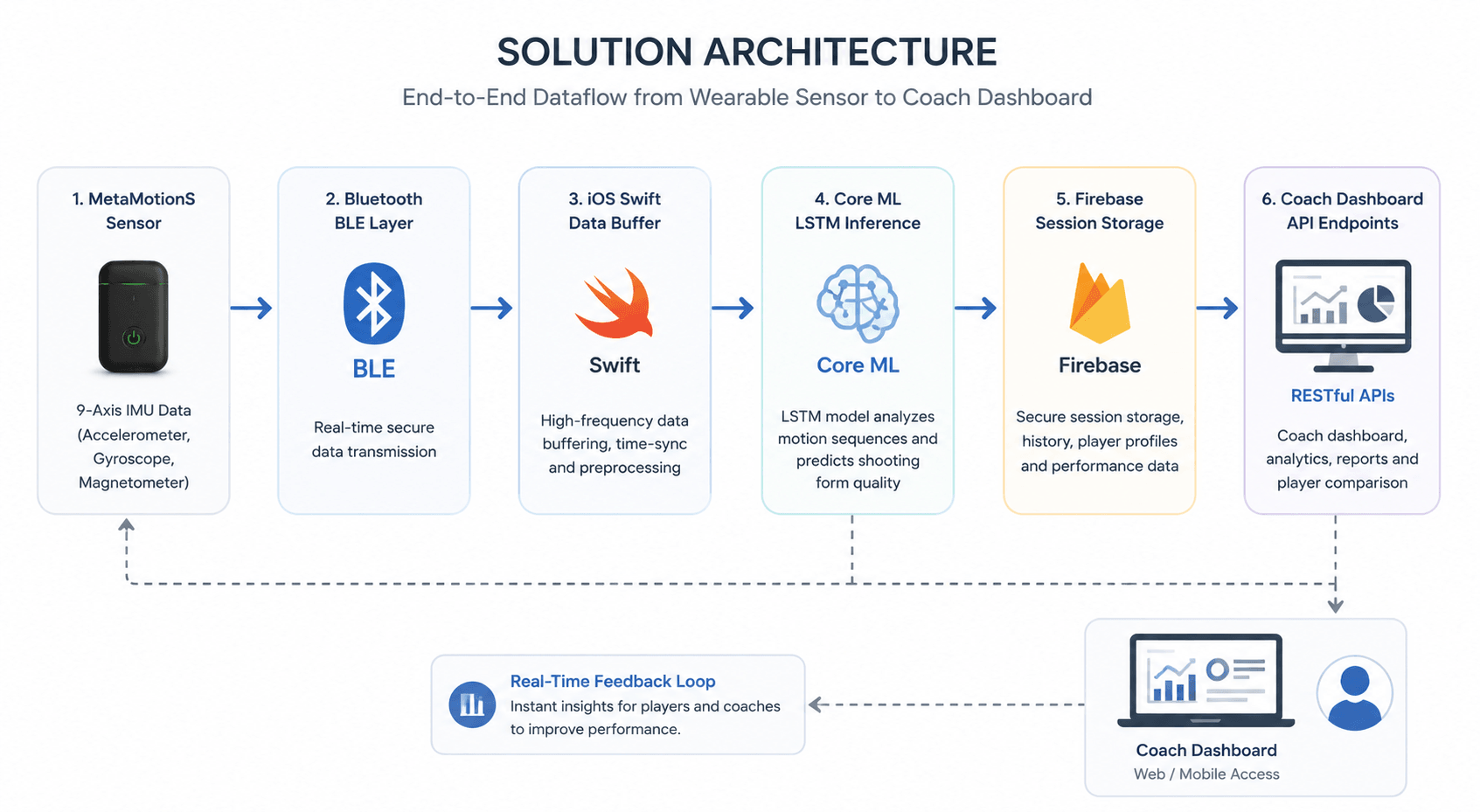
Folio3 built a four-stage pipeline that takes raw wrist sensor data and converts it into a coaching-grade shooting form score — all running natively on iPhone without any cloud dependency.
1. BLE data acquisition — The MetaMotionS device streams six-axis IMU data (3-axis accelerometer + 3-axis gyroscope) to the iOS app over Bluetooth Low Energy at 100 Hz. The app buffers incoming readings and timestamps each frame to preserve the temporal sequence required for LSTM inference.
2. Signal preprocessing — Raw sensor readings contain significant noise from incidental wrist movements. A sliding-window filter isolates the shooting motion window, from the start of the upward arm drive to wrist snap at release, discarding ambient activity before and after the shot.
3. LSTM inference — The preprocessed time-series sequence is passed to a CoreML-optimized LSTM model, trained on a purpose-built dataset of labeled shooting form samples. The model classifies form quality across five key phases: catch stance, dip, drive, release, and follow-through.
4. Feedback delivery — Within 150ms of shot release, the app surfaces a composite form score, a phase-by-phase breakdown, and a personalized drill recommendation. Coaches can review full session history, export drill logs, and track form improvement over time.
Precision metrics tracking verified over dynamic court environments with variable illumination vectors.
Local quantization processing framework completely bypasses expensive cloud network architecture delays.
Zero hardware dependency or calibration cycles required, slashing setup times from days to under ten minutes.
Book a 15-minute discovery session with our sports technology engineering team.
Schedule a Discovery Call →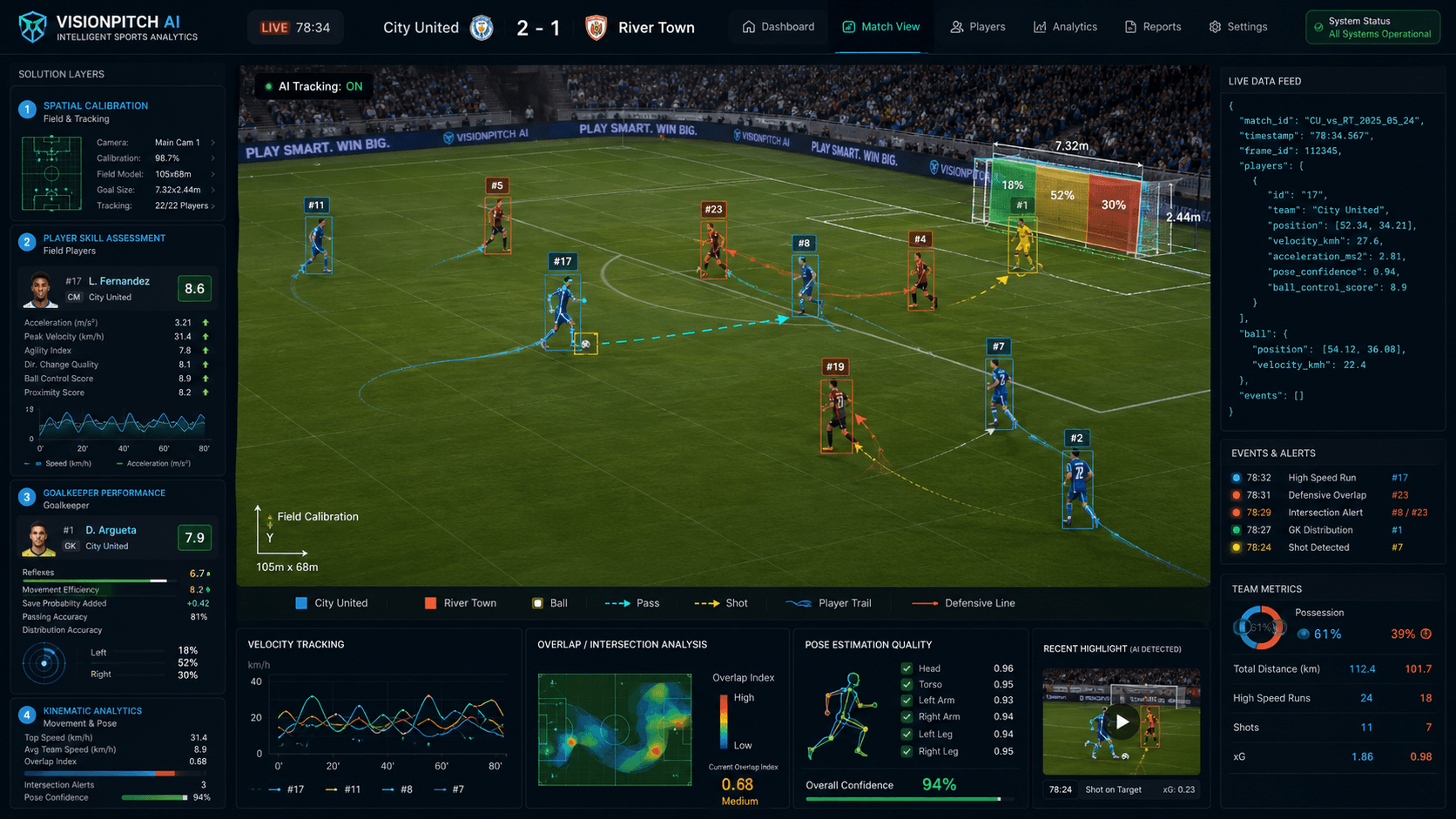
Folio3 developed a comprehensive, custom computer vision-based tracking solution for a premier football association. The software automates the recording and measurement of player and goalkeeper performance across a sequence of complex tactical drills.
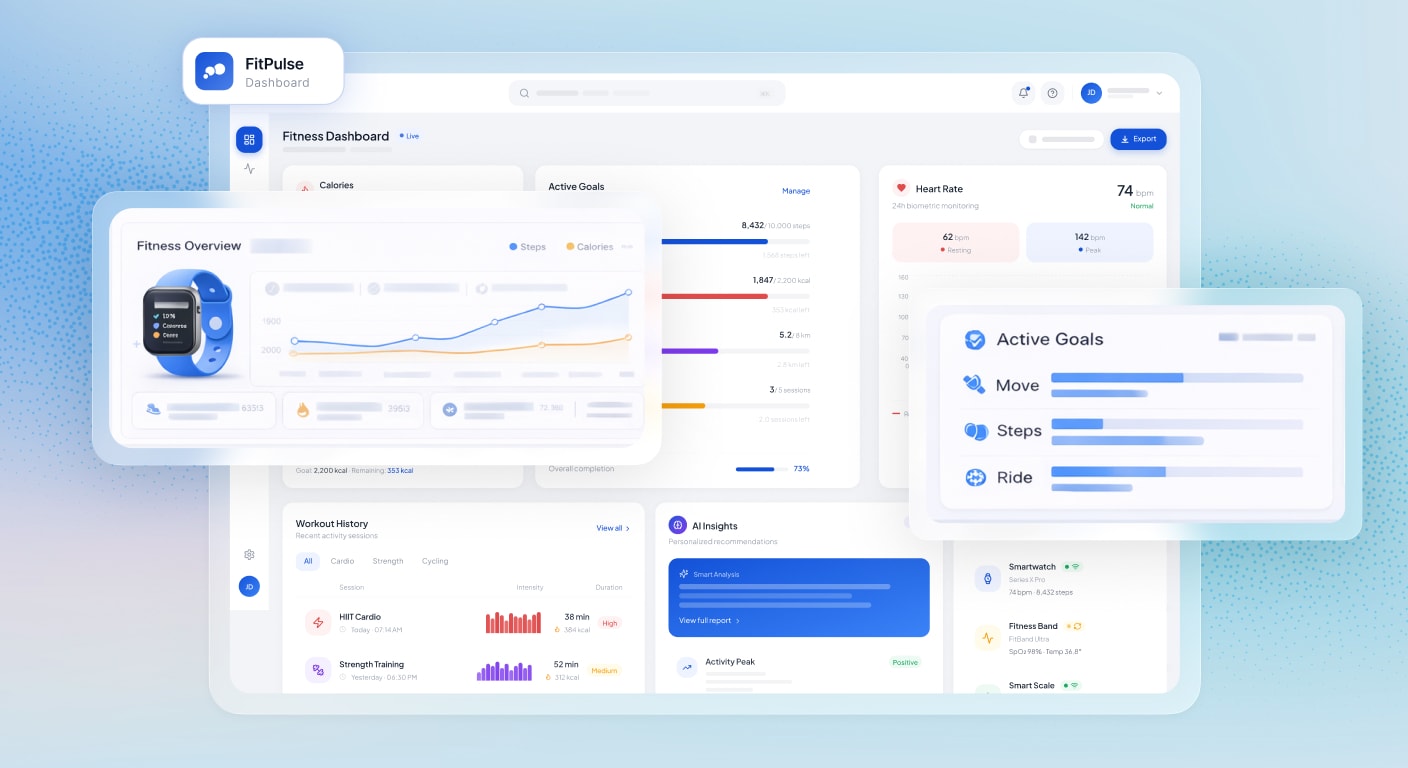
A seamless fitness ecosystem connecting smart wearables and home exercise equipment for real-time health insights.