

Automotive

Fleet management today is no longer about simply tracking vehicles; it is about optimizing performance, safety, and profitability across the entire operation. From fuel usage and route efficiency to driver behavior and maintenance scheduling, every aspect directly affects your bottom line. Yet, when managed in isolation, these moving parts create data silos, inefficiencies, and higher operating costs.
Modern fleet management systems solve this by integrating four key components into one intelligent ecosystem. Together, they deliver real-time visibility, automate decision-making, and uncover opportunities for savings that manual oversight often misses.
According to the sources, fuel accounts for nearly 24% of total fleet operating costs, and integrated systems can reduce overall expenses by up to 30% while improving safety, compliance, and asset longevity. Understanding how these four components connect and how each contributes to your ROI is the first step toward transforming your fleet into a smarter, more profitable operation.

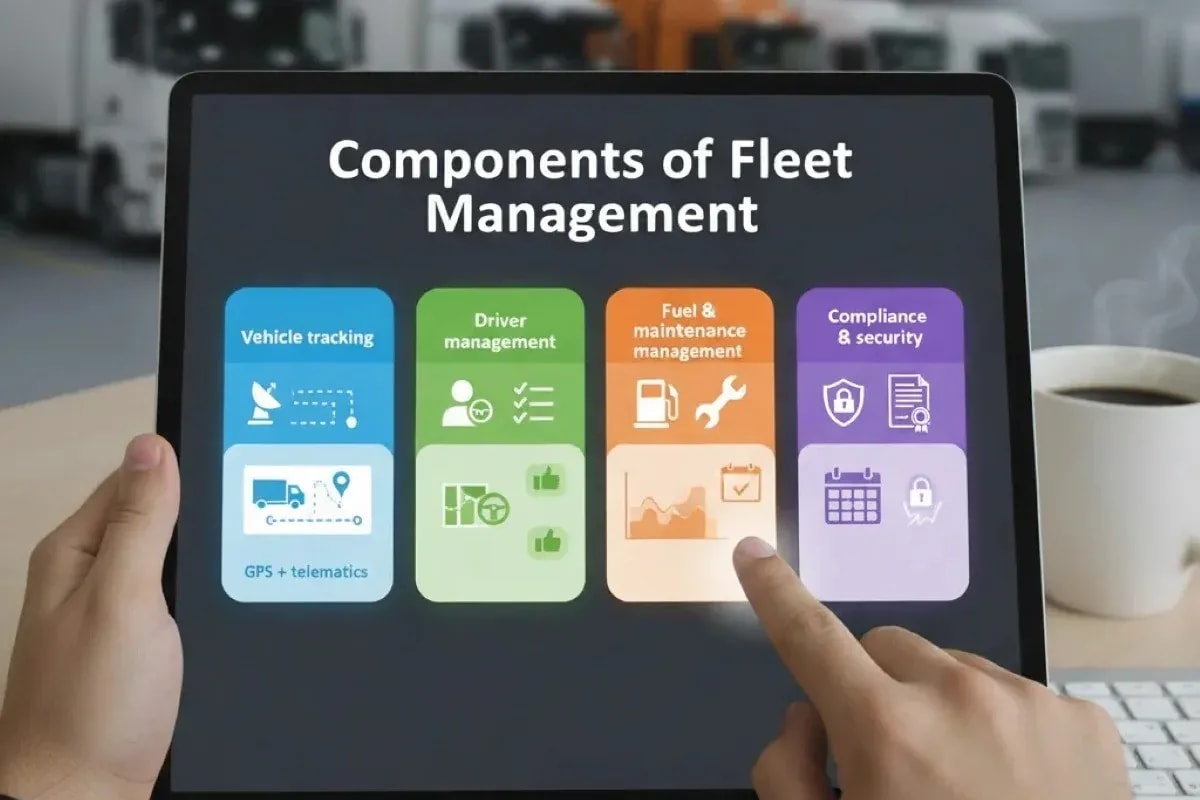
The four core components of fleet management work together as an integrated ecosystem. Each addresses specific operational challenges, and together, they contribute to overall fleet efficiency, safety, and profitability.
Knowing vehicle location at any moment eliminates guesswork and enables smarter, data-driven decisions. Real-time tracking minimizes unauthorized use, enhances customer satisfaction through accurate ETAs, and strengthens security against theft or misuse.
GPS devices use satellite signals to pinpoint locations within meters, while IoT sensors monitor parameters like door status, temperature, and usage hours, transmitting critical insights through secure cellular networks in real time.
Virtual boundaries trigger instant alerts when vehicles enter or exit designated zones, helping managers detect unauthorized detours, after-hours activity, or confirm arrivals at customer sites for strict route compliance.
Comprehensive tracking from purchase to disposition enables monitoring of depreciation, scheduling timely replacements, and maintaining detailed service histories that support smarter repair-versus-replace decisions for aging assets.
Visibility extends to trailers, containers, and heavy equipment using RFID tags or Bluetooth trackers, ensuring every high-value asset is accounted for while reducing loss and maximizing utilization rates.
Archived location data uncovers long-term patterns, highlights route inefficiencies, pinpoints recurring delays, and enables benchmarking of driver performance to continuously improve overall fleet productivity.
Drivers are both your most valuable asset and your greatest liability. Effective management programs reduce accidents by 20–40%, lower insurance costs, cut fuel consumption, and improve retention through fair, data-driven evaluation.
Advanced sensors monitor speeding, harsh braking, acceleration, cornering, and seatbelt use, while algorithms generate objective 0–100 safety scores that highlight coaching opportunities and reward consistently safe drivers.
Audio and visual alerts deliver instant feedback, helping drivers self-correct risky behavior on the spot. Integrated video telematics captures incidents automatically, protecting drivers from false claims and supporting targeted training programs.
Electronic logging devices automatically record driving hours and rest periods, replacing manual logs. Pre-emptive alerts prevent violations and ensure FMCSA compliance while maximizing available drive time efficiently.
Interactive coaching dashboards display personalized metrics, trends, and improvement areas. Gamified leaderboards and achievement badges foster healthy competition, reinforcing safe driving habits through continuous feedback and motivation.
Transparent evaluations eliminate favoritism, rewarding top performers publicly while addressing weaknesses privately. Balanced workloads and data-backed fairness build trust and significantly reduce costly driver turnover.
Fuel accounts for 30–40% of total fleet operating expenses, making it the largest controllable cost. Strategic management reduces consumption by 10–25% through theft prevention, efficiency optimization, and driver behavior improvement.
Intelligent fuel sensors instantly detect siphoning, skimming, or unauthorized refueling. Cross-referencing tank levels with purchase data triggers instant alerts, enabling rapid investigation and preventing costly fuel theft incidents.
Automated systems validate every transaction against GPS location, tank capacity, and fuel type. Exceptions such as excessive gallons or off-duty purchases are flagged immediately to prevent fraud and misuse.
Comprehensive analytics compare miles per gallon across vehicles and drivers, identifying mechanical inefficiencies or wasteful driving habits while setting measurable improvement goals for long-term fuel performance gains.
Dynamic routing algorithms factor in real-time traffic, delivery schedules, and vehicle capacity. Optimized routes cut total miles by 10–20%, reducing both fuel consumption and driver hours efficiently.
Integrated dashboards consolidate expenses, including fuel, maintenance, insurance, and depreciation. Managers can calculate cost per mile or per job, pinpoint high-cost routes, and make smarter asset investment decisions.
Regulatory violations can result in fines from $1,000 to $11,000 per incident and even force operational shutdowns. Automated compliance transforms legal exposure into a controlled, documented process that ensures audit readiness and business continuity.
FMCSA regulations require automated duty status tracking for commercial fleets. ELDs replace paper logs, prevent hours-of-service violations, and provide inspectors with real-time, tamper-proof records that meet federal compliance standards.
Automated scheduling ensures timely annual inspections while storing digital reports for easy access. Pre- and post-trip DVIRs document vehicle condition, record defect resolutions, and protect against liability from unaddressed maintenance issues.
GPS systems log mileage by jurisdiction automatically, reconciling it with fuel card transactions. Quarterly IFTA reports generate instantly with full documentation, eliminating manual entry errors and reducing audit penalties.
Real-time monitoring tracks idle time and emissions performance against regional regulations. Automated alerts ensure clean-air zone compliance, maintain ESG documentation, and help fleets proactively prevent costly environmental violations.
Centralized systems store insurance certificates, driver qualification files, and claim documentation. Integrated video evidence and safety data simplify insurance submissions, support faster claims, and justify lower premium rates.
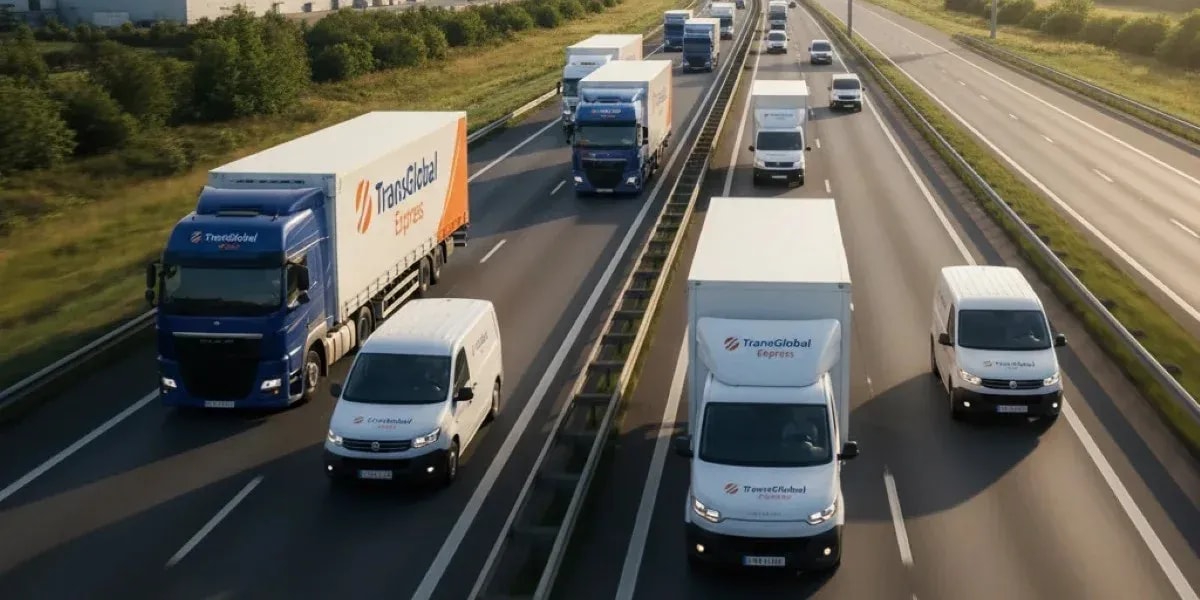
Standalone fleet systems create costly information silos. Integrated platforms eliminate duplicate data entry, reduce administrative overhead by 25–40%, and transform fleet operations from a cost center into a strategic business advantage.
Seamless connectivity links ERP systems for job costing, HR platforms for driver qualification tracking, and accounting software for expense management, while fuel card and dispatch integrations automate reconciliation and optimize daily operations.
RESTful APIs enable flexible integrations with proprietary tools, while webhook triggers ensure real-time data exchange. Custom field mapping supports unique requirements, and automated workflows eliminate manual coordination between departments.
Integrated systems remove data conflicts across teams. Fleet, finance, and operations access synchronized information in real time through unified dashboards that provide complete visibility without switching between applications.
Consolidated reporting merges fleet metrics with financial data, workforce analytics, and customer KPIs. Executive dashboards present unified insights, empowering strategic decisions driven by comprehensive, organization-wide business intelligence.
Mobile applications empower drivers to view trips, submit inspections, and receive new assignments instantly, while supervisors approve requests, track performance, and coordinate teams in real time from any location.
Selecting a fleet management platform is a long-term decision, often spanning 5–10 years. Evaluating vendors systematically ensures your investment enhances operations, scalability, and ROI rather than creating future limitations.
Confirm the platform includes all four essential components: tracking, driver management, fuel monitoring, maintenance, and compliance. Test real-time accuracy, mobile usability, customizable alerts, flexible reporting, and user-friendly dashboards requiring minimal training.
Ensure the system easily scales from 10 to 1,000+ vehicles. Validate multi-location support, role-based access, and custom field options while confirming pricing remains fair as your fleet grows.
Review pre-built connectors for ERP, HR, and accounting platforms. Examine API documentation quality, test export flexibility, confirm fuel card network compatibility, and evaluate the depth of available third-party integrations.
Understand the implementation timeline and data migration process. Evaluate administrator and driver training, verify customer support availability, and ensure a dedicated success manager and resource hub for ongoing assistance.
Clarify per-vehicle subscription fees, hardware options, and storage or support charges. Review contract flexibility, cancellation terms, and request ROI tools to accurately model long-term business impact.
With technology evolving rapidly, your fleet management system must adapt to emerging innovations like electric vehicles, AI, 5G connectivity, and autonomous operations while supporting sustainability and compliance initiatives seamlessly.
Monitor battery health, charging schedules, and station availability in real time. Optimize routes for range efficiency and analyze total ownership costs between electric and combustion fleets comprehensively.
Leverage predictive analytics to forecast maintenance issues, use natural language queries for insights, and apply AI-driven recommendations or image-based damage detection to streamline operational decision-making.
Next-generation networks enable real-time video streaming, low-latency safety alerts, and vehicle-to-vehicle communication, providing the bandwidth needed for advanced telematics and high-speed data synchronization.
Integrate monitoring tools for driver assistance and platooning systems. Prepare for evolving liability structures while ensuring fleet software supports automation, remote oversight, and manual override capabilities.
Track emissions, fuel usage, and carbon footprint per route or vehicle. Automate ESG reporting, support green delivery commitments, and optimize operations to meet environmental and stakeholder expectations.
At Folio3 AI, we empower businesses to manage fleet operations seamlessly through AI-driven, fully customized solutions. Our expertise in artificial intelligence and fleet optimization helps organizations enhance efficiency, safety, compliance, and profitability across every operational layer.
AI-based scheduling algorithms automatically match the right drivers and vehicles for each job, optimizing utilization. Daily routes are generated dynamically, eliminating paper processes with mobile work orders and secure digital signatures.
Intelligent route planning continuously adapts to live traffic and delivery priorities. Dynamic rerouting ensures on-time arrivals, while geofencing creates automated alerts for customer sites, restricted zones, or unauthorized vehicle movements.
Our unified dashboard integrates GPS data, ELD compliance metrics, and onboard diagnostics. Fleet managers gain instant visibility into every vehicle’s status through intuitive, color-coded map views and real-time performance indicators.
Built-in accelerometer sensors detect impact events instantly, notifying managers with precise location data. Mobile workflows guide drivers through standardized post-incident protocols, ensuring fast, accurate, and compliant claims processing.
Our analytics engine benchmarks actual utilization against available capacity, identifying underperforming assets. Comprehensive dashboards calculate cost per mile, aggregate expenses, and deliver actionable insights to improve fleet ROI continuously.

Fuel and cost management typically delivers the fastest ROI because fuel represents 30-40% of total operating expenses. However, all four components work synergistically, driver behavior affects fuel efficiency, and preventive maintenance keeps vehicles running optimally.
GPS tracking creates accountability through visibility, causing unauthorized personal use to drop by 20-30% when drivers know they're monitored. Geofencing alerts immediately notify managers when vehicles operate outside business hours or enter unauthorized areas.
Systems track speeding, harsh braking, rapid acceleration, sharp cornering, excessive idling, seatbelt usage, and following distance. Events are weighted by severity and normalized to miles driven, generating scores from 0-100.
Studies show predictive maintenance reduces breakdowns by 30-50%, extends vehicle life by 20%, and cuts maintenance costs by 10-25%. Every dollar spent on preventive maintenance saves $4-6 in emergency repairs.
GPS tracking automatically logs miles by jurisdiction, eliminating manual logbooks for IFTA reporting. ELD devices connect directly to vehicle engines to record duty status without driver input, preventing violations before they occur.
Fuel card integration delivers immediate ROI through automated reconciliation, fraud detection, and IFTA reporting for all fleets. ERP integration is essential for job costing, while HR/payroll integration matters most for mileage-based compensation tracking.
Real-time monitoring should check diagnostic trouble codes continuously with immediate alerts for critical issues like overheating or low oil pressure. Weekly reviews help identify trends, while monthly comprehensive reports reveal emerging patterns across your entire fleet.
GDPR requires driver consent for personal data collection and provides rights to access and deletion in Europe. CCPA offers similar protections in California, requiring clear privacy policies, data encryption, and access controls.
Insurers offer 10-20% premium discounts for fleets using telematics-based safety programs with documented safe driving data. Video telematics systems that exonerate drivers in not-at-fault accidents reduce claim payouts, further lowering premiums over time.
Watch for data delays of 5-10 minutes, limited mobile access, manual data entry requirements, and no integration with ERP systems. Missing compliance features like ELD or IFTA, frequent hardware failures, and inability to scale indicate outdated technology.