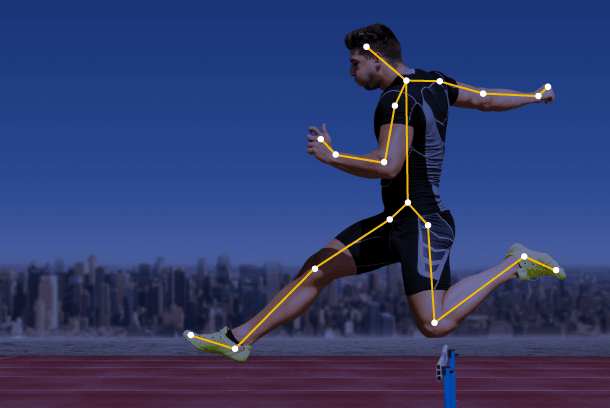
AI has fundamentally changed how coaches and sports scientists read the human body in motion. Where manual observation once limited analysis to what the eye could catch in real time, AI video analysis systems now process thousands of data points per second, joint angles, stride patterns, force vectors, ground contact time, and surface insights that would take a human analyst hours to extract.
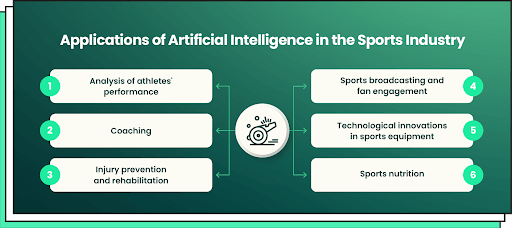
The sports industry is catching up fast. Elite football clubs, Olympic training programs, and professional basketball franchises are already using AI-driven biomechanical analysis to sharpen technique, reduce injury risk, and build training programs that adapt to each athlete's physiology rather than forcing every athlete into the same template.
This guide breaks down exactly how AI biomechanical analysis works, where it delivers the most value, and what the real-world applications look like across different sports, from sprinting mechanics to rehabilitation protocols.
Transform Sports Performance with AI-Powered Video Analysis
Unlock real-time athlete insights, automate performance tracking, and gain a competitive edge with advanced AI-driven sports video analysis solutions.
Get an Exeprt Consultation
The Power of AI in Biomechanical Analysis
AI-driven biomechanical analysis provides unparalleled insights into an athlete's movements, enabling precise evaluation of performance metrics such as speed, acceleration, joint angles, and force production. Tools like motion capture systems integrated with AI algorithms can accurately assess biomechanical patterns, helping athletes optimize technique and efficiency.
2. Personalized Training Regimens
By analyzing biomechanical data, AI can tailor training regimens to individual athletes' needs. Customized workout programs based on biomechanical profiles help optimize training intensity, duration, and recovery strategies. This personalized approach maximizes performance gains while minimizing injury risks.
3. Injury Prevention and Rehabilitation
Real-world Applications of AI in Biomechanical Analysis
1. Enhancing Technique in Sports
In sports like golf, tennis, or basketball, AI analyzes biomechanical data to refine athletes' techniques. For instance, analyzing golf swings through AI-powered motion capture and video analytics helps golfers perfect their form and consistency.
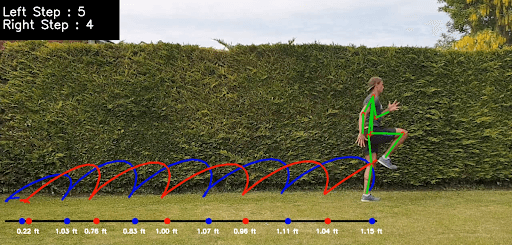
In track and field events, AI-based biomechanical analysis assists in optimizing sprinting techniques. By evaluating stride length, foot strike patterns, and body posture, coaches can fine-tune athletes' running mechanics for faster times.
Many of these capabilities are built on sports custom software development, allowing teams to integrate biomechanical tracking directly into their existing training and performance systems.
3. Redefining Sports Medicine
AI-driven biomechanical analysis is transforming sports medicine. From assessing athletes' gait to diagnosing movement disorders, AI assists healthcare professionals in providing targeted treatments and rehabilitation plans.
Ethical Considerations and Future Trends
AI has brought significant advancements in biomechanical analysis. However, there are ethical considerations that need to be addressed, such as data privacy and equitable access to technology. Looking toward the future, AI has the potential to identify talent based on biomechanical signatures and provide real-time feedback systems for immediate performance adjustments, which is a promising trend.
Embracing the Future of Sports Science
Build Smarter Athlete Performance Strategies
Use AI-driven biomechanical analysis to evaluate movement, optimize training programs, and give coaches data-backed performance insights.
Get an Exeprt Consultation
Biomechanical analysis has always been one of the most data-rich areas in sports science. The challenge was never a shortage of information, it was the inability to process that information fast enough, at scale, and in a way coaches could act on in real time. AI removes that barrier.
The organizations seeing the clearest returns are not necessarily those with the biggest budgets. They are the ones that started with a specific, well-defined use case, a single movement pattern to optimize, a recurring injury to prevent, a training variable to track, and built outward from there. That approach keeps implementation costs manageable and produces measurable outcomes faster than trying to deploy a full biomechanical AI system from day one.
If your organization is exploring where AI fits into your sports science or athlete development program, the first step is understanding what your current data infrastructure can support. Our AI Readiness Assessment gives you a clear picture of where you stand and what a realistic implementation path looks like.
Frequently asked questions:
What is AI biomechanical analysis in sports?
AI biomechanical analysis uses machine learning and computer vision to capture and interpret an athlete's movement data including joint angles, force production, stride patterns, and posture and translate that into actionable performance and injury risk insights.
How does AI detect injury risk from movement data?
AI models are trained on large datasets of athlete movement, correlating specific biomechanical patterns with known injury outcomes. When a live athlete's movement deviates from healthy baselines, asymmetrical loading, abnormal joint extension, or fatigue-related gait changes, the system flags it before the injury occurs.
What equipment is needed for AI biomechanical analysis?
Requirements vary by use case. High-end setups use marker-based motion capture systems with force plates. More accessible deployments use multi-camera video rigs processed through computer vision models or wearable IMU sensors. The right setup depends on the sport, budget, and the level of biomechanical detail required.
Can AI biomechanical analysis work in real time?
Yes. Modern systems can process video feeds and sensor data with low enough latency to provide in-session feedback to coaches. Real-time capability is especially valuable in high-velocity sports like sprinting, swimming, and baseball pitching, where technique corrections need to happen within a training session, not days later.
Is AI biomechanical analysis only for elite athletes?
No. While early adoption was concentrated in elite and professional sport, the cost of video-based systems has dropped significantly. Semi-professional teams, university programs, and high-performance fitness facilities now deploy scaled-down versions of the same underlying technology for training optimization and injury prevention.
How is athlete data kept private?
Responsible deployments adhere to data governance frameworks that restrict access to authorized personnel, anonymize data used for model training, and align with applicable regulations. Any AI biomechanical system handling medical or physiological data should also align with relevant healthcare data standards in its operating jurisdiction.