
ALPR
How Much Does an ALPR System Cost in 2026?
Learn ALPR system costs, pricing models, hidden fees, and ROI factors for smarter deployment planning in 2026.
Explore AI-powered ALPR solutions in Canada for smarter traffic control, parking automation, and enhanced security.

Canada's transportation sector processes over 285 million vehicle crossings annually at its borders, making efficient vehicle identification critical for security and traffic management. With over 426,872 new motor vehicle registrations in Q1 2025 alone, the volume of vehicles requiring monitoring continues to grow across Canadian roads and facilities.
ALPR (Automatic License Plate Recognition) technology has emerged as a game-changing solution for Canadian municipalities, law enforcement agencies, and private organizations seeking to automate vehicle monitoring and enhance public safety.
From Vancouver's busy port terminals to Toronto's congested highways, ALPR systems are transforming how Canada manages vehicle identification, traffic enforcement, and border security in an increasingly connected world.
Use AI-powered ALPR systems to automate access control, tolling, and parking management across Canada.
Explore Free ConsultationALPR technology combines high-resolution cameras with artificial intelligence to automatically capture, read, and process license plate information in real-time. These systems use optical character recognition (OCR) algorithms to convert visual license plate data into digital text that can be instantly matched against databases.
The technology operates continuously, scanning thousands of vehicles per hour while identifying specific plates of interest for law enforcement, parking management, toll collection, and security applications.
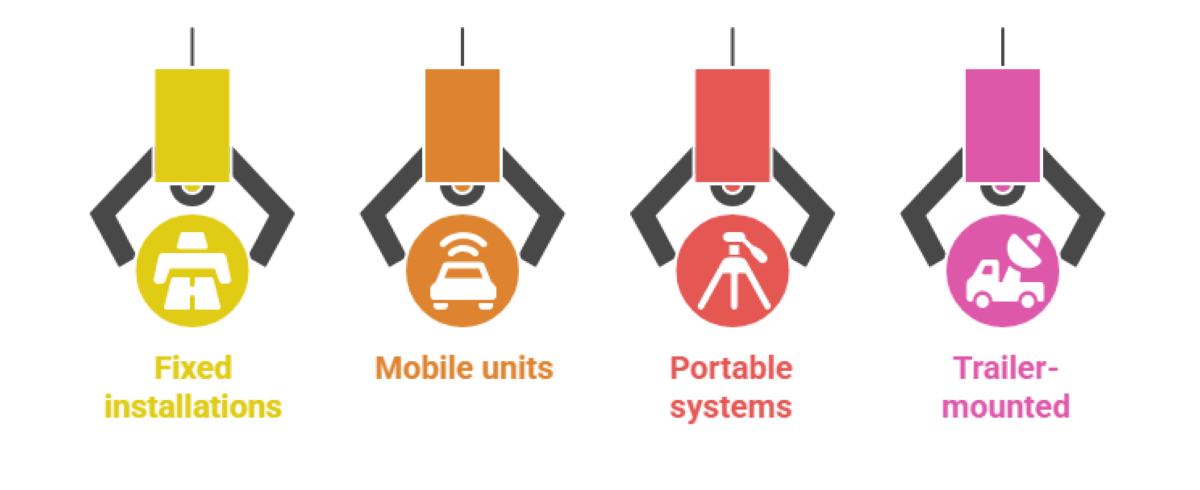
Different ALPR configurations serve various operational needs, ranging from permanent traffic monitoring to flexible law enforcement applications. Each type offers distinct advantages tailored to specific deployment requirements and use cases.
Permanently mounted ALPR cameras represent the most common deployment method for continuous vehicle monitoring. These systems provide reliable, long-term surveillance capabilities for high-traffic areas and critical infrastructure points.
Fixed installations offer 24/7 monitoring of highways, intersections, and facility entrances through cameras mounted on bridges, poles, or overhead gantries.
Vehicle-mounted ALPR systems transform patrol cars into mobile surveillance platforms. These flexible solutions enable law enforcement officers to actively scan license plates while conducting regular patrols or responding to incidents. Mobile ALPR cameras provide enhanced flexibility for on-the-go enforcement activities.
Mobile units allow patrol cars to scan license plates while driving, enabling proactive enforcement and real-time suspect vehicle detection capabilities.
Temporary ALPR deployments serve specific events or short-term enforcement needs. These systems can be quickly installed and relocated as operational requirements change, providing cost-effective monitoring without permanent infrastructure commitments.
Portable systems support temporary deployments for special events, construction zones, or short-term enforcement operations, offering flexibility without permanent infrastructure investment.
Self-contained trailer units bring ALPR capabilities to remote or infrastructure-limited locations. These systems include integrated power sources and wireless connectivity, enabling deployment in areas where traditional installations aren't feasible.
Trailer-mounted units feature solar power and wireless connectivity, allowing deployment in remote locations or areas lacking electrical infrastructure support.
ALPR solutions can be implemented through dedicated hardware or software applications, each offering different benefits for Canadian organizations. The choice depends on existing infrastructure and specific operational requirements.
ALPR technology delivers operational improvements for Canadian organizations across multiple sectors. These systems enhance efficiency, reduce manual workload, and improve accuracy in vehicle identification tasks.
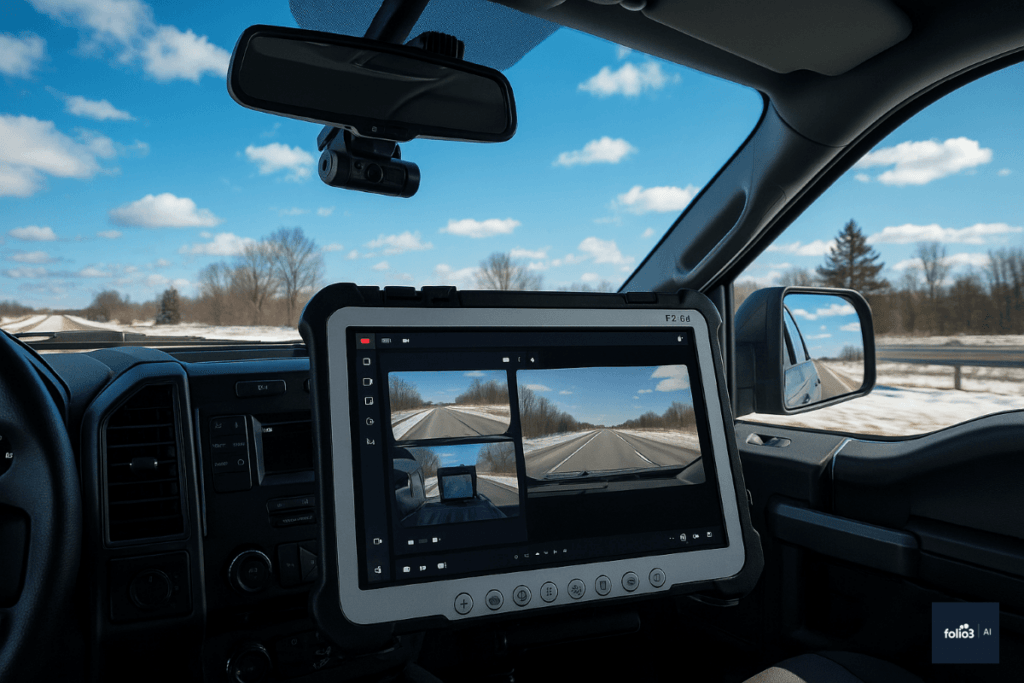
Canadian organizations across various sectors leverage ALPR technology to address specific operational challenges. These applications demonstrate the versatility and practical value of automated license plate recognition systems.
Police agencies across Canada have adopted ALPR technology as a vital tool for enhancing public safety and preventing crime. These systems enhance officer capabilities while providing valuable intelligence for investigations and patrol operations.
Police agencies utilize ALPRs to detect stolen vehicles, identify vehicles with expired registrations, and track suspects while on patrol or through fixed monitoring points.
Automated traffic enforcement represents one of the most widespread ALPR applications in Canadian municipalities. These systems improve road safety while reducing the administrative burden on law enforcement personnel and providing consistent violation reporting.
Automated systems capture speeding violations and red light infractions, generating digital evidence while reducing the need for officer presence at enforcement locations.
Canadian cities are increasingly relying on ALPR technology to modernize their parking management and enforcement operations. These systems enhance compliance rates, lower operational costs, and deliver improved service to residents and visitors.
Cities implement ALPR for automated permit validation, violation detection, and efficient management of parking resources without requiring manual enforcement activities.
Private companies and government organizations utilize ALPR systems to monitor vehicle movements and ensure operational compliance. These applications help optimize fleet utilization while maintaining security and accountability for vehicle usage.
Companies track vehicle entry and exit times, monitor route compliance, and ensure proper vehicle usage through the use of automated identification systems.
Toll highways, such as Ontario's 407 ETR, demonstrate how ALPR technology can transform transportation infrastructure. This system replaces traditional toll collection methods, providing accurate billing and a seamless travel experience for millions of users annually.
License-based billing systems eliminate traditional toll collection while providing a seamless travel experience for highway users across Ontario's express routes.
Canadian organizations face unique obstacles when implementing ALPR systems due to environmental conditions and regulatory requirements. Understanding these challenges helps ensure the successful deployment and operation of these systems.
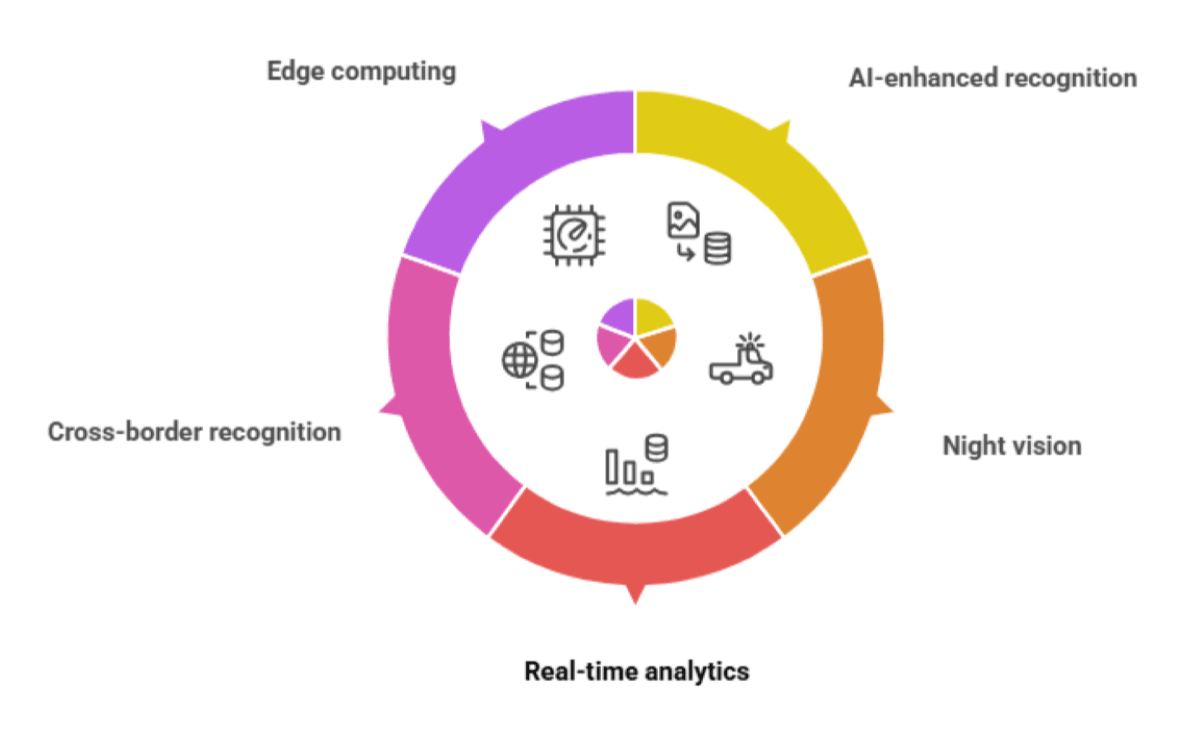
Latest technology continues to improve ALPR capabilities and expand the potential applications for Canadian users. These developments address current limitations while opening up new possibilities for vehicle monitoring and management.
Modern ALPR systems leverage artificial intelligence and machine learning to achieve unparalleled accuracy rates. These advanced algorithms continually learn from new data, adapting to evolving license plate formats and enhancing performance over time without requiring manual intervention.
Machine learning algorithms enhance accuracy rates and minimize false positives, automatically adapting to new license plate formats.
Canadian weather conditions and extended winter darkness require ALPR systems with superior low-light capabilities. Advanced sensor technology and specialized illumination ensure reliable operation regardless of lighting conditions or weather challenges.
Advanced sensor technology and infrared illumination enable reliable operation in darkness and challenging weather conditions common in Canada.
Cloud-based ALPR platforms provide instant access to vehicle data and analytics from any location. These systems provide powerful reporting tools and real-time insights, enabling organizations to make informed decisions about security and traffic management.
Web-based platforms offer instant access to data and insights from any location, along with advanced reporting and analysis capabilities.
Enhanced international cooperation and expanded databases enable ALPR systems to recognize license plates from multiple countries. This capability is particularly valuable for managing Canada's busy border crossings and the tourism industry.
Enhanced databases and algorithms facilitate the recognition of international license plates, supporting improved border security and tourism management.
Local processing capabilities reduce dependence on network connectivity while improving response times. Edge computing ensures that ALPR systems remain operational during network outages, providing immediate alerts for critical situations.
Local processing capabilities reduce response times while maintaining operation during network outages or connectivity issues.
Monitor vehicles accurately, reduce manual processes, and improve operational efficiency with advanced ALPR solutions.
Explore Free ConsultationCanadian ALPR implementations must balance complex privacy regulations with effective operation. Proper governance frameworks protect citizen privacy while enabling legitimate security and enforcement applications.
The Personal Information Protection and Electronic Documents Act establishes fundamental privacy requirements for Canadian organizations collecting personal data. ALPR implementations must carefully address consent mechanisms, data minimization principles, and transparency obligations to ensure compliance with relevant laws.
Federal privacy legislation requires organizations to obtain consent, limit data collection, and provide transparency about information usage and retention practices.
Individual provinces have enacted additional privacy legislation that affects ALPR deployments, particularly for public sector organizations. These laws often impose stricter requirements than federal legislation and must be carefully considered during system design and implementation.
Additional regulations in provinces like British Columbia and Alberta impose specific requirements for public sector ALPR implementations and data handling.
Protecting collected vehicle and location data requires robust encryption throughout the entire data lifecycle. Strong security measures prevent unauthorized access while ensuring compliance with Canadian privacy laws and industry best practices for protecting sensitive information.
Strong encryption protects collected information during transmission and storage while preventing unauthorized access to sensitive vehicle and location data.
Balancing operational requirements with privacy obligations requires carefully crafted data retention policies. These guidelines help organizations determine appropriate storage durations while ensuring compliance with legal requirements and minimizing privacy risks for citizens.
Clear guidelines for data storage duration help organizations balance operational needs with privacy requirements and legal obligations.
Regular compliance reviews ensure that ALPR systems continue to meet legal requirements as regulations evolve. These assessments identify potential improvements in privacy protection while maintaining operational effectiveness and demonstrating accountability to regulatory authorities and the public.
Regular reviews of data handling practices ensure ongoing compliance while identifying areas for improvement in privacy protection.
Selecting an appropriate ALPR vendor requires careful evaluation of technical capabilities, compliance features, and local support options. The right choice ensures successful implementation and long-term operational success.
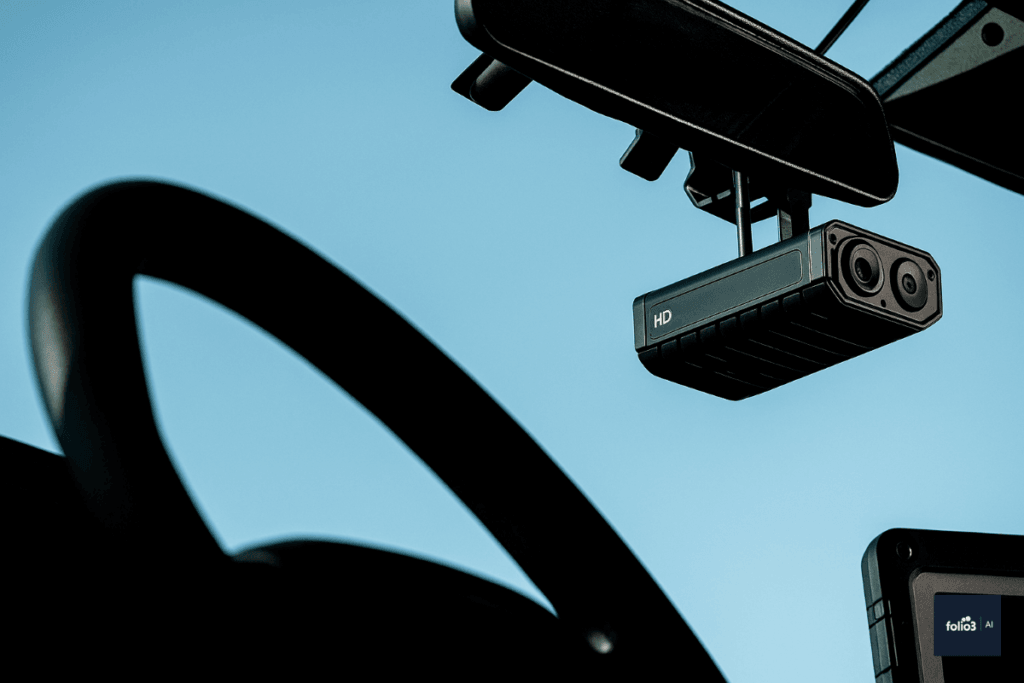
ALPR technology will play an increasingly important role in Canada's transportation infrastructure as smart city initiatives expand. Integration with emerging technologies promises enhanced capabilities and new applications.
Canadian municipalities are developing connected infrastructure that relies on integrated data systems for optimal performance. ALPR technology will become a fundamental component of these smart city networks, providing real-time vehicle data for traffic optimization and emergency response coordination.
ALPR systems will become key components of connected urban infrastructure, providing data for traffic optimization and emergency response coordination.
As self-driving cars become more common on Canadian roads, they'll need systems that can identify and communicate with them effectively. ALPR technology will adapt to work with these autonomous vehicles while still handling regular cars and trucks in our mixed traffic reality.
Future systems will identify and communicate with self-driving vehicles while maintaining security and traffic management capabilities.
Advanced data analysis capabilities will transform ALPR from reactive to predictive systems. Machine learning algorithms will analyze historical traffic patterns and real-time data to forecast congestion, identify potential security threats, and predict infrastructure maintenance needs.
Advanced algorithms will analyze traffic patterns and predict congestion, security threats, or maintenance needs based on vehicle movement data.
International cooperation between Canada and its neighboring countries will improve through the enhanced use of ALPR systems and the development of data-sharing protocols. These developments will enable seamless vehicle tracking and security screening while facilitating legitimate travel and commerce.
Improved international cooperation will enable seamless vehicle tracking and security screening between Canada and neighboring countries.
Climate change initiatives will drive the integration of ALPR systems and environmental monitoring programs. These connections will support emissions tracking, pollution control efforts, and environmental policy development through detailed data on vehicle movement and usage.
Integration with emissions databases and environmental sensors will support pollution control efforts and climate change initiatives.
Folio3 delivers AI-powered ALPR solutions in Canada designed for seamless integration with existing infrastructure while meeting Canadian operational requirements. Our expertise in video analytics and deep learning ensures reliable performance across a wide range of applications and challenging conditions.
Folio3's ALPR technology utilizes high-resolution cameras and deep learning algorithms to provide real-time license plate detection and recognition. Our solution integrates seamlessly with existing CCTV systems, traffic management platforms, and access control software, offering vehicle monitoring capabilities. Our ALPR cameras deliver exceptional performance in Canadian environments.
AI-powered algorithms detect and read license plates in real-time, seamlessly integrating with existing cameras and third-party systems.
Folio3 supports both cloud-based and on-premise deployments to meet diverse organizational requirements and security policies. Our solutions work with existing IP cameras and infrastructure, reducing implementation costs while providing scalable performance from small facilities to multi-provincial networks.
Cloud and on-premise deployment options work with existing infrastructure, scaling from small facilities to multi-provincial highway networks.
Our customizable algorithms can be fine-tuned to recognize international license plate formats, supporting Canada's diverse vehicle population, including American visitors and commercial cross-border traffic. This capability is essential for border regions and tourism-heavy areas across Canada.
Customizable algorithms recognize international license plate formats, effectively supporting cross-border traffic and the diverse Canadian vehicle population.
Deploy AI-powered ALPR solutions to improve security, automate parking management, and streamline traffic operations.
Explore Free ConsultationCanadian law enforcement agencies use ALPR systems to automatically detect traffic violations, such as speeding, red light infractions, and expired registrations. The technology provides digital evidence while reducing the need for officer presence at enforcement locations.
Cities gain improved traffic management, automated parking enforcement, enhanced security through stolen vehicle detection, and reduced operational costs. ALPR systems also provide valuable data for urban planning and traffic optimization initiatives.
Yes, ALPR technology is legal in Canada; however, it is subject to federal and provincial privacy laws, including PIPEDA. Organizations must implement proper data governance, obtain necessary consents, and adhere to retention guidelines to ensure compliance.
Artificial intelligence enhances accuracy rates, reduces false positives, and adapts to challenging conditions such as harsh weather or poor lighting. AI algorithms also enable predictive capabilities and automated integration with existing systems, improving operational efficiency and accuracy rates while reducing false positives and adapting to challenging conditions.
Learn ALPR system costs, pricing models, hidden fees, and ROI factors for smarter deployment planning in 2026.
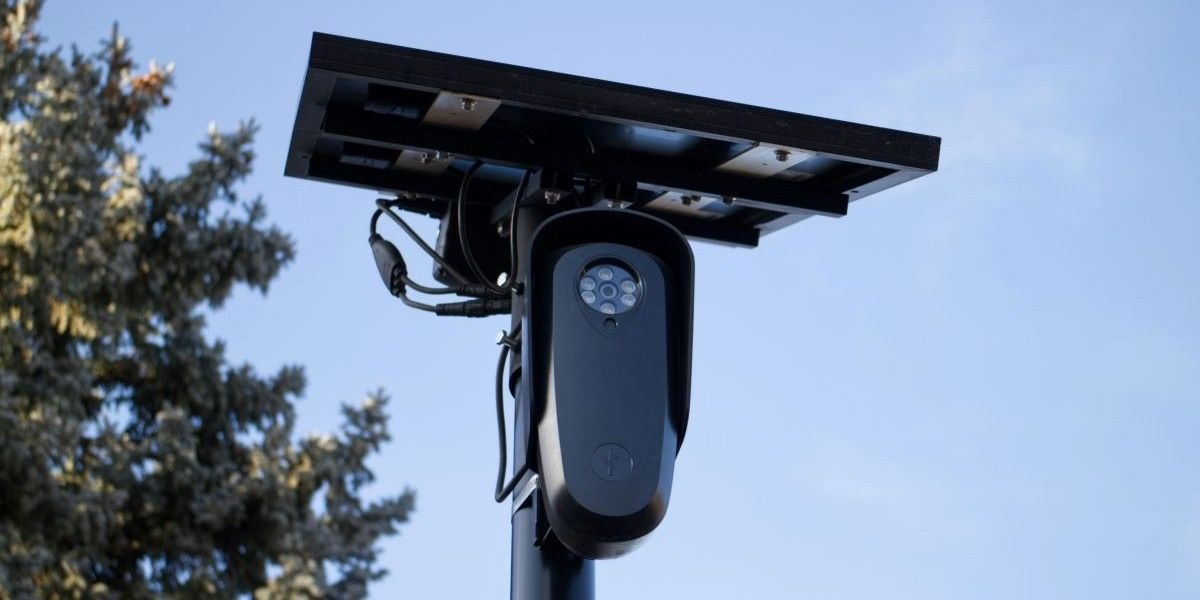
Automatic License Plate Recognition (ALPR) is a computer vision system that captures vehicle plate images and converts them into searchable, actionable data for use in access control, parking, tolling, logistics, security, and traffic operations.