Fleet managers across the trucking industry face mounting pressure to enhance security while reducing operational costs and improving efficiency. Large truck fleets handle millions of dollars in cargo daily, making them prime targets for theft and unauthorized access. Manual gate operations and traditional security measures create bottlenecks that cost valuable time and resources. Modern fleet operations demand smarter, automated solutions like ALPR technology, and understanding the benefits of ALPR for large truck fleets is key to building secure, scalable, and cost-efficient operations.
ALPR for truck fleets represents a technological breakthrough that addresses these critical challenges. According to recent market research, the global automatic license plate recognition (ALPR) market was valued at approximately $1.3 to $2.8 billion in 2024, with conservative projections suggesting growth to $2.8-5.4 billion by 2032. This growth is driven largely by commercial fleet adoption seeking enhanced security and operational efficiency, as businesses increasingly integrate AI in transportation to optimize their operations.
How does ALPR work for large truck fleet operations?
ALPR technology transforms traditional fleet management by automating vehicle identification through advanced computer vision and AI-powered recognition systems designed specifically for commercial operations.
Camera placement at depots, weigh stations, and centers
Strategic positioning of high-resolution cameras at critical access points ensures optimal license plate capture regardless of challenging environmental conditions like weather variations or poor lighting situations.
Heavy-duty truck recognition
Specialized algorithms are specifically trained to recognize commercial vehicle plates, including unique formats for heavy-duty trucks, trailers, and hazardous material transporters that require specialized identification and tracking.
OCR and AI processing in real-time for vehicles
Optical character recognition technology instantly converts plate images to digital data, enabling simultaneous processing of multiple vehicles without creating operational delays or bottlenecks at facility gates.
Integration with fleet management and ELD systems
Seamless connectivity with existing Transportation Management Systems and Electronic Logging Devices ensures comprehensive data flow across all operational platforms without disrupting current workflows or processes.
Support for multi-unit truck configurations
Sophisticated recognition capabilities handle complex vehicle combinations, enabling independent tracking of both tractor and trailer units for complete asset visibility and comprehensive fleet management throughout operations.
Key benefits for large truck fleets
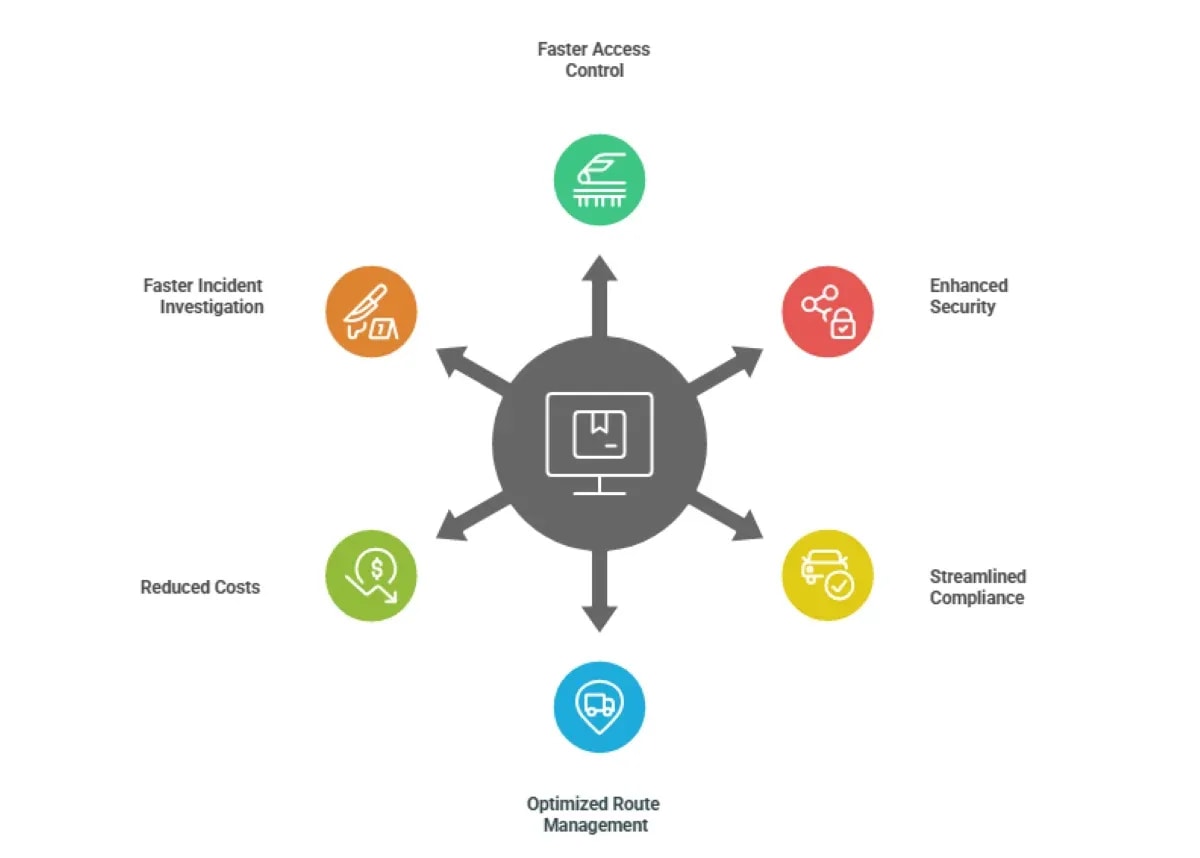
ALPR technology delivers transformative advantages that directly impact operational efficiency, security, and profitability for large-scale trucking operations across multiple operational areas.
1. Automated fleet access control
ALPR eliminates manual verification processes, enabling instant vehicle identification and authorization while reducing congestion at critical access points throughout fleet operations.
Automatic recognition significantly speeds up vehicle processing, with documented improvements of 70-80% in gate processing times, eliminating manual checks and reducing average processing time from minutes to seconds.
Reduced congestion and manual verification delays
Automated systems process multiple vehicles simultaneously, preventing bottlenecks during peak hours and improving overall terminal throughput and operational efficiency.
Support for oversized and hazmat truck identification
Specialized recognition algorithms identify permitted oversized loads and hazardous material vehicles, ensuring compliance with safety regulations and routing requirements.
Streamlined trailer yard management systems
Real-time tracking of trailer movements within yards enables efficient space utilization, faster cargo loading/unloading, and improved asset location management.
Enhanced driver experience and satisfaction
Seamless gate access reduces driver wait times, improving overall job satisfaction and reducing turnover in an industry facing significant driver shortages.
2. Improved asset security
Advanced security monitoring protects valuable fleet assets and cargo through continuous surveillance and immediate threat detection across all operational facilities and locations.
Detect unauthorized vehicle access to terminals
Instant alerts when unregistered vehicles attempt facility access, preventing potential security breaches and protecting valuable cargo from theft or tampering.
Real-time alerts for stolen or cloned plates
Immediate notifications when flagged license plates are detected, enabling rapid response to potential security threats and stolen vehicle recovery efforts.
Protection against cargo theft at truck stops
24/7 monitoring capabilities track vehicle movements in high-risk areas, deterring criminal activity and providing evidence for law enforcement investigations.
Enhanced security for high-value freight operations
Additional security layers for sensitive cargo shipments through continuous monitoring and verification of authorized personnel and vehicle access.
Comprehensive audit trails for security incidents
Detailed logs of all vehicle movements provide complete documentation for security investigations, insurance claims, and law enforcement cooperation.
3. Streamlined compliance and record keeping
Automated documentation ensures complete regulatory compliance while reducing administrative burden and minimizing risks associated with manual record-keeping errors and oversights.
Automated logging for DOT and HOS requirements
Seamless integration with Hours of Service regulations, automatically documenting vehicle movements to support compliance with federal transportation safety requirements.
Simplified audit and inspection processes
Digital records provide instant access to complete vehicle movement histories, streamlining DOT audits and reducing administrative overhead during inspections.
Integration with hours of service data systems
Direct connectivity with ELD systems ensures accurate correlation between driver duty status and vehicle location for comprehensive compliance monitoring.
DOT audit trail support for regulatory compliance
Comprehensive documentation meets federal requirements for vehicle tracking, driver accountability, and operational transparency during regulatory reviews.
Reduced risk of compliance violations and penalties
Proactive monitoring prevents violations through real-time alerts and automated documentation, protecting fleets from costly fines and operational disruptions.
4. Optimized route and yard management
Real-time vehicle tracking enhances operational visibility, enabling data-driven decisions that improve efficiency, reduce costs, and optimize asset utilization across fleet operations.
Tracking truck movements between terminals and centers
Complete visibility of vehicle locations during inter-facility transfers, enabling proactive route optimization and improved customer communication regarding delivery schedules.
Real-time fleet position monitoring at checkpoints
Strategic monitoring points provide continuous updates on vehicle progress, allowing dispatchers to make informed decisions about route adjustments.
Weigh station and inspection checkpoint tracking
Automated documentation of regulatory checkpoint passages ensures compliance records while providing valuable data for route planning and optimization.
Reduced dwell time at terminals and docks
Efficient vehicle identification speeds up cargo operations, reducing unnecessary delays and improving overall terminal productivity and customer satisfaction.
Enhanced coordination between fleet operations and logistics
Seamless data sharing between operational systems improves coordination, reduces communication errors, and enhances overall supply chain efficiency.
5. Reduced operational costs
ALPR implementation delivers measurable cost savings through automation, improved efficiency, and reduced labor requirements while maintaining high security and operational standards.
Fewer staff are required for gate operations
Automation reduces personnel needs at access points, allowing reallocation of human resources to higher-value operational activities.
Lower risk of fines from compliance breaches
Automated compliance monitoring prevents costly violations, with potential savings of thousands of dollars in avoided penalties and regulatory issues.
Reduced terminal congestion and faster turnaround
Improved flow reduces operational bottlenecks, increasing daily throughput capacity and enabling higher revenue generation from existing infrastructure investments.
Decreased labor costs for yard management
Automated tracking reduces manual supervision requirements, lowering operational overhead while maintaining comprehensive visibility of all fleet movements.
Improved fuel efficiency through optimized operations
Better traffic flow and reduced idle time at gates contribute to lower fuel consumption and reduced environmental impact.
6. Faster incident investigation
Comprehensive data collection and instant access to historical records accelerate incident resolution, supporting insurance claims and enhancing overall operational accountability.
Quick access to historical vehicle movement data
Instant retrieval of complete vehicle histories enables rapid investigation of incidents, accidents, or security breaches with detailed timeline reconstruction.
Support for insurance and claims processing
Detailed documentation provides compelling evidence for insurance claims, potentially reducing premiums and accelerating settlement processes for covered incidents.
Enhanced accident investigation capabilities
Complete movement records support thorough accident analysis, helping identify contributing factors and implement preventive measures for future incidents.
Comprehensive audit trails for liability protection
Detailed logs protect fleet operators from false claims while providing evidence of proper operational procedures and driver accountability.
Streamlined reporting for regulatory investigations
Automated data collection simplifies reporting requirements for DOT investigations, reducing administrative burden and ensuring complete compliance documentation.
ALPR technology trends impacting large truck fleets in 2025
Emerging technological developments continue advancing ALPR capabilities, offering truck fleets enhanced functionality, improved accuracy, and greater integration possibilities for operational optimization.
AI-powered edge computing for real-time processing
Advanced processors enable instant plate recognition without cloud connectivity, reducing latency while maintaining high accuracy even in remote locations. Modern systems achieve 95-98% accuracy rates under various conditions.
Multi-lane simultaneous recognition capabilities
Next-generation cameras process multiple vehicles across several lanes simultaneously, dramatically improving throughput at busy terminals and distribution centers.
Integration with IoT sensors and smart infrastructure
Connected systems combine ALPR data with weight sensors, cargo monitors, and environmental systems for comprehensive operational intelligence and automation. These innovations align with broader fleet management technology trends for 2025, including AI-powered predictive analytics and sustainable transportation solutions.
Enhanced international plate recognition for cross-border operations
Advanced algorithms support diverse plate formats across North American markets, enabling seamless operations for international trucking companies and routes.
Predictive analytics and machine learning optimization
AI systems analyze historical patterns to predict optimal traffic flows, maintenance needs, and security risks, enabling proactive operational management
Choosing the right ALPR partner for truck fleet operations
Selecting appropriate technology partners requires careful evaluation of capabilities, integration options, and long-term support to ensure maximum return on investment and successful implementation outcomes.
Proven experience with commercial vehicle recognition
Fleet managers should evaluate vendors' track record with heavy-duty trucks, trailers, and commercial plate formats to ensure reliable performance in demanding operational environments and challenging conditions.
Scalability across multiple terminals and regions
Companies must choose solutions that accommodate fleet growth and geographic expansion without performance degradation or requiring significant additional infrastructure investments that could impact operational budgets.
Integration capabilities with existing fleet management systems
Organizations should ensure seamless connectivity with current TMS, ELD, and operational software to maximize data utility and minimize disruption during implementation while preserving existing workflows.
Comprehensive support and maintenance services
Fleet operators need partners offering 24/7 technical support, regular system updates, and proactive maintenance to ensure continuous operational reliability and minimize downtime throughout the deployment lifecycle.
Customization options for specific operational requirements
Businesses should select partners capable of adapting ALPR solutions to unique operational needs, compliance requirements, and integration challenges specific to their trucking operations and industry demands.
Why Folio3 AI is the right partner for custom truck fleet ALPR technology?
Folio3 AI delivers comprehensive ALPR solutions specifically designed for commercial fleet operations, combining advanced technology with deep industry expertise and proven implementation success. With over 15 years of experience in AI-driven solutions, we understand the unique challenges facing modern transportation companies.
Specialized expertise in transportation and logistics applications
Extensive experience developing custom ALPR solutions for commercial fleets, with a deep understanding of trucking industry challenges, regulations, and operational requirements.
Advanced license plate detection and tracking applications
Comprehensive solution portfolio includes traffic management, security monitoring, toll management, and parking management, specifically designed for fleet operations. Learn more about our comprehensive ALPR software solutions that deliver accuracy in all conditions.
Seamless integration with existing fleet management infrastructure
Proven ability to integrate ALPR technology with existing TMS, ELD, and operational systems without disrupting current workflows or requiring extensive system overhauls. Our AI-powered transportation solutions enable real-time vehicle tracking and route optimization.
Scalable cloud and on-premise deployment options
Flexible architecture supports both cloud-based and on-premise implementations, accommodating diverse security requirements and operational preferences across different fleet sizes.
Frequently asked questions
{ "@context": "https://schema.org", "@type": "FAQPage", "mainEntity": [ { "@type": "Question", "name": "What is ALPR, and how does it work for large truck fleets?", "acceptedAnswer": { "@type": "Answer", "text": "ALPR (Automatic License Plate Recognition) uses cameras and AI to automatically read license plates on trucks and trailers. For large fleets, it streamlines gate access, tracks vehicle movements, and automates documentation for improved security and operational efficiency." } }, { "@type": "Question", "name": "How can ALPR improve depot and yard access control for fleets?", "acceptedAnswer": { "@type": "Answer", "text": "ALPR eliminates manual verification by instantly recognizing authorized vehicles, reducing gate processing time by up to 80%. It prevents unauthorized access, tracks vehicle movements within yards, and provides real-time alerts for security threats." } }, { "@type": "Question", "name": "Can ALPR integrate with existing fleet management and telematics systems?", "acceptedAnswer": { "@type": "Answer", "text": "Yes, modern ALPR solutions integrate seamlessly with Transportation Management Systems (TMS), Electronic Logging Devices (ELDs), and existing telematics platforms, providing unified data flow across all operational systems without disrupting current workflows." } }, { "@type": "Question", "name": "What are the security benefits of ALPR for large trucking companies?", "acceptedAnswer": { "@type": "Answer", "text": "ALPR provides 24/7 monitoring, instant alerts for unauthorized vehicles, stolen plate detection, and comprehensive audit trails. It protects valuable cargo from theft while providing evidence for security investigations and insurance claims." } }, { "@type": "Question", "name": "How does ALPR help with regulatory compliance in the transportation industry?", "acceptedAnswer": { "@type": "Answer", "text": "ALPR automatically documents vehicle movements to support DOT compliance, integrates with Hours of Service data, maintains audit trails for inspections, and reduces risks of violations through proactive monitoring and automated record-keeping." } }, { "@type": "Question", "name": "Is ALPR effective for monitoring trucks across multiple locations?", "acceptedAnswer": { "@type": "Answer", "text": "Yes, ALPR provides centralized monitoring across multiple terminals, distribution centers, and checkpoints. Cloud-based systems enable real-time tracking and management of fleet movements regardless of geographic location or operational complexity." } }, { "@type": "Question", "name": "How accurate is ALPR in reading plates on large trucks at high speeds?", "acceptedAnswer": { "@type": "Answer", "text": "Modern ALPR systems achieve 95-98% accuracy even with fast-moving commercial vehicles. Advanced algorithms specifically designed for heavy-duty trucks ensure reliable recognition regardless of speed, lighting conditions, or weather challenges." } }, { "@type": "Question", "name": "What cost savings can ALPR deliver to large fleet operations?", "acceptedAnswer": { "@type": "Answer", "text": "ALPR can reduce labor costs by 40-60% at gate operations, prevent costly compliance violations, decrease dwell time, and improve operational efficiency. Many fleets see positive ROI within 18-24 months through reduced overhead and improved productivity." } }, { "@type": "Question", "name": "How can ALPR data be used for incident and insurance claim investigations?", "acceptedAnswer": { "@type": "Answer", "text": "ALPR provides detailed historical records of vehicle movements, timestamps, and locations that support accident investigations, insurance claims, and liability protection. This documentation often accelerates claim processing and may reduce insurance premiums." } }, { "@type": "Question", "name": "What should fleet managers consider when selecting an ALPR provider in 2025?", "acceptedAnswer": { "@type": "Answer", "text": "Fleet managers should evaluate commercial vehicle recognition expertise, scalability across multiple locations, integration capabilities with existing systems, comprehensive support services, and customization options for specific trucking operational requirements and compliance needs." } } ]
}
1. What is ALPR, and how does it work for large truck fleets?
ALPR (Automatic License Plate Recognition) uses cameras and AI to automatically read license plates on trucks and trailers. For large fleets, it streamlines gate access, tracks vehicle movements, and automates documentation for improved security and operational efficiency.
2. How can ALPR improve depot and yard access control for fleets?
ALPR eliminates manual verification by instantly recognizing authorized vehicles, reducing gate processing time by up to 80%. It prevents unauthorized access, tracks vehicle movements within yards, and provides real-time alerts for security threats.
3. Can ALPR integrate with existing fleet management and telematics systems?
Yes, modern ALPR solutions integrate seamlessly with Transportation Management Systems (TMS), Electronic Logging Devices (ELDs), and existing telematics platforms, providing unified data flow across all operational systems without disrupting current workflows.
4. What are the security benefits of ALPR for large trucking companies?
ALPR provides 24/7 monitoring, instant alerts for unauthorized vehicles, stolen plate detection, and comprehensive audit trails. It protects valuable cargo from theft while providing evidence for security investigations and insurance claims.
5. How does ALPR help with regulatory compliance in the transportation industry?
ALPR automatically documents vehicle movements to support DOT compliance, integrates with Hours of Service data, maintains audit trails for inspections, and reduces risks of violations through proactive monitoring and automated record-keeping.
6. Is ALPR effective for monitoring trucks across multiple locations?
Yes, ALPR provides centralized monitoring across multiple terminals, distribution centers, and checkpoints. Cloud-based systems enable real-time tracking and management of fleet movements regardless of geographic location or operational complexity.
7. How accurate is ALPR in reading plates on large trucks at high speeds?
Modern ALPR systems achieve 95-98% accuracy even with fast-moving commercial vehicles. Advanced algorithms specifically designed for heavy-duty trucks ensure reliable recognition regardless of speed, lighting conditions, or weather challenges.
8. What cost savings can ALPR deliver to large fleet operations?
ALPR can reduce labor costs by 40-60% at gate operations, prevent costly compliance violations, decrease dwell time, and improve operational efficiency. Many fleets see positive ROI within 18-24 months through reduced overhead and improved productivity⁵.
9. How can ALPR data be used for incident and insurance claim investigations?
ALPR provides detailed historical records of vehicle movements, timestamps, and locations that support accident investigations, insurance claims, and liability protection. This documentation often accelerates claim processing and may reduce insurance premiums.
10. What should fleet managers consider when selecting an ALPR provider in 2025?
Evaluate commercial vehicle recognition expertise, scalability across multiple locations, integration capabilities with existing systems, comprehensive support services, and customization options for specific trucking operational requirements and compliance needs.