Executive Summary:
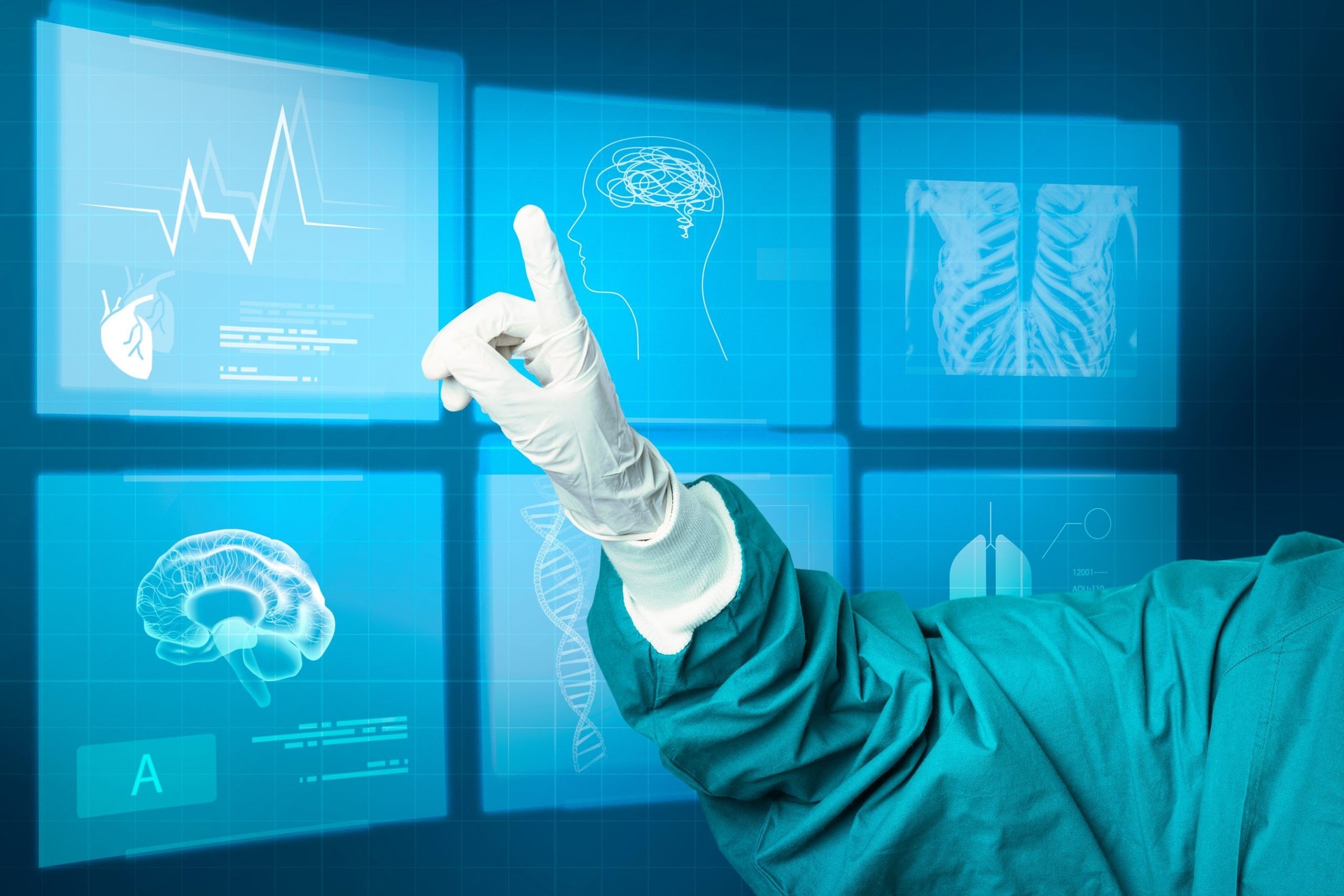
Throughout the recent past, technology has steadily advanced in the healthcare industry. The healthcare sector has come a long way from maintaining rooms upon rooms full of actual, paper-based medical documents and patient information to storing data in digital format. Hospitals and clinics may now use cutting-edge technologies to improve healthcare for their patients and run a more streamlined and effective business, thanks to next-generation healthcare software development services. In this post, we'll talk about how artificial intelligence can be used in medical transcription software.
Introduction:
Artificial intelligence is the next-generation technology currently in demand in the healthcare industry. As a result, there is a sizable market for AI healthcare solutions, and for good reason. AI-powered healthcare solutions are a boon for the entire sector, from assisting hospitals and clinics in bettering disease identification and treatment to reducing excess labor on the management side by automating repetitive processes.
Medical transcription software is an AI-based solution that has recently gained much attention. These days, most doctors use these medical transcription software programs to minimize their transcription-related labor and spend more time treating patients.
Artificial Intelligence's Role in Medical Transcription Software
Medical transcription is transforming thanks to artificial intelligence (AI). Medical transcription software may now make accurate and dependable transcriptions of medical reports with high accuracy thanks to artificial intelligence (AI). As it can improve the accuracy and efficiency of the process, artificial intelligence is being employed more and more in medical transcription. In many instances, AI-based medical transcription software can produce results that are more accurate than those produced by human transcribers because they can consider a larger range of parameters and do away with potential sources of error. AI-based systems can also frequently operate more quickly than human transcribers, saving time and money.
This is because software with AI capabilities can comprehend and decipher medical terminology and jargon. AI can also assist in locating and fixing transcription problems, improving the accuracy and efficiency of the entire process. For individuals who work in busy hospitals or clinics, where many medical reports need to be transcribed regularly, AI in medical transcription software can assist these individuals easily. It is very helpful. A Medical transcription software can work more quickly and precisely thanks to AI, which could enhance patient care.
The Top Advantages of Creating AI-based Medical Transcription Software
Below is a list of some of the most astonishing advantages of creating AI-based medical transcribing software.
Instantaneous transcription
Real-time AI-based medical transcribing software solutions listen for medically pertinent information in a doctor-patient dialogue and only save the pertinent information. As a result, it merely records the pertinent information rather than recording small conversations like dictation software would.
Modern NLP engines allow these solutions to recognize subtleties in a conversation, removing unnecessary lines and keeping only the pertinent data. Doctors don't need to spend hours digitizing their notes because AI-based medical transcription software and solutions record everything as the dialogue happens. This not only greatly streamlines the process but also makes it time-efficient.
Increased accuracy of medical transcription:
These AI-based software solutions can learn from their mistakes. Doctors, therefore, review the documents once they finish preparing them to ensure everything is in order. And whatever adjustments a physician makes, the AI uses them as data points. The AI realizes it is making a mistake and learns from it if the doctor corrects a mistake of a similar nature more than a predetermined number of times. This degree of sophistication and independence
Enhanced patient experience.
It is safe to assume that somebody waiting in front of a doctor is not just dropping by to say hello. Not at all; the patient is tense. And the patient becomes irritated very quickly if the doctor makes notes while making a diagnosis on his computer screen, iPad, or notebook. Yet, as AI-based medical transcription software becomes more popular, doctors can devote all their time to their patients because the program properly takes notes and enters them into the EHR. This not only makes the patient's visit much simpler and more comfortable, but it also increases a doctor's effectiveness.
The last say:
The use of AI in a medical transcription software has various benefits. The improved correctness of the transcriptions plays one of the greatest roles. The accuracy and error-free nature of the transcriptions can be guaranteed by using AI for transcriptionists. This is very advantageous because incorrect transcriptions can have negative effects. There is no question about the accuracy of AI in medical transcription. Technology has advanced significantly and will continue to do so. Medical transcriptionists may now produce more accurate transcripts than ever, thanks to artificial intelligence (AI). This is especially beneficial for medical professionals who must be able to rely on correct transcripts when choosing a diagnosis and course of therapy.
The accelerated speed of AI medical transcribing is another benefit. Transcripts can be finished considerably more quickly with AI than manually. This software, made to assist doctors with documentation, could save your life. It enables doctors to concentrate on their patients while saving time on paperwork. As a result, doctors may finish more transcriptions in less time, which is a big advantage.
AI Medical Dictation Efficiency & Market Growth
AI medical dictation software is reshaping healthcare workflows by reducing turnaround times, improving accuracy, and lowering costs. Recent studies highlight that AI-driven dictation tools can cut documentation time by up to 40%, allowing doctors to spend more time with patients. At the same time, the AI medical transcription market is projected to grow at a CAGR of over 15% in the next five years, driven by hospitals’ need for automation and analytics integration.
FAQs:
What is AI medical transcription software?
AI medical transcription software uses speech recognition and natural language processing (NLP) to automatically convert doctors’ dictations or patient conversations into accurate, structured medical records.
How does AI improve medical dictation accuracy?
AI learns medical terminology, context, and physician speech patterns, which significantly reduces errors in documentation compared to manual transcription.
Can AI transcription integrate with electronic health records (EHR)?
Yes. Modern AI transcription tools seamlessly integrate with EHR systems, ensuring faster, more accurate, and real-time updates to patient records.
What are the main benefits of AI transcription in healthcare?
Key benefits include faster turnaround times, reduced documentation costs, fewer human errors, compliance with HIPAA regulations, and improved physician productivity.
Is AI medical transcription HIPAA compliant?
Most enterprise-grade AI transcription solutions are HIPAA compliant, meaning they encrypt and secure sensitive patient health data to prevent breaches.
Can AI fully replace human medical transcriptionists?
Not entirely. While AI automates the bulk of transcription, human medical editors are often needed for complex cases, rare terminology, or contextual validation.
What role does AI play in reducing physician burnout?
AI transcription reduces the administrative burden by cutting down on manual note-taking, giving physicians more time to focus on patient care.
What is the difference between speech-to-text and AI-powered medical transcription?
Standard speech-to-text converts spoken words into text, while AI-powered transcription understands medical terms, context, grammar, and structure, producing clinical-grade documentation.
What is the future of AI in medical dictation?
The future includes multilingual transcription, predictive note suggestions, real-time clinical decision support, and deeper EHR integration for fully automated workflows.
How big is the AI medical transcription market?
The global AI-powered medical transcription market is growing rapidly, projected to reach billions in value within the next decade, driven by hospitals’ need for automation and cost efficiency.