Key takeaways
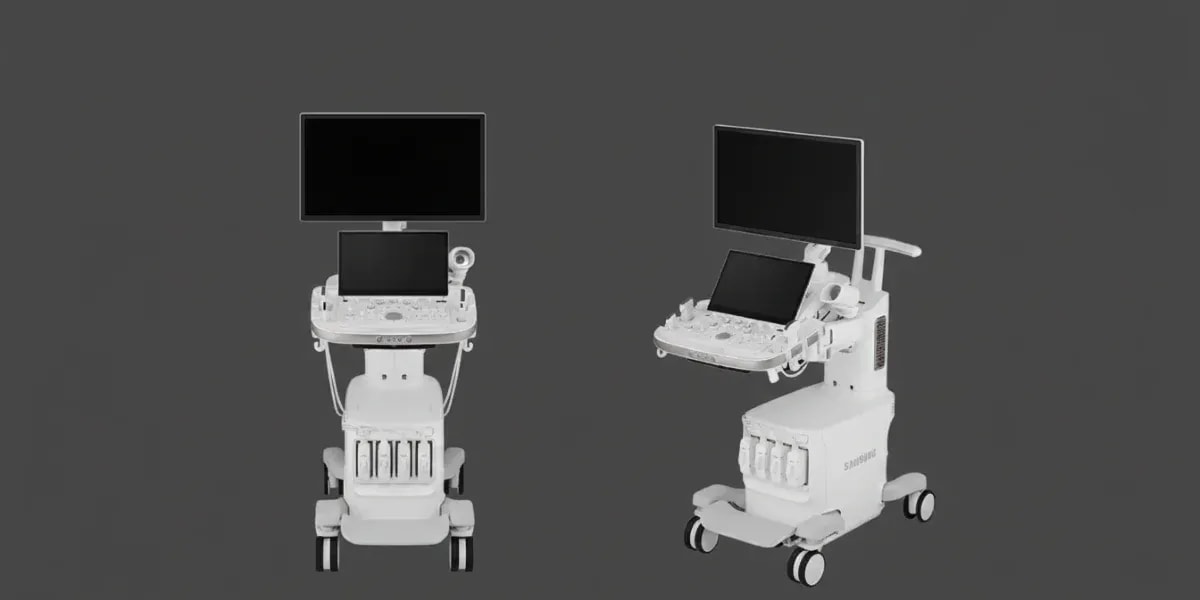
Samsung announced the launch of its R20 ultrasound system for general imaging, positioning the device as a next-generation solution that combines artificial intelligence capabilities with advanced imaging technology.
The system represents the company's latest entry into the medical equipment market, targeting healthcare facilities across multiple clinical specialties.
Advanced imaging architecture drives diagnostic clarity
The R20 operates on Samsung's Crystal Architecture, a proprietary imaging technology designed to deliver enhanced image uniformity, resolution, and penetration depth.
The system incorporates a next-generation imaging engine paired with a powerful GPU and an ultra-high-definition OLED monitor, providing visualization capabilities across a broad spectrum of diagnostic applications.
According to Samsung's announcement, the system's enhanced Doppler sensitivity and color flow visualization enable clinicians to detect subtle vascular structures and pathologies.
The R20 supports imaging across abdomen, thyroid, musculoskeletal, vascular, breast, obstetrics, gynecology, and urology applications.
The R20 integrates multiple AI-driven features designed to streamline diagnostic workflows.
Live LiverAssist detects suspicious focal lesions during real-time ultrasound scanning, while Live BreastAssist provides real-time detection of breast lesions with BIRADS classification and reporting capabilities.
The system includes automated measurement tools that use AI-based detection and measurement of internal structures with guided reporting for consistency.
Deep USFF, an AI-based tool, provides deep ultrasound fat fraction quantification with correlation to MRI PDFF standards.
"The R20 embodies Samsung's commitment to advancing healthcare through intelligent innovation," said Atantra Das Gupta, Head of HME Business, Samsung. "With AI at its core and a focus on both image excellence and clinician comfort, the R20 is a paradigm shift in ultrasound technology, helping doctors ensure detection of lesions during live scanning."
Ergonomic design addresses clinician workflow needs
Beyond imaging capabilities, the R20 emphasizes user comfort through ergonomic design features.
The system includes lightweight transducer cables, an intuitive touch interface, and customizable system configurations to accommodate varied clinical requirements.
Samsung designed the system to minimize strain and fatigue during extended use periods, allowing clinicians to maintain focus on patient care.
The launch of the R20 follows Samsung's recent expansion in medical imaging equipment, including the Z20 ultrasound system for obstetrics and gynecology applications, unveiled at international medical conferences throughout 2024 and early 2025.
Read more: