Key Takeaways
Global automaker Stellantis and Chinese autonomous driving technology leader Pony.ai announced a strategic partnership on October 17, 2025, to accelerate the development and deployment of self-driving robotaxis across Europe.
The collaboration marks a significant milestone in the expansion of autonomous mobility services beyond Asian and American markets.
The two companies signed a non-binding Memorandum of Understanding to jointly develop SAE Level 4 autonomous vehicles, which enable hands-off, eyes-off operation within specific conditions.
The partnership will integrate Pony.ai's advanced autonomous driving software with Stellantis' AV-Ready electric vehicle platform, specifically targeting the automaker's medium-size van segment.
Luxembourg to serve as European testing ground
Real-world testing is scheduled to begin in the coming months in Luxembourg, where Pony.ai's European division is headquartered.
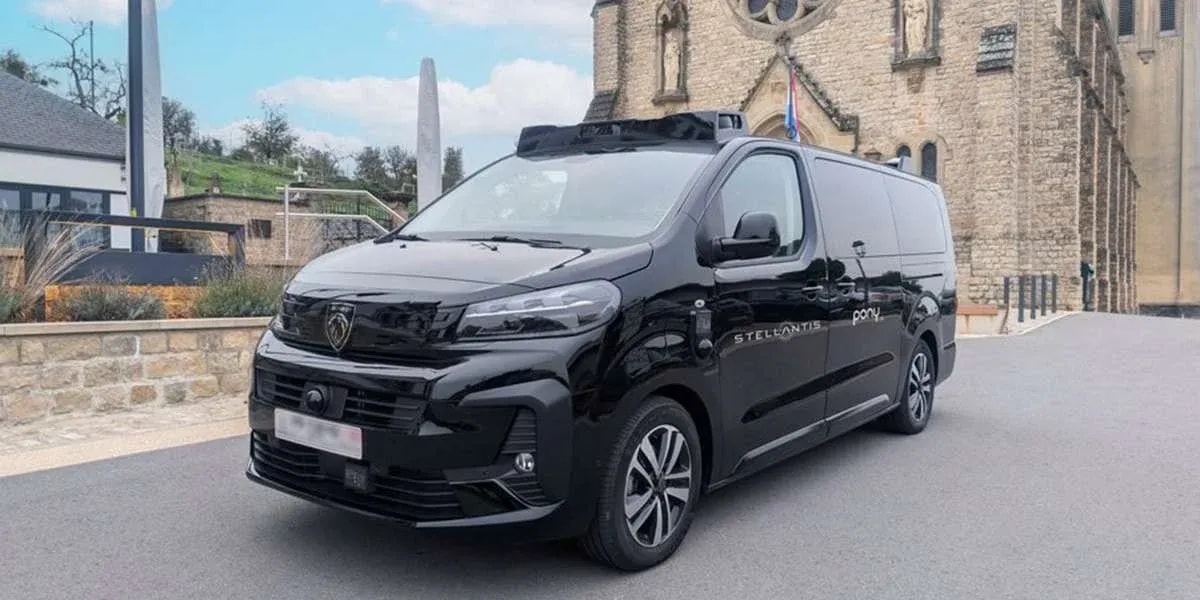
The initial test fleet will be based on the eight-seater Peugeot e-Traveller electric van, equipped with advanced sensors and Pony.ai's proprietary autonomous driving technology.
"Driverless vehicles have the potential to transform the way people move in our cities, offering safer and more affordable options for communities," said Ned Curic, Stellantis Chief Engineering and Technology Officer, in the official announcement.
Dr. James Peng, Pony.ai Founder and CEO, expressed enthusiasm about the European expansion: "We are delighted to partner with Stellantis to bring our autonomous mobility technology to Europe. Their strong European presence and portfolio of iconic brands make them the ideal partner to help accelerate our growth in this key market."
Strategic focus on commercial vehicles
The partnership's initial emphasis will be on light commercial vehicles, a segment where Stellantis holds a commanding position in Europe through its Pro One commercial vehicle business unit.
This strategic focus leverages the versatility of LCVs, which can accommodate various applications ranging from compact robotaxis to multi-passenger vans carrying up to eight people.
Following the Luxembourg testing phase, the companies plan a gradual rollout across European cities starting in 2026.
The real-world testing program will focus on validating safety performance, establishing operational procedures, and achieving regulatory readiness across different European jurisdictions.
Intensifying competition in European autonomous vehicle market
The Stellantis-Pony.ai partnership enters an increasingly competitive landscape for autonomous mobility services in Europe.
Just days before this announcement, Alphabet's Waymo revealed plans to begin testing robotaxis in London, with a full service launch planned for next year. Waymo already operates established autonomous taxi services in several U.S. cities.
This agreement represents Pony.ai's first major collaboration with a Western automaker and signals the Guangzhou-based company's determination to expand beyond its established markets in China.
As of August 2025, Pony.ai operates a fleet exceeding 500 robotaxis and 170 robotrucks, having accumulated more than 55 million autonomous kilometers on open roads worldwide.
The company currently operates fully driverless robotaxi services across all four tier-one cities in China: Beijing, Guangzhou, Shanghai, and Shenzhen.
The partnership also follows Pony.ai's recent tie-up with Uber to deploy autonomous vehicles in international markets, including Europe and the Middle East, demonstrating the company's aggressive international expansion strategy.
Technology and safety framework
Stellantis' AV-Ready Platform has been specifically upgraded to support SAE Level 4 capabilities through comprehensive technology updates.
The platform incorporates critical enablers including system redundancies and compatibility with advanced sensor suites, ensuring compliance with the highest safety and reliability standards required for autonomous operation.
While the collaboration initially centers on light commercial vehicles, both companies indicated the partnership could lay groundwork for broader applications, potentially extending to autonomous mobility services for both passenger and freight transportation.
Read more: