When LeBron James steps onto the court or Serena Williams plays at Wimbledon, they are backed by something more than just years of training and natural talent. Today's elite athletes rely on artificial intelligence to fine-tune every aspect of their performance. From detecting muscle fatigue before it becomes an injury to perfecting a golf swing down to the smallest detail, this is how AI is transforming athlete performance optimization in 2025, acting as the silent coach that never sleeps.
This technology isn't just for superstars anymore. Precedence Research reports that the AI in sports market was valued at $8.93 billion in 2024 and is projected to reach $60.78 billion by 2034. College teams, youth programs, and even weekend warriors now have access to AI tools that were once exclusive to professional sports.
Athletes and trainers now have access to advanced tools that turn data into better performance and fewer injuries.
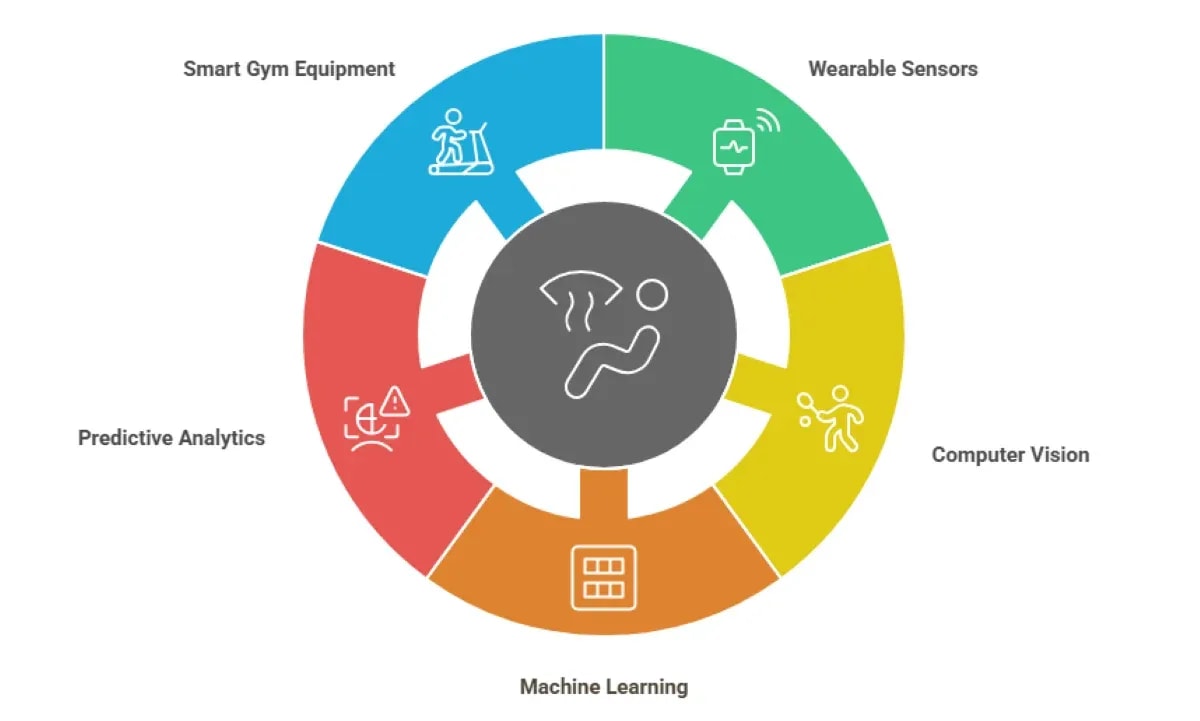
Wearable sensors & IoT devices
Smart clothing, fitness trackers, and GPS monitors collect information about how athletes move, how hard they work, and how well they recover. These devices send data to apps and computers that analyze the information and provide useful insights for training improvements.
Cameras with AI software watch athletes practice and compete, breaking down every movement in slow motion. The technology can spot when the technique starts to slip and suggest corrections. Tennis players use these systems to perfect their serve, while runners improve their stride efficiency.
Want to Reduce Injury Risk and Improve Results?
Explore AI solutions for athlete monitoring, performance analysis, and personalized training optimization.
Book a Demo
Machine learning models for personalized training plans
AI studies each athlete's data to create training programs that fit their specific needs and goals. The system considers injury history, current fitness level, and upcoming competitions to design workouts that maximize improvement while minimizing risk.
Predictive analytics for injury risk and recovery
AI analyzes movement patterns and training loads to predict when injuries might happen. The technology warns sports professionals and athletes before problems develop, allowing them to adjust training to prevent injuries. Recovery recommendations help athletes bounce back faster after hard workouts.
Smart gym equipment integrated with AI
Exercise machines now connect to AI systems that automatically adjust weights, provide form feedback, and track progress. Treadmills change speed based on heart rate, while weight machines adapt resistance to match training goals. The equipment becomes a personal trainer that knows exactly what each athlete needs.
Real-world applications and use cases
Professional fleet operators across industries are implementing AI-powered electric vehicle management systems to optimize operations, reduce costs, and improve sustainability performance.
AI wearables in Olympic training (USA track & field)
USA Track & Field athletes use AI-powered wearables to monitor biometrics like heart rate, sleep, and strain. This data helps coaches personalize training, optimize recovery, and reduce injuries, enhancing performance for elite events like the Olympics and World Championships.
Computer vision in Tennis (IBM at Wimbledon)
IBM’s AI at Wimbledon uses computer vision to analyze player movements, shot accuracy, and rally patterns. Coaches and analysts use this real-time data to refine strategies, enabling tennis players to better prepare for opponents and improve in-match decision-making.
Injury prediction in soccer (AC Milan’s MilanLab)
MilanLab, AC Milan’s performance center, leverages AI to analyze training loads, fatigue levels, and biomechanics. This predictive system helps identify injury risks early, allowing for tailored recovery plans that preserve player health and ensure sustained performance throughout the season.
Success Story: Folio3 AI Sports Analytics Solution
Folio3 developed an advanced AI-powered web application for lacrosse performance analysis that uses computer vision and pose estimation to analyze player movements and technique in real-time through video analysis.
Our solution
- Advanced Pose Estimation Technology - AI algorithms utilize state-of-the-art pose estimation to analyze player form and detect key biomechanical markers to determine optimal positioning during shooting, pitching, and other lacrosse movements
- Real-time Player Performance Analysis - Computer vision technology detects and overlays pose information onto video frames, highlighting key body points and providing visual cues for comprehensive player performance analysis and coaching insights
- Injury Prevention Through Form Assessment - System assesses player form and technique to identify optimal poses and movement patterns, helping prevent injuries by flagging potentially harmful positioning or movements
- Automated Biomechanical Calculations - Application performs real-time calculations on pose estimation data and generates detailed performance metrics based on biomechanical markers, eliminating manual video analysis while providing coaches with data-driven insights
Results
The web application improved players' training experience with over 90% accuracy and led to significant measurable performance improvements for lacrosse players at all skill levels:
Challenges in adopting AI for athlete optimization
While AI offers many benefits, sports organizations face real obstacles when trying to implement these new technologies.
- Data privacy concerns arise as athletes worry about who can access and use their sensitive biometric and health information.
- High costs of AI systems make them difficult to afford for smaller teams, youth programs, and individual athletes.
- Traditional coaches may resist AI, preferring to rely on personal experience rather than trust data-driven recommendations.
- Overreliance on technology can lead to ignoring human judgment, which remains essential for personalized athlete care and decision-making.
- Integration with existing systems is often complex, requiring time and planning to ensure AI tools work seamlessly with current training methods.
Sports organizations have found effective ways to overcome AI implementation challenges while maximizing the benefits.
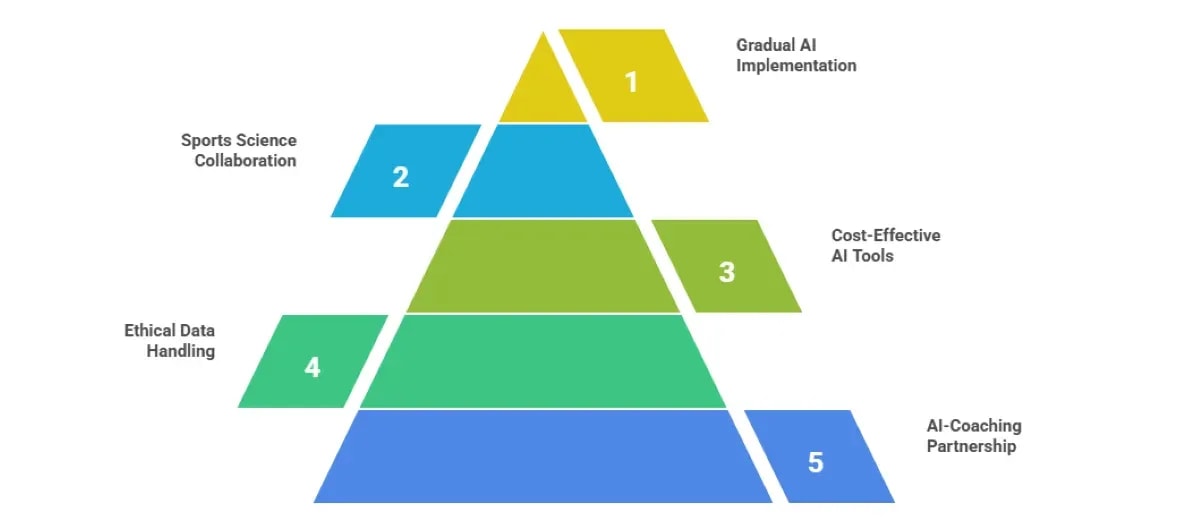
Balancing AI with expert coaching feedback
The best programs create partnerships between AI systems and human trainers. Technology provides data and insights, while experienced sports professionals interpret the information and make final training decisions based on their knowledge of each athlete.
Ensuring compliance and ethical data handling
Successful teams establish clear rules about data collection, storage, and use. They get proper consent from athletes and explain how their information will be used to improve performance while protecting privacy.
New platforms are making AI more affordable for smaller teams and individual athletes. Mobile apps and cloud-based systems reduce the need for expensive hardware while still providing valuable performance insights.
Partnering with sports scientists and AI vendors
Teams work with technology companies and researchers to access the latest AI tools while maintaining scientific standards. These partnerships help ensure that AI systems are accurate, reliable, and appropriate for athletic training.
Gradual implementation and staff training programs
Organizations introduce AI tools slowly, starting with simple applications and building up to more advanced systems. They provide training for trainers and athletes to ensure everyone knows how to use the technology effectively.
New AI technologies are being developed that will make athlete training even more effective and personalized in the coming years.
AI will help athletes and trainers make long-term decisions about training focus, competition schedules, and career goals. The technology will analyze performance trends to suggest the best path forward for each athlete's development.
Future AI systems will monitor stress levels, sleep patterns, and mental health indicators to provide complete wellness support. Athletes will get help with both physical and mental aspects of performance optimization.
AI in Esports and virtual training environments
Virtual reality platforms with AI will create realistic training environments where athletes can practice specific situations safely. Gamers and traditional athletes will both benefit from these immersive training tools.
Cross-sport AI intelligence for talent scouting
AI systems will identify skills that transfer between different sports, helping athletes discover new activities where they might excel. The technology will analyze movement patterns to suggest sports that match individual capabilities.
Integration with emerging technologies like AR and VR
Augmented reality will provide real-time feedback during training, while virtual reality creates custom practice environments. Athletes will train in digital worlds that adapt to their learning style and skill level.
Folio3 AI brings a unique blend of advanced AI capabilities and real-world sports domain expertise, making it an ideal partner for sports organizations aiming to optimize athlete performance.
Video analysis in sports
Using advanced computer vision, Folio3 AI transforms raw game footage into tactical insights, enabling coaches to analyze movement, prevent injuries, and optimize athlete performance with instant, data-driven feedback.
By offering real-time data on brand visibility and audience engagement, our sponsorship intelligence solution indirectly supports athlete performance by securing stronger sponsorships that fund advanced training programs, equipment, and performance technologies.
Full-funnel exposure tracking
By capturing sponsorship impact across all platforms, our solutions empower organizations to maximize financial support, enabling greater access to AI-based training systems, biometric monitoring, and data-driven performance optimization for athletes.
Ready to Optimize Athlete Performance With AI?
Discover how computer vision, wearables, and predictive analytics can improve training outcomes and reduce injury risk.
Book a Demo
Frequently asked questions
AI analyzes performance data to find patterns, create custom training programs, and provide real-time feedback that helps athletes improve technique, prevent injuries, and reach their full potential.
Professional teams use wearable sensors, computer vision systems, performance analytics platforms, and AI coaching assistants to monitor athletes, analyze technique, and develop personalized training programs.
Can AI reduce the risk of injuries in athletes?
Yes, AI systems predict injury risks by analyzing movement patterns, fatigue levels, and training loads, helping trainers adjust workouts before problems develop and reducing injury rates significantly.
Are AI-powered wearables effective for training?
Yes, AI-powered wearables continuously monitor performance metrics, health data, and recovery indicators. These gadgets allow athletes and trainers to make better training decisions based on real information rather than guesswork.
How do athletes track progress using AI analytics?
AI analytics platforms process data from training, competitions, and recovery to create detailed progress reports, identify areas for improvement, and adjust training plans based on individual performance trends.
Is AI replacing human coaches in sports training?
No, AI supports human coaching by providing data insights and analysis, but experienced trainers remain essential for interpreting results, making strategic decisions, and providing mentorship that technology cannot replace.
The main trends include AI-powered wearables processing massive amounts of data, computer vision for real-time technique analysis, personalized analytics platforms, continuous health monitoring, and virtual coaching assistants.
Yes, new platforms offer affordable AI solutions, including mobile apps and cloud-based analytics that make professional-level performance insights available to athletes at all competitive levels and budget ranges.
Computer vision systems use high-speed cameras and machine learning to analyze movement patterns in real-time, providing instant feedback on technique, identifying problems, and helping athletes optimize their form.
Main challenges include data privacy concerns, high costs for advanced systems, resistance from traditional trainers, risk of relying too much on technology, and difficulty integrating AI tools with existing training methods.