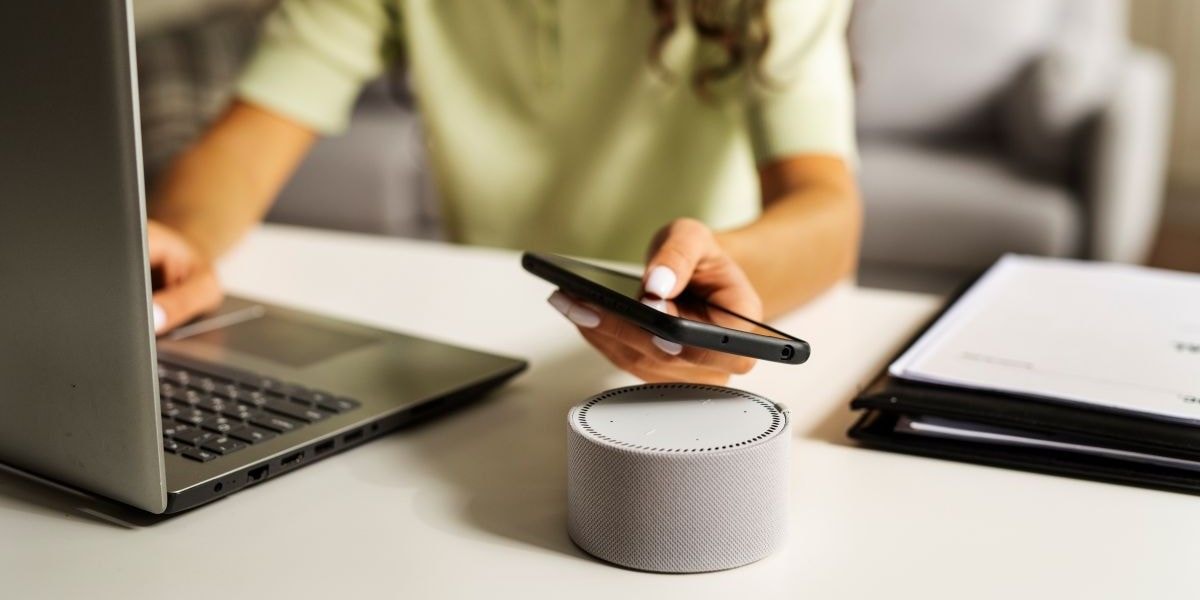
Voice technology has integrated into daily routines faster than most predicted. According to recent research by Statista, approximately 153.5 million Americans use AI-powered voice assistants in 2025, representing a 2.5% increase from 2024 and an 8.1% jump from 142 million users in 2022.
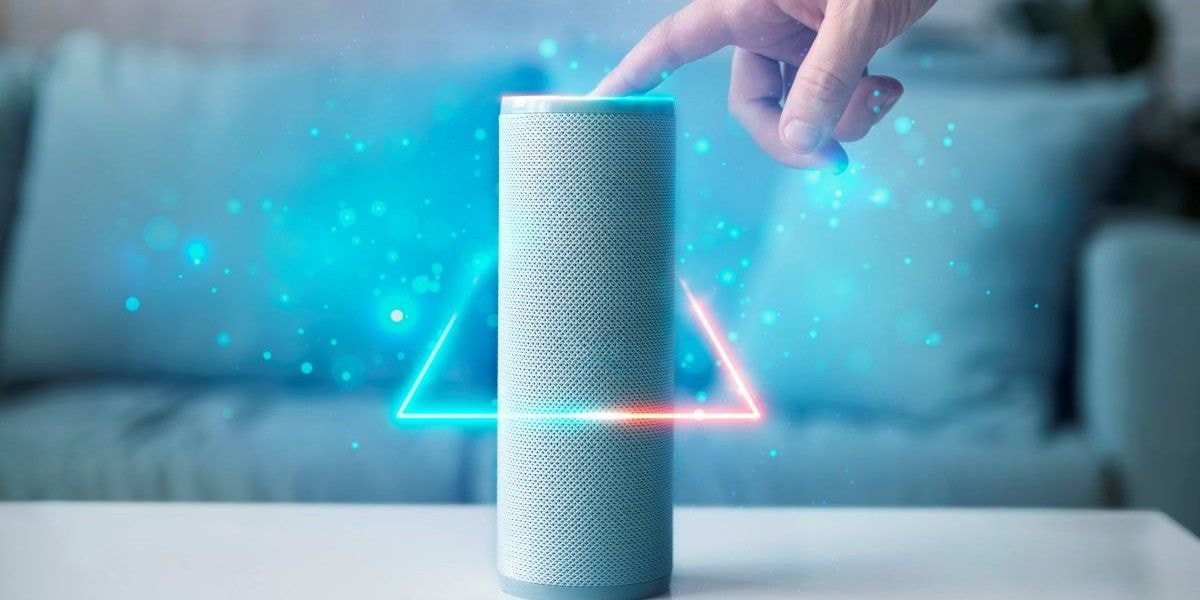
An AI-powered voice assistant utilizes artificial intelligence to comprehend spoken commands and respond naturally in conversation, unlike basic voice commands that follow rigid scripts. These intelligent systems learn from interactions and adapt to user preferences.
Unlike basic voice commands that follow rigid scripts, these smart systems learn from interactions and adapt to user preferences. From Amazon's Alexa managing your smart home to Apple's Siri scheduling meetings, voice assistant technology has moved beyond simple tasks to become intelligent companions that understand context and provide personalized responses.
What is an AI-powered voice assistant?
An AI-powered voice assistant is an intelligent system that uses artificial intelligence (AI) to comprehend and respond to natural human speech, representing a major advancement over traditional keyword-based voice commands.
These platforms utilize speech recognition, natural language processing (NLP), and machine learning to analyze patterns in conversational language. Unlike legacy voice systems, which required specific command structures, AI assistants process casual speech, colloquialisms, and contextual references while understanding user intent, rather than simply matching predetermined audio patterns.
The core distinction lies in adaptive learning capabilities. Traditional voice commands provide static responses, while AI-powered assistants continually learn from user interactions through machine learning algorithms. They build user preference profiles, maintain conversational context across sessions, and personalize responses based on historical usage data to create human-like conversational experiences.
Advanced capabilities of modern AI voice assistants
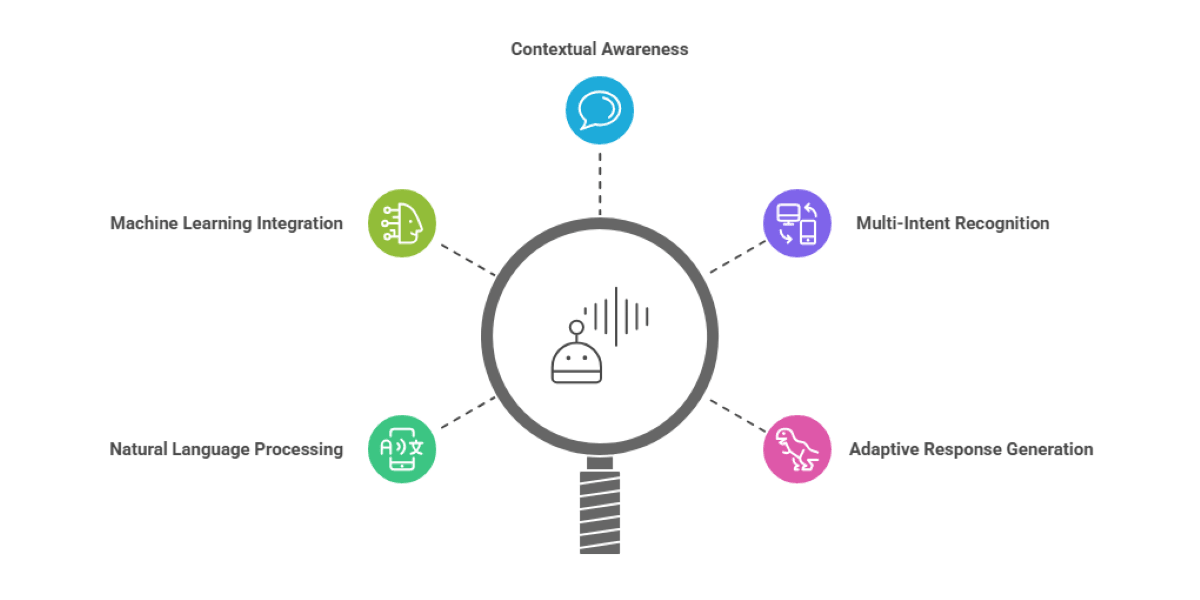
Modern AI voice assistants incorporate technologies that distinguish them from basic voice-activated tools, enabling natural conversations and intelligent responses through AI capabilities.
Natural language processing capabilities
Voice assistants understand conversational speech patterns, including questions, requests, and casual remarks, without requiring specific command structures or predetermined phrases. This capability enables natural and intuitive interactions across different speaking styles.
Machine learning integration
Voice assistants continuously learn from user interactions, improving accuracy and personalizing responses based on individual preferences, usage patterns, and behavioral data. Machine learning algorithms adapt to each user's unique speech patterns, vocabulary, and preferences, providing increasingly accurate and relevant assistance.
Contextual awareness features
AI assistants remember previous conversations and reference earlier topics, creating natural dialogue flows that feel like genuine human interactions while maintaining conversational continuity across sessions. This memory capability enables follow-up questions and references to past discussions without requiring users to restate context.
Multi-intent recognition
Unlike basic systems that handle one command at a time, AI assistants efficiently process multiple requests within a single conversation, understanding complex multi-part instructions while maintaining accuracy across different task types. Users can combine several requests in one sentence, such as "set an alarm for 7 AM and check tomorrow's weather.
Adaptive response generation
Instead of scripted answers, AI assistants create responses tailored to specific contexts and user needs, adjusting tone and content for personalized experiences that match individual communication preferences. Voice assistants consider factors like time of day, user mood indicators, and conversation history to craft appropriate responses.
How do AI voice assistants work?
AI voice assistant technology involves several interconnected processes that work together to create natural conversational experiences.
Devices continuously listen for wake words using low-power processors, activating full processing only when trigger phrases are detected while maintaining energy efficiency and user privacy. Noise cancellation and directional microphones help distinguish user commands from background conversations and environmental sounds, improving accuracy.
Speech recognition
Neural networks convert spoken words into text with over 95% accuracy, processing various accents, dialects, and speech patterns from diverse user populations while filtering background noise and environmental interference. Neural networks are trained on millions of voice samples to recognize regional variations, speech impediments, and different speaking speeds effectively.
Natural language understanding
AI analyzes converted text to identify user intent, extracting key information such as requested actions, contextual details, and emotional undertones from natural conversations, while understanding implied meanings and conversational nuances. The AI can interpret metaphors, idioms, and cultural references to provide accurate and contextually appropriate responses.
AI decision-making
Voice assistants query internal databases and external APIs to gather relevant information, determining appropriate response strategies based on user requests and learned preferences while considering context, urgency, and personal history. Machine learning algorithms prioritize information sources and response types based on user feedback and successful interaction patterns.
Voice response generation
Text-to-speech technology converts AI responses into natural-sounding speech, matching human vocal patterns, intonation, and conversational tone for authentic communication experiences. Voice synthesis creates voices with personality traits and emotional expressions that align with brand identity and user preferences.
Key features of AI voice assistants
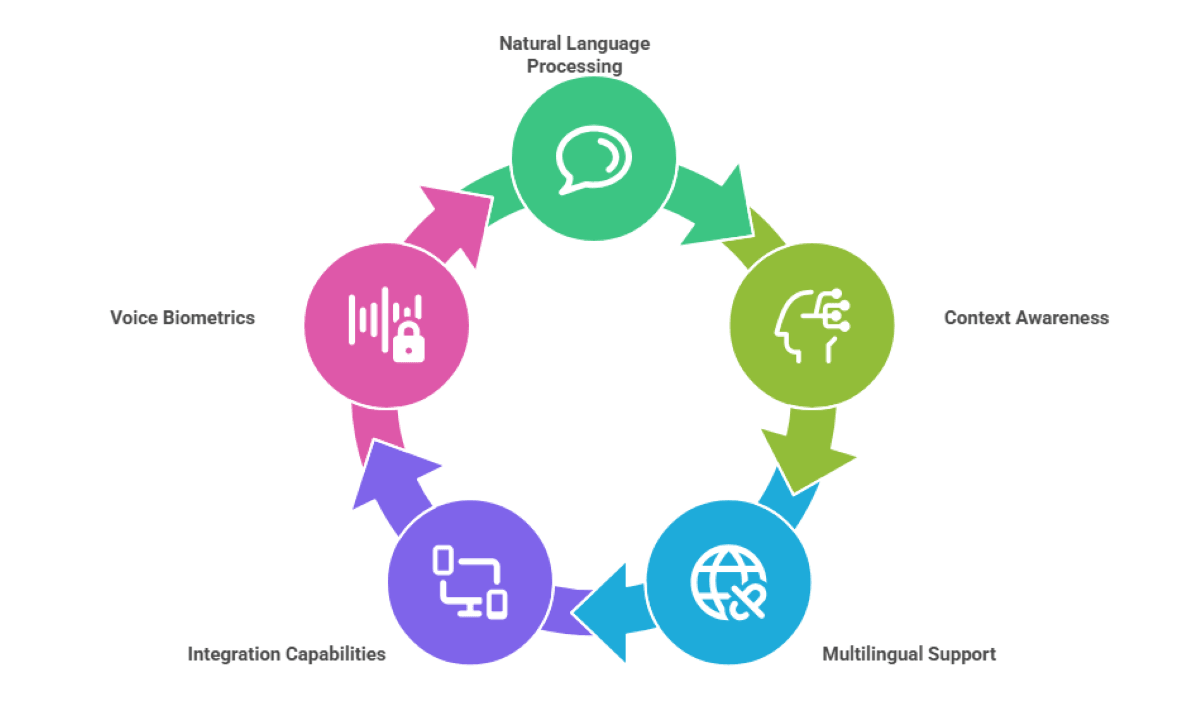
Modern voice assistants incorporate several capabilities that distinguish them from simpler voice-activated tools, creating a more natural user experience.
Natural language processing
Voice assistants understand conversational speech patterns rather than rigid commands, processing questions, casual remarks, and complex requests while adapting to individual speaking styles and communication preferences. This flexibility allows users to speak naturally, using contractions, incomplete sentences, and colloquial expressions.
Context awareness and memory
Voice assistants remember previous conversations and user preferences, maintaining dialogue continuity across multiple interactions while learning from past exchanges to build comprehensive user profiles for enhanced assistance. Memory capabilities can recall details from weeks or months ago, creating personalized experiences that improve over time.
Multilingual support
Voice assistants can switch between languages mid-conversation and understand various accents, regional dialects, and cultural expressions from diverse global user populations, providing accurate translations and culturally appropriate responses. This capability supports international businesses and multilingual households where multiple languages are spoken during daily interactions.
Integration capabilities
Voice assistants connect with smart devices, apps, and services through APIs, creating unified control experiences across platforms and connected environments while maintaining security and data synchronization standards. Integration allows users to control everything from thermostats and lights to calendar apps and music streaming services through voice commands.
Voice biometrics
Security features identify individual users through unique vocal patterns and characteristics, enabling personalized responses and secure authentication methods for sensitive information access while protecting against unauthorized use. Biometric capabilities can distinguish between family members and provide appropriate access levels for banking, personal information, and device control features.
Examples of AI-powered voice assistants
The voice assistant market features several major platforms, each with distinct strengths and target audiences.
Amazon’s Alexa
Amazon Alexa dominates smart home control, with over 400 million connected smart home devices and more than 130,000 third-party skills. The platform offers home automation, entertainment solutions, shopping integration, and multi-room communication capabilities. Alexa's ecosystem includes smart light bulbs, thermostats, security systems, and kitchen appliances from major brands.
Apple’s Siri
Apple Siri offers seamless integration with the iOS ecosystem, prioritizing privacy-focused on-device processing, personalized shortcuts, and deep hardware integration across Apple devices. Siri has approximately 500 million users worldwide, with 86.5 million users in the United States. Siri's Shortcuts app allows users to create complex automation workflows triggered by simple voice commands across all Apple devices.
Google’s Assistant
Google Assistant leverages Google's search intelligence and knowledge graph to deliver accurate information with contextual conversation abilities, real-time data access, and integration with Google's service ecosystem. Google Assistant has 88.8 million users in the United States and excels at answering complex questions and providing up-to-date information from Google's database of indexed web content.
Microsoft’s Cortana
Microsoft Cortana focuses on enterprise productivity with deep Office 365 integration for business scheduling, email management, and workplace collaboration tools designed for corporate environments. Cortana helps professionals manage meetings, deadlines, and team communications while maintaining enterprise-level security standards and compliance requirements.
ChatGPT’s Voice
OpenAI's ChatGPT provides conversational AI capabilities, offering creative assistance, complex reasoning, and natural dialogue interactions through language model integration. The platform supports educational and professional applications, engaging in detailed discussions, assisting with writing projects, and providing explanations on complex topics across various fields.
Applications of AI voice assistants
Voice assistant technology has expanded beyond personal convenience to transform multiple industries and create new possibilities for human-computer interaction.
Smart home automation
Smart home automation represents one of the most visible applications of voice assistant technology. Homeowners use voice commands to control lighting systems, adjust thermostats, manage security cameras, and operate entertainment systems without physical controls.
Integration with IoT devices allows comprehensive home management through natural conversation. Users can set morning routines that gradually increase lighting and start coffee makers, or activate security systems by simply saying goodnight.
Customer service automation
Customer service automation has transformed how businesses handle routine inquiries and support requests. AI voice assistants manage phone systems that understand natural speech, routing calls more effectively than traditional menu-driven systems.
Voice assistants handle common questions about business hours, product information, and order status without human intervention, reducing wait times and operational costs while transferring complex issues to human agents when necessary.
Healthcare applications
Healthcare applications utilize voice technology to enhance patient care and clinical efficiency. Patients utilize voice assistants for medication reminders, symptom tracking, and accessing health information from trusted medical sources.
Healthcare providers utilize voice-enabled systems for clinical documentation, enabling doctors to dictate notes during patient visits instead of typing them afterward, thereby reducing administrative burden and improving accuracy.
Automotive integration
Automotive integration has made voice assistants essential safety features in modern vehicles. Drivers use voice commands for navigation, making phone calls, and controlling media without taking their hands off the wheel or eyes off the road.
Voice assistants understand contextual requests, such as "find the nearest gas station," while considering the user's current location and traffic conditions. Integration allows for seamless continuation of conversations between vehicles and other devices.
Business productivity applications
Business productivity applications help organizations streamline operations and improve employee efficiency. Voice assistants schedule meetings by checking multiple calendars and finding optimal times for all participants.
Voice assistants can transcribe meeting notes, set reminders for follow-up tasks, and join conference calls to provide real-time information or updates, allowing human staff to focus on more complex responsibilities.
Benefits of AI voice assistants
Hands-free convenience - Enables multitasking and safer operation when manual device interaction would be impractical, dangerous, or disruptive.
Accessibility improvements - Supports users with visual impairments, motor disabilities, or age-related challenges through an intuitive audio-based interaction alternative.s
Time-saving automation - Streamlines routine tasks like reminders, weather checks, and smart device control without manual app navigation
Personalized user experience - Learns individual preferences for communication styles, content sources, and behavioral patterns for customized interaction.s
Smart environment integration - Coordinates multiple connected devices through single commands, creating unified control across home, office, and mobile environments.
Challenges and limitations
Privacy concerns - Continuous audio processing raises questions about data recording, storage practices, unauthorized access, and the potential for surveillance of conversations.
Misinterpretation issues - Recognition systems struggle with background noise, diverse accents, and unclear speech, leading to incorrect responses and failed commands.
Language limitations - Poor performance with non-standard accents, regional dialects, and minority languages creates barriers for diverse linguistic backgrounds.
Internet dependency - Requires stable connections for cloud processing, making systems unreliable during outages or in poor service areas.
Ethical data concerns - Questions around algorithmic bias, consent practices, and transparency create fairness issues affecting specific demographic groups.
The future of AI voice assistants
Voice assistant technology continues advancing rapidly, with several emerging trends pointing toward more integrated experiences in the coming years.
Contextual intelligence
Future assistants will understand physical surroundings and environmental context, adapting responses based on situational awareness and location data.
IoT integration
Sensors will enable assistants to automatically adjust responses based on room occupancy, lighting conditions, and user activity patterns.
Emotion recognition
Systems will detect emotional states through vocal patterns and speech characteristics, providing empathetic responses with appropriate emotional intelligence.
Communication adaptation
Voice assistants will adjust communication styles for user comfort while maintaining appropriate professional and personal boundaries during interactions.
Deeper personalization
AI will create individualized experiences through machine learning, understanding personal preferences, behavioral patterns, and lifestyle choices effectively.
Proactive assistance
Future systems will predict user needs before they're expressed, offering assistance based on calendar events, habits, and life changes.
Generative AI integration
Voice assistants will incorporate advanced language models to facilitate natural conversations, provide creative assistance, and enable sophisticated problem-solving capabilities.
How Folio3 AI can help with voice-enabled application development?
Folio3 AI offers speech recognition and AI technologies that can be leveraged to build voice-enabled applications, utilizing our expertise in Google Speech APIs, NLP, and AI agent development.
Speech-to-text integration
We provide Google speech-to-text API integration services with custom app development, real-time transcription capabilities, multi-language support across 120+ languages, and automated speech recognition for applications.
Voice technology components
Our team integrates speech recognition APIs, NLP technologies, and machine learning frameworks to create voice-enabled features within applications, supporting transcription services and voice-controlled functionalities.
AI-powered voice automation
We develop AI agents with voice automation capabilities for specific industries like healthcare, enabling voice-powered patient interactions, automated scheduling systems, and intelligent conversation processing through existing platforms.
Frequently asked questions
{ "@context": "https://schema.org", "@type": "FAQPage", "mainEntity": [ { "@type": "Question", "name": "What is an AI-powered voice assistant?", "acceptedAnswer": { "@type": "Answer", "text": "An AI-powered voice assistant is a software application that utilizes natural language processing and machine learning to comprehend spoken commands and respond with voice or actions. It can perform tasks such as answering questions, controlling smart devices, and providing information through conversational interactions." } }, { "@type": "Question", "name": "How does a voice assistant work?", "acceptedAnswer": { "@type": "Answer", "text": "Voice assistants capture audio through microphones, convert speech to text using automatic speech recognition, process the text with natural language understanding algorithms, and generate appropriate responses. The system then converts responses back to speech and delivers them through speakers or connected devices." } }, { "@type": "Question", "name": "What are the main benefits of AI voice assistants?", "acceptedAnswer": { "@type": "Answer", "text": "Voice assistants provide hands-free convenience, improve accessibility for users with disabilities, and enable multitasking. They offer instant access to information, streamline smart home control, and increase productivity through voice-activated automation." } }, { "@type": "Question", "name": "Are AI voice assistants secure and private?", "acceptedAnswer": { "@type": "Answer", "text": "Security varies by provider. Most use encryption for data transmission and provide privacy controls like mute buttons and deletion options. However, voice data is often stored on company servers for improvement purposes, which may raise privacy concerns." } }, { "@type": "Question", "name": "Can I build a custom voice assistant for my business?", "acceptedAnswer": { "@type": "Answer", "text": "Yes, businesses can use platforms like Amazon Alexa Skills Kit, Google Actions, and Microsoft Bot Framework to create custom voice assistants. Cloud services like AWS Lex and Google Dialogflow offer tools that simplify development without requiring deep AI expertise." } }, { "@type": "Question", "name": "What are the key technologies behind voice assistants?", "acceptedAnswer": { "@type": "Answer", "text": "Voice assistants rely on automatic speech recognition (ASR), natural language processing (NLP), text-to-speech synthesis, and machine learning algorithms. Additional technologies include wake word detection and cloud computing infrastructure." } }, { "@type": "Question", "name": "What are some popular examples of AI voice assistants?", "acceptedAnswer": { "@type": "Answer", "text": "Popular AI voice assistants include Amazon Alexa, Google Assistant, Apple Siri, Microsoft Cortana, and Samsung Bixby. Enterprise tools like IBM Watson Assistant and automotive systems like BMW’s Intelligent Personal Assistant are also widely used." } }, { "@type": "Question", "name": "Can AI voice assistants understand multiple languages?", "acceptedAnswer": { "@type": "Answer", "text": "Yes, major voice assistants support multiple languages. For instance, Google Assistant supports over 30 languages, and both Alexa and Siri provide multilingual functionality with varying levels of accuracy." } }, { "@type": "Question", "name": "What is the role of machine learning in voice assistants?", "acceptedAnswer": { "@type": "Answer", "text": "Machine learning enhances voice assistants by improving speech recognition, understanding context and user intent, and personalizing responses. It enables learning from user interactions to deliver more accurate and adaptive experiences." } }, { "@type": "Question", "name": "How are smart homes using AI voice assistants?", "acceptedAnswer": { "@type": "Answer", "text": "AI voice assistants are used in smart homes for controlling lighting, security systems, thermostats, and appliances. They simplify automation and make home management more convenient through hands-free, voice-based interaction." } } ]
}
What is an AI-powered voice assistant?
An AI-powered voice assistant is a software application that utilizes natural language processing and machine learning to comprehend spoken commands and respond with voice or actions. It can perform tasks such as answering questions, controlling smart devices, and providing information through conversational interactions.
How does a voice assistant work?
Voice assistants capture audio through microphones, convert speech to text using automatic speech recognition, process the text with natural language understanding algorithms, and generate appropriate responses. The system then converts responses back to speech and delivers them through speakers or connected devices.
What are the main benefits of AI voice assistants?
Voice assistants provide hands-free convenience, improve accessibility for users with disabilities, and enable multitasking while performing other activities. They offer instant access to information, streamline smart home control, and can increase productivity through voice-activated automation.
Are AI voice assistants secure and private?
Security varies by provider, with most using encryption for data transmission and offering privacy controls like mute buttons and deletion options. However, voice data is typically stored on company servers for improvement purposes, raising privacy concerns that users should consider.
Can I build a custom voice assistant for my business?
Yes, platforms like Amazon Alexa Skills Kit, Google Actions, and Microsoft Bot Framework allow businesses to create custom voice applications. Cloud services like AWS Lex and Google Dialogflow provide tools for building enterprise voice assistants without extensive AI expertise.
What are the key technologies behind voice assistants?
Core technologies include automatic speech recognition (ASR), natural language processing (NLP), text-to-speech synthesis, and machine learning algorithms. Cloud computing infrastructure and wake word detection are also essential components for modern voice assistant functionality.
What are some popular examples of AI voice assistants?
Major examples include Amazon Alexa, Google Assistant, Apple Siri, Microsoft Cortana, and Samsung Bixby. Enterprise solutions like IBM Watson Assistant and specialized assistants for automotive (like BMW's Intelligent Personal Assistant) are also widely used.
Can AI voice assistants understand multiple languages?
Yes, most major voice assistants support multiple languages and can switch between them based on user settings or detection. Google Assistant supports over 30 languages, while Alexa and Siri offer multilingual capabilities with varying degrees of accuracy across different languages.
What is the role of machine learning in voice assistants?
Machine learning enables voice assistants to enhance speech recognition accuracy, comprehend context and intent, and tailor responses to individual user behavior. It enables systems to learn from interactions, providing more relevant answers and adapting to unique speech patterns.
How are smart homes using AI voice assistants?
Smart homes use voice assistants as central control hubs for lighting, thermostats, security systems, and entertainment devices. They enable voice-controlled automation routines, provide status updates on connected devices, and offer hands-free management of household functions.



-fba59e49-f902-4c9e-b43a-b6baa75ef444.webp&w=1920&q=90)