

ANPR

Enterprise decision-makers face mounting pressure to modernize security and operational infrastructure while maximizing return on investment. The choice between hardware-only vs integrated investment in ALPR solutions represents a critical strategic decision. This decision will shape operational efficiency, costs, and scalability for years to come.
The ALPR market continues to grow steadily as organizations recognize license plate recognition technology as essential infrastructure rather than an optional enhancement. The global ALPR market is projected to reach $4.36 billion by 2025 with a compound annual growth rate of 11.12% through 2033. This growth reflects enterprises increasingly understanding that their strategic approach to ALPR investment fundamentally determines long-term success. Organizations must choose between pursuing hardware-only flexibility or integrated solution simplicity.

Modern enterprises face a fundamental strategic choice that shapes their entire ALPR deployment. They must decide between pursuing hardware-only procurement for maximum flexibility or choosing integrated solutions for streamlined implementation.
The hardware-only approach prioritizes component-level control. This strategy enables enterprises to select best-of-breed cameras, processors, and infrastructure while maintaining complete software independence and vendor negotiation leverage. This strategy prioritizes flexibility and long-term adaptability over immediate deployment simplicity.
Companies with robust IT teams, complex integration requirements, and long-term scaling plans. These organizations require vendor independence and customization capabilities for competitive positioning.
ProsConsVendor independence: Complete freedom to negotiate competitive pricing and avoid lock-in situationsIntegration complexity: Requires significant internal expertise to manage multiple vendor relationshipsSoftware flexibility: Ability to upgrade, change, or customize software without hardware constraintsProject timeline risk: Longer implementation periods due to coordination challengesLong-term cost control: Competitive vendor selection and modular upgrades reduce ownership costsSupport fragmentation: Multiple support channels create accountability gaps
Integrated solutions provide complete hardware-software packages from a single vendor. This approach prioritizes deployment speed, unified support, and operational simplicity over component-level flexibility and vendor independence considerations.
Organizations prioritize operational efficiency and deployment speed over component flexibility. Moreover, companies accept vendor partnerships for simplified management and accountability structures that reduce complexity.
This solution is used by organizations that require rapid deployment, limited internal IT resources, or risk-averse operational cultures. These organizations prioritize predictable outcomes over maximum customization and flexibility benefits.
ProsConsUnified accountability: Single vendor responsible for entire system performance and supportVendor lock-in: Limited flexibility to change components or negotiate competitive pricesFaster deployment: Pre-integrated solutions reduce implementation time and accelerate value realizationHigher long-term costs: Bundled pricing may exceed component-level procurement costsSimplified management: Unified support channels streamline ongoing operational requirementsLimited customization: Standardized solutions may not accommodate unique enterprise needs
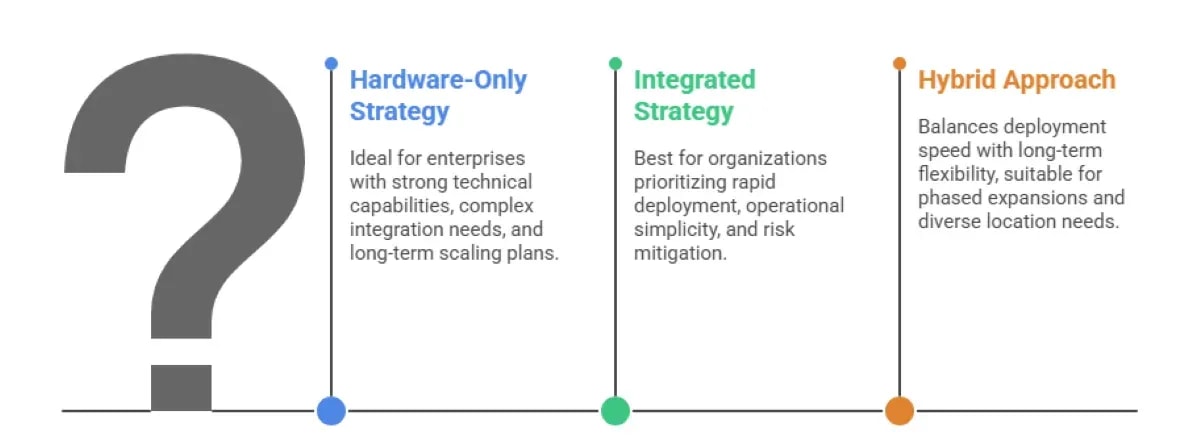
Strategic alignment between organizational capabilities, growth objectives, and investment approach determines long-term ALPR success. This alignment affects operational efficiency and total cost optimization across enterprise scaling initiatives.
Hardware-only approaches benefit enterprises with strong technical capabilities, complex integration requirements, and long-term scaling plans. These organizations require maximum vendor flexibility and cost optimization strategies.
Organizations deploying across diverse environments benefit from selecting location-specific hardware. They can maintain unified software platforms for centralized management and comprehensive reporting.
Companies with established technical teams and integration experience can leverage hardware-only approaches. These organizations can maximize cost savings and customization capabilities effectively.
Five-plus-year expansion strategies benefit from vendor independence. This approach enables competitive re-negotiation and technology refresh cycles without complete system replacement requirements.
Organizations requiring ERP integration, WMS, or specialized software integration benefit from software flexibility. This flexibility is unavailable in bundled solutions with limited customization options.
Large-scale deployments achieve significant savings through competitive hardware procurement. Software licensing negotiations enabled by vendor independence strategies and market competition provide additional benefits.
Integrated solutions serve enterprises prioritizing deployment speed, operational simplicity, and risk mitigation. These organizations value these benefits over long-term cost optimization and component-level flexibility in their ALPR investments.
Organizations with six-to-eighteen-month implementation windows benefit from pre-tested integration. Unified project management and accelerated deployment timelines provide immediate operational capability.
Companies without dedicated integration expertise can leverage vendor capabilities. This approach avoids internal resource strain and technical risk exposure during implementation phases.
Organizations prioritizing predictable outcomes and unified accountability benefit from single-vendor responsibility. This includes system performance, support, and ongoing maintenance requirements throughout lifecycles.
Businesses requiring quick time-to-value benefit from standardized deployment processes. Established implementation methodologies and proven operational frameworks provide immediate results.
Finance teams preferring unified pricing and support structures benefit from integrated solutions. These solutions offer clearer total cost projections and simplified procurement processes.
Hybrid strategies enable enterprises to balance deployment speed with long-term flexibility. Organizations can strategically combine integrated solutions for immediate needs with hardware-only approaches for scaling.
Starting with integrated solutions for initial deployments provides immediate operational capability. This approach preserves hardware-only options for large-scale expansion based on lessons learned.
Organizations can utilize integrated solutions for time-sensitive locations. They can pursue hardware-only approaches for planned expansions requiring specific customization or cost optimization opportunities.
Different facility types may benefit from different approaches. Integrated solutions work for standard locations while hardware-only suits specialized environments requiring unique configurations.
Initial integrated partnerships can establish vendor relationships and system familiarity. Organizations can transition to hardware-only approaches for cost optimization and flexibility benefits.
Hybrid approaches reduce vendor dependency risks while maintaining operational capability. Enterprises can balance flexibility with deployment speed requirements effectively.
Comprehensive financial analysis enables enterprises to understand true total cost of ownership. This understanding allows for informed decision-making between hardware-only and integrated investment strategies for optimal value.
Hardware-only strategies require detailed cost modeling across procurement, integration, and operational phases. This modeling helps understand true total ownership costs and long-term financial implications accurately.
Component-level purchasing enables competitive pricing but requires careful vendor management. Technical specification alignment and quality assurance processes are necessary for optimal results.
Independent software selection provides flexibility but may require higher licensing fees. Customization costs and ongoing development expenses for integration requirements must be considered.
Multi-vendor coordination requires dedicated project management resources. Technical expertise and extended timelines increase overall implementation costs and complexity significantly.
Managing multiple vendor relationships for support, updates, and maintenance requires internal resources. Service gaps may occur during critical operational periods.
Hardware-only approaches enable selective component upgrades and competitive re-procurement. This potentially reduces long-term refresh costs while maintaining operational continuity and performance.
Integrated solutions provide predictable cost structures but may include premium pricing for convenience. Careful analysis of bundled services and long-term contract implications is required.
Single-vendor packages often include premium costs for integration and support services. These costs may exceed component-level procurement costs over extended ownership periods.
Multi-year agreements may include pricing escalations, service level definitions, and renewal terms. These terms impact long-term financial commitments and operational flexibility.
Limited vendor competition for ongoing services, upgrades, and expansions may result in higher costs. Reduced negotiation leverage over contract lifecycles is also a concern.
Unified support structures provide operational benefits but require careful analysis. Service level agreements, response times, and resolution capabilities need value assessment.
Integrated solutions offer clearer expansion pricing but may limit cost optimization opportunities. Competitive procurement and vendor diversification strategies may be unavailable.
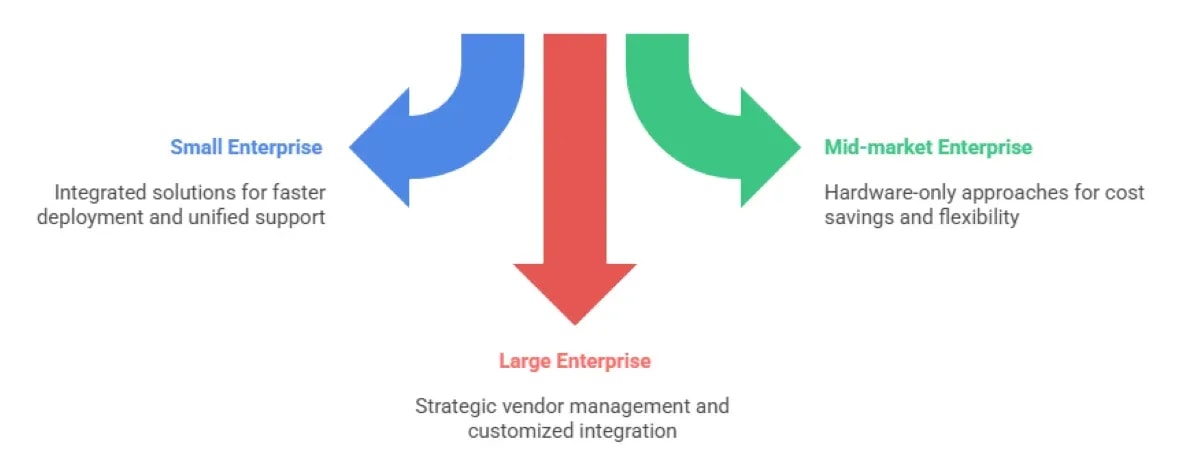
Different enterprise scales require tailored strategic approaches. Optimal investment strategies vary significantly based on organizational size, complexity, and growth trajectory requirements.
Limited internal resources favor integrated solutions for faster deployment and unified support. Cost optimization benefits may not justify hardware-only complexity.
Organizations reach decision points where internal capabilities and scale economics enable hardware-only approaches. These approaches deliver significant cost savings and flexibility benefits.
Complex operations benefit from strategic vendor management, competitive procurement processes, and customized integration approaches. Hardware-only investment strategies enable these benefits, particularly as ALPR adoption accelerates in smart city initiatives across multiple locations.
Effective vendor relationship management determines operational success regardless of chosen investment strategy. Tailored approaches are required for hardware-only complexity versus integrated solution simplicity.
Multi-vendor environments require sophisticated relationship management. Clear accountability frameworks and proactive coordination ensure operational success and avoid integration challenges during scaling.
Establishing technical compatibility requirements, support capability assessments, and financial stability evaluations ensures reliable vendor partnerships. These partnerships are crucial for complex multi-component deployments.
Dedicated project management resources coordinate between hardware suppliers, software providers, and installation teams. This coordination ensures timeline adherence and quality standards achievement.
Clear accountability frameworks and escalation paths prevent finger-pointing between vendors. These procedures ensure rapid issue resolution and maintain operational continuity.
Regular vendor performance reviews, service level monitoring, and relationship health assessments ensure ongoing partnership value. These assessments identify improvement opportunities proactively.
Competitive positioning between vendors enables better pricing, service terms, and performance guarantees. This maintains operational flexibility and risk mitigation strategies.
Single-vendor partnerships require strategic relationship management to maximize value while avoiding dependency risks. This is particularly important when working with specialized providers.
Long-term vendor relationships enable deeper customization, priority support, and collaborative innovation. These relationships enhance operational capabilities.
Clear service level agreements, performance metrics, and regular business reviews ensure vendor accountability. These frameworks maintain collaborative partnership relationships for mutual success.
Working with specialized providers to build flexibility into standardized solutions enables customization within integrated frameworks for specific requirements.
Volume commitments and multi-year agreements can deliver cost reductions while maintaining service quality and capabilities.
Strategic partnerships with technology leaders provide early access to emerging capabilities. Beta testing opportunities and product development influence are additional benefits.
Comprehensive risk evaluation across technology, operational, and financial dimensions enables informed decision-making. Appropriate risk mitigation strategies for chosen ALPR investment approaches are necessary.
Hardware-only approaches face integration complexity and compatibility challenges. Integrated solutions risk vendor dependency and limited technology evolution flexibility, which require careful evaluation.
Multi-vendor coordination increases management complexity. Single-vendor dependency creates potential service continuity risks requiring careful contract and relationship management strategies.
Hardware-only strategies enable cost optimization but require careful budget management for integration projects. Integrated solutions provide predictability but limit financial control.
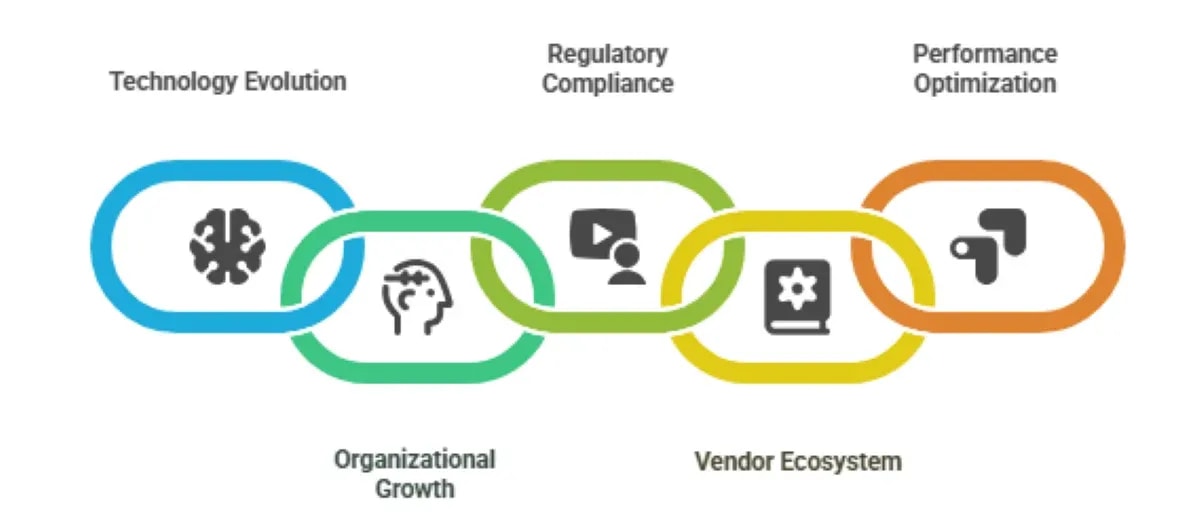
Strategic planning for technology evolution, organizational growth, and market changes ensures ALPR investments remain valuable and effective. This planning covers their operational lifecycles and development phases.
AI advancement trends, cloud migration capabilities, and emerging technology integration requirements must align with chosen investment strategies. This alignment preserves value over time.
ALPR scaling strategies must accommodate business expansion, mergers and acquisitions, and geographic growth. Operational efficiency and cost effectiveness must be maintained.
Evolving privacy regulations, data protection requirements, and industry standards require flexible ALPR architectures. These architectures must adapt without complete system replacement.
Technology provider relationships, integration partner capabilities, and support service evolution must align with organizational growth. Changing operational requirements must be addressed effectively.
Continuous improvement frameworks, analytics capability enhancement, and operational efficiency gains require investment strategies. These strategies support ongoing development and optimization initiatives throughout lifecycles.
Strategic evaluation across multiple dimensions ensures optimal ALPR investment decisions. These decisions must align with organizational capabilities and objectives for sustainable success.
Assessment CategoryKey Evaluation CriteriaOrganizational readinessInternal IT capabilities, project management experience, and technical expertise availabilityFinancial capacityBudget structure (CAPEX vs OPEX), multi-year funding availability, cost optimization prioritiesTechnology requirementsIntegration complexity, customization needs, performance specificationsTimeline constraintsDeployment urgency, implementation windows, operational requirement datesRisk toleranceVendor dependency acceptance, integration complexity comfort, operational continuity prioritiesScaling plansGrowth trajectory, expansion timeline, geographic distribution requirementsVendor relationship preferencesSingle-point accountability vs. competitive flexibility preferencesSupport requirementsInternal support capabilities, vendor support expectations, and maintenance preferencesCompliance needsRegulatory requirements, data protection obligations, and audit trail necessitiesFuture flexibilityTechnology evolution expectations, vendor independence priorities, customization requirements
Strategic execution requires focus on key success elements that determine ALPR investment outcomes. These factors apply regardless of the chosen hardware-only or integrated solution approach.
Matching investment strategy with internal technical capabilities, project management experience, and ongoing operational resources ensures sustainable success and value realization.
Whether managing multiple hardware vendors or single integrated providers, strong partnership development and performance accountability drive operational success and optimization.
Considering five-year technology evolution, organizational growth, and operational requirements ensures investment strategies remain valuable throughout their operational lifecycles.

Common strategic mistakes can undermine ALPR investments regardless of chosen approach. Proactive recognition and mitigation ensure successful outcomes and value realization.
Focusing solely on initial pricing without considering total cost of ownership, operational requirements, and long-term strategic implications often leads to suboptimal outcomes.
Choosing hardware-only approaches without adequate internal resources or technical expertise creates integration risks. Timeline delays and cost overruns significantly affect success.
Selecting integrated solutions without understanding long-term implications, contract terms, and exit strategies may create unsustainable operational and financial commitments.
Folio3 AI delivers comprehensive ALPR solutions that bridge the gap between hardware-only complexity and integrated solution limitations. Their approach involves customized solutions tailored to enterprise requirements.
Folio3 AI develops tailored ALPR solutions that integrate seamlessly with existing enterprise systems. These solutions provide flexibility for future expansion and technology evolution.
Enterprise-grade solutions from Folio3 AI support growth from pilot deployments to large-scale implementations. Performance, reliability, and cost effectiveness are maintained throughout scaling.
Specialized expertise in traffic management, security monitoring, toll management, parking systems, and drive-thru operations ensures optimal performance. Solutions are tailored for specific applications and operational requirements.
Cutting-edge machine learning algorithms and computer vision capabilities provide superior accuracy. Environmental adaptation and continuous improvement enhance operational value significantly.
End-to-end partnership from initial consultation through deployment, training, and ongoing optimization ensures successful implementation. Long-term value realization for enterprises is prioritized throughout the engagement.

ALPR hardware includes physical components like cameras, processors, and mounting systems that capture license plate images. ALPR software contains the algorithms and applications that analyze these images to extract license plate data. Hardware has longer replacement cycles while software can be updated more frequently.
For large enterprises (200+ locations), hardware-only approaches typically prove more cost-effective long-term through competitive procurement. However, integrated solutions may be better for rapid deployments or organizations with limited IT resources.
Many ALPR software solutions can integrate with existing IP cameras if they meet minimum resolution and positioning requirements. However, optimal accuracy typically requires specialized ALPR cameras with higher resolution and specific lens configurations.
Dedicated ALPR hardware typically achieves 95-98% accuracy under optimal conditions due to specialized cameras and processors. Software-only solutions using existing cameras may achieve 85-92% accuracy depending on camera quality and environmental conditions.
Cloud-based solutions offer easier scalability and reduced infrastructure costs but may have higher ongoing subscription fees. On-premises deployments provide better data control and lower latency but require more internal IT resources for maintenance.
Key factors include network bandwidth capacity, data storage requirements, and integration complexity with existing systems. Organizations should also evaluate vendor support capabilities and long-term technology roadmaps before large-scale deployments.
Quality hardware investments typically provide 5-7 year operational lifecycles with consistent performance. Hardware-only strategies enable selective upgrades and vendor competition, potentially improving ROI by 20-35% over integrated solutions.
Primary risks include data breaches, unauthorized access to license plate databases, and potential system vulnerabilities. Organizations should implement encryption, access controls, and regular security audits to mitigate these risks.
Hardware-only strategies typically allow software upgrades without hardware replacement, extending system lifecycles. Integrated solutions may require complete system replacement for major upgrades, potentially increasing long-term costs.
Data protection regulations like GDPR require specific data handling and storage capabilities that may favor certain software solutions. Hardware choices must support compliance features like data encryption and audit trails for regulatory adherence.