
ANPR

Fleet operators today face a critical paradox: the same ALPR technology that boosts efficiency can expose organizations to devastating financial and legal consequences. Data privacy in fleet ALPR isn't just a compliance checkbox; it's a business imperative that directly impacts your bottom line. Choosing an ALPR vendor that is not GDPR- and HIPAA-compliant exposes fleets to fines that can erase any ROI.
When TalkTalk faced a data breach, the Information Commissioner's Office imposed a £400,000 fine, but under GDPR, that penalty would have exceeded £70 million. With evolving rules like GDPR, HIPAA, and state privacy laws, even a single misconfigured camera or weak encryption setup can trigger penalties that dwarf an entire technology budget.
This guide provides the essential framework for deploying ALPR systems that deliver business value while maintaining strict compliance with GDPR, HIPAA, and emerging privacy regulations across North America and other regions.

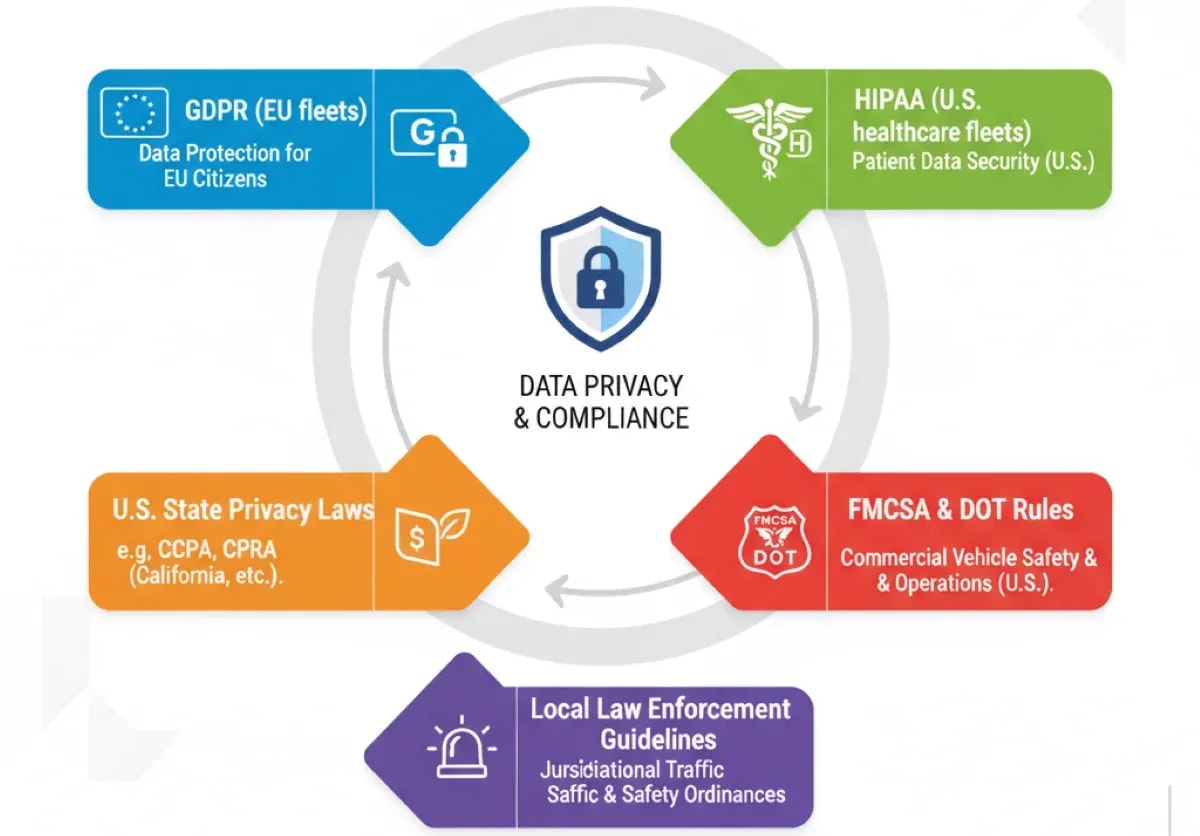
Fleet operators deploying ALPR systems must look after a complex web of privacy regulations spanning multiple jurisdictions. Compliance requires understanding which laws apply based on geographic operations, data types collected, and sharing arrangements with third parties.
The General Data Protection Regulation establishes strict requirements for any organization processing personal data of European Union residents. ALPR systems capturing license plates constitute personal data under GDPR, triggering comprehensive obligations for fleet operators with EU exposure.
Territorial scope: GDPR applies to fleets physically operating within EU borders or remotely processing data belonging to EU residents, regardless of the company headquarters location.
Legal justification requirements: Organizations must identify valid lawful bases, such as legitimate interests for fleet safety or explicit consent, with documented assessments balancing business needs against individual privacy rights.
Breach notification obligations: Data controllers must report qualifying security incidents to supervisory authorities within 72 hours of discovery and notify affected individuals when breaches pose high privacy risks.
The Health Insurance Portability and Accountability Act (HIPAA) governs protected health information in healthcare settings. Medical transport fleets must evaluate whether their ALPR implementations create associations between vehicle tracking data and patient identities, potentially triggering HIPAA's stringent security requirements.
Applicability determination: HIPAA becomes relevant when ALPR systems track ambulances, hospital shuttles, or medical transport vehicles in ways that could link location data with patient treatment information or identifiable health records.
Contractual safeguards: Fleet operators must establish Business Associate Agreements with ALPR technology vendors, formally obligating third-party service providers to implement HIPAA-compliant security measures and data handling protocols.
Technical security standards: Protected data requires encryption both in transit and at rest, accompanied by comprehensive audit logging that tracks all system access, data modifications, and user activities for compliance verification.
A growing patchwork of state-level privacy statutes creates varying obligations across American jurisdictions. Fleet operators with multi-state operations face California's Consumer Privacy Act, Virginia's Consumer Data Protection Act, Colorado Privacy Act, and similar laws in Connecticut, Utah, and other states.
Geographic coverage: CCPA/CPRA affects businesses collecting data from California residents meeting revenue or data volume thresholds, while Virginia CDPA, Colorado Privacy Act, and similar statutes establish distinct applicability criteria and compliance timelines.
Consumer rights provisions: These laws mandate transparent privacy notices explaining data collection purposes, providing mechanisms for consumers to opt out of data sales or targeted advertising, and honoring deletion requests.
Security baseline requirements: State privacy statutes impose duties to implement reasonable security practices proportionate to data sensitivity, maintain data minimization principles, and establish vendor oversight programs for third-party processors.
The Federal Motor Carrier Safety Administration and the Department of Transportation establish safety-focused regulations for commercial vehicle operations. While not exclusively privacy-focused, these federal rules impose data retention and security obligations affecting how fleet operators manage ALPR information for interstate commerce vehicles.
Commercial fleet jurisdiction: FMCSA regulations primarily govern trucks, buses, and commercial vehicles crossing state lines, establishing safety standards and operational requirements that may intersect with ALPR data management practices.
Record retention mandates: Federal transportation rules specify minimum retention periods for various operational records, potentially creating conflicts or alignment requirements with privacy law data minimization principles for geolocation and tracking information.
Fleet operators sharing ALPR data with municipal police departments or regional law enforcement agencies enter complex regulatory territory. These arrangements require careful attention to local data-sharing agreements, public records laws, and community-specific policies governing surveillance technology deployment and oversight.
Data-sharing frameworks: Memoranda of understanding or formal contracts with law enforcement must specify permissible data uses, access limitations, retention schedules, and audit rights to prevent mission creep beyond agreed purposes.
Retention policy alignment: Operators must reconcile their internal data lifecycle policies with law enforcement retention requirements, which may mandate longer preservation periods for investigative purposes while respecting privacy law deletion obligations.
ALPR systems generate far more than license plate numbers. Each data stream may qualify as PII or PHI under GDPR and HIPAA, making awareness critical for compliant fleet operations.
Each scan captures license plates, geolocation, time, and contextual photos. Combined, these identifiers create detailed movement profiles that regulators classify as personal data requiring strict safeguards.
Fleet ALPR systems track speed, braking, and route deviations. While useful for safety, this information links directly to driver performance, introducing compliance risks under privacy regulations.
CRM, telematics, and ERP integrations multiply exposure. Linking license plate data with customer accounts or delivery logs transforms operational data into regulated personal information.
Plates become direct identifiers when tied to DMV records. Repeated patterns also expose home addresses, workplaces, or sensitive visits, classifying this information as protected data under GDPR Article 9.
Ambulance and patient transport fleets create HIPAA risks when logs or routes connect to appointments, treatments, or prescriptions. These scenarios demand BAAs, encryption, and strict access controls for compliance.

The General Data Protection Regulation fundamentally reshapes how fleet operators handle license plate data across Europe. Organizations face substantial penalties for non-compliance, making GDPR understanding essential for any fleet collecting vehicle information.
Fleet operators must identify one lawful basis before collecting license plate data under GDPR Article 6. Legitimate interests work for employee monitoring but require documented balancing tests against driver privacy rights.
GDPR Article 13 requires providing comprehensive information to drivers before capturing any license plate data. Privacy notices must specify collection purposes, retention periods, third-party recipients, and all individual rights in clear language.
GDPR violations can result in fines reaching €20 million or 4% of global annual revenue, whichever amount is higher. Supervisory authorities issue penalties for inadequate security and excessive data retention practices.
Transferring ALPR data outside the European Economic Area requires additional safeguards beyond standard GDPR compliance measures. Standard Contractual Clauses provide legal mechanisms for international transfers to countries without adequacy decisions.
Each EU member state has designated Data Protection Authorities supervising GDPR compliance and handling individual complaints. Fleet operators must identify their lead supervisory authority based on the main establishment location for consistent regulatory oversight.
Healthcare fleets face unique compliance challenges when deploying ALPR technology that potentially intersects with patient information. Privacy and security of HIPAA framework extend to vehicle tracking systems when they create connections to protected health information.
Healthcare providers, health plans, and clearinghouses qualify as covered entities subject to HIPAA regulations for all operations. Fleet operators become covered entities when vehicle tracking directly supports healthcare delivery, like ambulance dispatch or patient transport services.
The HIPAA Privacy Rule limits the use and disclosure of protected health information to the minimum necessary for intended purposes. Vehicle location data linking to patient appointments or medical facility visits requires the same protections as traditional medical records.
The Security Rule of HIPAA mandates encryption, access controls, and audit mechanisms for electronic protected health information across all systems. Fleet ALPR data stored electronically must meet these technical requirements when connected to patient care or medical operations.
Healthcare organizations must designate privacy and security officers responsible for HIPAA compliance across all departments, including fleet operations. Workforce training programs educate drivers and dispatchers about patient privacy obligations when handling transportation-related protected health information.
Healthcare organizations must investigate suspected HIPAA breaches within fleet systems and notify affected individuals within 60 days of discovery. Breach risk assessments evaluate whether unauthorized ALPR data access could identify patients or reveal protected health information requiring notification.
American fleet operators must comply with a patchwork of state privacy laws alongside federal transportation regulations. Each jurisdiction imposes different requirements for data collection, retention, and individual rights, creating complex compliance obligations for fleets operating across multiple states.
California Consumer Privacy Act grants residents rights to know what personal data is collected, request deletion, and opt out of data sales. California Privacy Rights Act expands these protections with stricter requirements for sensitive personal information, including precise geolocation data from fleet vehicles.
The Virginia Consumer Data Protection Act applies to businesses controlling data of 100,000+ Virginia residents or deriving revenue from 25,000+ residents' data. The Colorado Privacy Act requires data protection assessments for profiling activities and automated decision-making based on vehicle tracking and driver behavior analytics.
State laws create vastly different retention requirements, ranging from New Hampshire's 3-minute limit to Colorado's 3-year maximum retention period. Utah, Maine, and California impose specific ALPR regulations, including audit requirements, usage reports, and restrictions on law enforcement data sharing agreements.
The Federal Motor Carrier Safety Administration regulates commercial vehicle data, including electronic logging devices that often integrate with ALPR systems. Department of Transportation mandates specific record retention periods for driver qualification files, vehicle maintenance records, and hours of service logs.
Fleet operators spanning multiple states must implement the strictest applicable privacy requirements across their entire operations to ensure consistent compliance. Unified privacy policies, standardized retention schedules, and centralized data governance frameworks reduce complexity while meeting diverse state law obligations effectively.
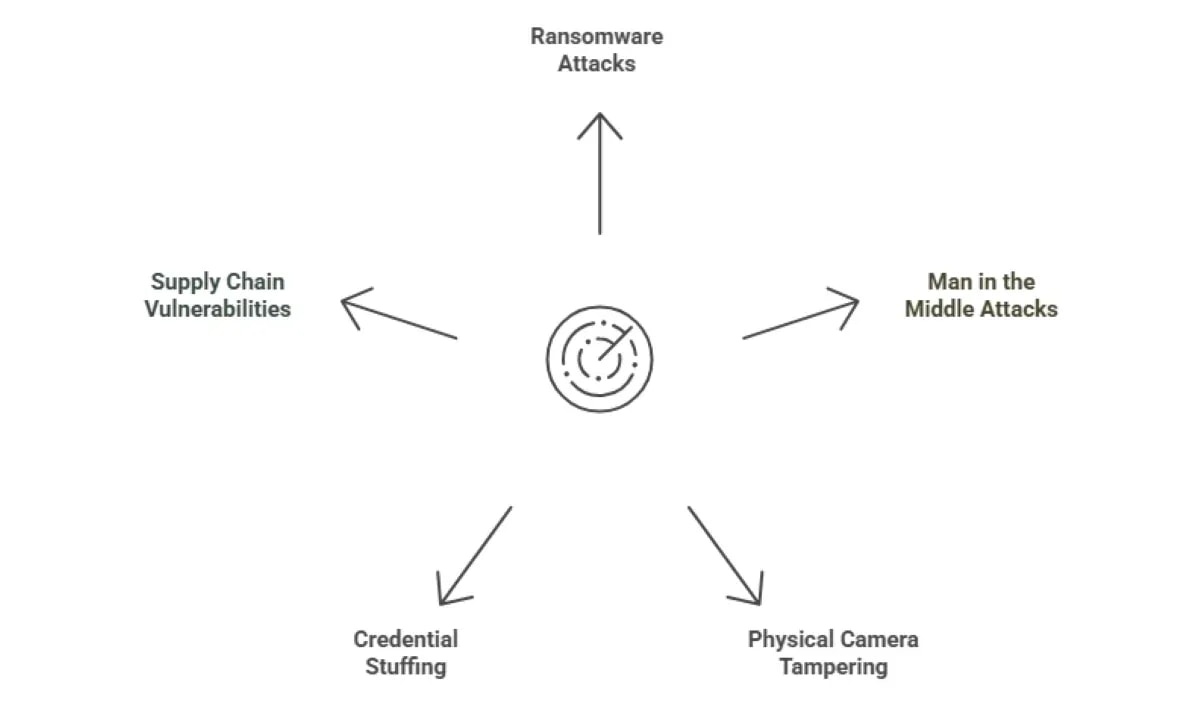
Fleet ALPR deployments face evolving cybersecurity threats that can expose sensitive location data and compromise operational integrity. Understanding these vulnerabilities helps organizations implement effective countermeasures to protect against data breaches, unauthorized access, and system manipulation by malicious actors.
Ransomware gangs increasingly target fleet management systems to encrypt critical operational data and demand payment for restoration. ALPR databases containing months of location history become valuable hostages, disrupting delivery operations and exposing sensitive customer information through data exfiltration.
Attackers intercepting unencrypted communications between ALPR cameras and central servers can capture license plate data in real time. Compromised network infrastructure allows modification of plate recognition results or injection of false data, corrupting enforcement and access control decisions.
ALPR cameras installed in accessible locations face physical attacks, including lens obstruction, device theft, or hardware modification to bypass security. Vandals may spray paint lenses or install signal jammers, disrupting communications, while sophisticated attackers extract stored data from memory chips.
Attackers use stolen username-password combinations from other breaches to access fleet management dashboards and ALPR administrative portals. Successful account takeovers enable unauthorized plate data queries, system configuration changes, or deletion of evidence for criminal activities involving tracked vehicles.
Compromised ALPR hardware or software introduced during manufacturing or distribution can contain backdoors enabling remote unauthorized access to systems. Third-party camera firmware updates or cloud service integrations may include malicious code that exfiltrates license plate data to attacker-controlled servers.
Collecting excessive ALPR data creates unnecessary privacy risks and compliance burdens for fleet operators. Strategic data minimization reduces storage costs, limits breach exposure, and demonstrates regulatory compliance while maintaining operational effectiveness through purpose-driven collection and timely deletion practices.
Organizations must clearly define specific business purposes for ALPR data collection before deploying any cameras or tracking systems. Each data element collected should directly support documented operational needs like access control, theft prevention, or route optimization activities.
Establish retention periods based on legitimate business requirements rather than indefinite storage capabilities or technical convenience for your organization. Legal holds, audit requirements, and investigation needs may justify extended retention for specific records while bulk data gets deleted promptly.
Implement automated deletion systems that remove ALPR records after predetermined periods without requiring manual intervention from staff members. Scheduled purge jobs should include verification processes ensuring complete data removal from primary databases, backups, and archived storage systems.
Transform individual license plate records into anonymized statistical summaries for long-term trend analysis and business intelligence purposes. Aggregated data eliminates individual identifiability while preserving valuable insights about traffic patterns, peak usage times, and operational efficiency metrics.
Configure ALPR cameras to capture only necessary data fields, disabling optional features like driver facial recognition or passenger imaging. Geofencing restricts data collection to specific authorized locations, preventing unnecessary surveillance of vehicles in public areas beyond operational boundaries.
Technical security controls form the defensive backbone protecting ALPR data from unauthorized access and cyber threats. Layered safeguards, including strong encryption, granular permissions, and comprehensive logging, create verifiable security evidence required for regulatory compliance and incident investigation.
Implement TLS 1.3 encryption for all data transmission between ALPR cameras, edge devices, and central management servers. Certificate-based authentication prevents unauthorized devices from joining your network while protecting against eavesdropping and man-in-the-middle attacks on communication channels.
Encrypt stored ALPR data using AES-256 encryption with properly managed cryptographic keys stored separately from encrypted databases. Full-disk encryption protects against physical theft while field-level encryption provides granular control over sensitive data elements like license plates and GPS coordinates.
Move beyond basic role assignments to implement attribute-based access control, considering user role, time of day, and data sensitivity. Dynamic access policies automatically adjust permissions based on context, like granting dispatchers temporary access only during scheduled shifts or emergencies.
Separate administrative accounts from regular user credentials, requiring additional authentication steps for privileged operations like system configuration changes. Just-in-time access provisioning grants elevated permissions only when needed for specific tasks with automatic revocation after predetermined time periods.
Centralize logs from ALPR cameras, servers, and applications into security information and event management systems for correlation analysis. Real-time alerting flags suspicious patterns like multiple failed login attempts, unusual data export volumes, or access from unexpected geographic locations.
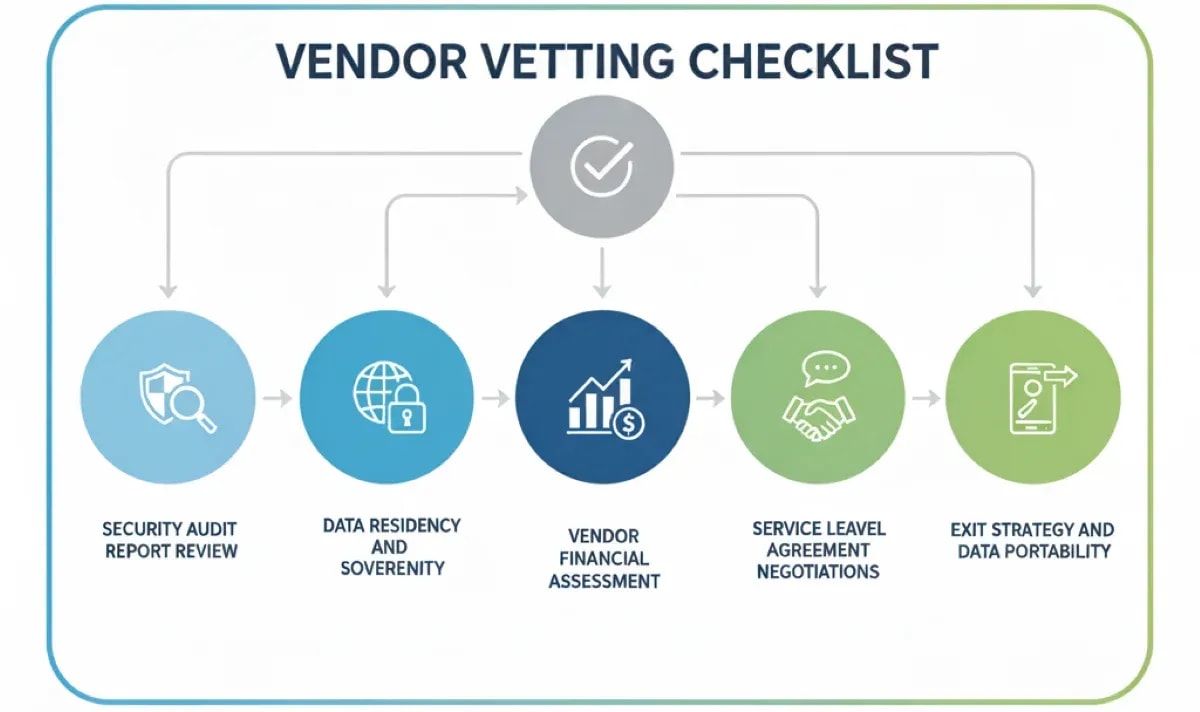
Selecting an ALPR vendor represents a critical decision impacting your organization's security posture and compliance standing for years. Thorough evaluation of vendor capabilities, certifications, and contractual commitments prevents costly mistakes and ensures alignment with your privacy and operational requirements.
Request recent SOC 2 Type II reports, penetration test results, and vulnerability assessment findings from independent third-party security firms. Review identified weaknesses, remediation timelines, and whether previous audit findings were adequately addressed, demonstrating continuous security improvement and commitment to protection.
Verify the exact geographic locations of data centers where your ALPR data will be stored and processed throughout the lifecycle. Confirm the vendor can meet data localization requirements prohibiting transfers outside specific jurisdictions, like keeping EU data within the European Economic Area boundaries.
Evaluate vendor financial health through credit reports, funding history, and revenue trends to ensure business continuity for long-term partnerships. Financially unstable vendors may abruptly cease operations, leaving you without support or access to critical fleet data stored in their systems.
Negotiate specific uptime guarantees, response times for security incidents, and performance benchmarks with financial penalties for non-compliance. Define maximum acceptable downtime, data recovery time objectives, and backup frequency, ensuring operational continuity during system failures or cyberattacks.
Establish clear contract terms for data extraction, format specifications, and transition assistance if you switch vendors or terminate services. Verify you'll receive all historical ALPR data in standard formats without excessive fees, enabling seamless migration to alternative platforms.
Integrating ALPR with telematics platforms amplifies operational insights but introduces new security vulnerabilities across connected systems.
Implement API rate limiting to prevent brute force attacks and excessive data extraction attempts from integrated telematics platforms. Use API keys with granular scope limitations, restricting each integration to the minimum required data access rather than blanket permissions across systems.
Deploy middleware components that sanitize data passing between ALPR and telematics systems, preventing injection attacks and malicious payloads. Middleware should validate data formats, enforce business logic rules, and transform sensitive fields before forwarding information to downstream applications.
Isolate ALPR systems on separate network segments with firewall rules strictly controlling which telematics components can initiate connections. Virtual LANs and software-defined networking create logical separation, preventing lateral movement if attackers compromise connected fleet management systems or devices.
Secure webhook callbacks using HMAC signatures or mutual TLS authentication, verifying data origin before processing events from integrated systems. Implement replay attack protection through timestamp validation and nonce tracking, ensuring webhook requests cannot be intercepted and maliciously retransmitted.
Monitor data flows between ALPR and telematics platforms, establishing baseline patterns for normal integration behavior and volumes. Alert on anomalies like unusual data transfer volumes, unexpected API endpoints being accessed, or integration attempts outside normal operational hours.
Security incidents involving ALPR systems require a swift, coordinated response to minimize damage and meet regulatory notification deadlines. Prepared organizations with documented procedures, trained personnel, and tested playbooks recover faster while maintaining stakeholder trust and avoiding compounding compliance violations during crisis situations.
Deploy intrusion detection systems monitoring ALPR infrastructure for suspicious activities like unusual database queries or unauthorized access attempts. Furthermore, establish severity classification criteria determining which incidents require immediate escalation versus routine security team investigation and routine handling procedures.
Immediately disconnect compromised ALPR systems from networks, preventing lateral movement to other fleet management infrastructure and critical operations. Preserve system memory dumps and disk images for forensic analysis before taking remediation actions that might destroy evidence of attack methods.
Create decision trees mapping breach scenarios to specific notification requirements across GDPR, HIPAA, and state breach notification laws. Maintain updated contact lists for supervisory authorities, affected individuals, and regulatory bodies, ensuring rapid communication within strict legal deadlines.
Involve legal counsel early in breach response to assess liability exposure, preserve attorney-client privilege, and guide external communications. In addition, coordinate with public relations teams on disclosure messaging, balancing transparency requirements with protecting organizational reputation during sensitive breach announcements.
Conduct blameless post-mortems identifying root causes, missed warning signs, and process improvements strengthening future incident response capabilities. Update runbooks, enhance detection rules, and implement technical controls addressing vulnerabilities exploited during the security incident for prevention.
Folio3 AI delivers enterprise-grade ALPR solutions combining advanced artificial intelligence with comprehensive security frameworks tailored for fleet operations.
Instantly capture and log license plates as vehicles enter or exit facilities, delivering continuous awareness and enhanced security. Advanced optical character recognition achieves 99%+ accuracy across varying weather conditions, lighting scenarios, and international plate formats for reliable identification.
Every vehicle movement is automatically recorded with millisecond-accurate timestamps, making trip reports, utilization tracking, and compliance documentation effortless. Tamper-proof logging ensures audit trail integrity for regulatory investigations, insurance claims, and operational performance analysis requiring verifiable historical records.
Access a unified view of your fleet's movements through intuitive dashboards displaying real-time locations, historical patterns, and performance metrics. Customizable widgets enable, role-based views ensuring managers, dispatchers, and executives see relevant data without overwhelming detail or unnecessary information.
Monitor hundreds of vehicles simultaneously across multiple depots, warehouses, or service locations, ideal for large distributed fleet operations. Geographic mapping displays vehicle concentrations, identifies bottlenecks, and enables rapid response to incidents anywhere within your operational footprint.
Securely store ALPR data in a compliant cloud infrastructure integrating directly with fleet management platforms, CRMs, and ERP systems. RESTful APIs with comprehensive documentation enable custom integrations, while webhooks provide real-time event notifications to downstream business applications and workflows.

Fleet ALPR systems collect license plate numbers, vehicle make and model, GPS coordinates, timestamps, and contextual photos of vehicles. Many systems also capture driver behavior data, including speed, braking patterns, route deviations, and dwell times at locations. When integrated with telematics platforms, ALPR data can expand to include fuel consumption, maintenance records, and driver performance scores.
Yes, ALPR data constitutes PII under both regulations. License plates become direct identifiers when linked to registered owners through DMV databases. Even without direct linkage, location patterns and timestamp data can indirectly identify individuals by revealing home addresses, workplace locations, and routine travel patterns. Under GDPR Article 4, any information that can identify an individual qualifies as personal data.
HIPAA applies when ALPR systems track healthcare vehicles like ambulances, patient transport shuttles, or pharmacy delivery fleets. If license plate data connects to patient appointments, emergency medical responses, or prescription deliveries, it may constitute Protected Health Information (PHI). Healthcare organizations must ensure ALPR vendors sign Business Associate Agreements and implement appropriate technical safeguards.
AES-256 encryption is the recommended standard for ALPR data at rest in cloud storage. Data in transit should use TLS 1.3 or minimum TLS 1.2 encryption between cameras and servers. Healthcare fleets must meet HIPAA Security Rule requirements, while EU operations should follow GDPR encryption guidelines. Certificate pinning and hardware security modules provide additional protection layers.
Implement role-based access control (RBAC), limiting data visibility based on job functions and operational necessity. Fleet managers may receive aggregate analytics without individual plate access, while dispatchers get time-limited location data. Multi-factor authentication should protect administrative accounts, and comprehensive audit logging must track all data access. Regular access reviews ensure permissions remain appropriate as roles change.
Vendors with proper Business Associate Agreements must notify customers immediately upon breach discovery, typically within 24-48 hours. Fleet operators then face regulatory notification obligations, including GDPR's 72-hour reporting deadline or HIPAA's 60-day requirement. Organizations may face fines, lawsuits, and reputational damage even when breaches originate with vendors, making careful vendor selection critical.
Legal requirements vary by jurisdiction and specific circumstances. Many vendors allow automatic data sharing with law enforcement networks, which may violate local privacy policies or sanctuary ordinances. Fleet operators should explicitly control data sharing through vendor contracts, require warrants or subpoenas for disclosure, and maintain detailed logs of all law enforcement access requests and approvals.
Retention limits vary dramatically: New Hampshire requires deletion after 3 minutes, Maine permits 21 days, and Colorado allows up to 3 years. GDPR doesn't specify timeframes but requires retention only as long as necessary for stated purposes. Organizations operating across multiple jurisdictions must implement the strictest applicable retention limit or maintain separate systems for different regions.
Both regulations require encryption, access controls, breach notification, and audit logging, creating overlapping compliance foundations. Healthcare fleets operating in the EU should implement GDPR's stricter consent and data subject rights requirements while maintaining HIPAA's specific technical safeguards. Business Associate Agreements must address both frameworks, and data retention policies should meet the most restrictive requirements from each regulation.
Personal Mode allows drivers to temporarily disable vehicle tracking when using company vehicles for authorized personal activities. This feature addresses GDPR's data minimization principle and employee privacy rights during non-work hours. While not explicitly required by GDPR, Personal Mode demonstrates compliance with privacy-by-design principles and helps organizations balance legitimate business interests with employee privacy expectations.