Artificial Intelligence
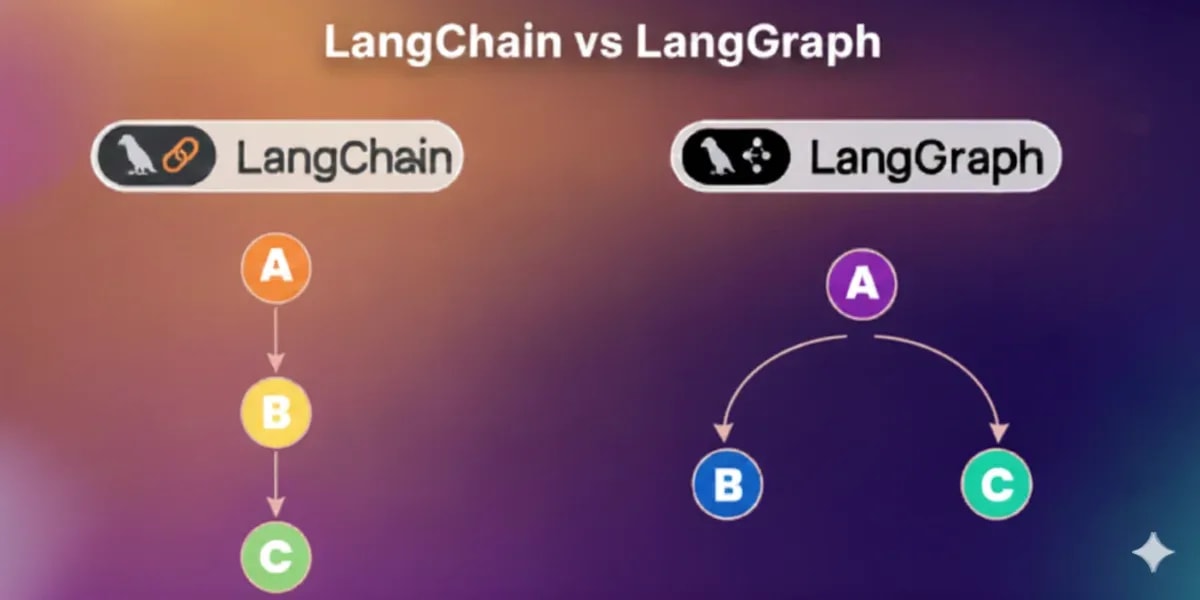
LangChain vs LangGraph: Which AI Agent Framework Is Better in 2026?
LangChain speeds up simple LLM apps; LangGraph powers stateful, multi-agent workflows built for production scale.
Healthcare systems are under pressure: rising patient volumes, clinician burnout, legacy IT, and growing regulatory complexity. Generative AI is no longer a futuristic concept; it’s already drafting clinical notes, summarizing medical images, and powering virtual health assistants.
In this guide, we break down how generative AI in healthcare is transforming clinical workflows, diagnostics, patient engagement, and research, and what it really takes for an enterprise health system to move from “AI pilots” to regulated, production-grade solutions.
Drawing on Folio3 AI’s experience delivering healthcare AI and digital health platforms across North America, EMEA, and APAC, we’ll explore:
Key challenges around data privacy, regulation, and model risk, and how to manage them
High-impact generative AI use cases in hospitals, clinics, and digital health products
A practical enterprise roadmap from proof-of-concept to large-scale deployment
Generative AI refers to models that can create new content, text, images, audio, and synthetic data rather than only classifying or predicting. In healthcare, these models are typically:
Large language models (LLMs) that can draft clinical notes, summarize patient records, or answer medical questions
Multimodal models that combine text with imaging, lab results, sensor data, or genomics
Generative models for images and signals (e.g., diffusion models) that can enhance or synthesize medical images
When applied correctly, generative AI doesn’t replace clinicians. Instead, it acts as a copilot that reduces documentation burden, surfaces insights faster, and supports more personalized care while keeping clinicians in control..
Generative AI analyzes a patient’s medical history, physical condition, and ongoing progress to design customized rehabilitation plans. These plans can be continuously adjusted to optimize recovery outcomes based on real-time data.
AI-driven virtual reality (VR) environments create immersive rehabilitation experiences. These setups help engage patients in their therapy, making exercises more interactive and enjoyable, which can lead to better compliance and faster recovery.
Generative AI, combined with Telemedicine App Development Services, facilitates remote rehabilitation, allowing patients to receive therapy from home. This approach increases accessibility for those unable to visit clinics regularly and enables healthcare providers to monitor progress remotely through video sessions and AI-powered exercises.
AI tools can track patient movements using wearable devices, providing real-time feedback on performance. This capability helps identify improper techniques or overexertion, allowing therapists to adjust exercise prescriptions accordingly.
Generative AI can identify trends and predict patient outcomes by analyzing large datasets collected during rehabilitation. This analysis supports clinicians in making informed decisions about treatment adjustments and long-term care strategies.
These examples showcase how generative AI is applied in real healthcare settings, driving innovation and improving patient care across various domains.
Generative AI can turn fragmented inputs voice notes, EHR fields, lab results into structured clinical documentation:
Drafting history of present illness (HPI), discharge summaries, and referral letters
Summarizing multi-visit patient histories for faster decision-making
Generating patient-friendly after-visit summaries
For health systems, this translates into:
More consistent, complete documentation that supports billing and quality reporting
Reduced documentation time per encounter
Less after-hours “pajama time” for clinicians
Many providers report 10–30% time savings per note when clinical AI copilots are deployed thoughtfully with workflow integration.
Generative models can enhance imaging workflows by:
Prioritizing suspicious studies and generating structured findings summaries
Enhancing low-quality images or synthesizing additional views for training
Suggesting differential diagnoses based on imaging plus clinical context
While final decisions remain with radiologists and specialists, generative AI can reduce turnaround time, improve consistency in reporting, and support training of junior clinicians.
In drug discovery and clinical research, generative AI is used to:
Generate and evaluate novel molecular structures
Simulate how drugs might interact with targets or populations
Create synthetic patient datasets that preserve statistical patterns while protecting privacy
This can shorten early-stage discovery timelines and open new options for trial design especially when paired with domain experts and robust validation.
LLM-powered chatbots and virtual assistants can:
Answer routine patient questions about conditions, medications, or procedures
Provide triage-style symptom guidance with clear escalation paths
Automate appointment reminders, prep instructions, and follow-ups
When integrated with your existing portals and communication channels, this reduces call-center load and supports 24/7, multilingual patient engagement.
Folio3 AI works with hospitals, digital health startups, and payers to co-design these use cases, build custom models where needed, and integrate them securely with existing EHR, PACS, and practice-management systems.
While generative AI holds tremendous potential for transforming healthcare, it also presents significant challenges that must be addressed. Below are some critical concerns regarding the integration of AI in medical settings.
Auditability & traceability: You need clear logs of prompts and outputs, plus versioning of models and configurations.
Hallucinations & clinical safety: Models can generate plausible but incorrect content. Clinician oversight and rigorous validation are non-negotiable.
Bias & fairness: If training data is skewed, recommendations may under-serve certain populations. Bias detection and mitigation must be part of your governance.
Data privacy & security: PHI must be protected under HIPAA, GDPR, and local regulations. Deployment models (on-prem, VPC, edge) should reflect your risk profile.
For healthcare leaders, the key question isn’t “Can we use generative AI?” it’s “Where does it create measurable value?” Typical impact areas include:
Time savings: Reduced documentation and admin time per clinician
Operational efficiency: Faster triage, fewer bottlenecks in imaging and referrals
Revenue integrity: More complete, structured documentation improving coding and billing
Patient experience: Shorter wait times for answers, clearer explanations, better engagement
Innovation speed: Faster iteration in digital-health products and research
AreaExample KPIDocumentation automationMinutes saved per note / per clinicianImaging supportAverage report turnaround timeContact center automation% of queries handled by virtual assistantRevenue integrityChange in claim denial rates / resubmissions
When we work with healthcare clients, Folio3 AI helps define these KPIs upfront and designs pilots that can prove value within 8–12 weeks before scaling.
Identify 1–2 high-value, low-risk use cases (e.g., discharge summaries, FAQ chatbot)
Assess data sources, privacy requirements, and integration points
Choose model strategy: open-source, commercial API, or custom fine-tuned models
Build a narrow proof-of-concept with clear success metrics
Integrate into real workflows (EHR, PACS, portals) with proper UI and guardrails
Introduce clinician-in-the-loop review and feedback mechanisms
Monitor safety, quality, and user satisfaction
Document governance, escalation paths, and validation results
Expand to additional departments and specialties
Standardize model monitoring, incident response, and retraining processes
Introduce edge or on-prem deployment where data-sovereignty or latency demands it
Maintain ongoing alignment with regulatory changes (HIPAA, GDPR, EU AI Act, regional laws)
Folio3 AI supports healthcare organizations across all three phases from architecture and model selection to edge/on-prem deployment and long-term model governance.
Healthcare focus: Experience across hospitals, payers, digital health, and medical product companies.
Full-stack delivery: From strategy and UX to model development, integration, and edge deployment.
Regulatory-aware solutions: Architected with HIPAA, GDPR, and regional data-sovereignty requirements in mind.
Proven projects: Mental health chatbots, computer-vision-based diagnostics, HL7-enabled data integration, and more.
See Our Generative AI in Action: ClinicalPad Case Study on AI-Driven Clinical Documentation
Folio3 AI collaborated with a UK-based healthcare technology client to refine their clinical documentation solution, ClinicPad, by integrating AI-powered tools. Despite an existing online system, healthcare professionals (HCPs) faced inefficiencies with manual data entry, leading to incomplete records and time management challenges. Over four months, Folio3 AI revamped the platform’s UX, added conversation recording, enabled handwritten and audio note uploads, integrated image recognition via ChatGPT, and developed an AI assistant for real-time support. They also implemented PII filtering for compliance, ensuring secure data handling. This upgrade transformed documentation into a seamless, efficient process, helping HCPs save time and focus more on patient care.
As generative AI continues to evolve, we can anticipate even greater integration of AI technologies within healthcare systems around the globe. This will encompass advancements in areas such as medical image analysis, virtual health assistants, and personalized medicine.
However, the successful integration of generative AI into healthcare hinges on carefully balancing its significant benefits with the inherent risks it poses. Leaders must diligently evaluate each potential application, weighing its advantages against possible drawbacks.
Remarkably, 82% of healthcare providers have already implemented or plan to implement governance and oversight structures specifically for generative AI. By optimizing operations and enhancing patient care through generative AI, you can lead your organization into the future contact N-iX today.
Generative AI in healthcare refers to models that can create new text, images, or data such as clinical notes, summaries, synthetic patient data, or imaging enhancements to support clinicians and operational teams.
Common uses include drafting clinical documentation, summarizing EHR data, assisting with imaging workflows, powering patient-facing chatbots, and accelerating research and drug discovery.
It can be, when deployed with strong governance: clinician review, clear scope, rigorous validation, and robust monitoring. GenAI should support not replace clinical judgment.
Privacy is protected through de-identification, strict access controls, encrypted data storage, and deployment models that keep PHI inside secure environments such as your private cloud or on-prem systems.
ROI often comes from reduced documentation time, faster diagnostics, lower contact-center costs, and improved revenue integrity. Most organizations start with a small pilot to validate impact before scaling.
Folio3 AI can help you identify priority use cases, design and build a pilot, integrate with your existing systems, and create a roadmap to scale generative AI safely across your enterprise.
LangChain speeds up simple LLM apps; LangGraph powers stateful, multi-agent workflows built for production scale.