

Generative AI
The Enterprise’s Definitive Guide to Scalable Generative AI Architecture
A practical guide to building scalable generative AI architecture for the enterprise, covering infrastructure, security, orchestration, and governance.
Custom generative AI helps businesses increase ROI by improving efficiency, reducing operational costs, and delivering more tailored, scalable outcomes in 2026.
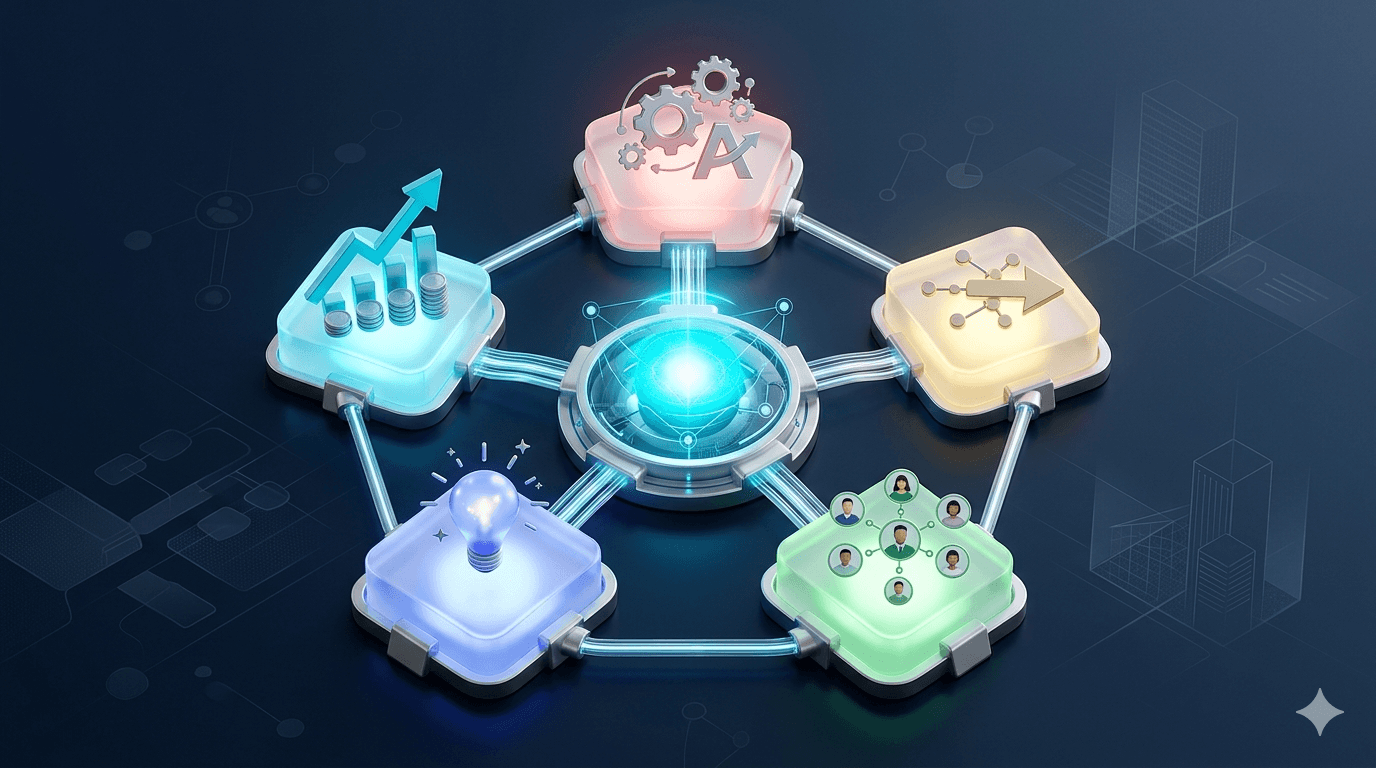
Generative AI is moving from pilots to profit centers. In 2026, the biggest returns come from custom models and agentic workflows tuned to your data, processes, and guardrails, not generic chatbots. Custom generative AI boosts ROI by lifting conversion, compressing operating costs, accelerating launches, monetizing data, and reducing risk at scale.
McKinsey estimates that generative AI could add $2.6–$4.4 trillion in annual value across industries, with outsized gains when firms tailor models to their proprietary context and workflows. And adoption is becoming universal: Gartner forecasts 80% of enterprises will use generative AI APIs and models by 2026. Below are five pragmatic, high-ROI plays and how to measure them.
Custom generative AI blends foundation models with your enterprise data, tools, and policies. It typically uses retrieval-augmented generation (RAG), fine-tuning, and safe tool use to ground outputs in your knowledge and automate multi-step tasks. The ROI advantage is simple: relevance. When AI understands your products, customers, and systems, and can act inside them, it earns measurable revenue and cost impact instead of generic productivity gains.
Among the highest-impact generative AI use cases for enterprise, AI-driven personalization leverages large language models (LLMs), real-time machine learning, and natural language processing (NLP) to deliver hyper-relevant customer experiences that measurably lift revenue.
Among the highest-impact generative AI use cases for enterprise, AI-driven personalization leverages large language models (LLMs), real-time machine learning, and natural language processing (NLP) to deliver hyper-relevant customer experiences that measurably lift revenue.
Companies that personalize at scale see 10–15% revenue lift and higher marketing efficiency. With custom models grounded in your catalog, content, and customer data, the lift compounds as the system learns what converts for your segments.
Discover how custom generative AI can reduce costs, improve efficiency, and create long-term business value.
Book a DemoIntelligent automation powered by agentic AI systems and LLM-based orchestration is fundamentally reshaping enterprise cost structures, enabling organizations to automate multi-step business processes and redeploy human talent to higher-value strategic activities.
Agentic workflows let AI plan, call tools, and complete tasks end-to-end, reducing cost-to-serve and cycle time.
Beyond labor savings, expect quality benefits: fewer errors, shorter handle times, and consistent compliance language.
Generative AI implementation across software engineering and content workflows, spanning code generation, multimodal content creation, and intelligent document processing, compresses development cycles and accelerates time-to-market with measurable quality gains.
Speed-to-market is an ROI lever in its own right. Custom copilots tuned to your codebase, design system, and brand reduce time from idea to release.
Proprietary datasets are an underutilized competitive moat. Enterprise generative AI platforms built on fine-tuned foundation models and transformer-based deep learning architectures transform raw data into defensible AI-powered products and new subscription revenue streams.
Your proprietary data becomes a product when AI can explain it, simulate it, and act on it.
The monetization upside is twofold: direct subscription or usage revenue, and defensibility from differentiated IP that open models can’t replicate.
Responsible AI and enterprise-grade AI governance are strategic enablers, not compliance afterthoughts. Organizations that embed AI governance frameworks, covering bias detection, model observability, and regulatory alignment, scale generative AI deployments faster while minimizing costly rework and reputational risk.
Custom doesn't mean unsafe. A robust governance layer protects brand, customers, and regulators, while unlocking scale.
Firms that treat governance as an enabler, not an afterthought, ship faster and avoid costly rework.
Use a crisp, comparable view across initiatives:
Example (personalization pilot):
Calculation:
Lever | Value |
Revenue contribution | $1.2M |
Cost savings | $1.2M |
Total investment | $0.9M |
Net benefit | $1.5M |
ROI | 166% |
Go custom when:
Buy or configure when:
Many winners blend both: commodity capabilities off the shelf, differentiation via custom layers.
Learn how tailored AI solutions can reduce costs, improve productivity, and create measurable business value in 2026.
Book a DemoAs a trusted generative AI development partner, Folio3 AI delivers end-to-end solutions from LLM strategy and RAG pipelines to agentic workflow deployment, helping enterprises accelerate innovation, reduce costs, and achieve measurable AI ROI.
We design and build custom LLMs and domain-specific generative AI models, fine-tuned to your proprietary data, industry, and use cases, delivering accuracy, scalability, and measurable business-specific value.
We embed generative AI seamlessly into your CRM, ERP, and proprietary platforms—ensuring smooth, workflow-preserving integration that maximizes operational efficiency and accelerates time-to-value.
Our experts craft enterprise-grade optimized prompts, reducing hallucinations and ensuring consistent, high-quality AI outputs, boosting model performance and reliability across all generative AI applications.
We augment your teams with seasoned MLOps specialists managing model deployment, monitoring, scaling, and optimization, keeping your generative AI infrastructure production-ready at all times.
We automate repetitive coding tasks using AI-driven tools, accelerating software development cycles, reducing manual effort, and ensuring higher code quality across your engineering workflows.
Our generative AI solutions break down data silos, process large datasets, and surface real-time actionable insights, empowering smarter, faster, data-driven decision-making across every business unit.
Start where you already have conversion or volume: personalization, support deflection, and engineering acceleration routinely pay back first.
Use retrieval over heavy fine-tuning where possible, cache responses, batch long-running jobs, and monitor token and compute spend.
High-signal, well-governed data tied to a clear workflow beats big, messy datasets; start narrow and expand.
No. Custom wins when your data or workflow creates differentiation; otherwise, configure proven tools.
Implement policy controls, human-in-the-loop for high-impact actions, continuous evaluation, and auditable logs aligned with NIST and local regulations.
A practical guide to building scalable generative AI architecture for the enterprise, covering infrastructure, security, orchestration, and governance.
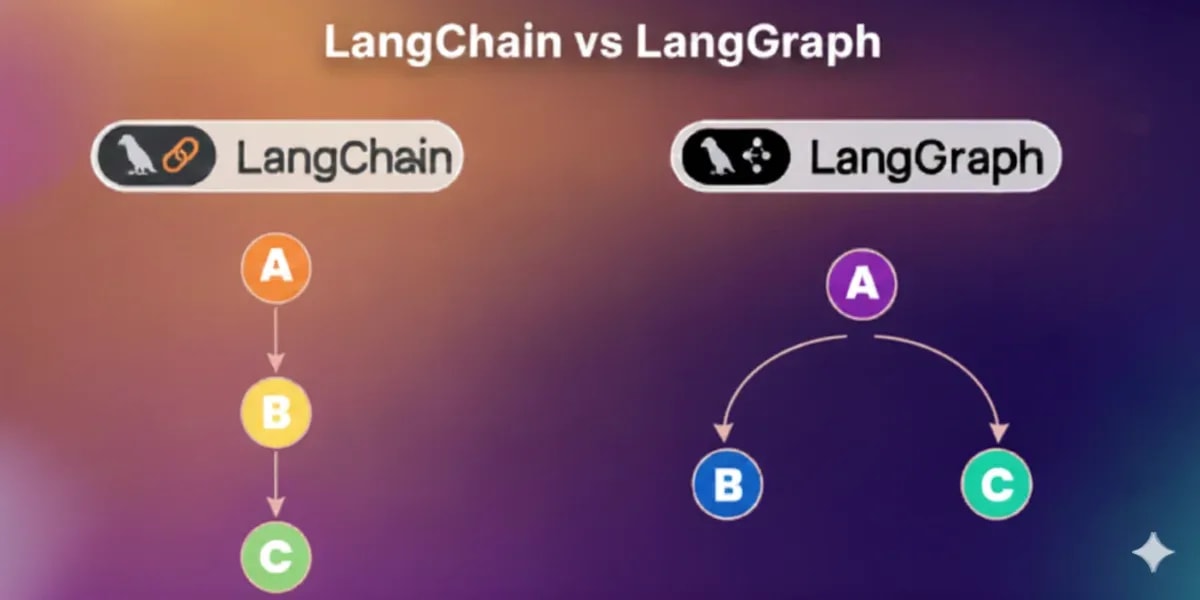
LangChain speeds up simple LLM apps; LangGraph powers stateful, multi-agent workflows built for production scale.