The way modern sports teams prepare, compete, and make decisions has changed fundamentally. What was once a niche practice limited to a handful of baseball front offices has become an indispensable part of sports data analytics operations across every major league on the planet. In 2026, the question is no longer whether teams should invest in analytics but how deeply they should integrate data into every facet of their organization.
The numbers tell a compelling story. The global sports analytics market was valued at approximately USD 5.79 billion in 2025 and is projected to surpass USD 7 billion in 2026, growing at rates exceeding 20% annually. AI-powered predictive models now achieve 85 to 97 percent accuracy across different sports and injury types.
Whether you are a coach seeking a tactical edge, an executive evaluating acquisitions, or a fan who wants to understand what sports analytics is and why it matters, this comprehensive sports analytics guide covers everything you need to know.
What is sports data analytics, and how is it used?
Sports data analytics is the practice of collecting, processing, and interpreting data to generate actionable insights that improve athletic performance, strategic decision-making, and business operations. It blends data science, statistical modeling, machine learning, and domain expertise to transform raw numbers into competitive advantages.
At its core, sports performance analytics encompasses two categories. On-field analytics focuses on player tracking, tactical analysis, biomechanical monitoring, and injury prevention. These insights are often supported by sports video analysis, where AI-powered systems review match footage to evaluate positioning, formations, and player decision-making. Off-field analytics, often called sports business analytics, covers fan engagement, ticket pricing, sponsorship valuation, and broadcast optimization.
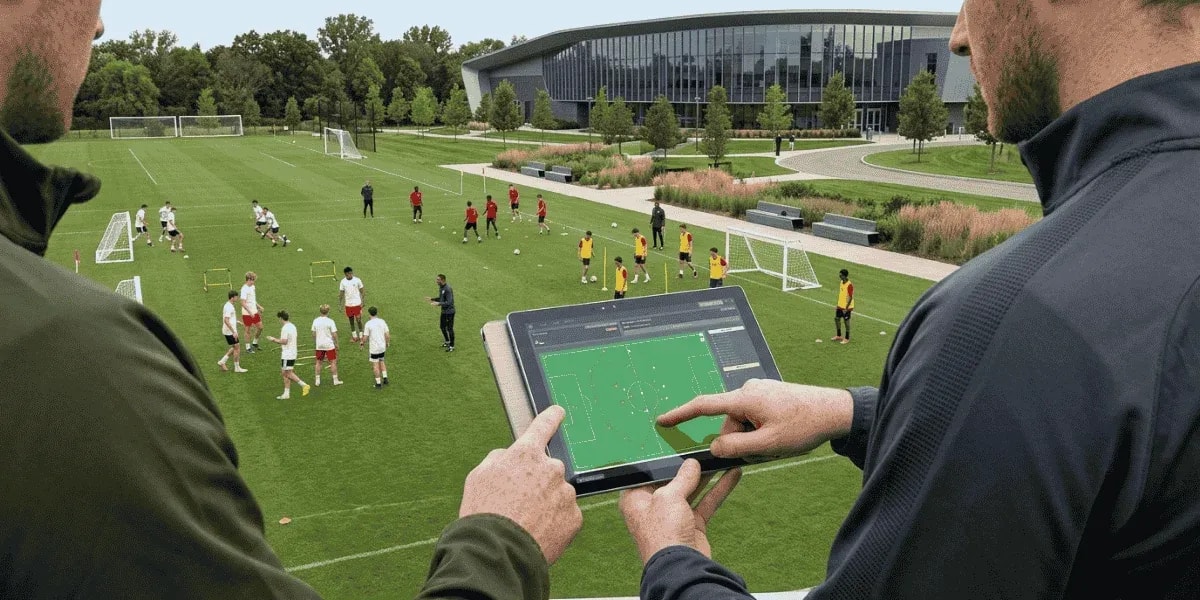
The data pipeline begins with collection through wearable sensors, GPS trackers, optical camera systems, and event-logging platforms. This raw data is cleaned, processed, and fed into analytical models that produce visualizations and predictive outputs. Modern data analytics for sports teams now involves entire departments operating with the analytical sophistication found in leading technology companies.
Explore more about: 8 Ways AI is Transforming Sports Analytics: Expert Insights
Applications of sports analytics in various sports
Every major sport has developed its own analytics ecosystem, with specialized metrics and tools tailored to each game’s unique demands. Here is how sports data analytics is applied across the most popular sports worldwide.
1. Soccer
Soccer has embraced analytics at an extraordinary pace. Clubs rely on data models to evaluate player fitness, track movements, and analyze passing accuracy and goal-scoring opportunities. The football analytics segment is expected to grow at over 20 percent annually from 2026 to 2033. Metrics like expected goals (xG), possession value, and pressing efficiency are now standard, while scouting departments leverage analytics for data-backed transfer decisions.
2. Basketball
The NBA pioneered optical player-tracking technology, with camera systems capturing 30 to 60 frames per second of movement data. Basketball sports video analysis systems use this footage alongside advanced metrics like player efficiency rating (PER), true shooting percentage, and plus-minus ratings to quantify player impact far beyond traditional box scores. Teams also collect biometric data to create player profiles that inform rest schedules and training load management across an 82-game season.
3. Baseball
Baseball remains the birthplace of modern sports analytics. Sabermetrics continues to evolve with metrics like weighted on-base average, launch angle, exit velocity, and spin rate. These help determine player impact and influence roster construction, in-game strategy, and development at every level.
4. Cricket
Cricket analytics has grown rapidly with T20 leagues like the IPL. Teams use ball-by-ball data, pitch-condition analysis, and Hawk-Eye tracking to identify patterns. GPS vests and proprietary databases have turned franchises into data laboratories where fatigue curves and condition models maximize returns within tight budgets.
5. Ice hockey
The NHL uses RFID chips and optical cameras to generate millions of data points per game. Analytics focus on puck possession, shot-blocking, save percentages, and expected goals models that enable real-time coaching adjustments.
NFL teams embed RFID chips in shoulder pads alongside camera systems to track positioning, speed, and acceleration. Metrics like expected points added and win probability models optimize play-calling, while wearables enable proactive injury prevention.
7. Tennis and individual sports
Analytics platforms like IBM’s Slamtracker process millions of data points from Grand Slam matches to identify player tendencies. Athletes in track, swimming, and golf use biomechanical analysis for incremental technique improvements at the elite level.
Read more about: The Power of AI in Sports Performance Analysis and Athletic Training
Key benefits of sports data analytics
The advantages of integrating analytics into sports operations extend across performance, health, strategy, and commercial outcomes. Here are the four primary benefits driving adoption at every competitive level.
Sports performance analytics enables teams to objectively evaluate talent, optimize strategies, and refine training based on evidence. By analyzing patterns in player movement, passing networks, and formations, coaches identify specific areas for improvement. Research shows measurable gains in decision-making accuracy when analytics are consistently integrated into workflows.
2. Injury prevention and player health management
Wearable sensors and biometric monitors continuously track workload, fatigue markers, and biomechanical stress. Predictive models flag athletes at elevated injury risk before problems become visible. Studies demonstrate injury rate reductions of up to 30 percent when data-driven load management protocols are applied, making this one of the highest-value applications of data analytics for sports teams.
3. Tactical and strategic advantage
Coaches use opponent analysis dashboards to study playing styles, identify vulnerabilities, and create targeted game plans. During matches, real-time data feeds enable tactical adjustments from substitution timing to formation changes, giving analytically prepared teams a consistent competitive edge.
4. Enhanced fan engagement
Off-field analytics drive personalized fan experiences that boost loyalty and revenue. Organizations analyze consumer behavior and social media activity to tailor marketing campaigns, forecast ticket demand, and optimize merchandising. Broadcasters use real-time statistics and predictive graphics to deepen viewer engagement.
The technology stack powering modern sports analytics spans hardware, software, and AI-driven platforms. Here are the five core categories that teams and organizations rely on in 2026.
Platforms like Hudl, Dartfish, Catapult, and Folio3’s AI sports video solutions enable coaches to tag, annotate, and review footage using AI-powered automation that identifies key moments and overlays statistical data onto clips.
2. Wearables and biometric devices
GPS trackers, heart rate monitors, accelerometers, and smart clothing from STATSports, Catapult, and KINEXON capture real-time data on distance, sprint intensity, heart rate variability, and recovery status. In 2026, wearables are integrated into lightweight vests and gear that feel natural during competition.
Cloud-based platforms from providers like Kitman Labs and Zone7 aggregate data from multiple sources into centralized dashboards, connecting wearable data with injury risk models and readiness assessments.
Tools like Tableau, Power BI, and sport-specific platforms such as StatsBomb and Opta transform complex datasets into intuitive visual outputs that enhance communication among coaches, analysts, and management.
5. AI and machine learning solutions
Machine learning models predict injury risk, optimize training periodization, simulate tactical scenarios, and generate automated scouting reports. These are key use cases of AI in sports analysis, demonstrating how technology transforms performance evaluation and decision-making. Computer vision algorithms extract tracking data from video without dedicated hardware.
Understanding the right metrics is essential for anyone working in or studying sports data analytics. Below is a breakdown of the most important indicators organized across five domains.
Individual player metrics form the foundation of sports performance analytics. These indicators measure physical output, technical proficiency, and positional effectiveness to help coaches tailor development programs.
a) Speed and acceleration
GPS and optical tracking systems measure top speed, acceleration patterns, and sprint frequency. These metrics help coaches assess physical readiness, compare players across positions, and tailor conditioning programs to individual needs.
b) Endurance and stamina
Total distance covered, high-intensity running distance, and heart rate recovery data reveal how well athletes sustain effort across match periods. VO2 max estimates from wearables add physiological context to these outputs.
c) Skill-specific metrics
Position-specific outputs vary by sport, from pass completion rates and dribble success in soccer, to launch angle and exit velocity in baseball, to assist-to-turnover ratios in basketball.
Beyond individual output, team-level metrics capture how well a squad functions as a cohesive unit. These indicators evaluate collective strategy, efficiency, and execution during competition.
a) Possession and control
Advanced models measure not just raw possession percentage but the quality and progression of ball movement toward dangerous areas, offering a more accurate picture of territorial dominance.
b) Scoring efficiency
Metrics like shots per goal, conversion rates, and expected goals reveal whether teams create and finish quality chances. Comparing actual output against expected output highlights clinical finishing or areas needing improvement.
c) Tactical success rates
Set-piece conversion, pressing trigger success, and counter-attack efficiency evaluate how well teams execute their game plans against specific opponents.
3. Health and injury metrics
Monitoring athlete health through data has become one of the most impactful applications of sports analytics. These metrics help teams prevent injuries, manage recovery, and optimize availability.
a) Load monitoring
Acute-to-chronic workload ratios and neuromuscular load measurements track physical stress over time. Spikes in workload relative to an athlete’s baseline are among the strongest predictors of soft-tissue injuries.
b) Injury risk scores
Machine learning models combine workload data, sleep quality, and historical injury records to generate individualized risk scores that enable proactive interventions such as reduced training loads or modified playing time.
c) Biometric tracking
Heart rate variability, sleep quality, and muscle oxygen saturation provide holistic readiness assessments. Teams use this data for daily wellness checks and return-to-play decisions following injuries.
4. Advanced analytics and key indicators
Beyond standard metrics, advanced statistical models provide deeper insight into performance quality and outcome probability. These indicators are now central to scouting, broadcasting, and strategic planning.
a) Expected goals (xG) and expected assists (xA)
A statistical model assigning a probability of 0 to 1 to each shot based on distance, angle, body part, assist type, and defensive pressure. Summing values across a match reveals how many goals a team should have scored given their chances.
b) Player efficiency rating (PER)
A basketball metric condensing scoring, rebounds, assists, steals, blocks, and turnovers into a single figure reflecting overall player impact, adjusted for pace and minutes played.
c) Win probability metrics
Real-time models calculating the likelihood of victory based on current score, time remaining, possession, and historical patterns. Used for in-game strategy, broadcast graphics, and betting applications.
d) Pitch/shot quality metrics
Granular evaluations of pitch speed, movement, and location in baseball, or shot difficulty based on defender proximity and shooter position in basketball, drive play-by-play decision-making.
5. Fan engagement and business metrics
Off-field data plays a growing role in sports business analytics. These metrics help organizations optimize revenue, strengthen brand value, and deepen fan relationships beyond game day.
a) Attendance and ticket sales trends
Analytics platforms track attendance patterns and season ticket renewal rates, using predictive models to forecast churn and measure the effectiveness of specific promotions and campaigns.
Engagement rates, sentiment analysis, and brand exposure valuations quantify ROI for sponsorship deals. Over 72 percent of fans worldwide now use at least one digital engagement platform, making social analytics a critical revenue driver.
c) Merchandising insights
Demand forecasting and personalized recommendation engines optimize merchandise inventory, pricing, and promotional timing across fan segments.
Challenges and pitfalls in sports analytics
Despite its transformative potential, sports data analytics presents significant challenges that organizations must address to realize the full value of their investments.
1. Data quality and accuracy
The value of any analytics output depends on data quality. Sensor malfunctions, inconsistent collection protocols, and integration issues can compromise analysis. Organizations must invest in data governance, regular calibration, and quality assurance to maintain reliable outputs.
2. Overreliance on data
An overreliance on analytics at the expense of coaching intuition and contextual understanding can be counterproductive. The most effective organizations blend quantitative insights with qualitative expertise, using data to inform rather than replace experienced judgment.
3. Privacy and security concerns
Extensive biometric data collection raises significant privacy concerns. Regulations like GDPR and BIPA impose strict requirements on how sensitive athlete data is collected, stored, and shared. Organizations must balance innovation with transparent governance that protects privacy and ensures compliance.
4. High costs of implementation
Advanced tracking systems and analytics software can be prohibitively expensive for smaller organizations. The shortage of skilled sports data analysts further limits adoption. Cloud-based platforms are helping democratize access, but cost remains a barrier at amateur and semi-professional levels.
Get Expert Consultation
Frequently asked questions
How does sports data analytics work?
It works by collecting information from wearable sensors, GPS trackers, optical cameras, and event-logging platforms. This data is processed using statistical models and machine learning algorithms to produce insights about performance, tactics, injury risk, and business operations that inform evidence-based decisions.
Can analytics predict player injuries?
Yes. By combining workload data, biomechanical indicators, sleep metrics, and historical injury records, machine learning models identify athletes at elevated risk. Current AI systems achieve high accuracy rates and enable proactive interventions that meaningfully reduce injury incidence.
Teams use video platforms like Hudl, wearable systems from STATSports and Catapult, visualization tools like Tableau and StatsBomb, and AI-driven platforms from Second Spectrum and Zone7. The specific stack varies by sport, league, and budget.
How much data is collected per game?
Optical tracking in the NBA captures 30 to 60 frames per second, while RFID chips in the NFL generate millions of data points per game. Combined with biometric and video data, a single professional match can produce several terabytes of raw information.
Is sports analytics only for elite athletes?
Not at all. Cloud-based platforms and affordable wearables have democratized access. By 2026, amateur clubs, college programs, and youth academies will be adopting data-driven approaches that were once exclusive to elite-level operations.


-fba59e49-f902-4c9e-b43a-b6baa75ef444.webp&w=1920&q=90)