Executive Summary:
The use of AI in sports technology is completely changing how we play, watch, and evaluate sports. The sports sector is benefiting from this innovative technology in many ways, from fan interaction to athlete performance analysis.
How AI Enhances Sports Technology
These essential features of artificial intelligence (AI) improve sports technology, bringing in an age of creativity and performance improvement in the sports industry.
Smart Gear Equipment:
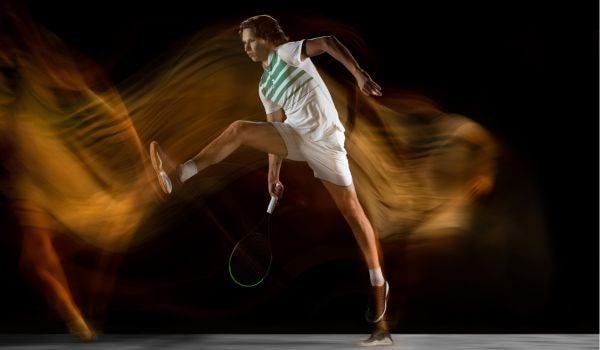
Tennis rackets with sensors and AI algorithms are one famous example. These rackets examine a player's swing, measuring things like swing speed, swing angle, and ball contact point. Athletes may immediately change their technique with this real-time feedback, which improves shot accuracy and power.
Before the arrival of AI in sports, elite athletes could only access this degree of analysis through professional coaches. These AI-powered sports gear and accessories not only help players improve their skills but also provide a better grasp of their capabilities, allowing them to monitor their improvement over time.
Ready to Bring AI Into Sports Technology?
Discover how AI can improve athlete performance, reduce injury risk, optimize strategy, and enhance fan engagement with smarter, real-time sports technology solutions.
Get an Expert Consultation
For coaches, AI-driven tracking systems provide a gold mine of information that can guide tactical choices made throughout a game. Every player's position, speed, and motions on the field or court are recorded by these systems using cameras and other sensors. Coaches have immediate access to this data, which enables them to change their team's strategy at the moment. Fans gain from this technology as well. Artificial intelligence (AI)-driven automated camera systems can precisely follow players and the ball. As the cameras follow the action automatically, spectators are less likely to miss important moments or game-changing plays.
Enhanced Sports Broadcasting:
The employment of automated camera systems is one of the most notable aspects of AI-enhanced sports broadcasting. These devices have remarkably accurate player and ball-tracking capabilities. Cameras can follow the action fluidly, guaranteeing that viewers never miss a critical moment by using AI algorithms to predict player motions and anticipate plays. With the help of this technology, spectators can get a thorough picture of the action from many perspectives, in addition to being able to experience the excitement of the game.
Furthermore, sports broadcasts now offer a deeper level of detail thanks to AI-driven graphics and augmented reality overlays. Real-time data, player profiles, and tactical analysis are available to viewers as screen overlays.
Use Of AI In Every Aspect of Sports
The way that sports are played, evaluated, and officiated is all being profoundly changed by AI in the current sports situation. Here's a detailed look at how AI developments are used in every aspect of sports:
Injury Prevention and Treatment:
AI in sports can identify minute irregularities that can be signs of impending injury risks by continually tracking athletes' motions with sensors and gathering intricate biomechanical data. With the help of this early warning system, coaches and medical personnel can take proactive action to reduce the danger of injuries.
Additionally, AI-driven rehabilitation solutions are altering how wounded athletes recuperate. These programs provide tailored treatment strategies based on the injury history and development of each athlete. AI can streamline the recovery process by continuously analyzing and adapting, ensuring that athletes receive specialized exercises and therapies that hasten healing and minimize downtime.
Turn AI Innovation Into On-Field Advantage
From smart gear and live tracking to injury prevention and advanced broadcasting, AI is changing how teams train, compete, and engage fans.
Book a Demo
Frequently asked questions:
1. How is AI used in sports technology?AI in sports technology is used to analyze athlete performance, track player and ball movement, improve coaching decisions, support injury prevention, enhance broadcasting, and power smart sports equipment with real-time feedback.
2. How does AI improve athlete performance?AI improves athlete performance by collecting and analyzing movement, speed, positioning, and technique data through sensors, cameras, and connected equipment. This helps athletes and coaches identify weaknesses, refine technique, and make faster performance adjustments.
3. Can AI help prevent sports injuries?Yes. AI can help prevent sports injuries by monitoring biomechanical patterns and detecting irregular movement that may signal elevated injury risk. It can also support personalized rehabilitation plans by adapting recommendations based on an athlete’s recovery progress and injury history.
4. What role does AI play in sports broadcasting?AI improves sports broadcasting through automated camera tracking, predictive camera movement, real-time graphics, and augmented reality overlays. These features help viewers follow the action more clearly and access richer game insights during live broadcasts.
5. What are the benefits of AI for coaches and teams?AI gives coaches and teams access to real-time performance data on player position, speed, and movement, which can support tactical adjustments during games. It also helps teams improve analysis, decision-making, and long-term player development.

-fba59e49-f902-4c9e-b43a-b6baa75ef444.webp&w=1920&q=90)