Key takeaways
Chinese technology giant Alibaba Group Holding Ltd. officially launched sales of its Quark AI Glasses in China on Thursday, entering the competitive smart wearables market dominated globally by Meta Platforms Inc.
The company introduced two variants: the flagship dual-display S1 model and the camera-focused G1 model, each available in multiple frame colors and lens options.
Prices start at 1,899 yuan ($268.25) for the entry-level G1 model, while the premium S1 model begins at 3,799 yuan.
Deep integration with Alibaba's ecosystem
Alibaba's Qwen large language model powers the Quark AI Glasses and integrate deeply with the company's digital ecosystem.
Users can access the AI assistant through voice commands or touch controls, enabling hands-free interactions with Alibaba's suite of services, including Alipay for payments, Taobao for shopping, and Amap for navigation.
"AI glasses are a uniquely powerful wearable as they consist of everything we envision for an AI assistant," said Wu Jia, Vice President of Alibaba Group.
"Looking ahead, AI glasses open the door to a revolutionary way of connecting and interacting with computers in the AI era. With Quark AI Glasses deeply integrated with Qwen, users can access Qwen anytime, anywhere, enabling the AI to connect seamlessly with the real world and deliver value at an unprecedented scale."
The glasses offer a range of intelligent features, including instant price recognition, AI-powered question answering for both text and images, real-time translation, near-eye navigation, AI-generated meeting notes, and context-aware support for finding locations and managing schedules.
Technical specifications and design
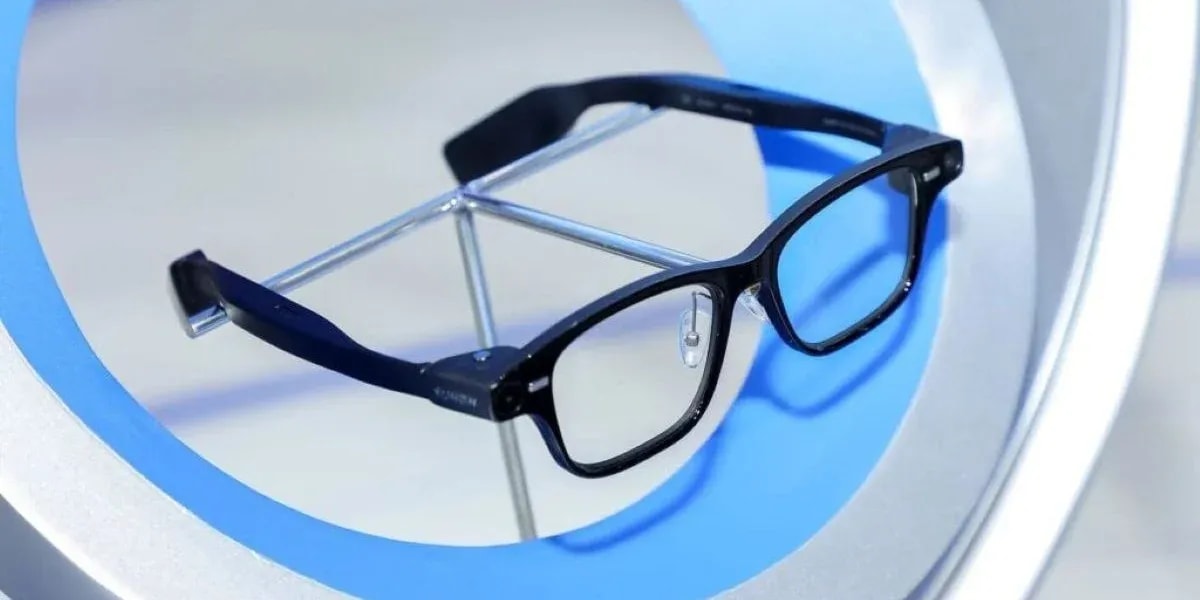
Unlike traditional AR headsets, the Quark glasses resemble conventional eyewear with black plastic frames.
The S1 model features built-in translucent displays that overlay contextual information onto the user's view, while the lighter G1 model weighs just 40 grams and focuses on camera and audio capabilities without displays.
Both models are equipped with cameras, bone conduction microphones, and advanced voice pickup technology.
The S1 variant includes dual micro-OLED displays with up to 2,300 nits of brightness and supports prescription lenses ranging from 0 to 800 degrees.
A standout feature is the swappable dual-battery system in the S1 model, which provides up to 24 hours of battery life.
The glasses use a dual-chip architecture combining Qualcomm's Snapdragon AR1 processor with the BES2800 chip for audio functions.
Entering a competitive market
The launch represents a significant push by Alibaba into consumer AI hardware after the company historically focused on business-to-business services.
The move comes as part of Alibaba's broader AI strategy following a major upgrade to its AI chatbot earlier this month.
The company recently launched its Qwen App, which surpassed 10 million downloads within the first week of public beta testing.
Alibaba faces competition from both domestic rivals and international players.
Chinese companies, including Xiaomi, Rokid, and Xreal, have already introduced their own smart glasses, while Meta's Ray-Ban collaboration has gained significant traction globally.
According to IDC data, the global wearables market shipped 136.5 million units in the second quarter of 2025, marking a 9.6% year-over-year increase, with China representing the largest market at nearly 50 million units shipped.
Read more:
Alibaba Deeply Integrates Qwen AI Model Into Quark Browser Desktop Version
Law Enforcement Agencies Turn to AI for Non-Emergency Call Management
Perplexity Launches AI Shopping Assistant To Challenge Google And Amazon