When disasters strike, every second matters for saving lives and minimizing damage. Traditional emergency response methods often require hours or days to assess disaster zones, leaving victims stranded and responders operating without crucial information. However, AI-powered drone swarms are revolutionizing this critical timeline by delivering unprecedented speed and accuracy in disaster response operations.
Recent deployments demonstrate remarkable capabilities: the CLARKE system can assess damage to 2,000 homes in just seven minutes, compared to days required for traditional ground surveys. These autonomous systems coordinate without human pilots, adapting in real-time even when the communication infrastructure fails.
From wildfire containment to earthquake survivor detection, AI-powered drone swarms are transforming emergency management by providing instant situational awareness, reducing responder risk, and accelerating life-saving interventions across multiple disaster scenarios simultaneously.
Technologies powering disaster response swarms
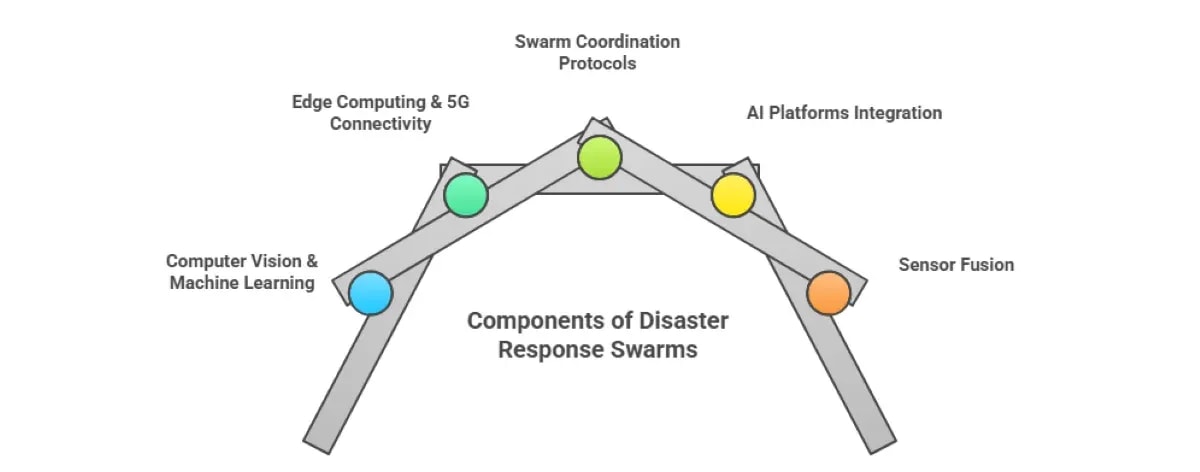
Modern drone swarms integrate cutting-edge technologies, including computer vision, edge computing, and advanced AI platforms. These technologies deliver real-time disaster assessment and coordinated emergency response capabilities effectively.
Computer vision & machine learning
Deep learning algorithms enable real-time object detection, damage classification, and survivor identification from aerial imagery. Furthermore, neural networks trained on disaster datasets can distinguish between debris patterns, structural damage levels, and human heat signatures with remarkable accuracy.
Edge computing & 5G connectivity
Onboard processing capabilities reduce latency by analyzing data locally rather than transmitting it to remote servers. Meanwhile, 5G networks provide high-bandwidth, low-latency communication for coordinating multiple drones and sharing critical information with ground response teams.
Swarm coordination protocols
Distributed algorithms manage task allocation, formation control, and collision avoidance among multiple drones. Additionally, these protocols enable efficient area coverage, prevent operational conflicts, and ensure coordinated movement patterns during complex emergency response missions.
Cloud-based AI services provide scalable processing power for complex analysis tasks. Moreover, integration with advanced frameworks enables sophisticated predictive modeling and real-time decision support for emergency responders.
Sensor fusion
Multiple sensor types, including visual, thermal, LiDAR, and audio sensors, provide comprehensive environmental awareness. Subsequently, data fusion algorithms combine inputs to create detailed situational maps, detect survivors, and identify hazardous conditions simultaneously.
The science behind AI drone swarms
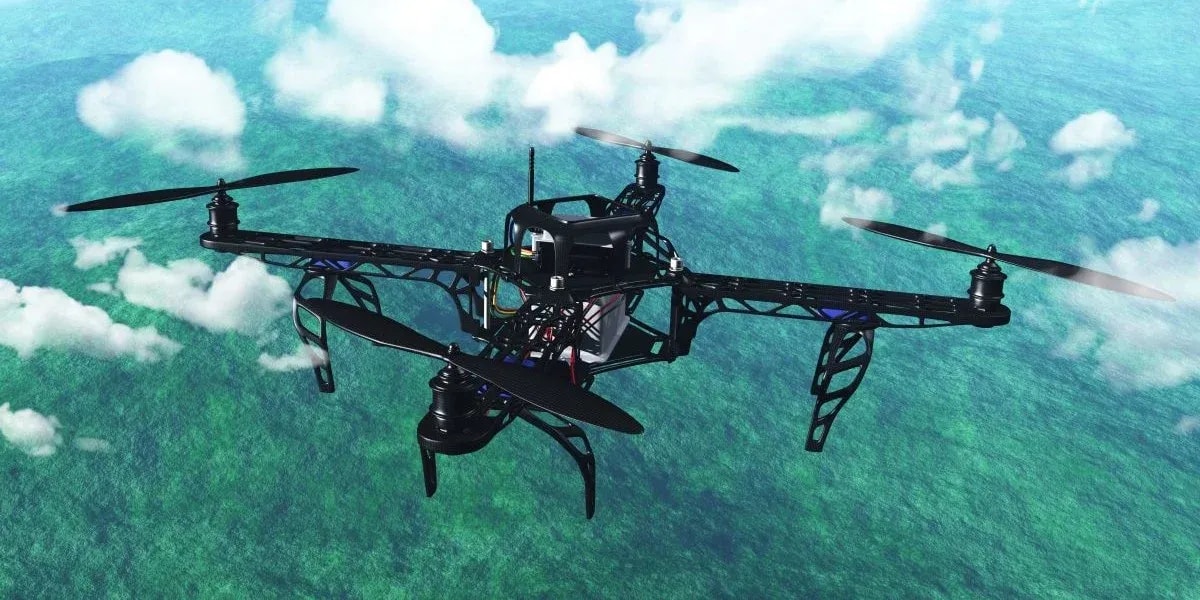
AI drone swarms use smart algorithms that let many unmanned vehicles work together on their own. Moreover, they mimic natural behaviors observed in bird flocks and insect colonies for emergency response applications.
Swarm intelligence fundamentals
Bio-inspired coordination allows individual drones to make collective decisions without centralized control. Furthermore, each drone follows simple behavioral rules that create complex group behaviors. This approach enables efficient task distribution and area coverage during disaster operations while maintaining operational flexibility.
Decentralized AI decision-making
Advanced algorithms enable each drone to process information locally and communicate decisions to neighboring units. Consequently, this eliminates single points of failure, ensuring continued operation even when individual drones are lost or damaged during critical missions.
Emergent behaviors & consensus algorithms
Complex mission outcomes emerge from simple individual drone actions through consensus protocols. Additionally, these algorithms enable swarms to dynamically reorganize formations, redistribute tasks, and adapt strategies based on real-time environmental changes and mission requirements.
Real-time adaptation
Machine learning enables swarms to modify behavior instantly based on environmental feedback. Subsequently, drones can reroute around obstacles, adjust search patterns for optimal coverage, and prioritize high-risk areas without human intervention or reprogramming.
Communication protocols
Mesh networking allows drones to maintain connectivity through peer-to-peer communication links. Therefore, this redundant communication system ensures information sharing continues even when traditional infrastructure fails during major disasters or emergency situations.
Proven real-world applications & case studies
Multiple organizations have successfully deployed AI drone swarms in actual disaster scenarios. These deployments demonstrate measurable improvements in response times, accuracy, and operational safety across various emergency situations.
CLARKE system (Texas A&M University)
The Computer Vision and Learning for Analysis of Roads and Key Edifices system processes drone imagery using AI trained on 21,000+ disaster-damaged structures, delivering comprehensive damage assessments within minutes of data collection. Furthermore, the system has already proven its value during the 2024 hurricane season, when deployed in Florida and Pennsylvania following Hurricanes Debby and Helene.
Ukraine conflict operations
Ukrainian forces demonstrate autonomous swarm coordination in active combat zones, using AI-enabled drones for reconnaissance, target identification, and coordinated operations. These systems adapt to electronic warfare and changing battlefield conditions in real-time, representing the first known routine use of swarm technology in combat operations.
Technology Innovation Institute (TII) UAE
Abu Dhabi's TII conducts real-world development of decentralized drone swarms for emergency response. Their bio-inspired algorithms enable autonomous coordination during infrastructure failures, demonstrating practical applications for disaster management deployments.
Real-time disaster scenarios
AI drone swarms excel across diverse emergency situations, providing specialized capabilities for specific disaster types. Simultaneously, they maintain coordinated operations and deliver critical intelligence to emergency response teams.
Wildfire management
Thermal sensors detect fire hotspots and predict spread patterns using wind data and terrain analysis. Furthermore, swarms coordinate with firefighting aircraft, map evacuation routes, and monitor firefighter safety during real-time operations.
Earthquake response
Post-earthquake swarms rapidly assess structural damage and locate trapped survivors using audio detection algorithms. Additionally, they identify safe zones for rescue operations while multi-spectral imaging reveals internal building damage invisible to traditional assessment methods.
Flood & hurricane operations
Water level monitoring, infrastructure damage assessment, and victim location services operate simultaneously across affected regions. Moreover, swarms identify accessible routes for rescue teams and assess critical infrastructure including, hospitals, power plants, and transportation networks.
Industrial accident response
Chemical leak detection, radiation monitoring, and explosion risk assessment protect first responders from hazardous environments. Subsequently, autonomous systems provide continuous monitoring while maintaining safe distances from dangerous industrial accident sites.
Urban search & rescue
Building collapse scenarios require precise victim location through thermal imaging and audio pattern recognition. Additionally, coordinated swarms provide multiple perspectives while minimizing disturbance to unstable debris fields during rescue operations.
Critical advantages over traditional methods
AI drone swarms deliver substantial operational improvements compared to conventional emergency response approaches. These systems offer quantifiable benefits in speed, safety, cost-effectiveness, and comprehensive situational awareness capabilities.
Speed improvements
Damage assessments are completed in minutes rather than days, enabling faster resource deployment and victim rescue operations. Furthermore, simultaneous multi-area coverage eliminates sequential inspection delays common with traditional ground-based assessment methods.
Safety enhancement
Zero human exposure to hazardous environments, including unstable structures, toxic chemicals, and extreme weather conditions. Moreover, remote operation capabilities protect emergency personnel while maintaining continuous monitoring and assessment operations.
Cost efficiency
Operational costs remain significantly lower than manned aircraft or large ground teams. Additionally, automated systems reduce personnel requirements, fuel costs, and equipment wear while providing superior data quality and continuous operational availability.
Coverage expansion
Simultaneous surveillance of multiple disaster zones becomes possible with coordinated systems. Furthermore, swarms provide comprehensive area monitoring, overlapping coverage for verification, and continuous situational updates across extended geographical regions.
Adaptability benefits
Real-time mission modification occurs based on changing conditions without operator intervention. Subsequently, dynamic task redistribution, formation changes, and priority adjustments ensure optimal resource utilization throughout evolving emergencies.
Technical challenges & advanced solutions
Despite significant capabilities, AI drone swarms face complex technical obstacles. These include cybersecurity vulnerabilities, environmental limitations, and integration challenges that require sophisticated solutions and careful implementation strategies.
Cybersecurity threats
Potential swarm hijacking, communication interception, and malicious control present serious operational risks. However, advanced encryption, authentication protocols, and autonomous security responses protect against cyber attacks while maintaining operational effectiveness and data integrity.
Privacy & data protection
High-resolution surveillance capabilities raise privacy concerns requiring careful data handling protocols. Therefore, automated facial blurring, restricted data retention policies, and transparent usage guidelines balance emergency response needs with citizen privacy rights.
Environmental limitations
Weather conditions, battery life constraints, and electromagnetic interference affect operational capabilities. Nevertheless, advanced weather prediction integration, rapid battery swap systems, and hardened communication protocols extend operational windows and reliability.
Regulatory compliance
FAA Part 107 restrictions, international aviation rules, and emergency service protocols create complex compliance requirements. Furthermore, regulatory sandboxes, emergency waivers, and coordinated policy development enable legal deployment while ensuring airspace safety.
Integration complexity
Legacy emergency systems, data format incompatibilities, and communication protocol differences complicate implementation. However, standardized APIs, middleware solutions, and gradual integration phases ensure seamless operation with existing emergency response infrastructure.
Implementation strategy & best practices
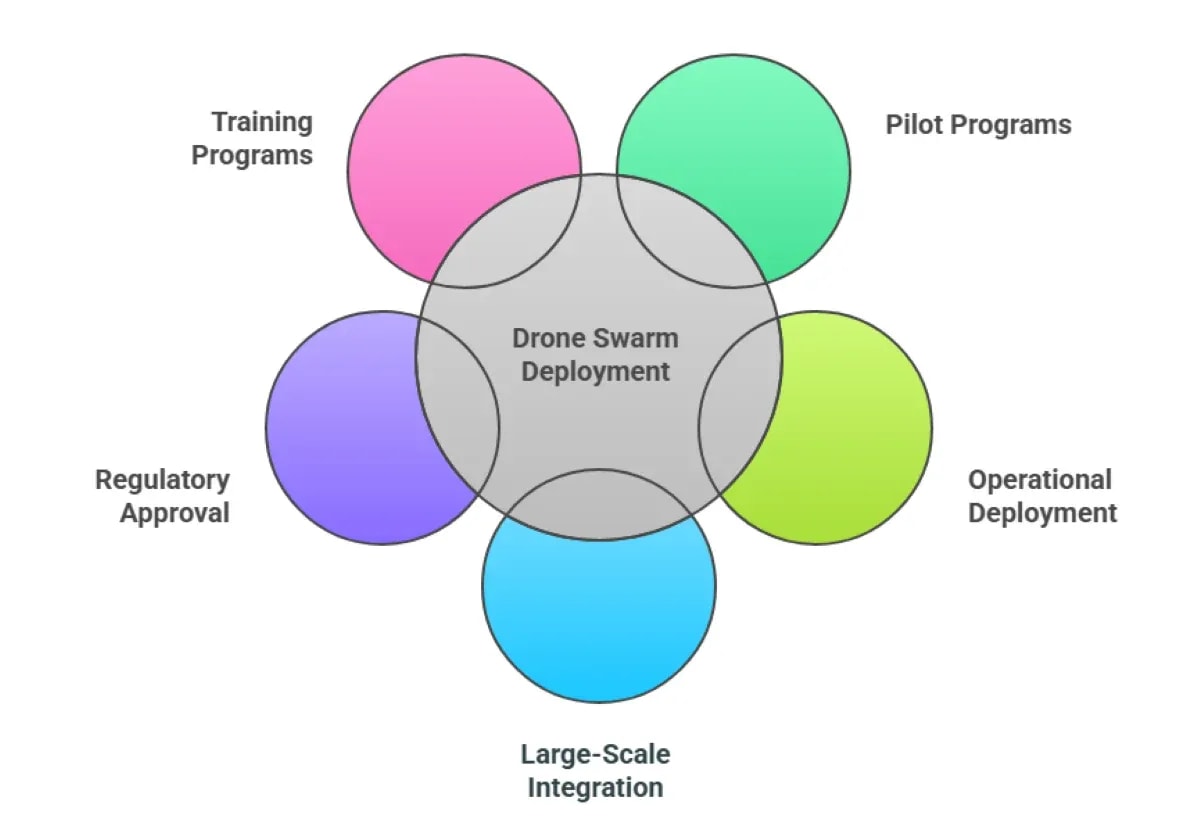
Successful drone swarm deployment requires systematic planning and phased implementation. Additionally, comprehensive training programs ensure effective integration with existing emergency response systems and regulatory compliance.
Phase 1: pilot programs
Small-scale testing with 3-5 drones validates core capabilities and identifies integration challenges. Moreover, controlled scenarios allow refinement of procedures before scaling to operational deployments while demonstrating value to stakeholders.
Phase 2: operational deployment
Medium swarms of 10-50 drones handle real emergency scenarios under controlled conditions. Furthermore, training programs for operators, integration with command centers, and performance metric collection establish operational baselines for expansion.
Phase 3: large-scale integration
Full swarm capabilities with 100+ drones provide comprehensive coverage for major disasters. Additionally, complete automation, multi-agency coordination, and advanced AI capabilities deliver maximum operational effectiveness for complex emergency scenarios.
Regulatory approval process
FAA waivers, international compliance documentation, and coordination ensure legal operation across jurisdictions. Moreover, proactive engagement with regulators, safety demonstrations, and compliance documentation streamlines approval processes for emergency deployments.
Training programs
Emergency responder education programs ensure effective utilization of advanced drone swarm technologies. Furthermore, hands-on training, simulation exercises, and certification programs prepare personnel for optimal system deployment and management.
Industry solutions & partnership models
Comprehensive drone swarm implementations require collaborative partnerships between technology providers and emergency agencies. These partnerships deliver effective, scalable disaster response solutions successfully through integrated approaches.
Technology providers
Leading platforms provide core technologies through various frameworks and solutions. Moreover, open-source options and proprietary solutions offer flexibility for customized emergency response implementations across different operational requirements.
Custom AI/ML development
Tailored algorithms for specific disaster types, regional conditions, and operational requirements enhance system effectiveness. Furthermore, machine learning models trained on local data improve accuracy for particular emergency scenarios and environmental conditions.
Integration services
Command center connectivity, data pipeline optimization, and legacy system compatibility ensure seamless operation. Additionally, professional services teams manage technical integration, training, and ongoing support for emergency response organizations throughout deployment phases.
Maintenance & support
24/7 operational readiness through proactive maintenance and rapid deployment capabilities ensures system availability. Moreover, service level agreements guarantee system performance during critical emergency response periods and disaster events.
Partnership expertise
Specialized capabilities in drone analytics, emergency system integration, and regulatory compliance support successful implementations. Furthermore, experience with government agencies and disaster response organizations ensures effective project delivery and operational success.
Future innovations & market outlook
Emerging technologies and market trends indicate rapid advancement in drone swarm capabilities. Additionally, significant improvements are expected in coordination, prediction, autonomy, and operational effectiveness across disaster response applications.
Swarm-to-swarm communication
Multiple agency coordination through inter-swarm protocols enables unified command and control systems. Moreover, standardized communication interfaces allow seamless integration between different organizations' drone systems during large-scale emergency operations.
Predictive AI capabilities
Advanced modeling pre-positions resources based on weather patterns, historical data, and risk assessments. Furthermore, machine learning algorithms predict disaster impacts, optimal response strategies, and resource requirements before events occur.
Autonomous supply delivery
Medical supplies, emergency equipment, and relief materials can be delivered directly to disaster zones without human pilots. Additionally, advanced navigation and precision landing systems enable safe delivery in challenging conditions and remote locations.
Advanced materials & design
Longer flight times through improved battery technology, enhanced weather resistance, and lighter materials optimize performance. Moreover, next-generation drone designs improve endurance, payload capacity, and environmental resilience for extended emergency operations.
Market growth projections
Industry analysts predict substantial growth in emergency drone markets driven by climate change impacts and urbanization. Furthermore, government investments and private sector innovation accelerate adoption timelines and technological advancement across the sector.
Ethical considerations & public acceptance
Widespread adoption of AI drone swarms requires addressing ethical concerns and privacy protection challenges. Additionally, transparent governance frameworks and community engagement initiatives build public trust and acceptance.
Privacy protection
Balancing surveillance capabilities with civil liberties occurs through automated privacy filters and data retention limits. Moreover, technical solutions protect individual privacy while maintaining emergency response effectiveness and public safety requirements.
Autonomous decision-making
Human oversight requirements for critical decisions involving resource allocation and risk assessment maintain accountability. Furthermore, clear protocols define when autonomous systems operate independently versus requiring human approval and intervention.
International deployment
Cross-border disaster response protocols address sovereignty, data sharing, and operational coordination challenges. Additionally, international agreements and standardized procedures enable rapid deployment while respecting national security and privacy requirements.
Public perception management
Education campaigns, transparency initiatives, and community engagement address surveillance concerns effectively. Moreover, demonstrating life-saving benefits and privacy protections increases acceptance of emergency drone technologies among communities.
Accountability frameworks
Clear responsibility chains for autonomous system decisions, liability coverage, and oversight mechanisms ensure proper governance. Furthermore, legal frameworks provide appropriate accountability while enabling innovative emergency response capabilities and protecting public interests.
How Folio3 AI can help with drone inspection solutions
Folio3's comprehensive AI-powered drone solutions enhance disaster response capabilities through advanced inspection, automation, monitoring, and analytics technologies. These solutions integrate seamlessly with emergency management systems for optimal performance.
Inspection
AI drones facilitate seamless inspection of assets, infrastructure, and terrain, identifying flaws and abnormalities with unmatched precision. Moreover, automated inspection procedures save time and resources while minimizing the risk of human error during critical assessments.
Automation
Automated drone systems optimize workflows, increasing operational efficiency and reducing labor costs significantly. Furthermore, solutions streamline processes for enhanced productivity across various emergency response applications from monitoring to industrial surveillance.
Monitoring
Real-time monitoring capabilities provide continuous surveillance of assets and environments, enabling proactive decision-making and risk management. Additionally, solutions ensure round-the-clock vigilance from detecting issues to monitoring critical infrastructure during emergency situations.
Analytics gathering
AI-powered analytics enable drones to process vast amounts of data autonomously, transforming raw information into actionable insights. Moreover, advanced machine learning algorithms analyze patterns, predict trends, and generate comprehensive reports without requiring human intervention during critical operations.
FAQs
1. What are AI-driven drone swarms?
AI-driven drone swarms are groups of autonomous unmanned aerial vehicles that coordinate through artificial intelligence algorithms. Furthermore, they perform collective missions without centralized human control, with each drone making independent decisions while communicating with others to achieve shared objectives.
2. How do drone swarms improve real-time disaster response?
Drone swarms provide simultaneous coverage of large disaster areas, reducing assessment times from days to minutes. Additionally, they deliver comprehensive situational awareness while adapting autonomously to changing conditions and operating in hazardous environments without risking human lives.
AI platforms provide machine learning frameworks for object detection, damage classification, and predictive modeling in drone operations. Moreover, advanced analytics capabilities enhance situational awareness and mission planning for emergency response teams through intelligent data processing.
4. Can AI drones coordinate without human pilots during emergencies?
Advanced AI algorithms enable drones to coordinate autonomously through decentralized decision-making and peer-to-peer communication protocols. However, human oversight remains important for critical decisions, mission parameters, and ensuring compliance with safety regulations.
5. How accurate is real-time object detection in disaster zones?
Current AI systems achieve 85-95% accuracy in damage classification and survivor detection using advanced computer vision technologies. Furthermore, machine learning models trained on disaster-specific datasets continuously improve recognition capabilities in challenging environmental conditions.
6. What communication networks support swarm intelligence?
Drone swarms utilize mesh networking for peer-to-peer communication and advanced networks for high-bandwidth data transmission. Additionally, edge computing capabilities enable local data processing and decision-making even when traditional communication infrastructure fails during disasters.
7. Are AI drone swarms cost-effective for government agencies?
Drone swarms significantly reduce operational costs compared to manned aircraft and large ground teams while providing superior coverage. Moreover, initial implementation investments typically achieve return on investment within 2-3 years through reduced personnel expenses and improved operational efficiency.
8. How does Folio3 integrate AI with multi-drone systems?
Folio3 provides custom AI/ML development services for drone analytics, specializing in emergency system integration and command center connectivity. Furthermore, expertise includes developing tailored algorithms for specific disaster scenarios while ensuring seamless integration with existing emergency response infrastructure.
9. What regulations affect autonomous swarm deployments?
FAA Part 107 regulations, international aviation rules, and emergency service protocols govern drone swarm operations. Additionally, regulatory frameworks are evolving to accommodate swarm technologies while ensuring airspace safety, with emergency exemptions available for disaster response scenarios.
10. What future innovations will shape AI drone disaster management?
Advanced AI will enable predictive scenario planning and automated mission optimization capabilities. Moreover, swarm-to-swarm communication will facilitate multi-agency coordination during large-scale disasters, while improved materials and autonomous supply delivery will expand emergency response applications.