
AI Enablement
100 AI Job Replacement Statistics You Should Know in 2026
Explore 100 AI job replacement statistics for 2026, including layoffs, automation risks, exposed roles, and main workforce trends.
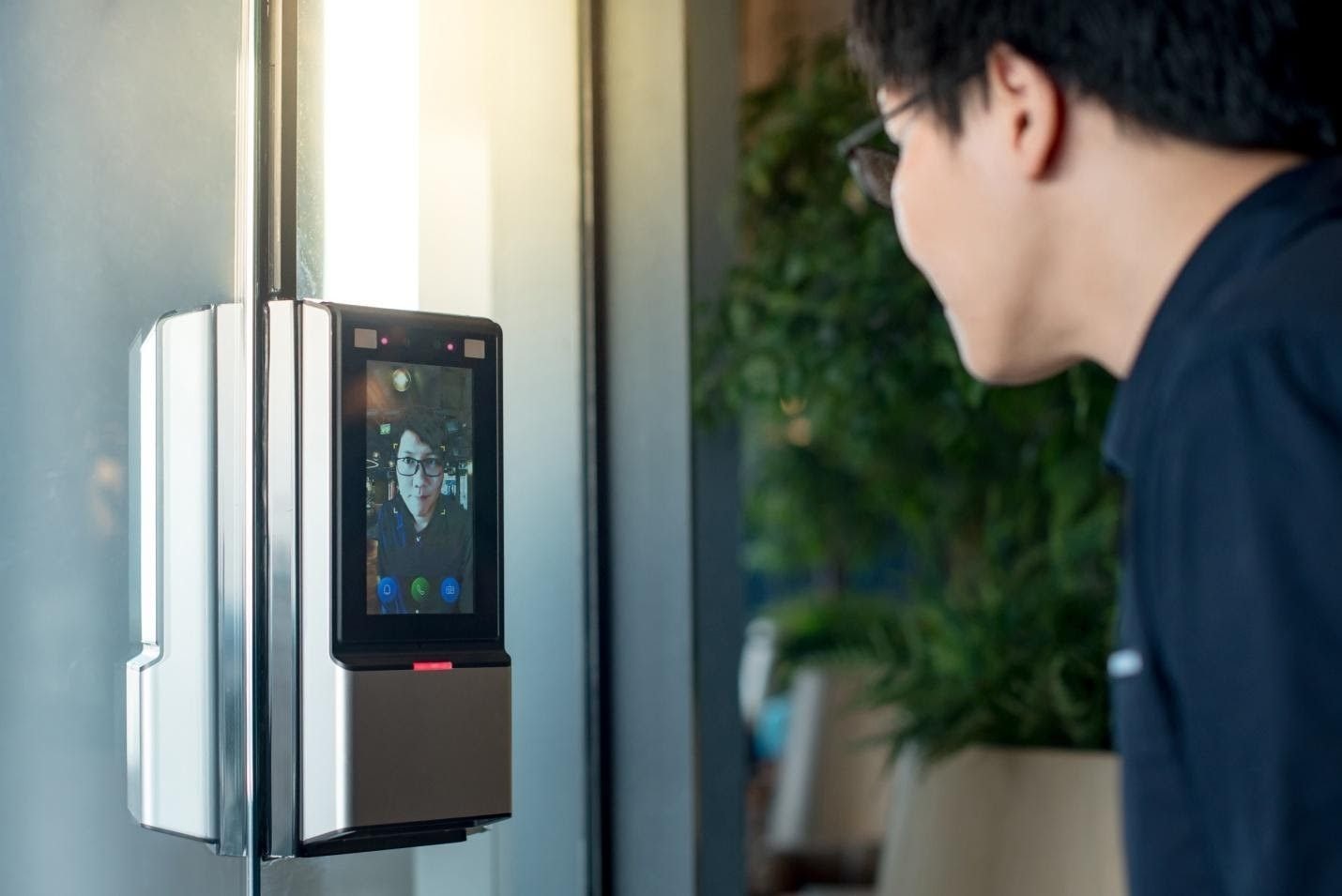
As computer vision techniques evolve and enhance, they create room for adoption opportunities. Recently, I happened to come across one such opportunity where a pen and paper solution was being used to record the attendance of employees. This, as anybody can tell, was not only an outdated solution but also an overhead. One should certainly not be doing this living in the digital century.
Any how, one way to solve this problem was using a Computer Vision-Based Attendance System, where people would have their photos taken at the entry whenever a face is detected. These images would then be sent to a processing unit that matches the face with the employee dataset and records the attendance of the respective person.
A birds eye view of the solution looks something like below.
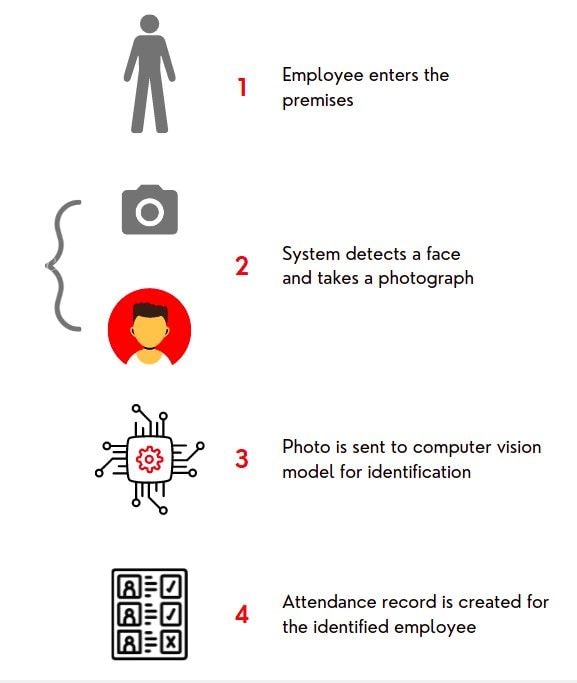
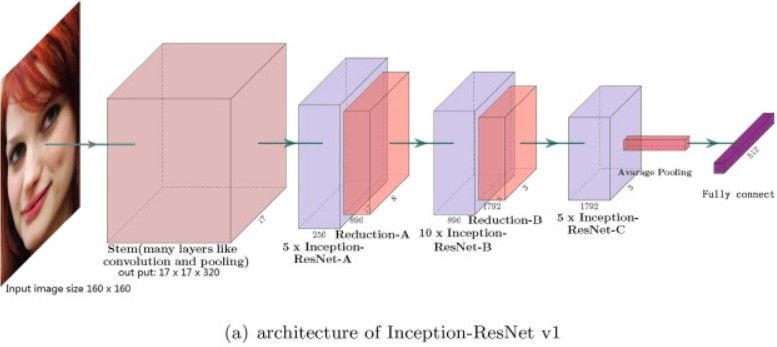
This is essentially a two-part solution where one component of the system is responsible for face detection and the other for identification/classification. For face detection, a Multi-Task Convolutional Neural Network (MTCNN) is used whereas an Inception Resnet is used for classification.
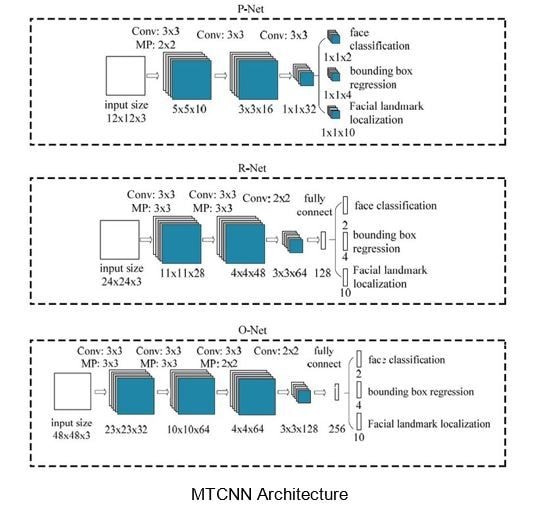
MTCNNs, as the name suggests are used for multi-task problems which in our case are faces and facial features. Fortunately for us, an MTCNN based facial detection model and a pre-trained Inception Resnet classifier were already set up by Harbman and made publicly accessible on his Github. All we needed to do was re-train the model on employees’ faces, which was not a difficult task as Habrman provided clear instructions in his repo on how to do that.
Some changes were made to the detection and reporting script. These include a threshold that defines how many successful detection frames are needed to successfully classify the person, a check that prohibits re-detection of a person whose attendance has already been marked, as well as a custom view that displays the photo of the person being identified along with the names of those who have been previously identified and marked.
Explore more about Face Recognition System in Action
The solution performed reasonably well, as it was confidently able to tell different people apart with an average confidence of around 80%. A sample from a model trained on 4 faces is attached, demonstrating the effectiveness of this Computer Vision-Based Attendance System in accurately recognizing individuals.
https://i.imgur.com/BfcwHSt.mp4
Explore 100 AI job replacement statistics for 2026, including layoffs, automation risks, exposed roles, and main workforce trends.

Today, large language models can access internal documents, customer records, generate code, call APIs, and perform tasks through autonomous AI agents. Retrieval-augmented generation (RAG) lets organizations connect AI systems to private data for more relevant outputs.

Most enterprises get this decision wrong by comparing year-one costs. This guide breaks down the AI build vs buy decision across TCO, data control, talent gaps, and compliance, so you can choose with confidence.