The coaching playbook has gone digital. In 2026, the gap between winning and losing increasingly depends on a team’s ability to harness data, sensors, and intelligent software rather than relying on instinct alone. The global sports technology market is valued at roughly $38.93 billion this year and is projected to surpass $104 billion by 2033, growing at a compound annual rate above 15 percent.
The sports coaching platforms segment alone is on track to more than triple in value over the next decade, fueled by AI-enabled training, wearable integration, and cloud-based analytics. Whether you coach a Premier League squad, a college basketball team, or a local youth academy, sports coaching technology is no longer optional; it is the infrastructure of modern athletic development. Organizations looking to build custom solutions increasingly turn to AI development companies that specialize in sports-grade analytics and computer vision.
What is sports coaching technology, and how is it used?
Sports coaching technology refers to the digital tools, software platforms, wearable devices, and data systems that coaches use to plan training sessions, analyze athlete performance, prevent injuries, and make real-time strategic decisions. At its simplest, it includes video replay apps and heart-rate monitors, which represent a common video analysis application in sports used by coaches to review plays, study tactics, and evaluate athlete performance. At its most advanced, it encompasses AI-powered analytics engines, markerless motion capture, and fully immersive virtual reality environments.
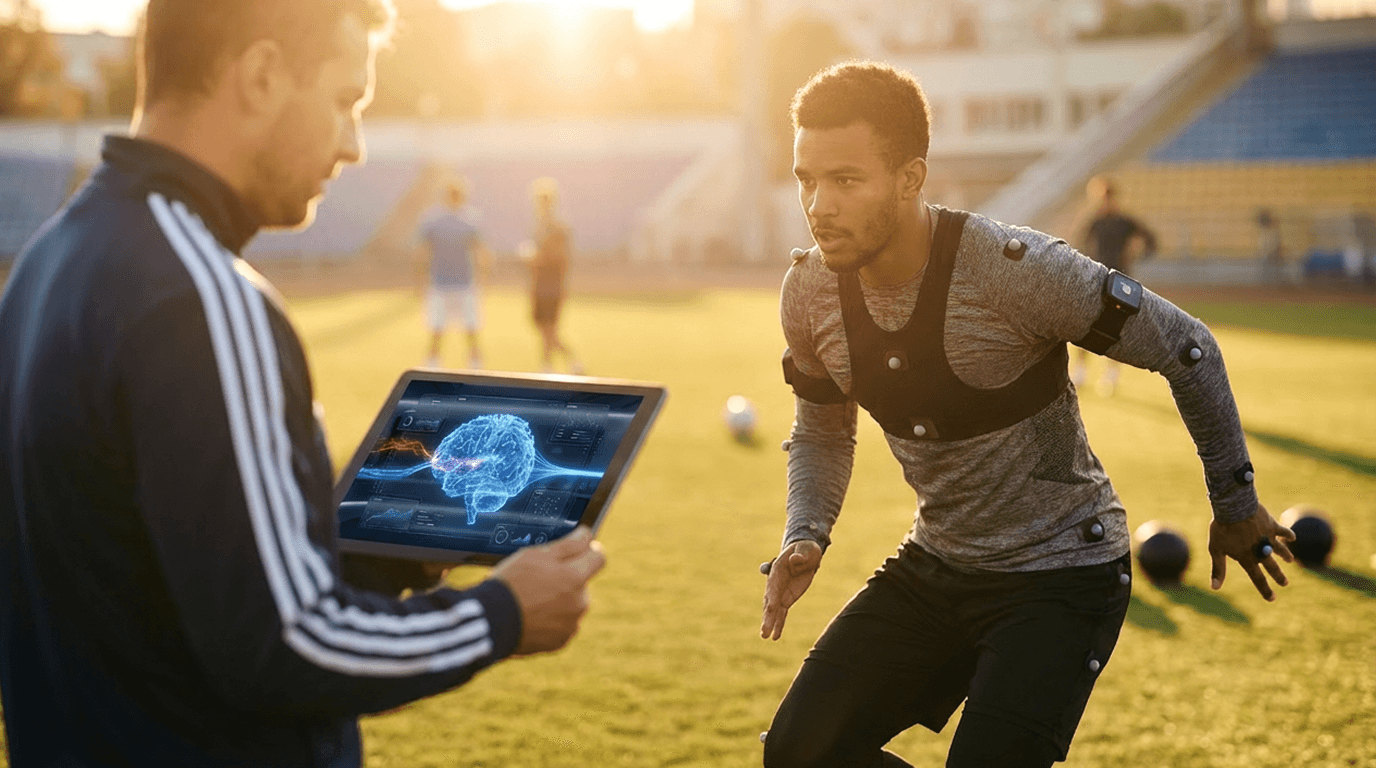
Understanding how technology is used in sports today requires looking at the entire athlete lifecycle. Pre-session, coaches use data dashboards to assess readiness scores derived from sleep quality, heart-rate variability, and prior workload. During training, GPS trackers, smart sensors, and live video feeds capture every sprint, tackle, and change of direction. Post-session, cloud-based platforms aggregate this data, apply machine-learning models, and surface actionable insights.
The result is a continuous optimization loop. Coaches no longer wait until game day to discover problems; they address them in real time. This shift from reactive to proactive coaching is why technology in sports coaching has become a core competitive advantage rather than a luxury reserved for elite programs.
Ready to Modernize Your Coaching Strategy?
Discover how the latest coaching technologies can improve player development, performance tracking, and decision-making in 2026.
Explore Free Consultation
Why is sports technology crucial in 2026?
Several converging forces make 2026 a defining year for new technology in sports. From exploding data volumes to plummeting costs, here is why coaches can no longer afford to wait.
Data volumes have exploded
The NFL’s Digital Athlete platform captures roughly 500 million data points weekly. No human can process that manually; AI-driven tools are now essential to convert raw numbers into coachable insights.
Mainstream adoption has accelerated
Three out of four professional teams worldwide already rely on real-time analytics for performance and strategy. Even amateur programs and youth academies are investing in affordable sensor kits.
The cost of entry has dropped
Cloud computing, smartphone-based motion capture, and subscription software let high school coaches access biomechanical tools that once required a university lab. Sensor miniaturization has removed hardware friction.
Peer-reviewed science validates the shift
Research published in Frontiers in Sports and Active Living in 2026 confirms that digital transformation in coaching is a fundamental shift in how knowledge is produced and applied.
Competitive pressure demands it
Coaches who ignore these changes risk falling behind rivals who treat data as a first-class asset. In a market growing at 15 percent annually, standing still means falling behind.
The 10 hottest trends in sports coaching technology 2026
Below are the ten most impactful new sports technology trends that every coach, athletic director, and sports organization should understand this year.
AI platforms process GPS, video, and biometric data to uncover patterns that human analysts may overlook. Sports video analysis AI applications help predict injury risk, evaluate tactics, personalize training plans, automate video tagging, and deliver real-time performance alerts that support faster, data-driven coaching decisions.
Trend #2: Wearable technology and smart sensors
Modern wearable devices such as GPS vests, smart insoles, and sensor-embedded garments continuously track heart rate, movement, and muscle load. This data enables coaches to monitor training intensity, detect fatigue early, prevent injuries, and optimize performance with real-time insights.
Trend #3: Virtual reality (VR) training
Virtual reality training creates immersive environments where athletes can repeatedly practice decision-making, tactical scenarios, and game situations without physical strain. These cognitive repetitions improve reaction time, strategic awareness, and confidence while reducing the risk of injury during intense training periods.
Trend #4: Augmented reality (AR) for real-time feedback
Augmented reality overlays performance metrics, tactical cues, and movement guidance directly into an athlete’s real training environment. By delivering instant visual feedback after actions, AR accelerates skill development, improves technique correction, and strengthens the connection between coaching instruction and athlete execution.
Trend #5: Advanced sports video analysis software
AI-powered video analysis software for sports automatically tags plays, identifies formations, and generates highlight reels. By integrating video with tracking and biometric data, coaches gain detailed insights into performance patterns, enabling faster review processes and more effective tactical and technical adjustments.
Mobile coaching applications allow trainers to design practice sessions, share video feedback, and communicate with athletes from anywhere. Many platforms now include built-in review tools that help coaches identify and correct sports video analysis errors during remote feedback sessions. Gamified features and remote video analysis increase athlete engagement, making professional coaching tools more accessible to youth, amateur, and grassroots sports programs.
Trend #7: Data analytics and cloud-based insights
Cloud-based analytics platforms combine data from wearables, video systems, and athlete tracking tools. They generate readiness scores, workload trends, and performance heat maps, helping coaches make informed training decisions while monitoring long-term athlete development and injury prevention strategies.
Trend #8: Biomechanics and motion capture technology
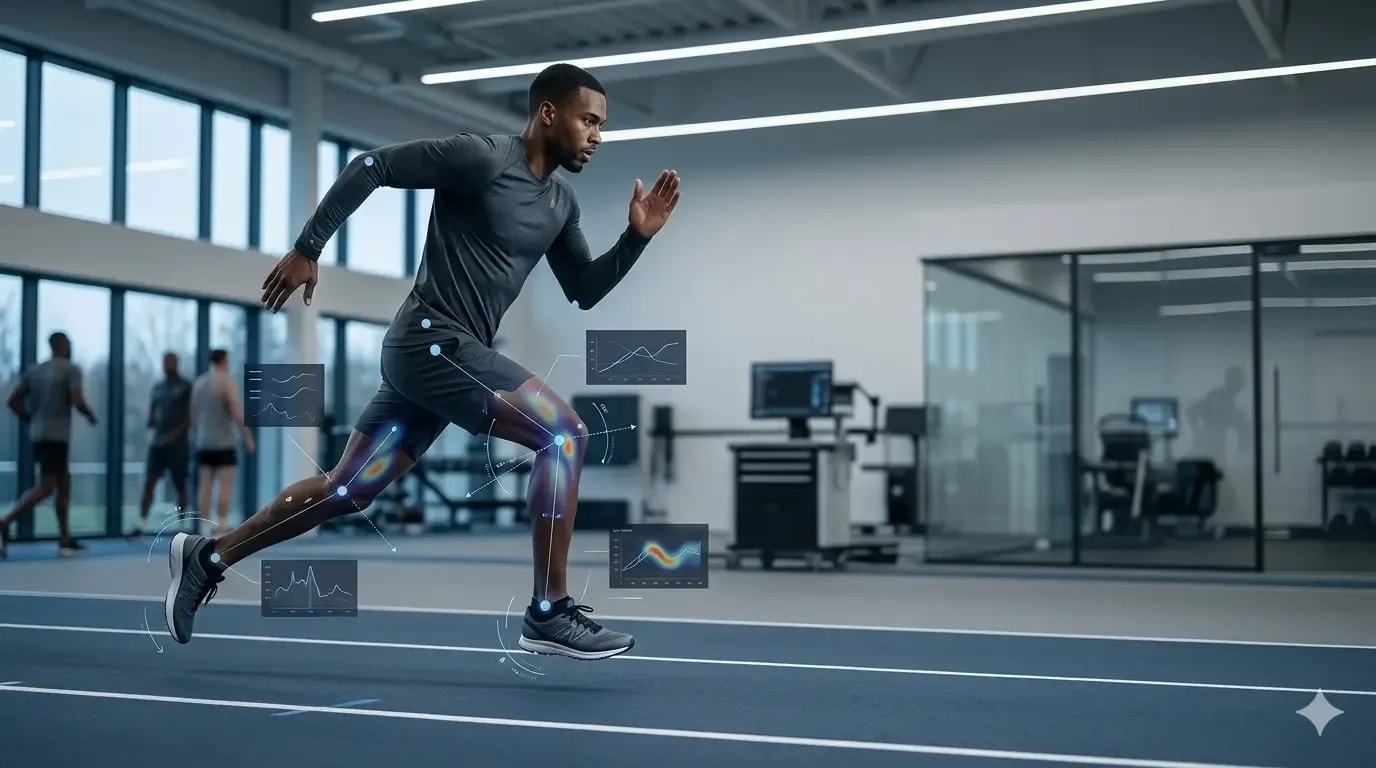
AI-powered motion capture systems analyze athlete movements using cameras or smartphones, producing detailed 3D biomechanical models. These systems identify inefficiencies, detect injury risks, and guide corrective exercises, enabling coaches to improve technique accuracy and optimize athletic performance.
Trend #9: Gamification in training
Gamification transforms repetitive drills into engaging experiences by incorporating leaderboards, rewards, and progress indicators. These motivational elements increase athlete commitment, encourage consistent practice, and improve long-term adherence to training and rehabilitation programs across different sports levels.
Wearable recovery devices monitor sleep quality, heart-rate variability, oxygen levels, and hydration throughout the day. Coaches use these insights to evaluate athlete readiness, manage fatigue, plan recovery strategies, and maintain optimal performance while reducing the likelihood of injuries.
Ready to Stay Ahead in Sports Coaching?
Explore the top technology trends shaping coaching in 2026 and discover how they can improve training, performance, and athlete development.
Explore Free Consultation
How can coaches implement these technologies?
Knowing what is available is only half the equation. Successful adoption requires a structured approach. Here are five steps to bring sports coaching technology into your program without overwhelming your staff or athletes.
1. Assess team needs
Start with a clear objective. Are you trying to reduce soft-tissue injuries? Improve set-piece conversion rates? Accelerate rehabilitation timelines? Defining the problem first prevents you from purchasing technology for its own sake. Audit your current capabilities—what data are you already collecting, what gaps exist, and what decisions would change if you had better information?
Match tools to your objective and budget. A youth soccer academy may benefit most from a mobile coaching app and basic GPS vests, while a professional rugby club might invest in markerless motion capture and a full AI analytics platform. For teams with unique workflows that off-the-shelf tools cannot support, custom sports software development offers a way to build systems tailored to specific tactical or data needs. Prioritize interoperability: choose systems that share data through open APIs so you build a unified ecosystem.
3. Integrate into training
Technology should be embedded in your existing workflow, not bolted on as an afterthought. Run a phased pilot: introduce one tool at a time, train your coaching staff on how to interpret the outputs, and collect feedback from athletes. Academic research cautions that technology alone does not resolve structural barriers; coaches need digital literacy and institutional support.
Define key performance indicators before you deploy any tool. Track whether injury rates drop, whether player availability improves, or whether your tactical adjustments translate to better match outcomes. Effective data analytics for sports teams depends on consistently monitoring these metrics and turning them into actionable insights. Regular reviews ensure you are measuring impact rather than just collecting data. Cloud dashboards make this process far simpler than it was even a few years ago.
5. Adjust and optimize
Sports technology adoption is iterative, not one-and-done. Use the data to refine your approach each cycle. If a particular wearable metric is not driving better decisions, reconsider whether it belongs in your workflow. Conversely, if AI-generated insights are consistently improving training quality, explore scaling that tool across more squads or age groups.
Frequently asked questions
What are the latest sports coaching technologies in 2026?
The most prominent technologies include AI-powered performance analysis, next-generation wearable sensors, VR training systems, AR feedback tools, advanced video analysis software, mobile coaching apps, cloud-based analytics, markerless motion capture, gamification engines, and wearable recovery-monitoring devices.
How can coaches integrate wearable tech into training programs?
Begin by identifying metrics most relevant to your sport—GPS load for field sports, muscle oxygen for rehabilitation, or HRV for endurance athletes. Choose devices that feed data into your existing analytics platform, run a pilot with a small group, and gradually expand usage as confidence grows.
Look for AI platforms that offer GPS-based workload modeling, automated video tagging, predictive injury analytics, markerless biomechanical capture, and affordable sensor-based analysis. The best choice depends on your sport, competitive level, and budget.
How do VR and AR enhance sports coaching?
VR lets athletes practice game scenarios in immersive digital environments without physical fatigue. AR overlays real-time data onto the training environment, accelerating the feedback loop between action and correction. Together, they improve cognitive processing, pattern recognition, and motor-skill retention.
What are the best mobile apps for coaching athletes?
The best mobile coaching apps offer video-based feedback, session planning, athlete communication, strength-and-conditioning programming, and team management features. Your ideal choice depends on your sport, roster size, and whether you prioritize real-time communication, programming, or analytics.
How can data analytics help coaches make better decisions?
Data analytics transforms raw numbers into visual dashboards, trend lines, and predictive alerts. Coaches can monitor training-load trends, compare player metrics against benchmarks, identify tactical patterns, and make evidence-based selection decisions from any device..
What challenges do coaches face when adopting new sports technology?
Common challenges include limited budgets, steep learning curves, resistance to change, data-privacy concerns, and difficulty integrating new tools with legacy systems. Digital literacy, institutional support, and clear data-governance policies are essential for sustainable adoption.
Motion capture tracks joint angles, stride symmetry, and movement patterns with high precision. AI detects biomechanical red flags—excessive knee valgus, asymmetric loading, or delayed hip rotation—that precede injuries like ACL tears. Early detection lets coaches modify loads and prescribe corrective exercises.