














Custom Face Recognition Software For Automated Identity Matching
Computer vision that detects, verifies, and matches faces against your approved database, deployed on your infrastructure with the compliance controls your use case actually requires. Built for identity verification, access control, and secure event entry.
What Does Face Recognition Software Do?
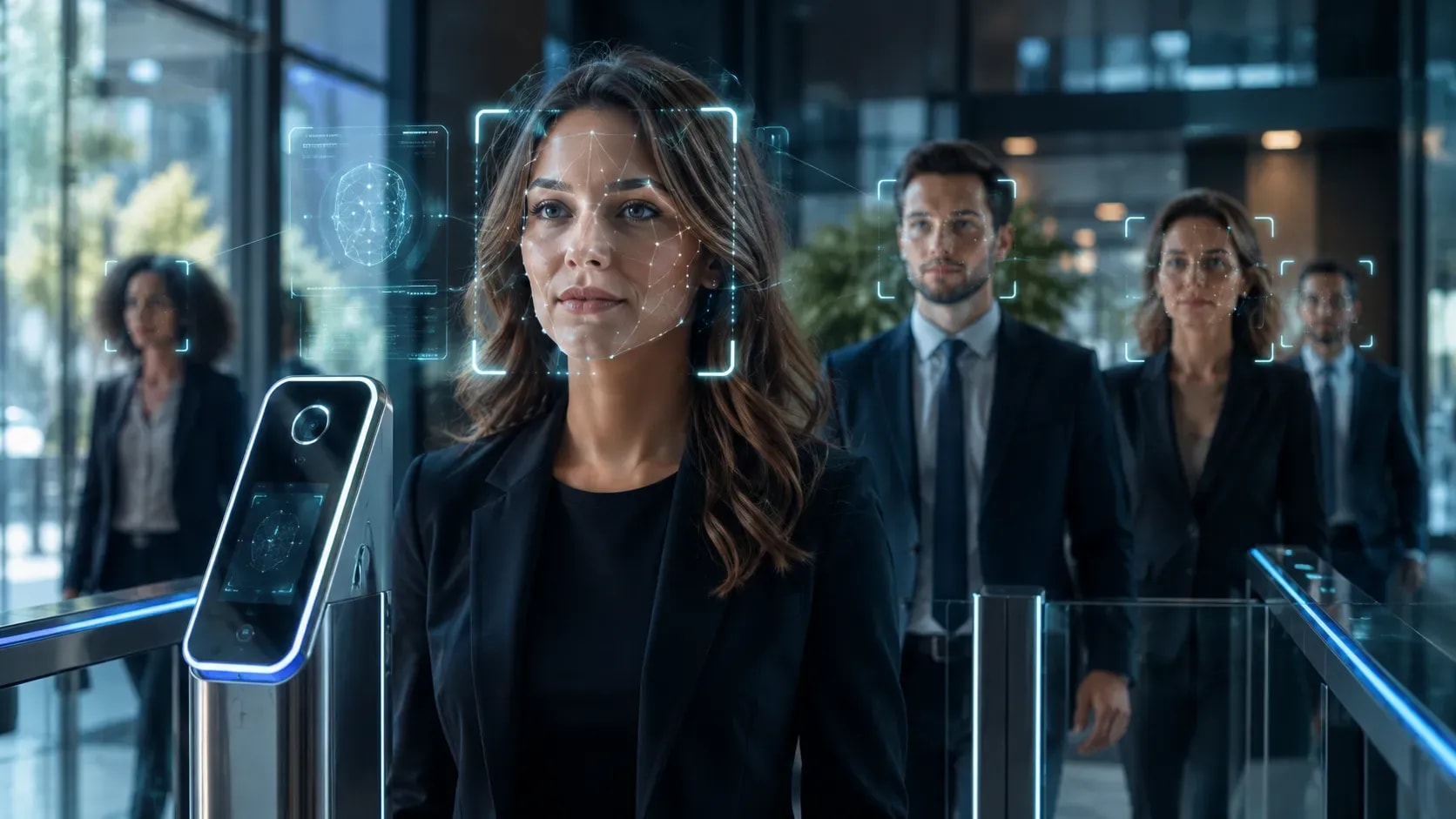
Face recognition covers two distinct technical tasks that vendors often blur together. This is built to handle both, plus the anti-spoofing layer that makes either one trustworthy in production.
One-to-One Verification (1:1)
Compares a live capture against a single known image, like a selfie against an ID photo, to confirm the two are the same person. The core of identity verification and KYC workflows.
One-to-Many Identification (1:N)
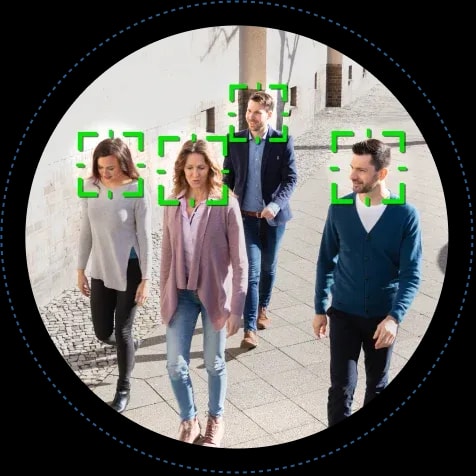
Searches a face against a gallery of known identities to find a match, used for access control and watchlist screening rather than one-to-one confirmation.
Liveness and Anti-Spoofing Detection
Identifies presentation attacks involving printed photos, replayed video, or masks before a verification or match result is trusted.
Deployment Models
Latency, data residency, and compliance requirements determine which architecture fits; this isn't locked into one.
Cloud Deployment
Centralized processing for easier multi-location management and flexible scaling; the model most off-the-shelf cloud APIs default to.On-Device and Edge Deployment
Processing runs locally on the camera or edge device, reducing server round trips and supporting low-latency identity workflows.On-Premises and Hybrid
Sensitive data stays within your infrastructure for organizations where data residency or regulatory requirements rule out sending biometric data to a third-party cloud.
Custom Face Recognition vs. Off-the-Shelf APIs
| Criteria | Folio3 Custom AI | Off-the-Shelf Platforms |
|---|---|---|
| Access | Built and deployed under your own governance | Azure Face requires registration for verification and identification features |
| Data residency | On-premises or private cloud options available | Hosting and data-residency options vary by vendor |
| Latency | Edge deployment available for lower-latency processing | Response time depends on network and service architecture |
| Compliance fit | Configured to your specific regulatory requirements | Provider-wide controls and eligibility rules vary |
| Feature availability | Scoped to what's appropriate and compliant for your actual use case | Microsoft has retired emotion and gender attributes and limits other sensitive attributes |
| Pricing | Scoped to your integration and volume | Vendor pricing models vary by service and usage |
Face Recognition Use Cases
Custom face recognition software can support identity, access, payment, and event workflows when it is validated against representative data and integrated with appropriate security controls.
Identity Verification and KYC
Authenticate users during account registration, remote onboarding, and payment authorization by matching a live capture against an ID document.
Access Control and Security
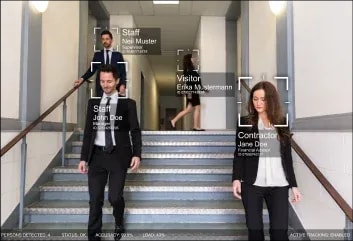
Verify employees, residents, or authorized personnel at entry points, and screen against watchlists at secure facilities.
Biometric Checkout and Payments
Match a shopper's face to their account for frictionless, card-free payment authorization at point of sale.
Secure Event Entry
Verify attendees and flag unauthorized access attempts at conferences, venues, and private events without manual ID checks.
Responsible Use and Regulatory Compliance
Responsible face recognition requires lawful deployment, informed consent, secure data practices, transparent oversight, and safeguards tailored to jurisdiction and use.
Meet the Team Behind the Build
This solution is developed by Folio3's AI and computer vision team, who bring direct, hands-on experience building facial detection, verification, and liveness systems for security and identity-verification deployments.
Abdul Sami
Head of AI and Machine Learning - Senior Software ArchitectAbdul leads business AI development across machine learning, computer vision, and production AI architecture, helping teams design systems with measurable performance and appropriate governance.
Explore More Computer Vision Solutions
Extend visual intelligence across object recognition, object tracking, safety monitoring, apparel analysis, food recognition, visual search, face recognition, demographic analysis, and AI image analysis.
Object tracking software
Track objects across video frames to monitor movement, position, direction, and activity over time.
Explore Object TrackingPPE detection
Detect helmets, vests, masks, gloves, and other protective equipment across workplace environments.
Explore PPE DetectionApparel detection
Recognize clothing categories, colors, patterns, styles, and visual attributes from images and video.
Explore Apparel DetectionObject recognition software
Identify, classify, count, and validate custom objects across images, video, and live camera feeds.
Explore Object RecognitionFood recognition API
Recognize dishes, ingredients, meal components, and food categories from uploaded or captured images.
Explore Food RecognitionObject recognition software
Identify, classify, count, and validate custom objects across images, video, and live camera feeds.
Explore Object RecognitionAI visual search
Let users search with an image and instantly discover visually similar products, assets, objects, or content.
Explore Visual SearchEthnicity detection
Analyze supported facial characteristics for approved research, audience analytics, and privacy-conscious demographic insights.
Explore Ethnicity DetectionAI image analysis software
Analyze, classify, and interpret visual data with custom computer vision models built around your images and workflows.
Explore Image AnalysisFrequently Asked Questions
Detection identifies that a face is present in an image and returns its location. Recognition goes further, comparing that face against a known identity (1:1 verification) or a gallery of identities (1:N search) to determine who it is. Some vendors market detection-only APIs as "recognition," worth confirming which one you're actually evaluating.
Yes. Cloud deployment centralizes processing for easier management; on-device and edge deployment can reduce network round trips, which is useful for real-time applications with strict latency requirements.
Yes. Liveness and anti-spoofing detection identifies presentation attacks, printed photos, replayed video, masks, before a match result is trusted.
AWS Rekognition and Azure AI Face are general-purpose cloud services. Azure requires registration for limited-access verification and identification features, as documented in its Face access requirements. A custom system can instead be scoped to your governance, jurisdiction, latency, and data-residency requirements.
Microsoft has retired emotion and gender attributes and limits age and related sensitive attributes, as documented in its Azure Face capability guidance. Any proposed demographic feature must be reviewed against the specific use case, jurisdiction, and applicable legal requirements rather than enabled by default.
Accuracy depends heavily on image quality, lighting, camera angle, and deployment conditions. Independent benchmarks such as the NIST Face Recognition Technology Evaluation use defined test datasets and protocols that may not reflect a specific production environment. Accuracy for your environment is validated against representative data before deployment rather than quoted as a fixed number.
Build Face Recognition Scoped to Your Compliance Needs
Off-the-shelf APIs get you general-purpose accuracy under someone else's terms. A custom-built system gets you a deployment matched to your actual data-residency, latency, and regulatory requirements.